Something has shifted in the dermatology world. For decades, sun protection advice focused on face, arms, and shoulders, with lips treated as an afterthought. But the American Academy of Dermatology's 2025 updated guidelines now explicitly recommend year round SPF lip protection for all adults, calling lips "the most commonly neglected UV exposed surface on the human body."
This is not seasonal advice. Dermatologists are recommending that SPF lip protection become as routine as brushing your teeth. But since summer is when UV exposure peaks and outdoor activities multiply, let us use it as the starting point for building a Lip Care habit that lasts all year. Understanding why lips need sunscreen in the first place is the foundation for everything that follows.
Why Summer 2026 Demands Better Lip Protection
UV Index Records Continue to Climb
Data from the National Oceanic and Atmospheric Administration (NOAA) shows that extreme UV index days (UV 11+) have increased by 18% across the continental United States since 2015. Climate scientists attribute this to ongoing ozone variability in the stratosphere and changing cloud cover patterns. In practical terms, summer 2026 will deliver more intense UV radiation on more days than any summer in the past decade.
The Outdoor Activity Boom
Post pandemic outdoor recreation continues to surge. The Outdoor Industry Association reported that 168 million Americans participated in outdoor recreation in 2025, up from 160 million in 2022. More people spending more time outdoors means more cumulative lip UV exposure across the population.
The SPF Myth Section: Numbers Most People Get Wrong
Before diving into activity specific advice, let us clear up the biggest misconception in sun protection.
SPF 50 Is Only 3% Better Than SPF 20
This surprises almost everyone. SPF measures the fraction of UVB rays that reach your skin:
- SPF 15 blocks approximately 93% of UVB
- SPF 20 blocks approximately 95% of UVB
- SPF 30 blocks approximately 97% of UVB
- SPF 50 blocks approximately 98% of UVB
The jump from SPF 20 to SPF 50 adds just 3 percentage points of protection. Yet SPF 50 products often cost significantly more and require the same reapplication frequency. Dermatologists consistently say that SPF 20 to 30 with consistent reapplication every 90 minutes provides better real world protection than SPF 50 applied once and forgotten.
For lips specifically, the American Academy of Dermatology recommends SPF 15 as the minimum and SPF 20 to 30 as ideal. Higher SPF numbers on lip products often indicate heavier formulations that feel waxy and discourage reapplication, which defeats the purpose entirely.
Activity by Activity: Your Summer Lip Protection Playbook
Hiking and Trail Running
Summer hiking combines extended UV exposure (often 4 to 10 hours), elevation gain (more intense UV with every meter climbed), sweat (which strips lip products), and frequent water drinking (which removes product from the lip surface).
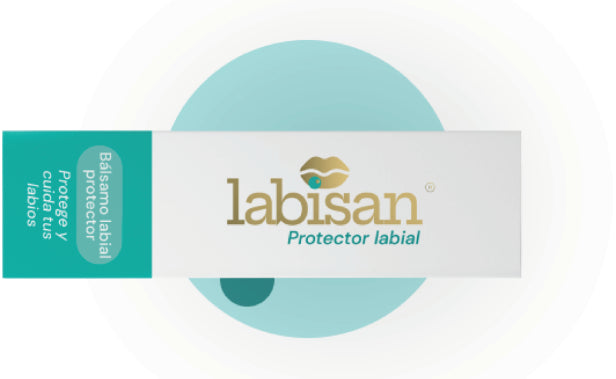
Protocol: Apply SPF lip balm before hitting the trail. Reapply every 60 minutes during sustained uphill effort where you are breathing heavily and sweating. Keep your lip balm in a chest pocket or hipbelt pocket for easy access. After drinking from your water bottle, immediately reapply. Choose a zinc oxide based formula like Labisan Protective Lip Balm SPF 20 that provides instant protection without a chemical activation delay.
Beach and Pool Days
Water reflects approximately 25% of UV radiation back at your face, and sand reflects 15 to 25% depending on color and moisture. This means your lips can receive nearly double the UV dose compared to a shaded park setting. Saltwater and chlorine both strip lip products aggressively.
Protocol: Apply before arriving at the beach. Reapply every 45 to 60 minutes, and immediately after swimming or toweling off. Look for water resistant formulations with physical (mineral) blockers that maintain a protective layer even when partially removed by water.
Festival and Concert Season
Music festivals and outdoor events present a unique challenge: hours of direct sun exposure combined with dehydration (from heat, activity, and often alcohol consumption). Dehydrated lips are significantly more vulnerable to UV damage because the tissue thins and loses its natural resilience.
Protocol: Pair SPF lip protection with aggressive hydration. Apply lip balm every 90 minutes. Drink at least 250ml of water per hour. Choose a lip balm with both SPF and moisturizing barrier ingredients (shea butter, vitamin E) to combat the double threat of UV and dehydration.
City UV Exposure: The Hidden Risk
Urban environments are not UV safe zones. Glass and steel buildings reflect UV radiation from angles you would never expect. Concrete and asphalt reflect 8 to 12% of UV. Even walking to lunch in a city center delivers meaningful UV exposure to unprotected lips.
A 2024 study from the British Journal of Dermatology found that office workers who spent just 30 minutes outdoors during lunch breaks accumulated enough UV to trigger measurable skin changes over the course of a summer. For lips, which have virtually no melanin protection, even brief daily exposure adds up.
Protocol: Make SPF lip balm part of your morning routine. Apply after brushing your teeth, before you leave the house. Reapply after lunch. This simple two application habit covers 90% of your daily urban UV exposure.
Travel Lip Care: Your Summer Trip Checklist
Traveling multiplies Lip Care challenges: altitude changes on flights, dry cabin air, unfamiliar climates, disrupted routines, and the tendency to "forget the details" while on vacation. Here is your packing checklist for Lip Care on summer trips:
- Primary tube: Your main SPF lip balm, carried in a pocket or day bag for constant access
- Backup tube: A second tube in your luggage (products get lost, melt in hot cars, or fall out of pockets)
- Night repair: A heavier, non SPF moisturizing balm for overnight lip recovery after sun exposure days
- Flight prep: Apply lip balm before boarding and every two hours during the flight. Airplane cabin humidity averages 10 to 20%, which is drier than the Sahara Desert
- Time zone rule: If you change time zones, set a phone reminder for reapplication until the habit adjusts naturally
What Dermatologists Want You to Know in 2026
We compiled recommendations from the American Academy of Dermatology's 2025 guidelines and recent dermatology literature. Here are the key takeaways:
Year round protection is non negotiable. UV radiation penetrates cloud cover (up to 80% on overcast days), reflects off snow in winter, and is present from sunrise to sunset. "Summer only" lip protection is outdated advice.
Mineral sunscreens are preferred for lips. Zinc oxide provides immediate, broad spectrum, photostable protection without the irritation risk of chemical filters on sensitive lip tissue. The FDA's 2024 updated sunscreen monograph reinforced zinc oxide's status as a Category I (safe and effective) sunscreen active.
Reapplication matters more than SPF number. The most common failure mode in lip sun protection is not using a low SPF product; it is applying a high SPF product once and then not reapplying for hours.
SPF lip protection reduces cold sore frequency. For the estimated 3.7 billion people carrying HSV 1, regular SPF lip use has been shown to reduce UV triggered cold sore outbreaks by up to 73% in clinical studies.
Start the habit now, not in June. UV radiation is already at moderate to high levels by April in most of the Northern Hemisphere. Waiting for "summer" to start lip protection means missing weeks of meaningful UV exposure.
Building the Habit That Lasts
The most effective Lip Care routine is the one you actually follow. Here are three habit stacking strategies that dermatologists recommend:
Morning anchor: Place your SPF lip balm next to your toothbrush. Apply it as the last step of your morning bathroom routine.
Meal anchor: Keep a tube at your desk or in your lunch bag. Reapply after eating, since food and drink remove lip products.
Activity anchor: Before any outdoor activity (walk, run, hike, bike ride, yard work), apply lip balm as part of your "gear up" checklist, just like putting on sunglasses or a hat.
Summer 2026 is going to deliver intense UV, more outdoor activity, and more opportunities for your lips to suffer. The protection is simple, affordable, and backed by decades of dermatological research. The only variable is whether you make it a habit.
Ready to Protect Your Lips?
Labisan Protective Lip Balm SPF 20
Single Tube: $24.99 | Adventure Pack (3x): $59.97 (save 20%) | Family Bundle (5x): $89.95 (save 28%)
Free EU shipping over $49, $19.99 worldwide. 30 day money back guarantee.
Shop Labisan SPF 20 Lip BalmFrequently Asked Questions
What SPF is enough for daily summer lip protection?
SPF 20 from a non nano zinc oxide formula, applied generously and reapplied every two hours during outdoor exposure, covers the realistic daily protection requirement for most adults. Higher SPF numbers add marginal protection at the cost of a heavier feel. Application thickness and reapplication discipline matter more than the headline number on the tube.
Do I need a separate summer formula compared to winter?
The core protection requirement is identical year round, because UV damage drives lip cancer and cold sore reactivation in every season. What changes in summer is reapplication frequency due to sweat and water exposure, plus a preference for slightly lighter wax matrices that tolerate heat without softening into a runny film. Why lips need dedicated SPF covers the year round case.
Can I use my regular face sunscreen on my lips in summer?
It is a poor substitute. Face sunscreen is formulated to absorb into keratinized skin, washes off the lip mucous membrane within minutes, and tastes bad enough to discourage repeat application. A dedicated lip product with a wax and butter matrix stays put through eating, drinking, and sweating in a way face sunscreen never will.
Why do my lips burn worse at the beach than on a city walk?
Because beach UV exposure stacks three reflection sources: direct sun, white sand reflecting up to 25 percent of UV, and water surface reflecting another 25 percent. The lower lip catches all three angles simultaneously. City walks rarely combine more than direct exposure, so the same hour of sun delivers significantly less total UV to lip tissue.