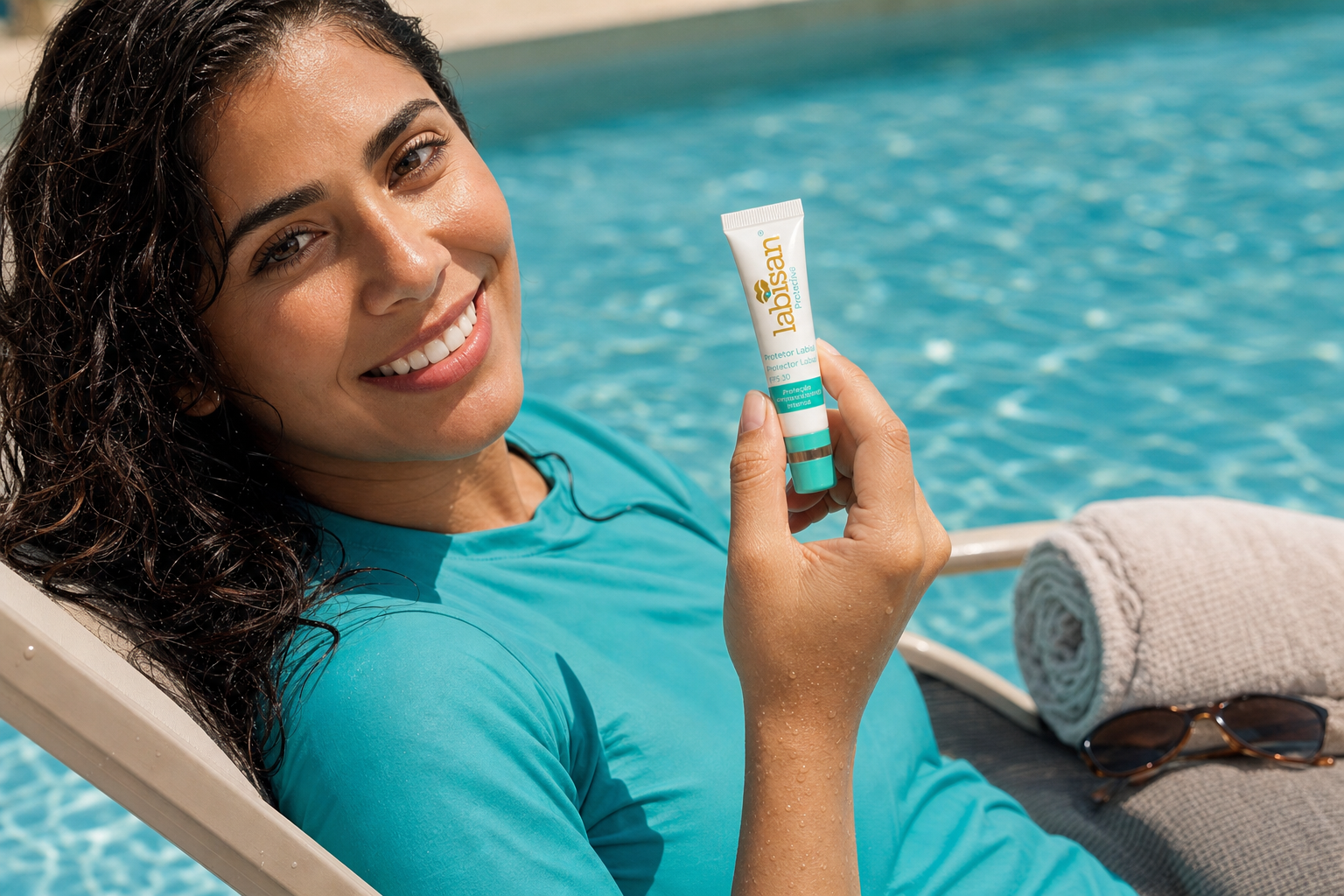

Why most cold sore prevention fails. The standard advice ("avoid your triggers") assumes you already know what your triggers are. Most people do not. They know they get outbreaks. They have a vague sense that "sun" or "stress" or "being run-down" matters. They do not have a precise map of which trigger class produces which percentage of their personal outbreaks, in what window, with what warning signal. Without that map, the protocol runs at the published default dosing, which is calibrated for the average user, not for you.
The trigger journal below is an 8-week structured workbook. You start it on the day you begin the Labisan dual protocol (or on any Monday if you are already running it). You spend 90 seconds per day on it. By week 8 you have a usable personal trigger pattern, plus enough data to adjust the protocol parameters for your specific case.
The three trigger classes you are tracking
Cold sores are caused by HSV-1 reactivation. Reactivation is caused by transient immune suppression at the lip border or systemically. The three trigger classes account for almost all reactivation events:
- UV exposure: roughly 67 percent of recurrences. Bright sun, ski trips, beach holidays, spring walks, snow reflection, even cloudy bright days.
- Fever or systemic infection: roughly 15 to 25 percent. Any illness with a temperature above 38 degrees Celsius, plus most upper respiratory infections even without fever.
- Chronic stress: roughly 10 to 20 percent. Sustained sleep loss, work pressure, emotional load, often combined.
The population averages are wide because individuals vary. For some users UV is 90 percent, for others it is 30 percent and stress is 60 percent. Your personal split is what the journal captures.
The daily entry, 90 seconds
Each day, before bed, fill in the following six fields. The template fits on a single index card or one row in a spreadsheet. We provide an example row at the end of this section.
- Date
- UV exposure score (0 to 3): 0 indoors all day, 1 brief outdoor exposure under 30 minutes, 2 sustained outdoor 30 to 120 minutes, 3 prolonged or high-intensity (ski, beach, summer hike, snow reflection)
- Illness or fever score (0 to 3): 0 fine, 1 mild congestion or fatigue, 2 visibly sick, 3 fever or full infection
- Stress and sleep score (0 to 3): 0 normal sleep and load, 1 one bad night or busy day, 2 multiple nights poor sleep or a sustained stressful week, 3 acute crisis or burnout state
- Tingle or symptom flag (Y or N): did you feel any prodromal lip tingle, itch, or burn today, even a faint one
- Active outbreak flag (Y or N): visible papule, vesicle, or crust today
Example row: 2026-05-12 | UV=2 | Ill=0 | Stress=1 | Tingle=N | Outbreak=N. Total time to fill: 30 seconds. Total time to glance over previous week: 60 seconds. Net 90 seconds per day.
Week 1 to 2: establish baseline
The first two weeks are pure observation. You are on the protocol (4 topical applications during any active outbreak, then 2 daily maintenance; 4 capsules during active, then 2 daily maintenance). You are logging the daily scores. You are not yet adjusting anything.
What to expect in weeks 1 to 2: if you started during an active outbreak, the visible course should finish by day 5 to 7. The tingle flag should become rare after day 7. The outbreak flag should be N from day 7 onward for the rest of the journal period in most cases. The scores will populate the spreadsheet with a baseline pattern of your typical UV, illness, and stress exposure.
Week 3 to 4: first analysis
At the end of week 4, you have 28 daily entries. Take 20 minutes to look at the pattern.
For any tingle flag (Y) or outbreak flag (Y) in the period, look at the three trigger scores in the 72 hours leading up to it. The trigger that scored highest in those 72 hours is the probable cause of that event. Tabulate. After 4 weeks even a single outbreak with a clear preceding UV=3 day tells you something. After 8 weeks with multiple events the pattern is usually obvious.
Most users on the protocol have zero outbreaks by week 4. In that case, the analysis is on tingle flags rather than full outbreaks. The tingle is the prodromal warning of containment under stress, even when containment holds. Tingles are tracking the same triggers as full outbreaks but in a sub-clinical form. Your tingle pattern is a high-resolution version of your outbreak pattern.
Week 5 to 6: first protocol adjustment
By week 5 you should have enough data to make one targeted adjustment. The adjustments are conservative and the framework is below.
If your tingle flags or outbreaks cluster on high-UV days (UV=2 or 3 in the previous 72 hours): increase morning topical application to a full continuous SPF practice. Apply on waking, reapply at 11:00 if outdoors, reapply at 14:00 if still outdoors. Carry the tube. Most UV-pattern users have under-applied the topical historically. The 22 percent zinc oxide is highly effective but only on the skin it is actually covering.
If your tingle flags or outbreaks cluster on illness days (Ill=2 or 3) or in the week following an illness: increase capsules to 3 per day during any active illness and continue for 7 days after symptoms resolve. The plasma concentration of acetogenins and flavonoids drops slowly enough that 3 capsules during a viral week provides a meaningful immune boost without disrupting your maintenance baseline.
If your tingle flags or outbreaks cluster on high-stress periods (Stress=2 or 3 sustained): shift the evening capsule (of your 2-per-day maintenance) to 30 minutes before bed rather than with dinner. The reticuline alkaloid load contributes most to sleep depth when concentrated near sleep onset. Add a second evening topical application before bed during the high-stress week. The behaviour of applying lip balm before bed itself has a soothing-routine effect, plus the topical provides overnight antiviral coverage if a stress-driven reactivation is incubating.
If your data is inconclusive (rare): stay on default dosing through week 6 and re-analyse at week 8.
Week 7 to 8: validation and lock-in
Weeks 7 and 8 test whether the week-5 adjustment is working. Continue the journal. If tingle flags or outbreaks have dropped further from your week 1 to 4 baseline, the adjustment is correct. Lock it in as your new protocol.
If they have not dropped, the adjustment was either insufficient or aimed at the wrong trigger class. Re-analyse the data and pick the next-most-frequent trigger class to adjust. Most users find one adjustment is enough. Some users have two trigger classes both contributing roughly equally and need two adjustments stacked.
What success looks like at week 8
For most users on the protocol with the personalised adjustment, week 8 looks like:
- Zero outbreaks during weeks 5 to 8
- One or two tingles in the period, both quickly resolved within hours of an extra topical application
- Clear data showing which one of the three trigger classes drives most of your prodromal events
- A locked protocol calibrated to your personal pattern
- Average daily protocol effort: 2 topical applications, 2 capsules, plus the journal entry. Total time 3 to 4 minutes per day.
Beyond week 8
The journal does not need to continue indefinitely. The point is to build the map, not to keep mapping. After week 8 most users drop the daily logging and shift to a much lighter tracking approach: note only days with a tingle or outbreak, and only the highest of the three trigger scores in the previous 72 hours.
This light-touch tracking continues to refine the protocol on an annual cycle. By the end of month 12 on the system, you have a high-confidence personal model: your dominant trigger class, the warning signals that precede a tingle, the adjustments that prevent the trigger from crossing the threshold, and the dosing rhythm that works for you.
The patient-observation pattern shows users who keep an active 8-week journal at the start of the protocol arrive at the 6-to-1 outbreak reduction faster (by month 6 rather than month 12) than users who run the default protocol with no journal. The journal does not change the biology. It identifies which leg of the protocol matters most for the individual, which means resources (topical reapplication, capsule timing, lifestyle attention) get spent where they actually move the dial.
Starting tomorrow
Index card or spreadsheet. Six fields. 30 seconds before bed. Eight weeks. Run alongside the Labisan dual protocol described in the hybrid system overview. The cost is 4 minutes a day of attention, and the output is a personalised cold sore prevention plan calibrated to your biology and lifestyle rather than to the population average.
Both Labisan products are available individually and as a bundle on labisan.shop. The bundle covers 1 month of maintenance dosing after an active outbreak, which is the right starting quantity for the first half of the 8-week journal.