The numbers up front. Patient-observation pattern across long-term Labisan dual-protocol users: outbreak frequency falls from roughly 6 per year baseline to roughly 1 mild per year by month 12 of continuous use. The mechanism behind this is not a cure. HSV-1 remains latent in the trigeminal ganglion of every carrier whether they are on the protocol or not. What the protocol does is shift the activation threshold for the same triggers that used to cause outbreaks, plus accelerate clearance of any virion that does break containment. This post explains the four-point interception that produces the 12-month dividend, with the immunology behind each one.
Where HSV-1 actually lives
The herpes simplex virus type 1 establishes lifelong latency in the trigeminal ganglion, the nerve cluster behind the cheekbone that supplies sensation to the face, mouth, and lips. The viral DNA sits dormant inside neurons, transcribing only a small set of latency-associated transcripts that keep the cell alive and the virus hidden. The immune system does not eliminate this reservoir. It contains it.
Containment is performed by tissue-resident memory CD8+ T cells (TRM cells) that surround the latent neurons in the ganglion. These cells maintain a low-level surveillance and, when they detect a reactivation signal, release interferon-gamma and granzymes locally to suppress viral replication before it produces visible disease. When containment fails, virions travel down the trigeminal axon to the lip border and a cold sore appears.
The frequency of outbreaks is therefore a function of two variables: (1) how often containment fails, and (2) how aggressively the immune system re-establishes containment once a reactivation is underway. The Labisan hybrid system addresses both.
The three triggers that cause containment to fail
Three trigger classes account for most HSV-1 reactivations. Each one weakens the same arm of the immune system (cell-mediated T-cell response).
UV exposure. Ultraviolet radiation directly suppresses local cutaneous T-cell function at the lip border for 24 to 72 hours after a bright-sun day. Peer-reviewed work attributes approximately 67 percent of cold sore recurrences to UV exposure. The ski trip outbreak, the beach holiday outbreak, the spring-walk outbreak are all this trigger.
Fever and infection. Systemic inflammation diverts immune resources away from peripheral surveillance. Any febrile illness raises the probability of HSV-1 reactivation by approximately 8-fold for the week of the illness. This is also why HSV-1 is called "fever blister" in older nomenclature.
Chronic stress. Cortisol elevation suppresses lymphocyte proliferation and function. Chronic stress (rather than acute stress) is the more potent driver. Two weeks of poor sleep plus a work crunch plus a personal-life stressor produces measurable immune suppression in laboratory assays and clinically maps to the outbreak that arrives "out of nowhere" after a difficult period.
The protocol intercepts all three.
Interception point 1: zinc oxide blocks UV at the lip border
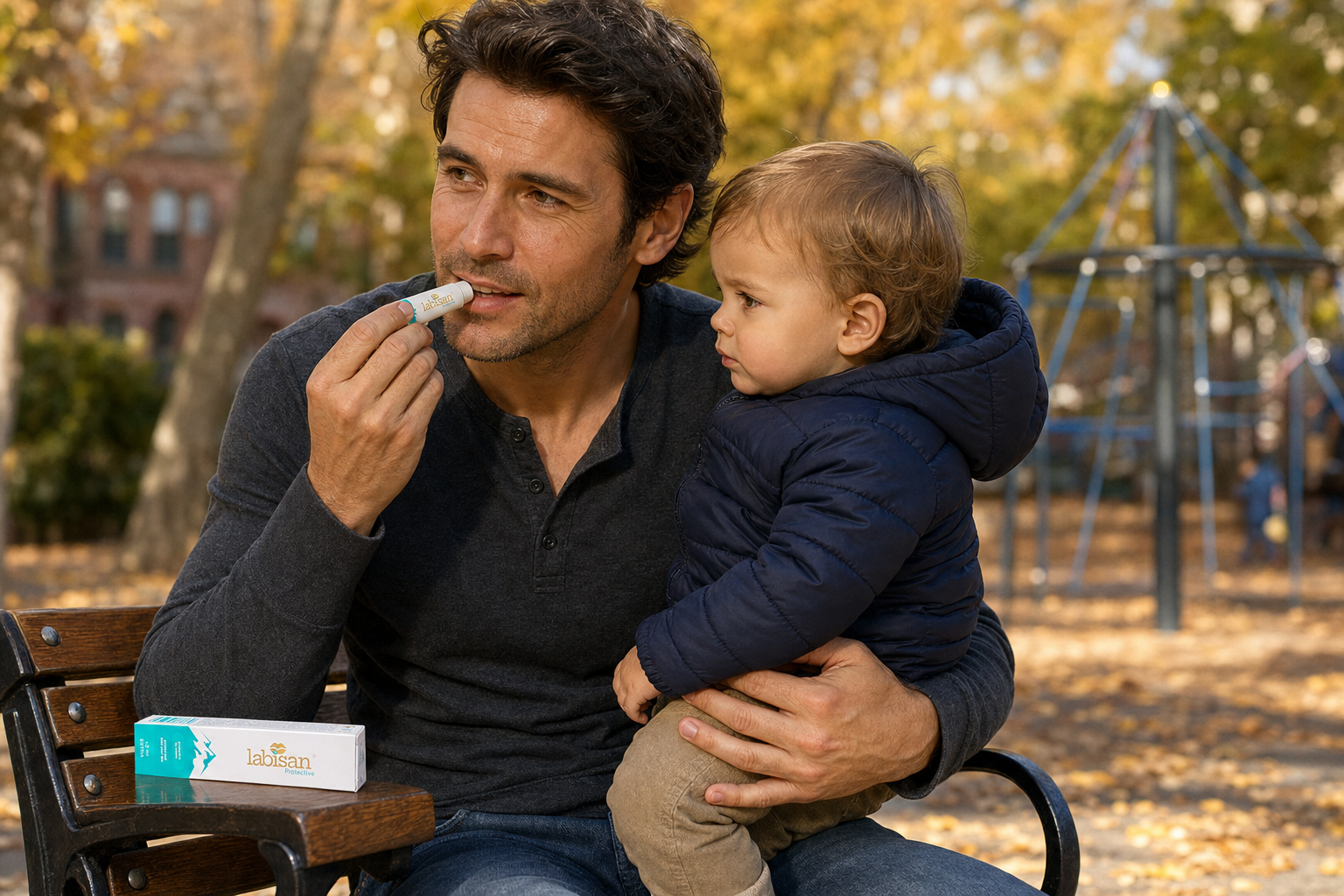
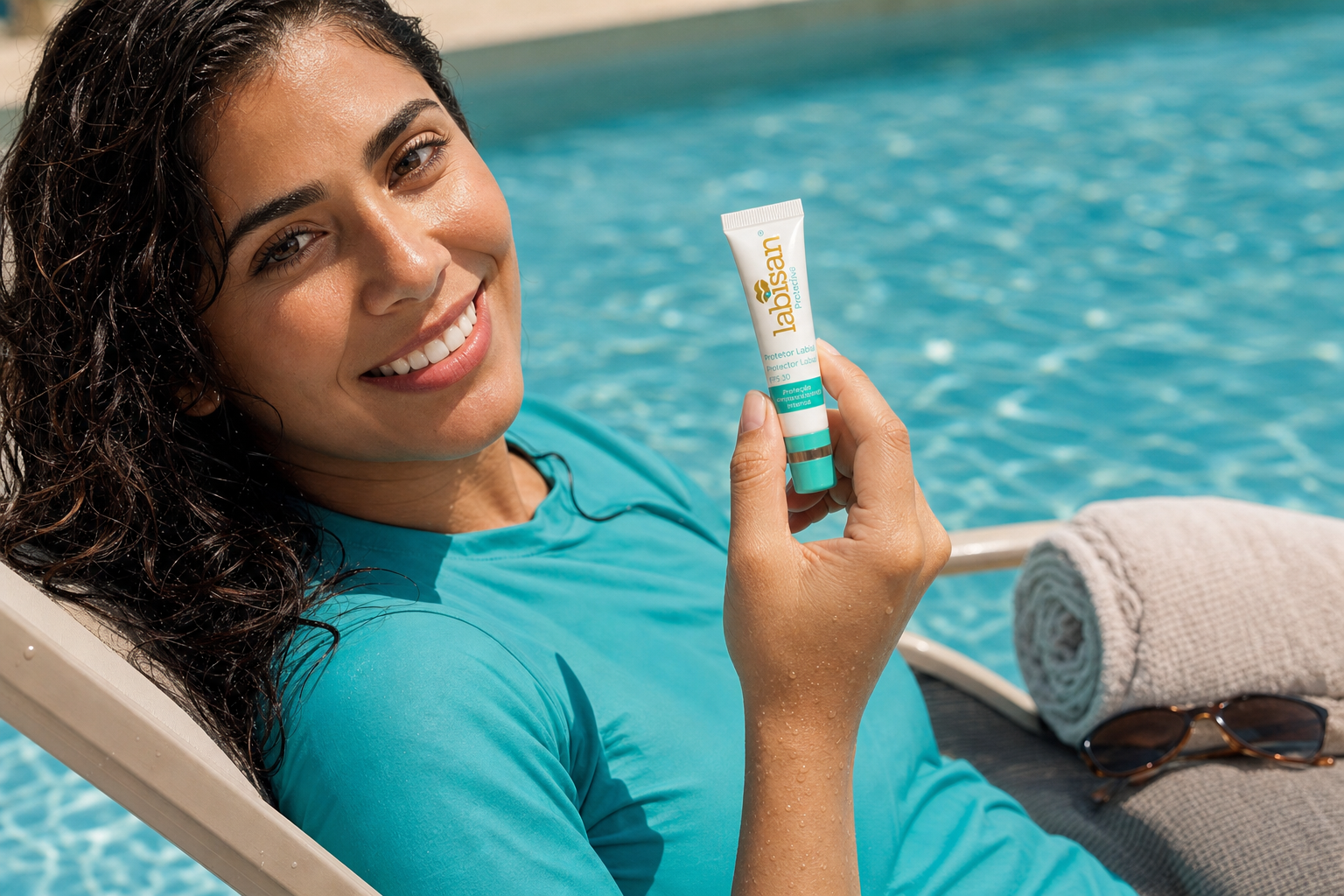
The Labisan Protective Lip Balm delivers 22 percent non-nano zinc oxide as a mineral SPF, blocking approximately 80 percent of UVB radiation at the lip surface. UVB is the wavelength most responsible for local immune suppression. By preventing the UV dose from reaching the lip dermis at all, the topical removes the trigger that causes about two-thirds of recurrences. This is the single highest-leverage intervention in the protocol on a population basis.
Zinc oxide also has documented direct antiviral activity against HSV-1 at the concentration delivered. It interferes with viral attachment to host cells and disrupts the lipid envelope of free virions. A continuous mineral film at the lip border thus acts as both UV block (preventing the trigger) and antiviral barrier (suppressing surface virions from a reactivation that does occur). Two mechanisms, one topical.
Interception point 2: graviola acetogenins raise the reactivation threshold
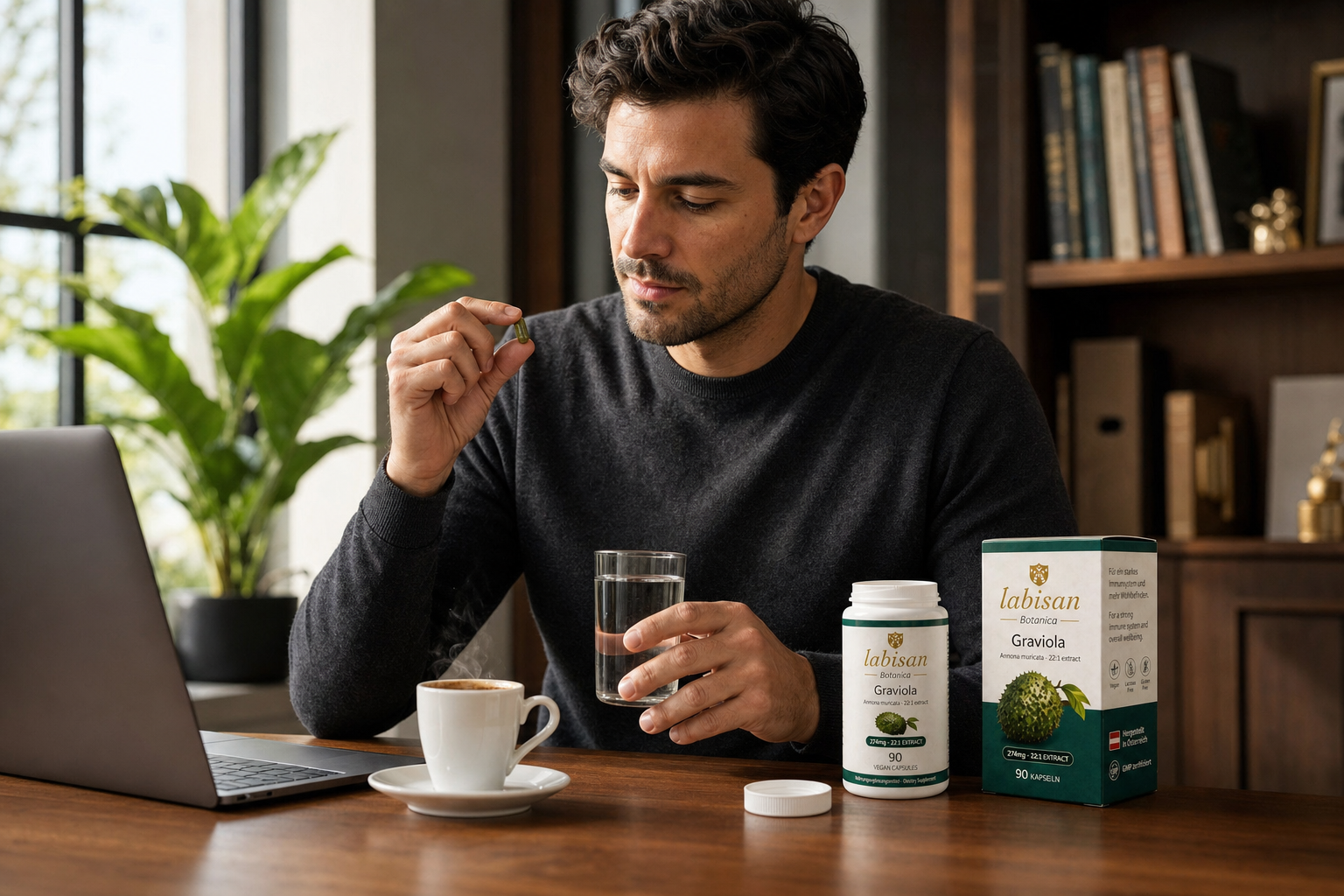
The 22:1 graviola fruit-extract capsule delivers annonaceous acetogenins systemically. These long-chain compounds interfere with mitochondrial complex I in stressed cells. HSV-1-infected cells, particularly during early reactivation, are in a metabolically stressed state because viral replication is energy-intensive. Acetogenins selectively reduce ATP production in these cells relative to healthy neurons, which slows replication and gives the local TRM cells more time to contain the reactivation before it produces visible disease.
The clinical effect is to raise the reactivation threshold. A trigger that previously crossed the line and produced an outbreak now crosses the same line, the same immune response engages, and the additional pressure from systemic acetogenins tips the outcome back to containment. The user does not feel anything happening because the reactivation is intercepted before symptoms manifest.
Interception point 3: graviola flavonoids accelerate clearance
Quercetin and kaempferol, the two major flavonoids in the 22:1 extract, are documented antiviral agents with activity against enveloped viruses including HSV-1. Their mechanism is twofold: direct disruption of viral envelope integrity, and modulation of host cell signalling pathways that the virus relies on for entry and replication.
On the protocol, plasma flavonoid concentration reaches steady state by approximately day 10 of continuous capsule dosing. From that point onward, any HSV-1 virion that breaks containment encounters a less hospitable replication environment. Reactivation events that do occur are smaller and resolve faster, which is why even treated outbreaks on the protocol compress from a 7 to 10 day natural course to a 5-day course.
Interception point 4: graviola alkaloids reduce the stress trigger upstream
Reticuline and coreximine, two of the dominant alkaloids in graviola extract, have parasympathetic nervous system effects. They reduce cortisol output and improve sleep depth. Users on continuous dosing typically report deeper sleep within 7 to 14 days, with downstream effects on perceived stress, mood stability, and immune resilience.
This addresses the third trigger class (chronic stress) at the upstream end rather than waiting for it to suppress T-cell function. By dampening the stress-axis activation, the alkaloid load reduces the probability that a stress trigger reaches the level required to suppress immune surveillance enough for HSV-1 reactivation. This is the slowest of the four interceptions to take effect (typically 4 to 8 weeks of continuous use) but it is the one that produces the most durable change in outbreak frequency on a 12-month timeline.
How the four points compound
Each interception alone would produce a partial benefit. UV block alone (topical only) reduces outbreaks by roughly the proportion of outbreaks that were UV-triggered for that user, typically 50 to 67 percent. Acetogenin and flavonoid systemic exposure alone (capsule only) would reduce outbreaks by raising the activation threshold across all triggers, typically 40 to 60 percent. Alkaloid stress-modulation alone takes longer to register but adds another 20 to 30 percent on a 12-month window.
Together the four interceptions act on independent variables. The combined effect is multiplicative not additive. A user starting at 6 outbreaks per year ends up at roughly 1 outbreak per year because each one of the four mechanisms is removing a portion of the trigger-to-outbreak pathway. Even a single remaining outbreak is typically smaller, shorter, and more easily contained because the immune system has been operating with continuous support.
Why the 12-month timeline
The reduction is gradual because the mechanisms have different time constants.
- Topical UV block is immediate. The benefit is fully present from day 1 of daily SPF use.
- Acetogenin and flavonoid systemic effect reaches steady-state plasma concentration at approximately day 10.
- Sleep and stress-axis modulation registers in 2 to 4 weeks.
- The downstream effect of better sleep and lower chronic cortisol on T-cell function takes 8 to 12 weeks to fully express.
- The behavioural feedback loop (the user, no longer worried about constant outbreaks, sleeps better, manages stress better, supports the system further) compounds across the 12 months.
The 6 to 1 figure is the endpoint pattern after the full 12-month adjustment, not an immediate result. A user at month 3 on the protocol may have observed only 1 outbreak versus their historical 2 in that window, and may interpret the data ambiguously. By month 12 the pattern is unambiguous because the comparison is against the previous year's full history.
The single thing the protocol does not do
The Labisan hybrid system does not eliminate the latent HSV-1 reservoir in the trigeminal ganglion. No commercially available product does. Aciclovir, valacyclovir, and famciclovir do not. Vaccine candidates remain in development, and our review of the 2026 HSV cure research pipeline and what is realistic explains why a true latency-clearing cure is still years away. The Labisan position is honest about this. Containment improvement is what is achievable, and the documented pattern is that continuous-prevention containment produces a similar real-world outcome to suppressive antiviral therapy without the prescription, without the renal and hepatic exposure of long-term pharmaceutical use, and without the resistance pressure that low-dose chronic antivirals can produce.
Practical implications
The biology above produces three practical conclusions for anyone running the protocol or considering it.
Continuous use beats episodic use. Stopping and restarting the capsule defeats the steady-state mechanism. The plasma concentration of acetogenins and flavonoids takes 10 days to build and decays over a similar window when dosing stops. A user who takes 2 weeks of capsules then skips a month is reverting to baseline biology for that month. Daily continuous dosing is what compounds.
Topical SPF matters even when no outbreak is in progress. The 2-application-per-day maintenance topical is the cheapest insurance against the dominant trigger class. Skipping the morning SPF on a bright winter day at altitude is the most common failure mode in long-term users.
The 12-month figure is real but requires the full 12 months. Most users see clear benefit by month 3 and most users continue indefinitely from month 6. The 6-to-1 figure is the year-over-year comparison that emerges when the protocol has run for a full calendar year. Track your own outbreaks against your own previous year, not against the published figure, because individual baselines vary.
The Labisan hybrid system is the Labisan Protective Lip Balm plus the Labisan 22:1 Graviola Capsules, run on the protocol above. Both are available individually and as a bundle on labisan.shop.