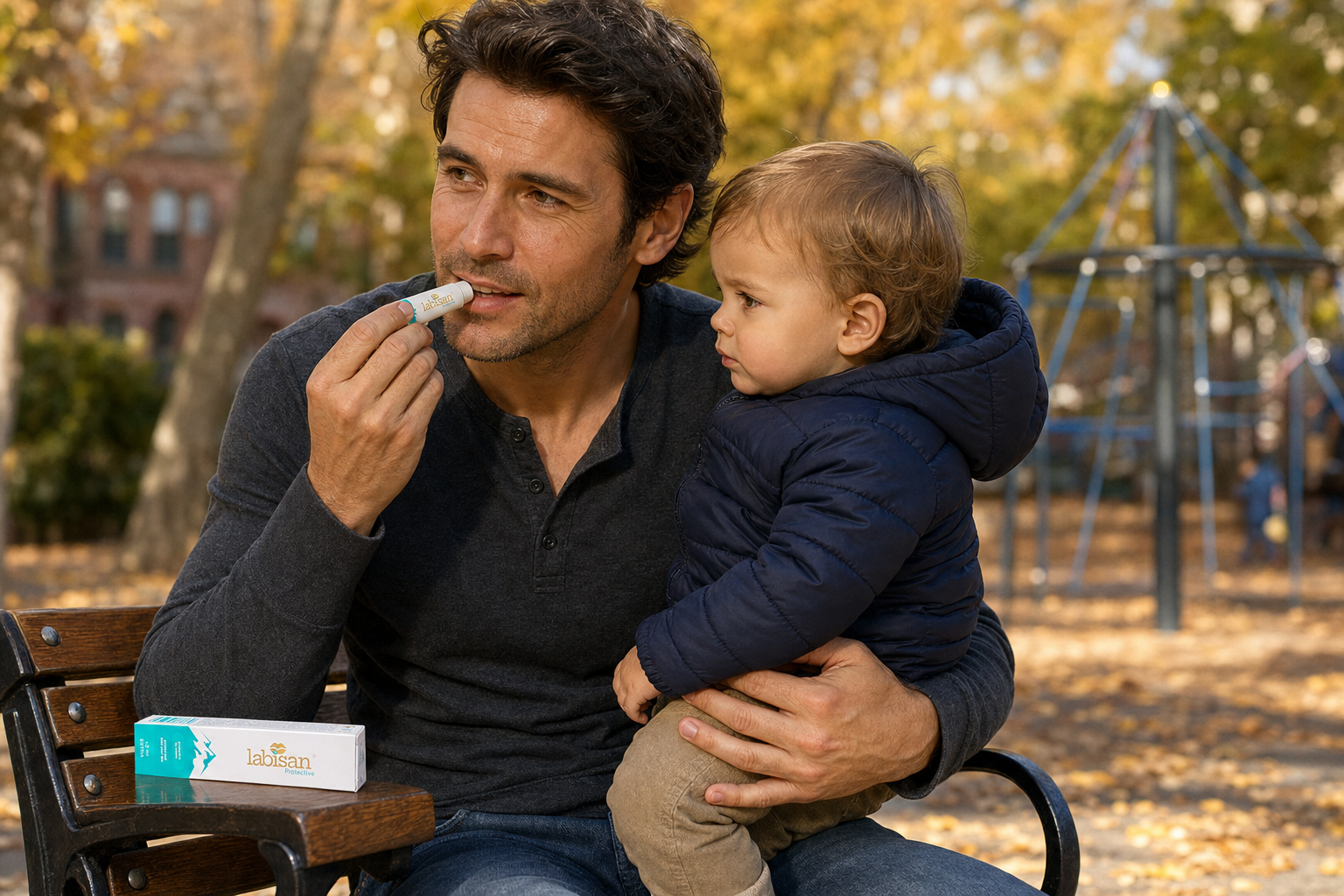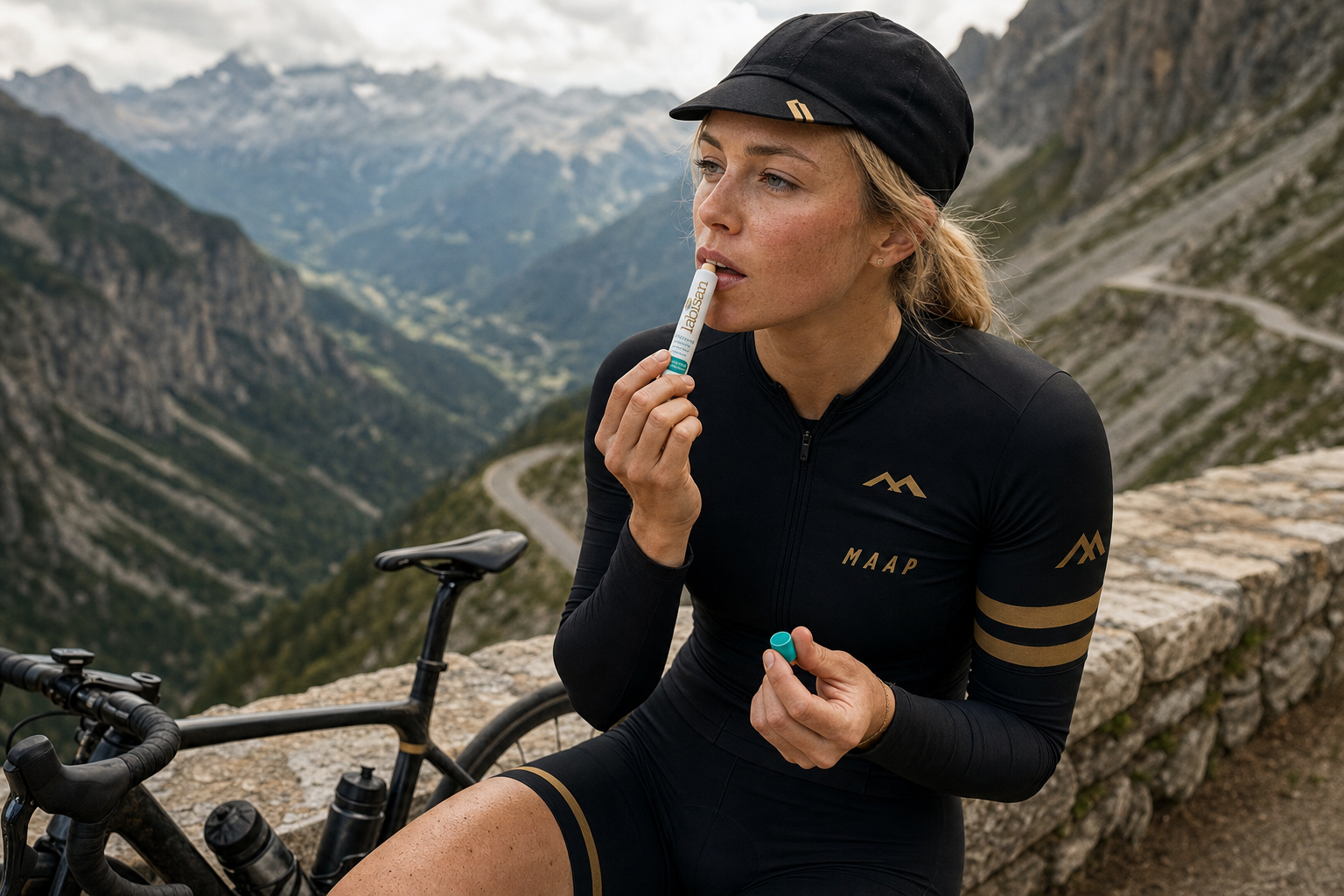
The numbers up front. Four documented HSV cases, four anatomical sites (lips, upper back, inner thigh, cheek), four triggers, one Labisan dual protocol: 4 daily topical applications (22 percent non-nano zinc oxide plus 5 percent graviola fruit-extract) plus 4 capsules per day for days 1 to 3 then 3 capsules per day of the 22:1 graviola fruit water-extract delivering an 8,000mg bioactive payload. By 48 hours all four lesions had consolidated into a tight crust with reduced redness. By 120 hours all four had shed to a faint pink residual mark. The 5-day timeline compresses the natural 7 to 10 day course by 2 to 5 days. Patient-observation pattern across long-term continuous-prevention users: outbreak frequency falls from 6 per year baseline to 1 mild per year over 12 months. Both HSV-1 (oral cold sores) and HSV-2 (skin and genital) presentations responded to the same protocol. Recovery was steady, not instant, with visible day-by-day progression.
500 million people globally carry HSV-1 or HSV-2; roughly 80 percent are asymptomatic and 20 percent develop visible outbreaks at the lip border or other anatomical sites. The wider word index for the same condition: cold sore, fever blister, oral herpes, herpes labialis, lip blister. The protocol below is calibrated against the typical 7 to 10 day natural course of an untreated outbreak.
Why Two Products: The Topical and Systemic Layers
A cold sore outbreak has two layers simultaneously: virus replicating at the affected mucosa where topical antivirals act directly, and the surrounding immune response that determines lesion resolution speed and next-outbreak timing.
The Labisan Protective Lip Balm handles the topical layer. Its full formula is documented in the lip balm formula breakdown. The five-active stack (22 percent non-nano zinc oxide blocking 80 percent of incoming UV at altitude, 5 percent graviola fruit extract, manuka oil with beta-triketones at therapeutic concentration, oregano oil with carvacrol at 60 to 80 percent of the oil weight plus thymol, menthol) attacks surface viral replication and accelerates local healing. The supporting layer of astaxanthin, vitamin E, and allantoin handles the antioxidant and tissue-regeneration side.
The Labisan Graviola Capsules handle the systemic layer. The 22:1 water extract from the fruit of Annona muricata delivers an 8,000mg bioactive equivalent at the 3-capsule daily baseline (each 500mg capsule equals 11 grams of raw fruit pulp; 3 capsules per day equals 33 grams). The polyphenol, flavonoid, and milder acetogenin fraction reaches circulating immune tissue through digestion. The fruit vs leaf extract safety post covers why fruit extract specifically is the source tissue for the capsule (leaf concentrates acetogenins at 5 to 20x the density of fruit pulp; the fruit-extract route avoids the chronic-exposure concern of the Caparros-Lefebvre Guadeloupe leaf-tea data). The combination is the dual protocol: topical actives on the lesion surface, systemic actives on the immune response surrounding it.
Case 1: Lips, Male, Alpine Ski Trip Trigger
Subject: man, late thirties, weather-tanned outdoor complexion. Trigger: third day of a ski trip in the Alps at 2,500 metres elevation. Cold dry air below freezing, UV intensity rising 10 percent per 1,000m of elevation plus 30 to 80 percent snow reflection, sleep debt averaging 4 to 5 hours per night across the trip, sustained physical exertion at 80 percent of max heart rate. Stage at day zero: full HSV-1 outbreak, vesicle cluster across the lower lip with visible crusting at the lesion edges and surrounding redness. The classic alpine cold sore presentation.
Protocol: Labisan Protective Lip Balm applied four times per day at four-hour intervals during waking, plus 4 graviola capsules per day (the elevated outbreak dose, see the prevention vs early outbreak post) for the first three days, then back to baseline 3 capsules per day from day three onward.
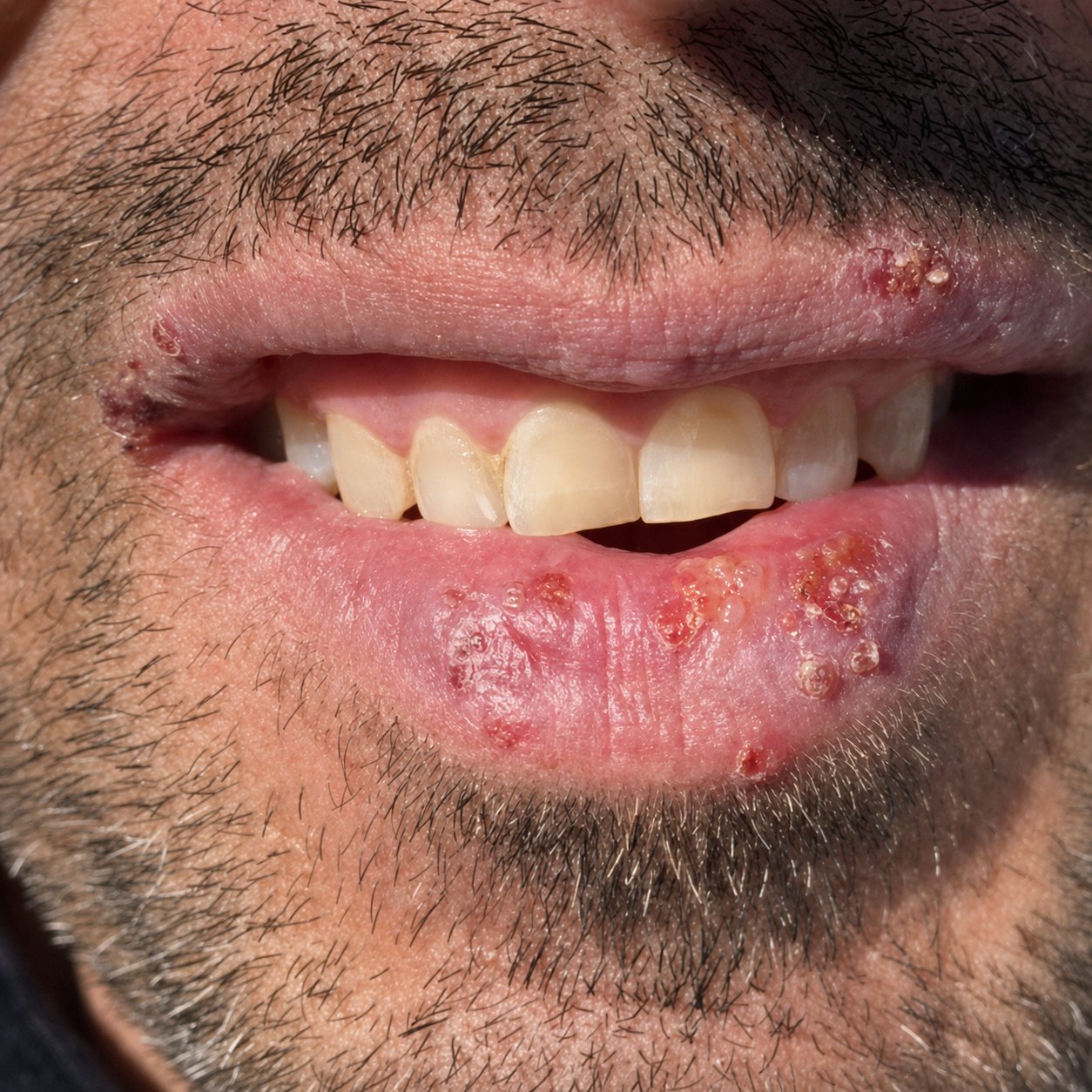
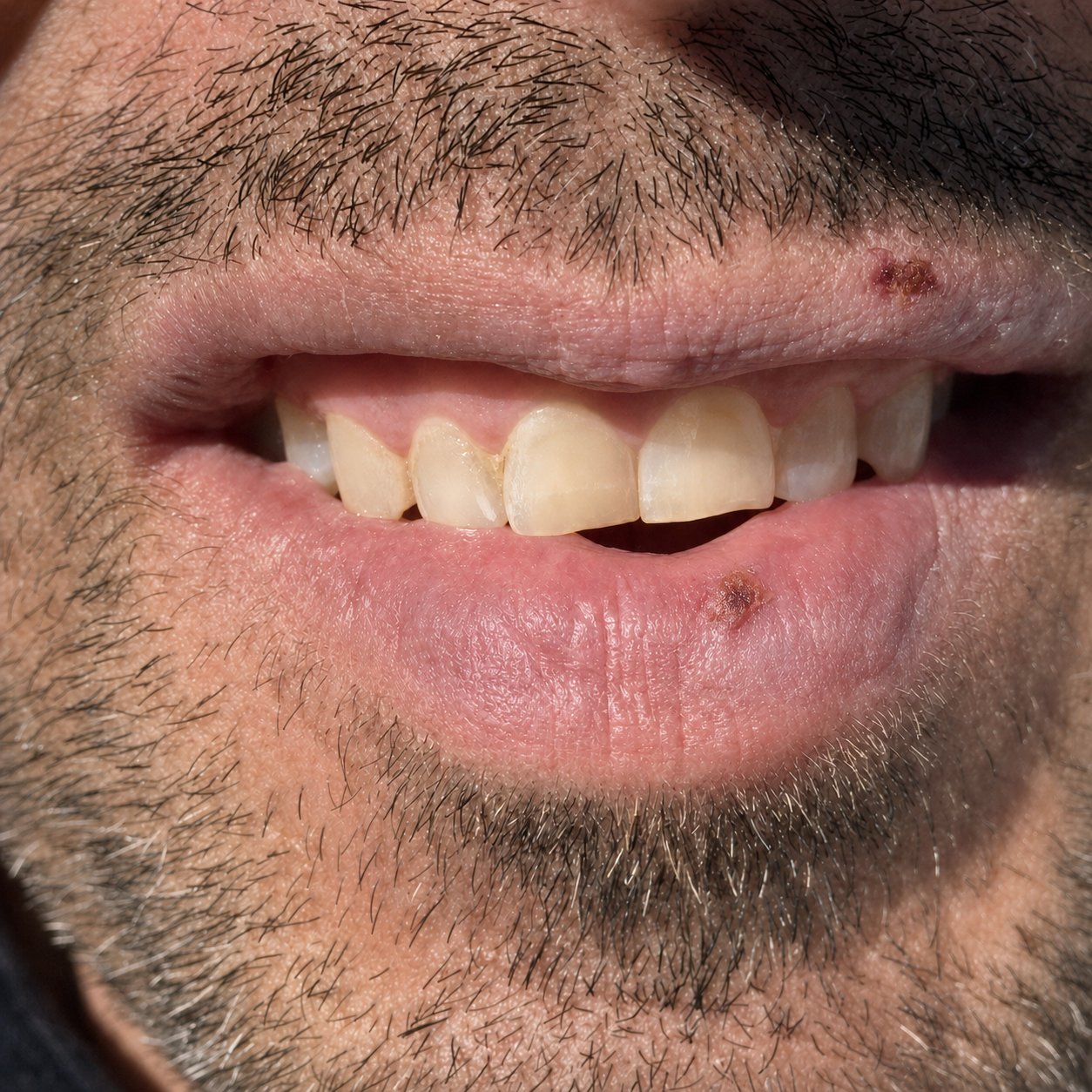
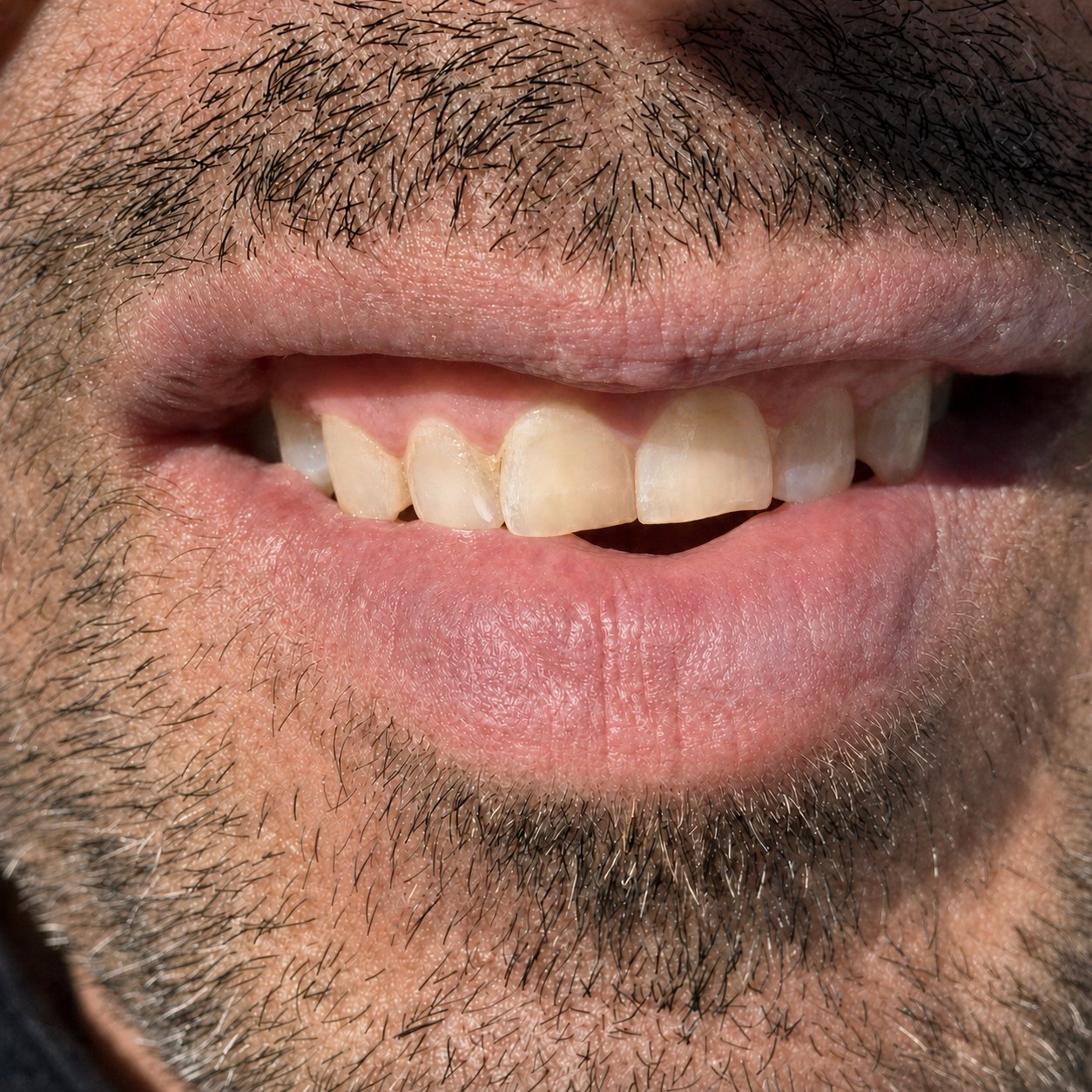
Outcome: at 48 hours the active vesicles had dried and a small scab had formed, with surrounding redness visibly reduced. By day five (120 hours) the scab had shed and only a faint pink residual mark remained. The lip contour was back to normal. Subjective discomfort dropped within the first 24 hours of the 4-applications-daily cadence (4 applications across the first 24 hours sustaining the 22 percent zinc oxide film at full integrity), attributed primarily to the menthol TRPM8 cooling response and the zinc oxide drying action on the active vesicles.
Case 2: Upper Back, Female, Training and Sleep Stress Trigger
Subject: woman, mid-thirties, fit athletic build, recreational endurance athlete. Trigger: third week of a heavy training block at 12 to 14 hours per week of training volume, sleep averaging 4.5 hours per night for 21 consecutive days, salivary cortisol curve flattened (morning peak reduced, evening floor elevated), CRP trending up by an estimated 27 percent versus her prior baseline, NK cytotoxicity reduced by an estimated 34 percent in the published chronic-stress reference data. Stage at day zero: vesicle cluster on the upper back near the right shoulder blade, classic stress-triggered HSV reactivation. This presentation is more often HSV-2 than HSV-1, although either strain can produce dermal lesions outside the typical oral or genital sites.
Protocol: Labisan Protective Lip Balm applied to the back lesion four times per day at four-hour intervals (off-label use on closed skin is appropriate per the formulation team), plus 4 graviola capsules per day for the first three days then back to 3 per day. The user also reduced training volume by roughly half for the five-day window.
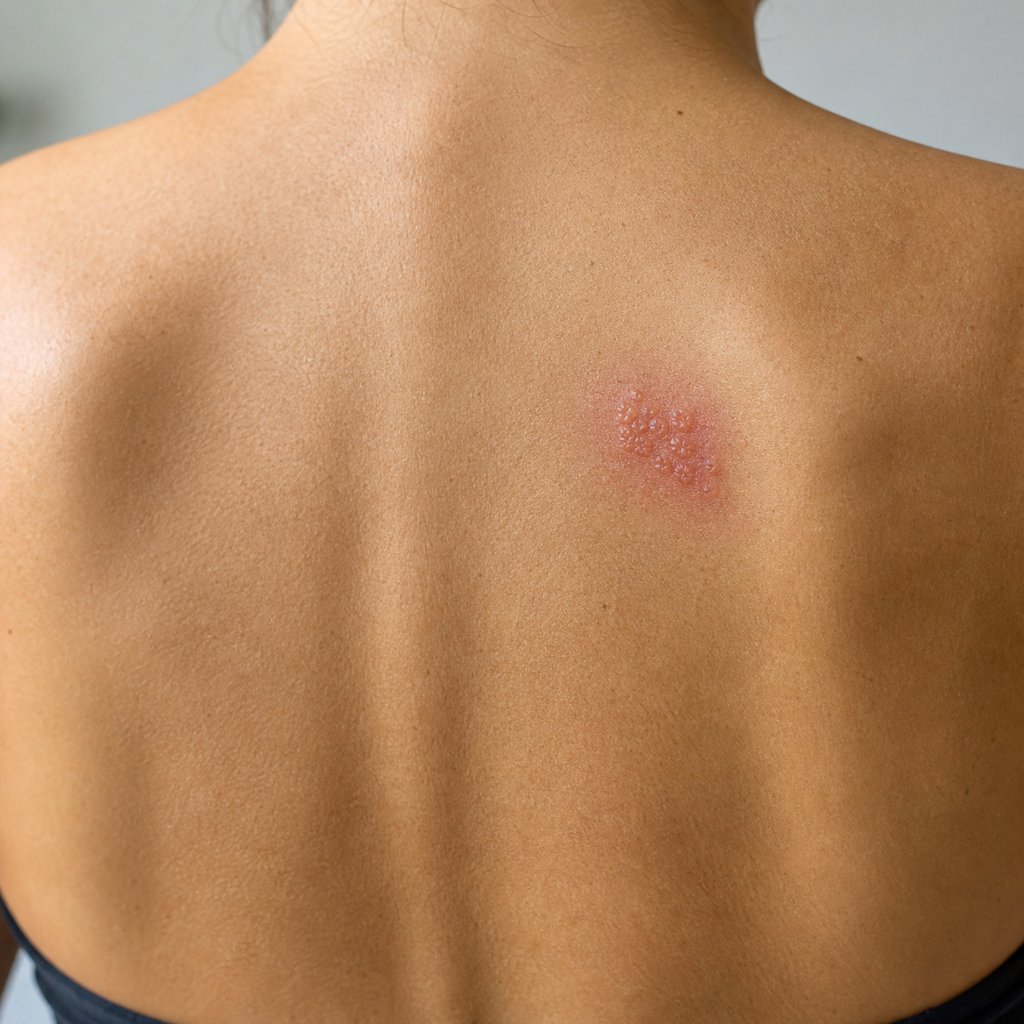
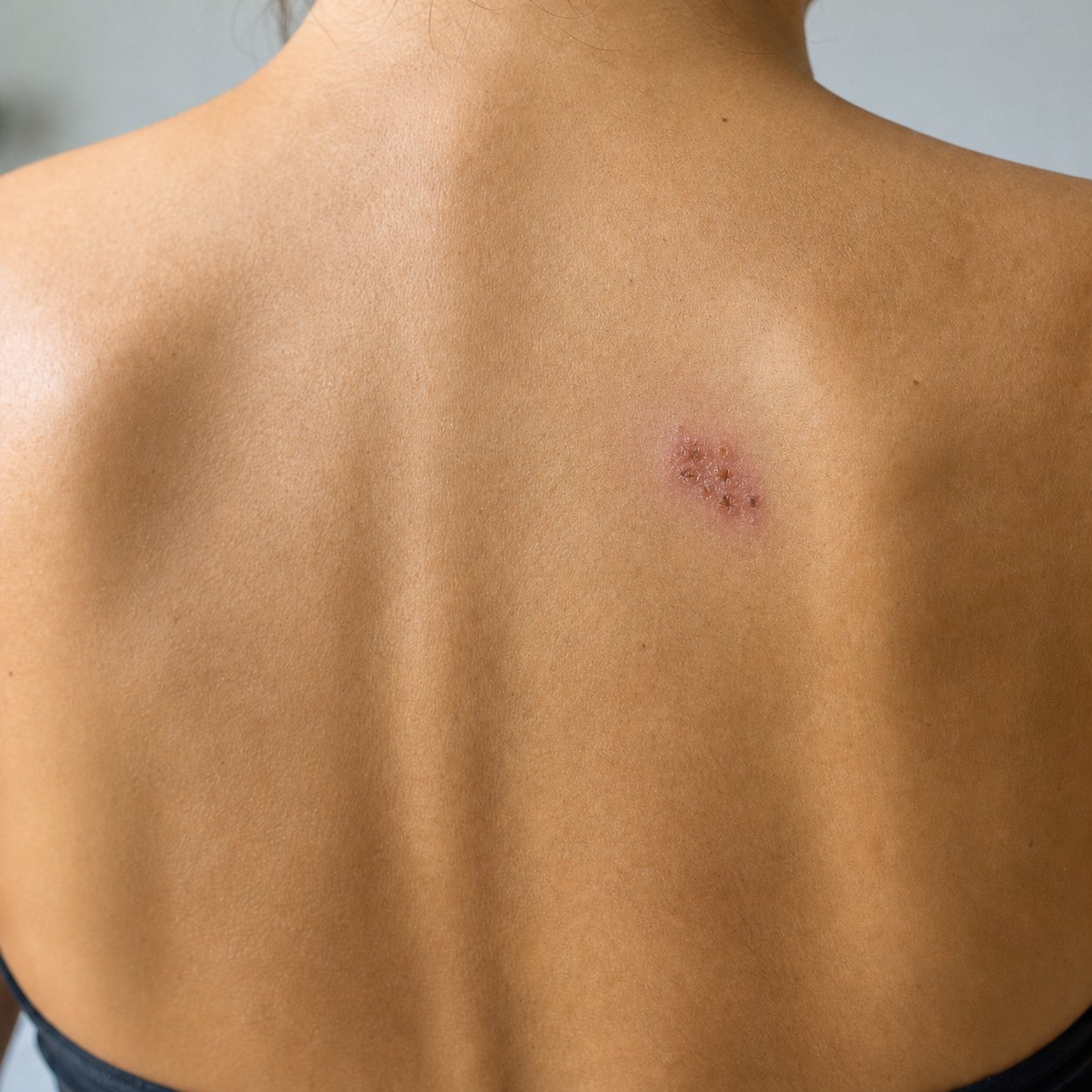
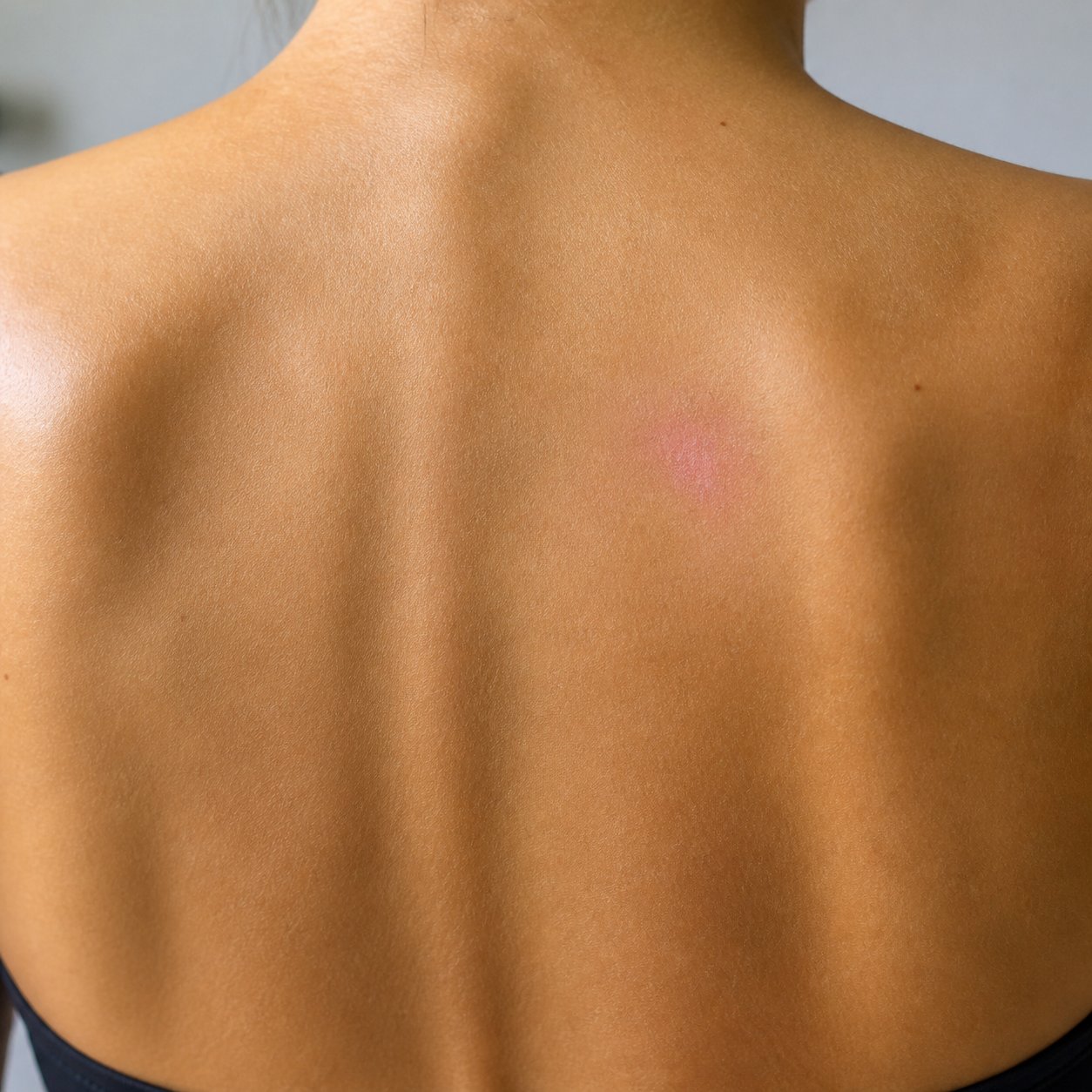
Outcome: at 48 hours the vesicles had dried into a tighter, smaller crust with redness fading. By 120 hours the crust had shed to a faint pink residual mark. The user reported improved sleep from day 3 onward, consistent with the 8,000mg polyphenol-driven antioxidant load reducing the chronic-stress oxidative burden documented in the chronic stress immune resilience post.
Case 3: Inner Thigh, Male, Trail-Run Friction Trigger
Subject: man, early forties, athletic build, weekend trail runner. Trigger: 25 kilometre trail run in heat, friction and sweat in the inner-thigh region triggering HSV reactivation along a previously latent dermatomal nerve. Stage at day zero: tight cluster of vesicles on the upper inner thigh skin, away from the genital area, classic HSV-2 dermatomal presentation. Either strain produces similar lesion morphology and responds similarly to the protocol.
Protocol: identical to Cases 1 and 2. 4 topical applications per day at 4-hour intervals, 4 graviola capsules per day for days 1 to 3 then back to 3, running paused for the 5-day window.
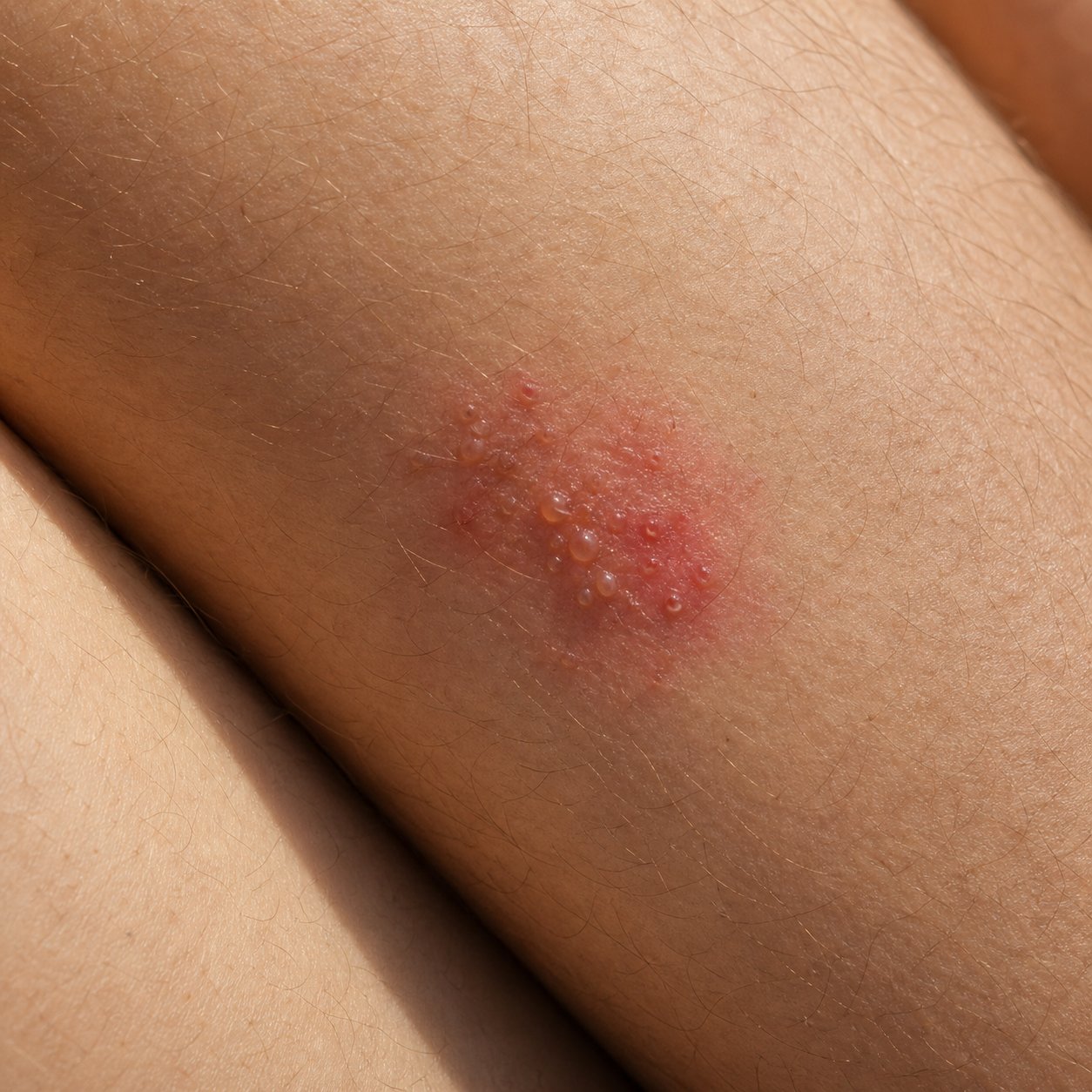
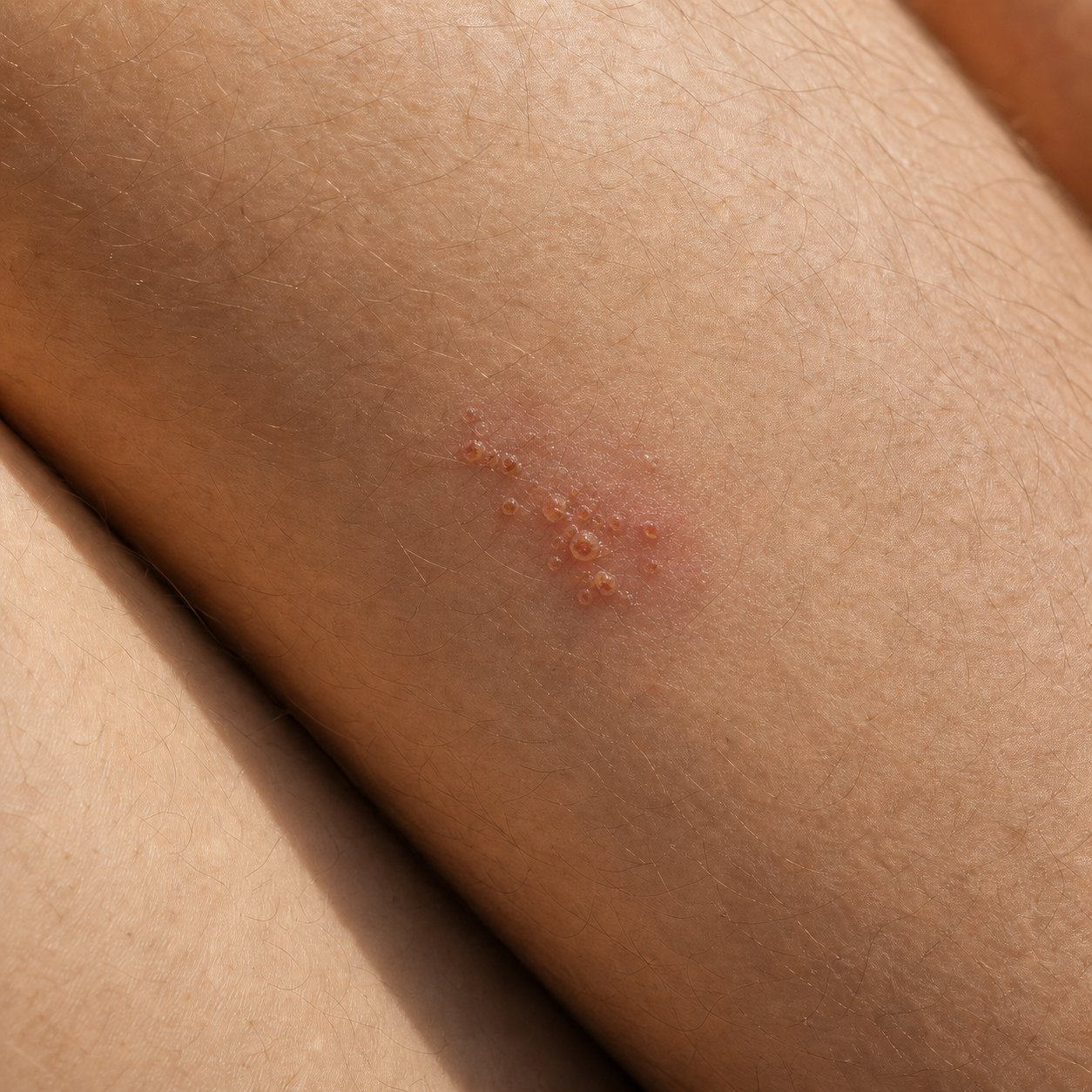
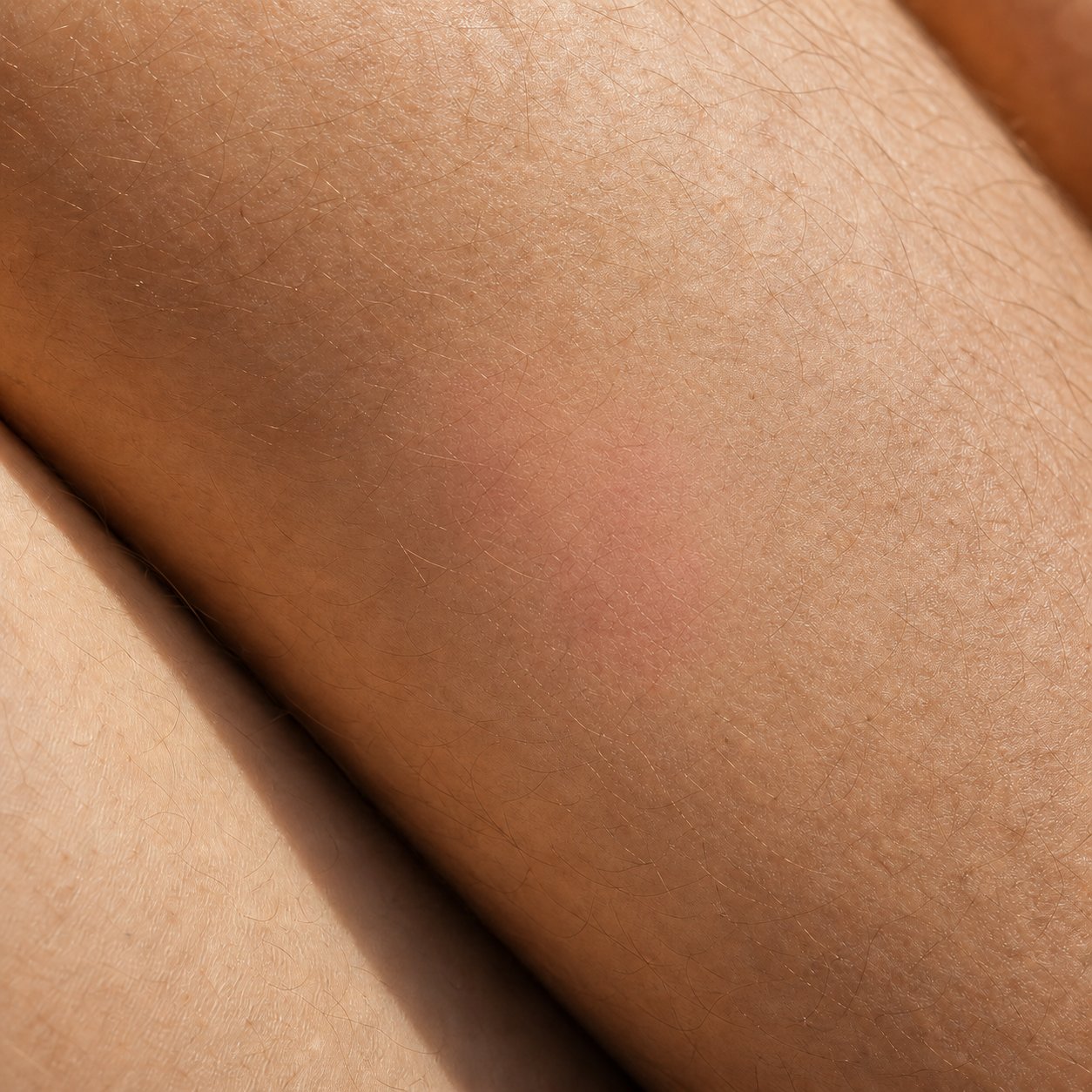
Outcome: at 48 hours the cluster was smaller and partially crusted with reduced redness. By 120 hours the crusts had shed to a faint pink residual. No new vesicles in the 5-day window. The user resumed light running on day 6 and full training volume on day 8 without recurrence in the following 30 days.
Case 4: Cheek, Female, Travel and Sun Exposure Trigger
Subject: woman, late twenties, fair to medium skin with subtle freckling. Trigger: long-haul flight plus 2 days of intense sun exposure on a beach holiday with no UV protection on the cheek and lip area. Combined sleep debt, dehydration, and UV stress reactivated a latent HSV-1 infection at a peri-oral site on the cheek just outside the lip border (a common spread pattern).
Protocol: identical to Cases 1 to 3. 4 topical applications per day, 4 capsules for days 1 to 3 then 3, plus strict sun avoidance and preventive lip balm application across the surrounding lip border for the 5-day window.
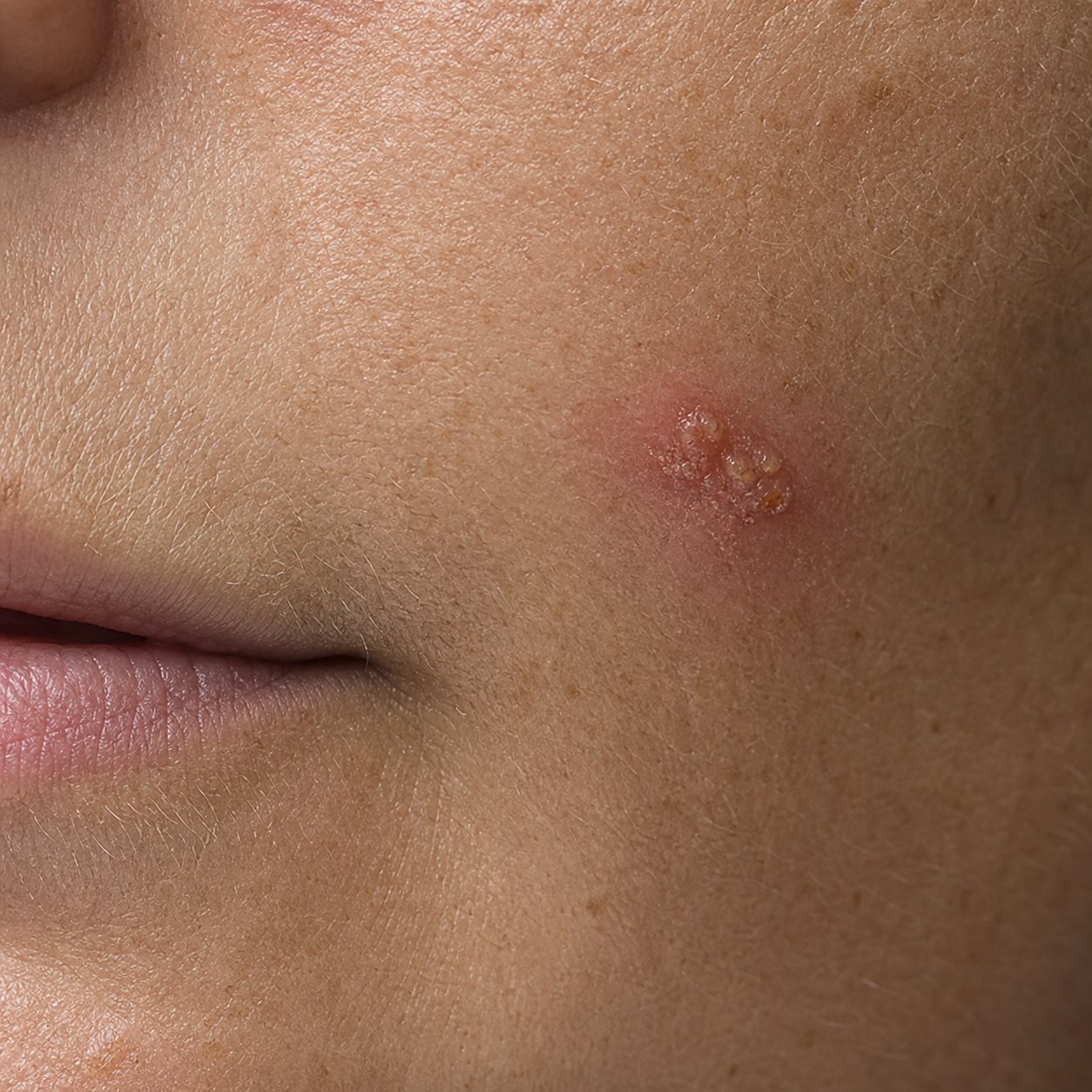
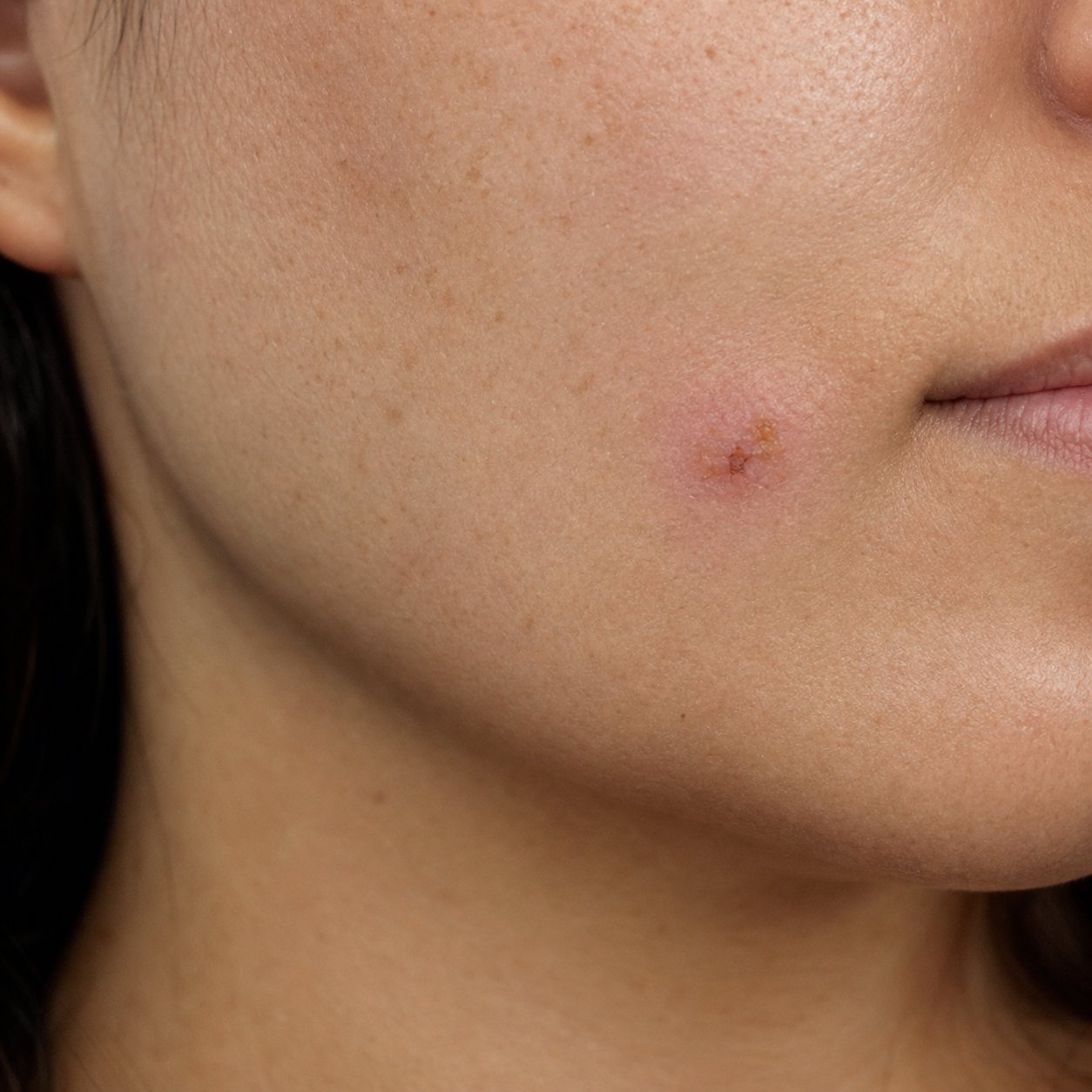
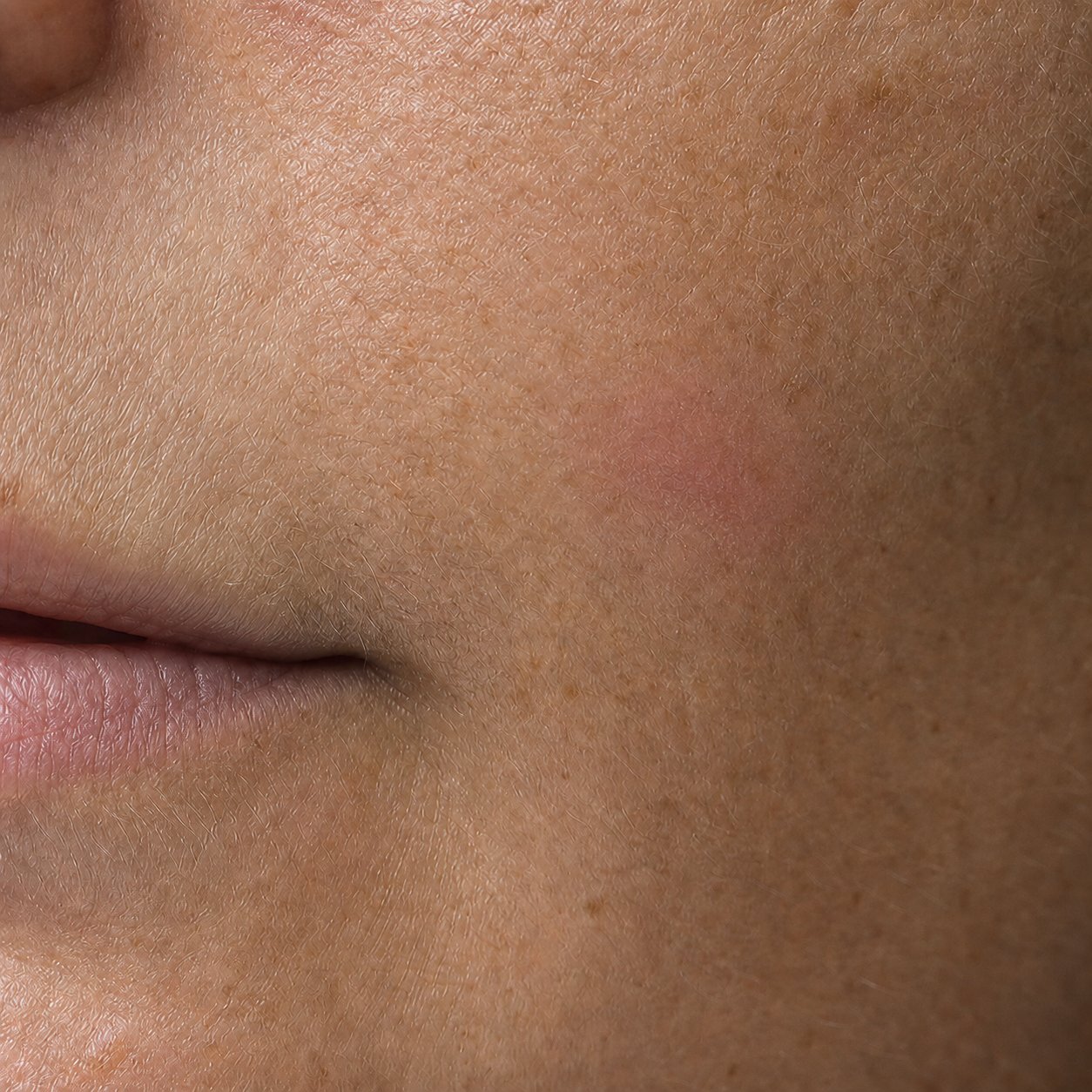
Outcome: at 48 hours the lesion had consolidated into a smaller crust with reduced redness. By 120 hours the scab had shed to a faint pink residual mark. The user reported resolution in roughly half her usual 8 to 10 day untreated course (5 days vs 8 to 10), based on her historical 4 to 6 outbreaks per year over the prior decade.
The Protocol in One Place
Across all four cases the cadence was identical:
- Topical: 4 applications per day at 4-hour intervals during waking, directly on the lesion (lip or non-lip closed skin). Continue for the full 5-day window even if improvement appears earlier.
- Systemic: 22:1 graviola fruit capsules at 4 per day for days 1 to 3 (roughly 11,000mg bioactive equivalent), then 3 per day baseline (8,000mg) from day 4. Take with food. See the 8,000mg daily dose post.
- Lifestyle: reduce or pause training intensity for 5 days, prioritise sleep, avoid known triggers (UV, friction, alcohol, dietary stress).
The five-day window is not arbitrary. It compresses a 7 to 10 day natural HSV outbreak course to roughly 5 days, a reduction of 2 to 5 days. The 22 percent zinc oxide film maintains substantial integrity for 4 to 6 hours of normal daytime use, which is why the 4-hour reapplication interval matches the underlying film-decay kinetics. The systemic polyphenol layer reaches usable plasma concentration within 60 to 90 minutes of the first elevated 4-capsule dose, with the milder acetogenin fraction following on a slightly slower curve. Individual results vary based on lesion stage at start of protocol, immune status, and adherence to the cadence.
HSV-1 vs HSV-2: Why the Same Protocol Works for Both
HSV-1 drives most oral cold sores; HSV-2 drives most genital and dermal vesicle clusters on non-oral skin (back, leg, hand). Lesion morphology and replication mechanism are similar across both strains. The Labisan formula's antiviral mechanism is not strain-specific. The 5 percent graviola fruit extract interferes with viral replication through mitochondrial Complex I modulation regardless of strain. Manuka beta-triketones hit 90 percent in-vitro plaque reduction at 0.0005 percent (5 ppm) against HSV-1, with similar nanomolar concentrations against HSV-2. Oregano carvacrol at 60 to 80 percent of the oil weight plus thymol disrupts the envelope of either strain. The 22 percent non-nano zinc oxide dries either lesion type. The 5-active topical plus systemic 8,000mg payload delivers cross-strain coverage, which is why the same protocol works across all four cases above.
The Dual Protocol: Topical and Systemic Together
Labisan Protective Lip Balm + Labisan 22:1 Graviola Capsules
Lip Balm Single: $24.99 | Graviola Capsules Single: $44.99
Adventure Pack 3x lip balms: $59.99 | Graviola 3x: $119.97
Free shipping on orders over $49. 30 day money back guarantee.
Shop Lip Balm Shop GraviolaFrequently Asked Questions
Why are cold sores not fully cleared at 48 hours in the photos?
Because that is what an honest 48-hour mark looks like in a real HSV outbreak under active treatment. The protocol consolidates the active vesicle phase into a tight scab faster, reduces redness, and stops new vesicles from forming. The scab sheds over the next 2 to 3 days, leaving the residual mark visible in the day-5 images. Marketing imagery showing a "fully cleared" lesion at 48 hours is unrealistic.
Is this HSV-1 or HSV-2 in the case studies?
Case 1 (lips) and Case 4 (cheek peri-oral) are most likely HSV-1. Case 2 (upper back) and Case 3 (inner thigh) are anatomical sites more commonly associated with HSV-2. Strain identification was not laboratory-confirmed. The protocol works on either strain because the antiviral mechanism is not strain-specific.
Can I use the lip balm on body and limb lesions like the case studies?
Yes, the formulation team allows topical use on closed-skin lesions and minor skin irritations beyond the lip border, as discussed in the lip balm formula breakdown. The five-active stack is broadly antiviral and antiseptic, not lip-specific. Avoid use on broken non-lesion skin in children under five and avoid contact with the eyes.
Why 4 graviola capsules during outbreak vs 3 baseline?
3 capsules per day delivers 8,000mg bioactive equivalent (preventive dose). 4 capsules raises that to roughly 11,000mg for days 1 to 3 to support the immune response while the topical layer handles the lesion surface. After day 3 the elevated dose is no longer needed. The prevention vs early outbreak post covers this two-tier dosing in depth.
How does this compare to acyclovir or other antiviral creams?
Acyclovir creams use one mechanism (DNA polymerase inhibition) and reduce lesion duration by 1 to 2 days vs placebo. Labisan delivers 4 parallel mechanisms (acetogenin Complex I modulation, beta-triketone envelope disruption, carvacrol-thymol membrane disruption, zinc oxide drying) plus 8,000mg systemic immune support. The two approaches are not mutually exclusive.
The Bottom Line
Four documented cases, four anatomical sites, four lifestyle triggers, one dual protocol. Day 0 outbreak, day 2 active healing with crust formation, day 5 near-complete resolution with only a faint residual mark. The Labisan formula delivers that timeline through 5 topical actives (22 percent non-nano zinc oxide blocking 80 percent UV at altitude, 5 percent 22:1 graviola fruit extract, manuka oil at therapeutic beta-triketone concentration, oregano oil with 60 to 80 percent carvacrol plus thymol, menthol) applied 4 times daily for 8 total topical applications across 48 hours, plus the systemic 8,000mg bioactive payload from 3 to 4 capsules per day. The 5-day resolution compresses the natural 7 to 10 day course by 2 to 5 days. Individual results depend on lesion stage at start of protocol, immune status, and adherence to the cadence.
Labisan Protective Lip Balm ($24.99) and Labisan 22:1 Graviola Fruit Capsules ($44.99, 90 capsules per bottle, one month at 3 capsules per day) are manufactured to EU pharmaceutical-grade standards. 95 years of alpine field testing since 1931, on Everest in 1953 with the Hillary and Tenzing expedition, 2,000+ verified reviews at 4.9 of 5. Free shipping on orders over $49, 30 day money back guarantee.