
The decision a herpes simplex virus carrier makes when they feel the first prodrome itch is more important than any other decision in the entire outbreak cycle. The trigeminal ganglion has reactivated. The virus is travelling down the sensory nerve to the lip surface. The visible lesion is hours away, not days. What happens in the next 48 to 72 hours determines whether the user gets a full-cycle outbreak or a milder version that resolves faster. The Labisan Graviola Capsules protocol recognises this window with a distinct dose recommendation, and most graviola brands on the market do not. This article walks through the two protocols, the underlying reasoning, and why the single-dose-fits-all approach is a category-wide blind spot.
Two protocols. Daily prevention runs three capsules per day continuously, one with each main meal, as covered in the three-capsule daily dose post. Early outbreak intervention bumps to four or five capsules per day for three weeks starting at the first itch, then returns to baseline. The mechanistic reason for the higher acute dose is the prodrome window biology: viral replication is rising, the immune response is mobilising, and a higher antiviral compound exposure during this 21 day window produces a different outcome than the standard prevention dose can achieve. This is the documented Labisan protocol pattern from long-term-user observation across the original graviola formulation.
The Prevention Protocol: Three Capsules a Day, Continuous
The baseline use case is the herpes simplex virus carrier with established outbreak history (whether they currently have an active lesion or not), who wants to reduce annual outbreak frequency over the longer term. The protocol for this user is three capsules per day, indefinitely, with a one-year-on / one-year-off cycle covered in the cycling protocol post.
The mechanism that matters at this dose is sustained polyphenol and optimised-acetogenin tissue presence at concentrations sufficient to support the immune layer's ability to suppress reactivation events as they occur. The Caribbean and South American daily-fruit-consumption studies of Annona muricata map to this dose range when the 22:1 fruit-extract ratio is applied. Three capsules per day delivers an 8,000mg bioactive payload, sufficient for sustained immune support without the higher acute load that becomes necessary during an active reactivation.
The outbreak frequency reduction the formulation team observes in patients on this protocol is the documented reference: from a baseline of 6 outbreaks per year down to 1 mild outbreak per year over twelve months of consistent use. That is the dose-response signal the daily prevention recommendation is calibrated to deliver, and the reason the 90-capsule, 30-day, 8,000mg-bioactive-payload bottle structure exists.
The Itching Window Protocol: Four to Five Capsules for Three Weeks
The acute case is different. The user feels the prodrome itch, recognises that an outbreak is reactivating, and wants to either prevent the visible lesion entirely or shorten and soften its course. The protocol for this user is to bump from three capsules per day to four or five capsules per day starting on the day of the first itch, continue at the higher dose for three weeks, then return to the baseline three-capsule prevention protocol.
Three reasons the higher dose works during this window. First, viral replication is rising rapidly during the prodrome and early replication phases. Higher circulating antiviral compound exposure during this window produces measurably different outcomes than the steady-state prevention dose. Second, the immune response is mobilising and benefits from a higher polyphenol antioxidant load to support the inflammatory cascade without producing collateral oxidative damage to surrounding tissue. Third, three weeks is the duration the formulation team observes is necessary to fully cycle through the reactivation event, including the post-resolution immune-memory consolidation that determines how easily the next reactivation will occur.
The dose range four to five capsules per day is meaningful. Four capsules per day delivers roughly 33 percent more bioactive load than the prevention dose; five capsules delivers roughly 67 percent more. The user choice between four and five depends on individual outbreak history (more severe baseline outbreaks support five capsules), body size, and tolerance. The upper bound is five for the three-week acute window; going higher does not appear to produce additional benefit and is not the recommended cap.
Why Most Brands Miss This Distinction
The single-dose recommendation that dominates the graviola category is a marketing artefact, not a biology recommendation. A brand selling a 60-capsule bottle at one capsule per day is constrained to a flat protocol because any acute-window bump would drain the bottle faster than the marketing positioning allows. A brand selling a 90-capsule bottle at one capsule per day has the same constraint. The Labisan 90-capsule bottle, designed around three-capsule daily dosing, is one month of prevention; the same bottle covers most of the three-week acute window, which is why the prevention-plus-intervention shape works on a single bottle structure.
The other reason is that most graviola brands do not have the patient observation depth to identify the itching-window distinction. The pattern requires consistent user feedback over months and years to surface, and a brand selling on a generic supplement marketplace does not see the same user across multiple outbreak events the way a heritage brand with a consistent customer base does. Labisan's protocol guidance comes from the specific clinical observation pattern in long-term users, not from a generic supplement marketing playbook.
How to Recognise the Itching Window
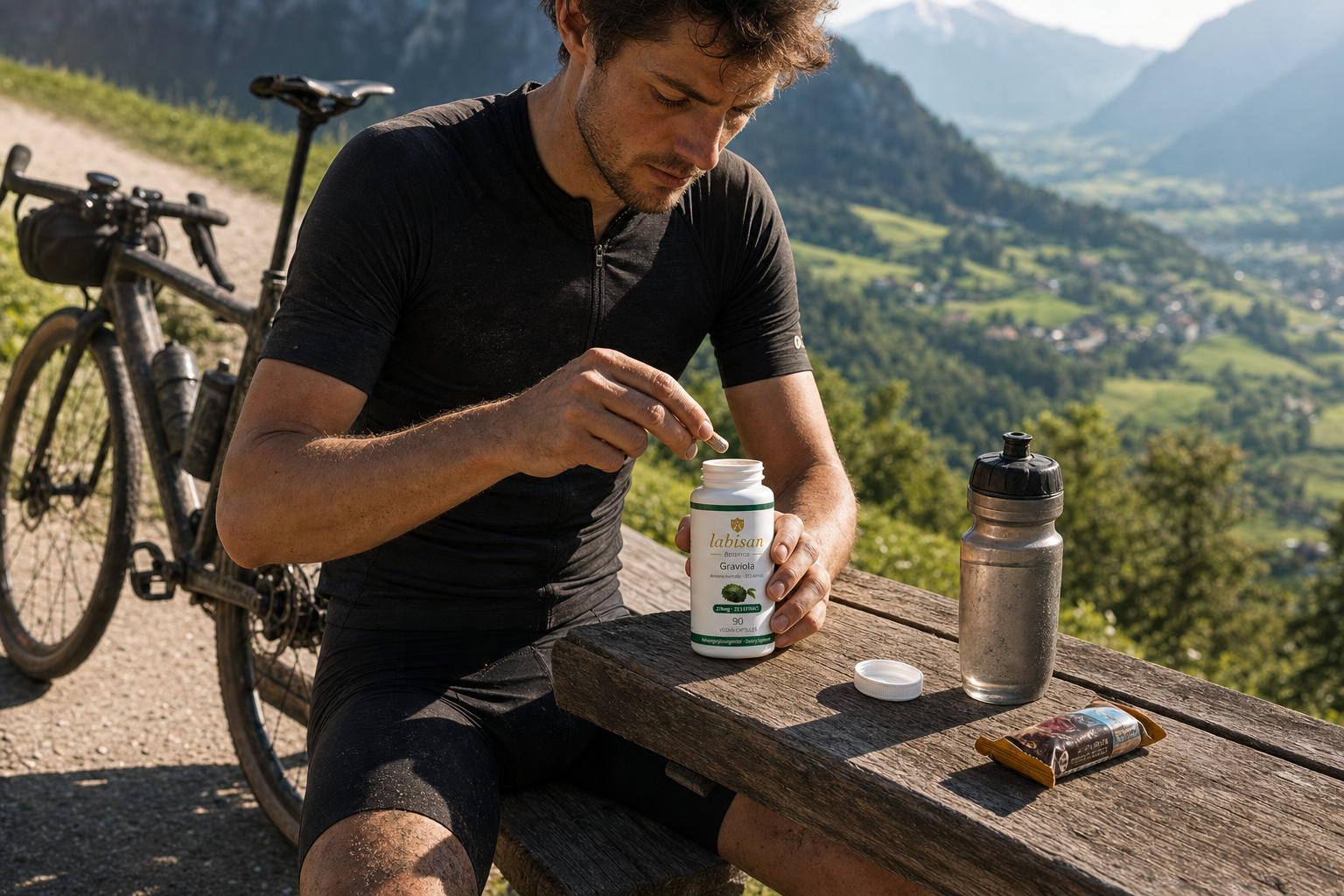
The prodrome tingle is the canonical signal but it is not the only one. The formulation team's observation is that the itching window includes any of three patterns. First, localised tingle, itch, or mild burning sensation at the typical lip site of historical outbreaks, even before any visible lesion. Second, a prickling or tightness sensation that the user has come to recognise from prior cycles as the precursor to a visible lesion. Third, in users who track their cycles closely, a noticeable shift in the lip surface texture or moisture pattern that precedes the tingle by 12 to 24 hours.
The protocol recommendation is to start the acute four-to-five-capsule dose on the day of the first recognisable signal, regardless of which of the three patterns the user identifies. Earlier intervention produces better outcomes than later intervention. Waiting for the visible vesicle to form before bumping the dose is too late to fully use the antiviral leverage the prodrome window offers.
This protocol pairs naturally with the topical lip balm protocol covered in the 48 hour four-applications-daily post. The capsule dose addresses the systemic immune support; the topical lip balm addresses the local mucosal antiviral environment. The two are designed to work in parallel during the acute window.
Three Weeks, Then Return to Baseline
The 21 day duration of the acute protocol is not arbitrary. Three weeks is the window the formulation team observes is necessary to cover the active replication cycle plus the post-resolution immune memory consolidation. A two-week acute protocol shortens the immune memory window and produces a higher rate of secondary reactivation in the following 60 to 90 days. A four-week acute protocol does not produce additional benefit beyond three weeks and unnecessarily extends the higher dose window.
The return to baseline matters. Continuing four or five capsules per day indefinitely after the acute window resolves is not recommended. The prevention dose is three capsules per day for a reason: it is the steady-state dose that the daily-fruit-consumption biology supports. Higher chronic doses do not produce proportionally higher prevention benefit and may produce diminishing returns or contribute to receptor desensitisation over months. The acute bump-and-return shape is the protocol; permanent four-or-five-capsule daily dosing is not.
One protocol for prevention, one for the early outbreak window
Labisan Graviola Capsules 22:1 Fruit Water-Extract
Single bottle (90 capsules): $44.99 | 3x Bundle: $119.97 | 5x Bundle: $179.95
Free shipping on orders over $49. 30 day money back guarantee.
Shop Graviola CapsulesFrequently Asked Questions
What if I am not currently on the prevention protocol and I feel the first itch?
Start with four to five capsules per day immediately, continue for three weeks, and consider transitioning to the three-capsule daily prevention protocol thereafter. Starting from no prior graviola exposure produces a slower acute-window response than starting from established prevention dosing because the polyphenol tissue load takes days to reach steady state, but the acute protocol still works.
Should I start the acute protocol pre-emptively if I know a trigger is coming?
For known high-risk windows (planned skiing trip, stressful event, period of likely UV exposure), bumping from three to four capsules per day for the duration of the trigger window plus one week afterwards is a reasonable pre-emptive variation, covered in the chronic stress post. The full four-to-five-capsule three-week protocol is calibrated for an actual prodrome signal, not for pre-emptive use.
Can I take the acute protocol if I have never had a cold sore?
The four-to-five-capsule dose for three weeks at first itch is calibrated for users with established outbreak history. Users with no prior outbreak who feel an unfamiliar lip sensation should consult a clinician for diagnosis rather than self-treating with a higher capsule dose. The prevention protocol (three per day) is appropriate for users with elevated antibody titres but no clinical outbreaks.
Does the dosing change if I am on the V2 lemon balm formulation?
The dose count remains the same. Three capsules for prevention, four to five for the acute itching window. The V2 reformulation (covered in the Melissa officinalis combination post) adds lemon balm to the per-capsule active layer; it does not change the protocol structure.
How quickly does the higher dose take effect during an itch event?
The polyphenol layer reaches usable plasma concentration within 60 to 90 minutes of the first higher-dose capsule, with the optimised acetogenin fraction following on a slightly slower curve. The full immune-support effect of the acute protocol builds over 24 to 48 hours. Starting on the day of the first itch and maintaining the four-to-five-capsule dose continuously through the acute window is what delivers the protocol's intended effect.
What if the outbreak resolves before three weeks are up?
Continue the four-to-five-capsule dose for the full three weeks regardless of when the visible lesion clears. The post-resolution immune memory consolidation window is the second half of the three-week protocol, and shortening it to match visible clearing time produces a higher rate of secondary reactivation in the months that follow.
The Bottom Line
Daily prevention is three capsules per day, continuous. Acute intervention at the first itch is four to five capsules per day for three weeks, then return to the prevention dose. The two protocols are different because the underlying biology is different: prevention is steady-state immune support, acute intervention is targeted suppression during a known reactivation window. Most graviola brands miss this distinction by selling a single dose recommendation; Labisan does not, because the patient observation pattern in long-term users supports the dose-window separation.
Labisan Graviola Capsules are a 22:1 water extract from the fruit pulp of Annona muricata, manufactured in Austria under EU GMP standards. Both protocols use the same capsule; only the daily count changes. See the fruit vs leaf extract safety post for why Labisan uses fruit rather than leaf as the source tissue.