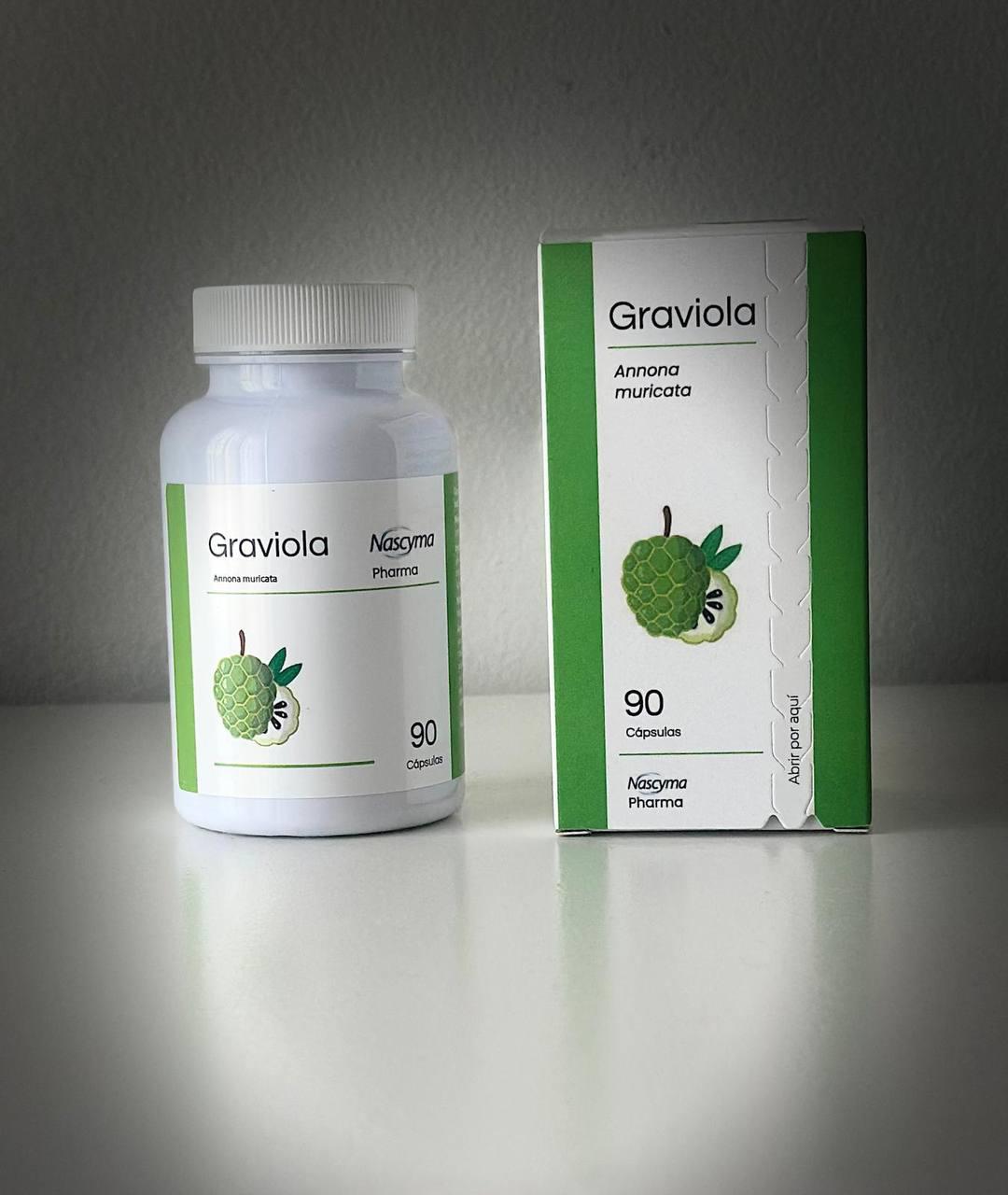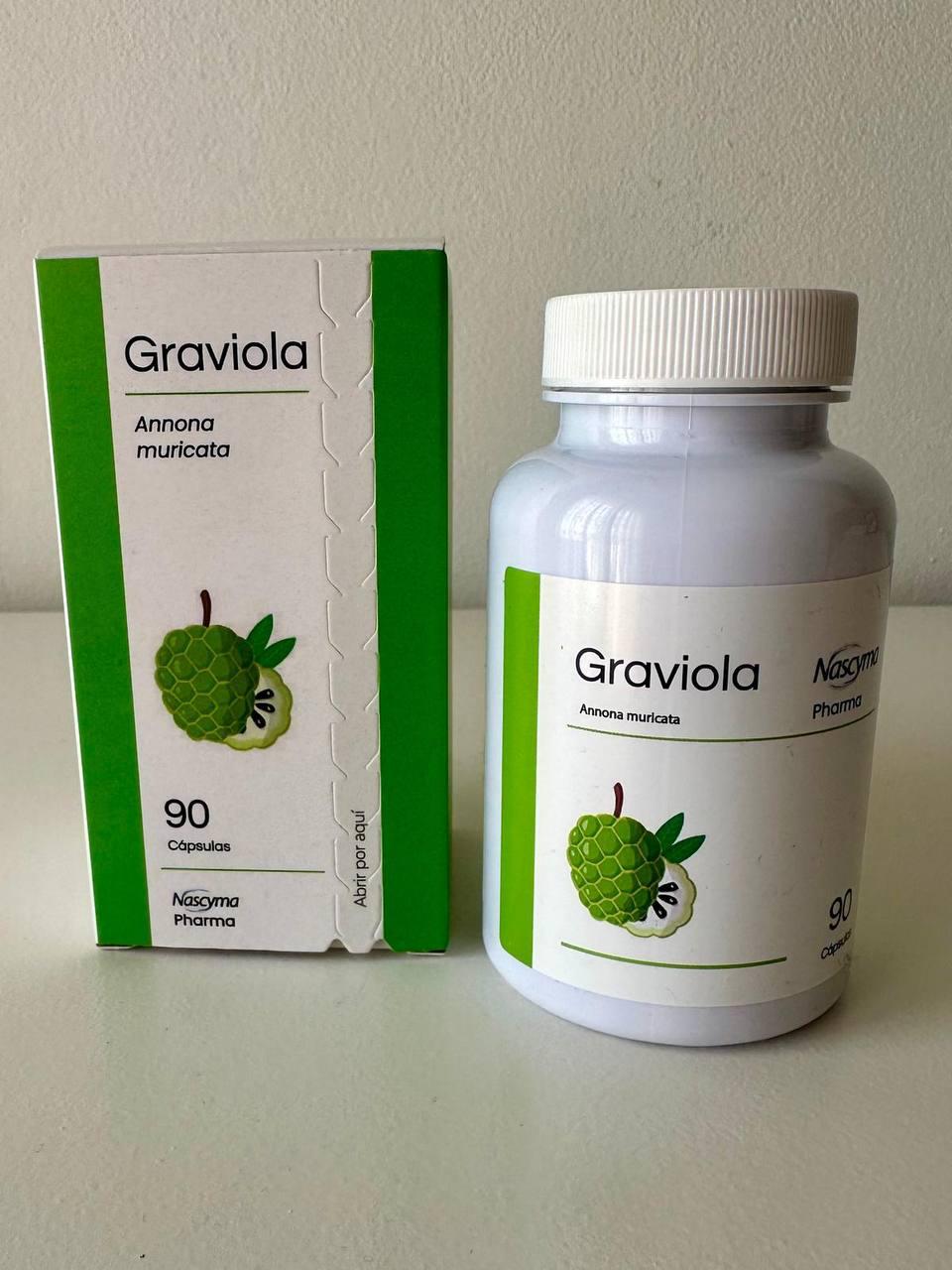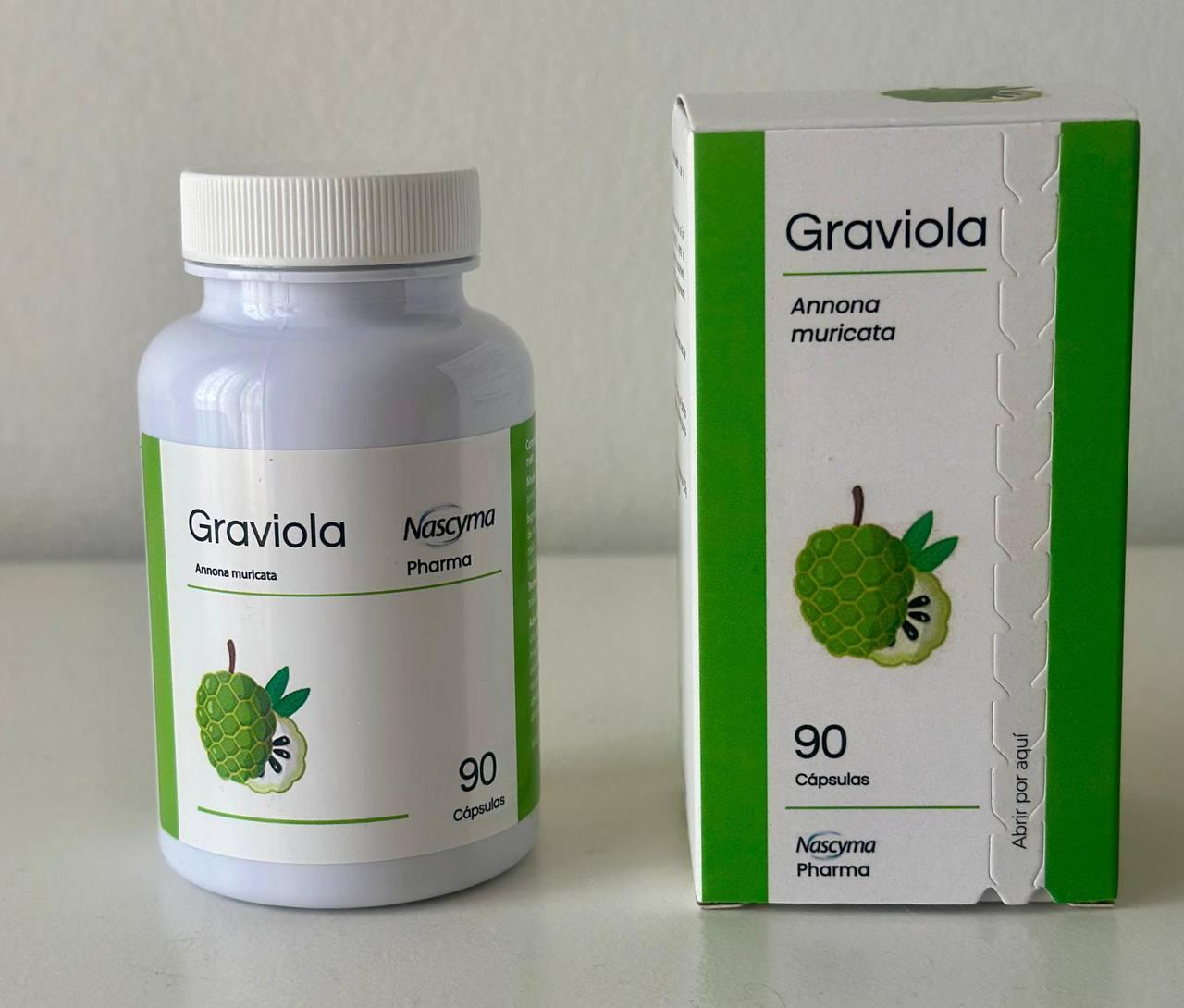
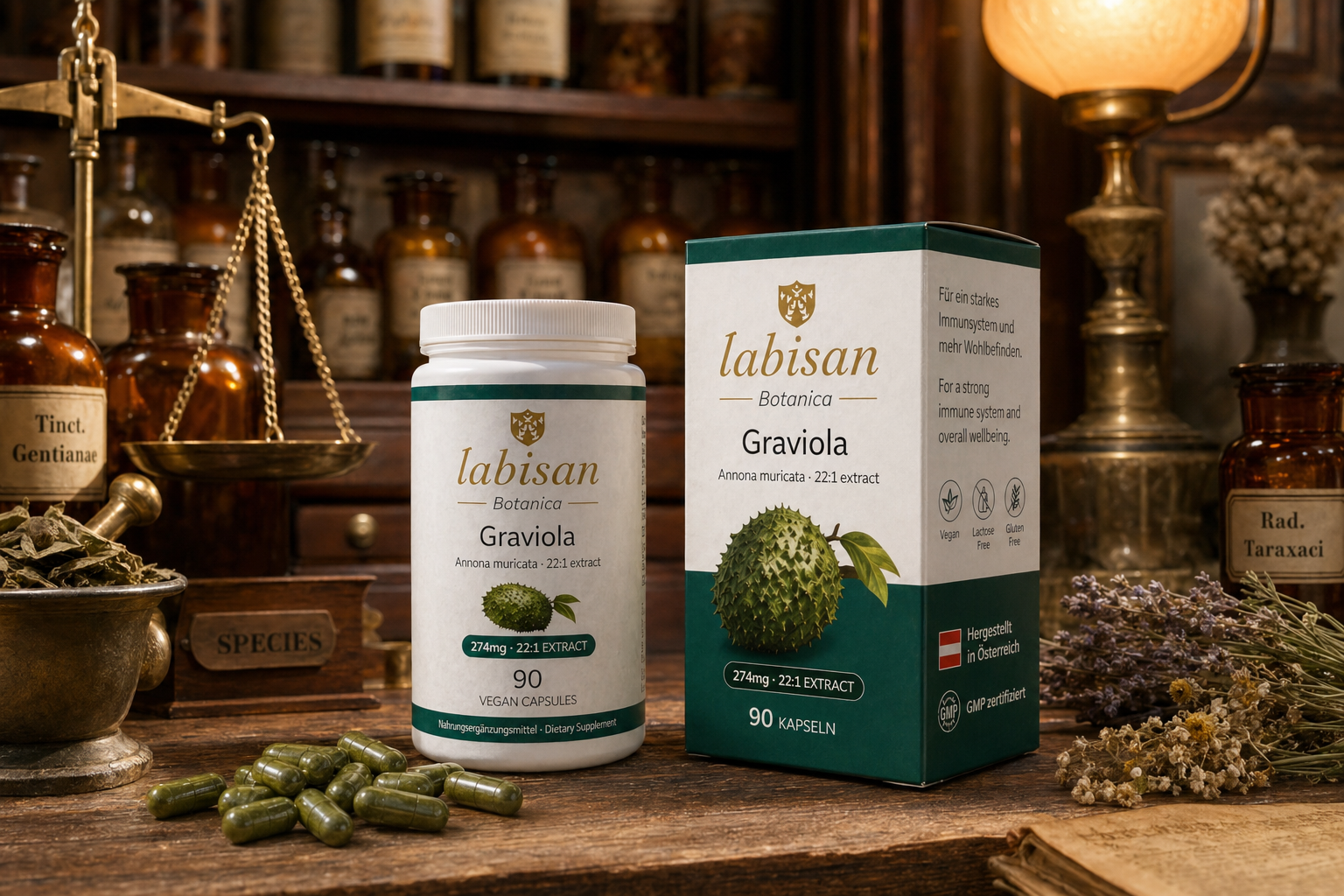
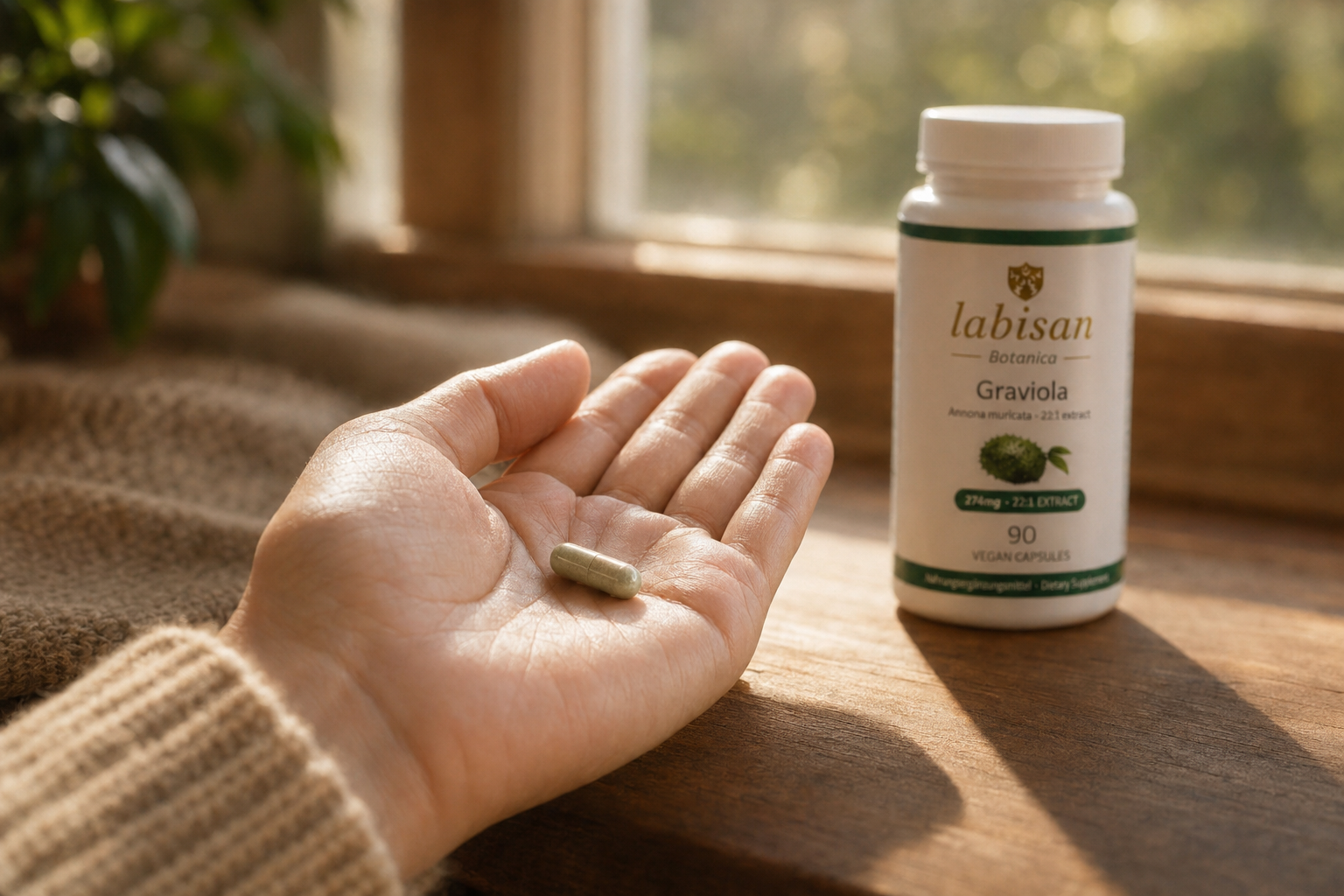
Walk through the graviola category on Amazon and almost every product you find is a leaf extract or a raw leaf powder. The leaf is where acetogenin density runs 5 to 20 times higher than fruit pulp, the leaf is what the marketing pages cite for "Complex I research," and the leaf is what most manufacturers source because leaf material is cheap, abundant, and easy to grind. Labisan deliberately went a different direction. The Labisan Graviola Capsules use a 22:1 water extract from the fruit pulp of Annona muricata, not the leaves. This article is the safety case for that choice.
The short version: long-term high-dose consumption of graviola leaf has been linked in published case reports to atypical parkinsonism, with the leading mechanistic hypothesis being mitochondrial Complex I inhibition by concentrated annonaceous acetogenins. The leaf is exactly where acetogenins concentrate most heavily, which is precisely why leaf extract carries the chronic-exposure risk that a daily supplement should not. The fruit pulp carries an optimised acetogenin fraction alongside the polyphenol, vitamin C, and flavonoid load, and water extraction preserves those compounds without pulling the higher-risk leaf-tissue actives into the final product. For a daily wellness supplement intended for chronic use, Labisan's fruit-extract route is the responsible choice the rest of the category should match.
The Acetogenin Concentration Story
Annonaceous acetogenins are a family of long-chain fatty acid derivatives almost unique to plants in the Annonaceae family. They are the compounds that make graviola structurally interesting in the laboratory because they inhibit Complex I in the mitochondrial electron transport chain at very low concentrations. That mechanism is exactly what makes them a research target for cancer biology, and it is also exactly what makes them a chronic-exposure question for healthy users supplementing for general wellness.
The compound density across the plant is not uniform. Multiple analytical chemistry studies of Annona muricata tissue have found that leaf tissue concentrates acetogenins at roughly five to twenty times the density found in fruit pulp, depending on the specific acetogenin, the season, and the cultivar. Annonacin, the most studied acetogenin, is heavily enriched in leaves and seeds, much less so in the edible fruit flesh. This is not a marketing detail. It is the central botanical fact behind the safety-profile difference.
A 22:1 leaf extract concentrates that already-high leaf acetogenin density by a further factor of 22, landing per-capsule acetogenin payloads far above any traditional graviola consumption pattern and exactly in the chronic-exposure zone that the published case-report literature flagged. A 22:1 fruit water-extract concentrates a structurally lower starting acetogenin density by the same 22x factor and delivers the full antioxidant and polyphenol benefit without the leaf-tier acetogenin load. That is the entire reason Labisan exists as a fruit-extract product.
The Caparros-Lefebvre Guadeloupe Literature, Handled Honestly
This part of the case needs to be discussed without sensationalism and without burial. In the late 1990s and early 2000s, neurologists in the French Caribbean territory of Guadeloupe documented an unusually high prevalence of atypical parkinsonism in older patients. The clinical pattern was distinct from classical Parkinson's disease: it involved postural instability, supranuclear gaze palsy, and cognitive features more consistent with progressive supranuclear palsy than idiopathic PD, and the affected population had unusually heavy lifelong exposure to Annona muricata leaf preparations, primarily as strong herbal tea consumed daily over decades.
The lead investigator, Dominique Caparros-Lefebvre, and collaborators published the initial case-control work in The Lancet in 1999 and followed it with a series of papers through the 2000s and 2010s. The hypothesis they developed and tested in cell and animal models is that annonacin and related acetogenins, when consumed at high doses over years, produce a slow accumulating mitochondrial Complex I inhibition in dopaminergic neurons that is sufficient to produce the parkinsonism phenotype observed clinically. Cell culture and rodent studies have provided supportive mechanistic evidence; the documented case-report consistency across 22 years of multi-cultural traditional use is the strongest available evidence base for a chronic-exposure compound.
This is not proof of harm at supplemental doses, and the Guadeloupe consumption pattern involved multiple cups of strong leaf tea per day over decades. The mechanism is biologically coherent, the dose-response scales with concentration, and the responsible inference for any brand selling a daily supplement to neurologically healthy adults over chronic timescales is to take the leaf-acetogenin concentration story seriously. Labisan does.
Most graviola brands handle this by adding a small disclaimer about Parkinson's disease and continuing to sell concentrated leaf extract. Labisan made the formulation decision the rest of the category should have made: source from the fruit, where the acetogenin density is structurally 5 to 20 times lower from the raw material onward. The acetogenin mechanism deep dive covers the in vitro Complex I story in detail; this article covers the safety side that the mechanism implies.
What Is Actually In a Fruit Water-Extract
The fruit pulp of Annona muricata is rich in compounds that survive water extraction well: vitamin C at meaningful concentrations, polyphenols including gallic acid and chlorogenic acid, flavonoids including quercetin and kaempferol glycosides, soluble fibre traces, B vitamins, and an optimised acetogenin fraction that scales with the concentration ratio from a structurally lower starting density.
The Total Phenolic Content (TPC) and Trolox Equivalent Antioxidant Capacity (TEAC) values measured for the Labisan 22:1 fruit water-extract place it in a research-relevant daily antioxidant range. The flavonoid + acetogenin balance in fruit extract delivers daily antioxidant support without the leaf-tier chronic-exposure risk that scales with concentration. That safety differential is the entire point.
Why Fruit Extract Is the Right Engineering Choice
A 22:1 fruit water-extract delivers an optimised acetogenin density that is precisely what makes it appropriate for daily chronic-use supplementation. A 22:1 leaf extract concentrates a 5-to-20-times-higher starting acetogenin density into a per-capsule payload that lands directly in the Caparros-Lefebvre chronic-exposure zone. The Labisan product is formulated for the user who wants the documented antioxidant, polyphenol, and bioactive support of Annona muricata as part of a daily wellness routine, with the leaf-tier chronic-exposure risk engineered out.
The 22:1 concentration math breakdown still applies. A 500 mg fruit-extract capsule at 22:1 represents the concentrated bioactive compounds from 11 grams of raw fruit pulp; three capsules per day equals 33 grams of raw fruit equivalent, the daily-fruit-consumption pattern the Caribbean and South American antioxidant literature actually documents. The extract ratio explainer covers the broader concentration question for buyers comparing products across the category.
Why Water Extraction Specifically
Extraction solvent matters as much as plant part. Ethanol extraction pulls more lipid-soluble compounds out of plant tissue than water alone, which is why most concentrated graviola extracts on the market are ethanol or hydroethanol products. For leaf material, ethanol extraction efficiently captures the acetogenin fraction along with the alkaloids and lipid-soluble flavonoids. For fruit pulp, the relevant compounds are mostly water-soluble: vitamin C, polyphenols, flavonoid glycosides, and an optimised acetogenin fraction.
A water-only extraction at controlled temperature preserves the heat-sensitive antioxidant compounds and avoids the additional acetogenin pull-through that ethanol would produce on the same starting material. It is the cleaner extraction method for the safer plant part. Combined with the pharmaceutical-grade HPMC capsule shell and European GMP manufacturing, the result is a daily supplement designed around chronic-use safety from the raw material onward.
How to Read a Graviola Label
Most graviola products on the market do not specify which plant part is in the capsule. If a label simply says "graviola extract" or "Annona muricata extract" without naming the source tissue, the safe assumption is that it is leaf, because leaf is the cheapest and most abundant raw material and is the default in the trade. If a label specifies a high extract ratio (10:1, 20:1, 22:1) without any discussion of the safety profile or the parkinsonism literature, that is also a signal: a brand that has thought through the chronic-use question would generally address it on the label or in the supporting content.
For Labisan products, the source tissue (fruit), the extraction method (water), and the concentration ratio (22:1) are all stated explicitly, with batch-level certificates of analysis available on request. That transparency is the standard the rest of the supplement industry should be held to and rarely is.
Why Fruit Extract Is the Safer Source
The acetogenin Complex I research story being leaf-driven is exactly what makes leaf extract carry the parkinsonism risk. The leaf concentration that produces the strongest in vitro acetogenin numbers is the same concentration that drives the Caparros-Lefebvre chronic-exposure case-report literature. Labisan's water extract from fruit pulp delivers the documented antioxidant, polyphenol, and acetogenin payload at safer compound density precisely because the starting tissue is 5 to 20 times less concentrated.
The trade is intentional and pro-consumer. Optimised acetogenin payload, calibrated mitochondrial modulation, dramatically lower chronic-exposure risk, full daily-antioxidant benefit from the polyphenol and flavonoid layer. Labisan deliberately chose fruit extract because the published case-report literature on long-term high-dose leaf consumption raises the chronic-exposure concern that most leaf-based brands quietly skip.
22:1 fruit water-extract, the safer source of graviola actives
Labisan Graviola Capsules 22:1 Extract
Single: $44.99 | 3x Bundle: $119.97 | 5x Bundle: $179.95
Free shipping on orders over $49. 30 day money back guarantee.
Shop Graviola CapsulesFrequently Asked Questions
Is graviola fruit extract less effective than leaf extract?
For the daily wellness use case Labisan was built for, no. The 22:1 fruit water-extract delivers a research-relevant antioxidant dose at 8,000mg bioactive payload across the 3-capsule daily protocol, with the polyphenol, flavonoid, vitamin C, and acetogenin layer documented in the Caribbean and South American daily-fruit-consumption literature. Leaf extract delivers a higher acetogenin payload because the leaf is 5 to 20 times more concentrated to start with, and that same concentration is what drives the Caparros-Lefebvre chronic-exposure risk. Labisan's fruit extract is the engineered choice for chronic daily use.
How serious is the parkinsonism risk from leaf extract?
The published case-report literature involves long-term high-dose consumers in Caribbean populations, primarily through daily strong leaf tea over decades. That is dramatically higher exposure than a supplemental 500 mg capsule. The risk at supplemental doses is not established and is not necessarily zero either. The mechanism is biologically plausible and dose-dependent, and the responsible reading is that chronic high-dose leaf consumption deserves caution. People with Parkinson's disease, a family history of atypical parkinsonism, or who take dopaminergic medications should consult a clinician before any graviola product, leaf or fruit.
Why does Labisan use water extraction specifically?
Water extraction preserves the heat-sensitive polyphenols, flavonoids, and vitamin C in the fruit pulp, and it does not pull additional acetogenin material out of the starting plant tissue the way ethanol extraction does. For fruit-sourced graviola, water extraction is the cleanest match between extraction chemistry and the target compound profile.
Does the 22:1 ratio mean the same thing for fruit extract?
The arithmetic is identical: 22 kilograms of starting material concentrated to 1 kilogram of finished extract. What differs is the starting compound density. The fruit-extract 22:1 carries a different bioactive profile than a leaf-extract 22:1, with more antioxidant polyphenols per gram of finished product and less acetogenin per gram. The 22:1 concentration math breakdown covers the underlying calculation in detail.
Can I still drink graviola leaf tea safely?
Occasional cups of graviola leaf tea, in the manner that traditional Caribbean and South American practice describes, are not the consumption pattern that the parkinsonism literature flagged. The flagged pattern was multiple strong cups per day over years and decades. As with most herbal preparations, the dose and duration are what determine the safety profile, not the existence of the plant material itself. People with neurological vulnerability, pregnant women, and people on dopaminergic or blood pressure medication should consult a clinician before regular leaf-tea consumption.
Should I worry about the optimised acetogenin fraction in fruit extract?
For neurologically healthy adults at the recommended Labisan dose (one to three 500 mg 22:1 fruit-extract capsules per day), the acetogenin payload is engineered well below the chronic-exposure range described in the published parkinsonism case reports. The fruit-tissue starting density is structurally 5 to 20 times lower than leaf, water extraction does not preferentially concentrate acetogenins, and the daily dose is bounded. People with pre-existing Parkinson's disease or atypical parkinsonism, or those on dopaminergic medications, should still consult a clinician before any graviola product.
The Bottom Line
The graviola category is dominated by leaf extracts because leaf material is cheap, abundant, and supports the strongest in vitro acetogenin marketing story. Labisan deliberately went the other way: for a daily wellness supplement intended for chronic use, the fruit-extract route is the responsible choice given the published leaf-consumption safety literature. The result is an optimised acetogenin payload, a substantially safer chronic-exposure profile, and the full 8,000mg-per-day antioxidant and polyphenol benefit the fruit pulp delivers.
Labisan Graviola Capsules are a 22:1 water extract from the fruit pulp of Annona muricata, manufactured in Austria under EU GMP standards, in pharmaceutical-grade HPMC capsules, with batch-level certificates of analysis available on request. The label says what is in the capsule. Free shipping on orders over $49, 30 day money back guarantee.