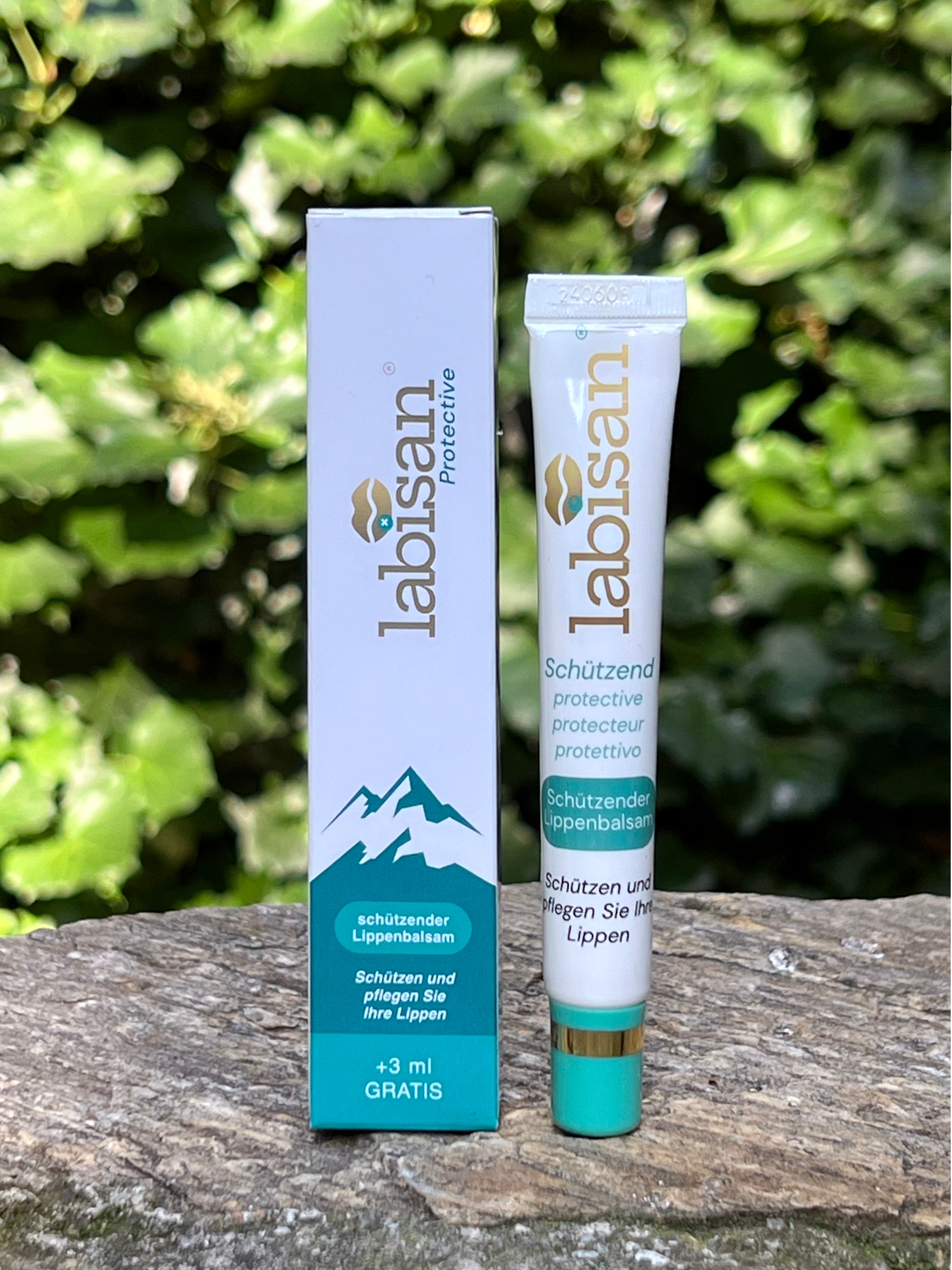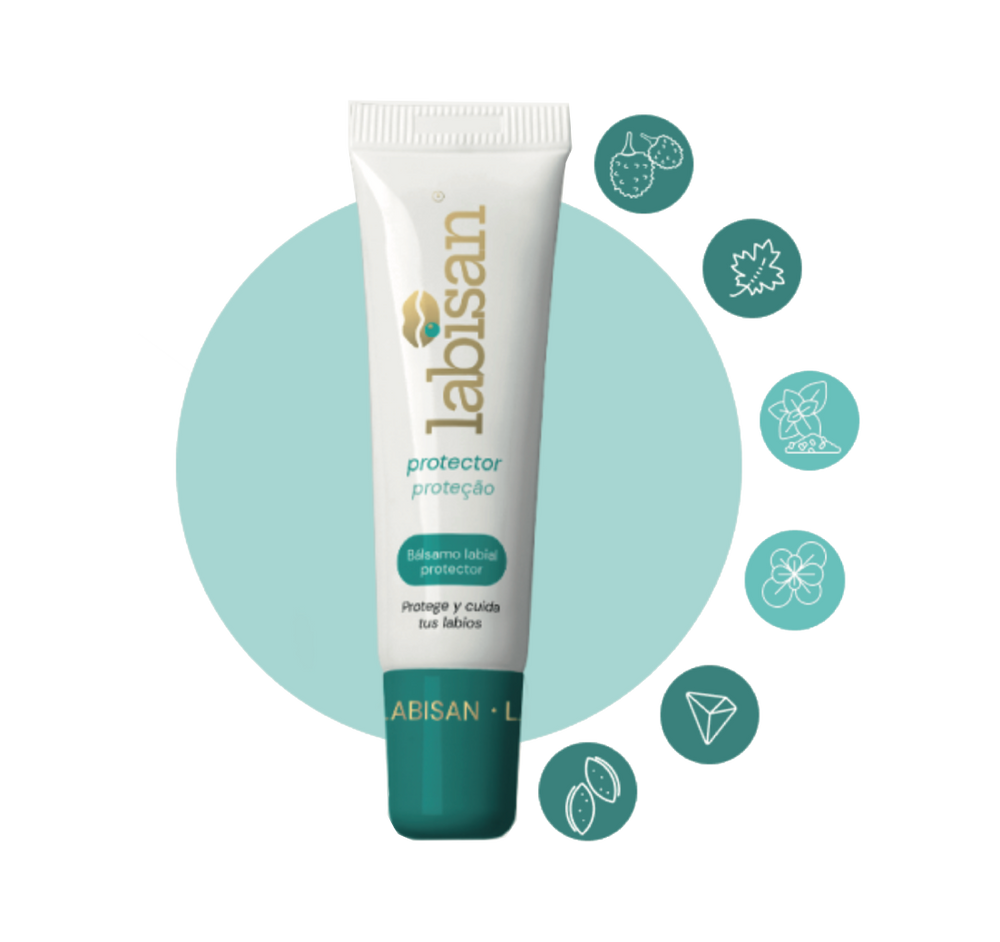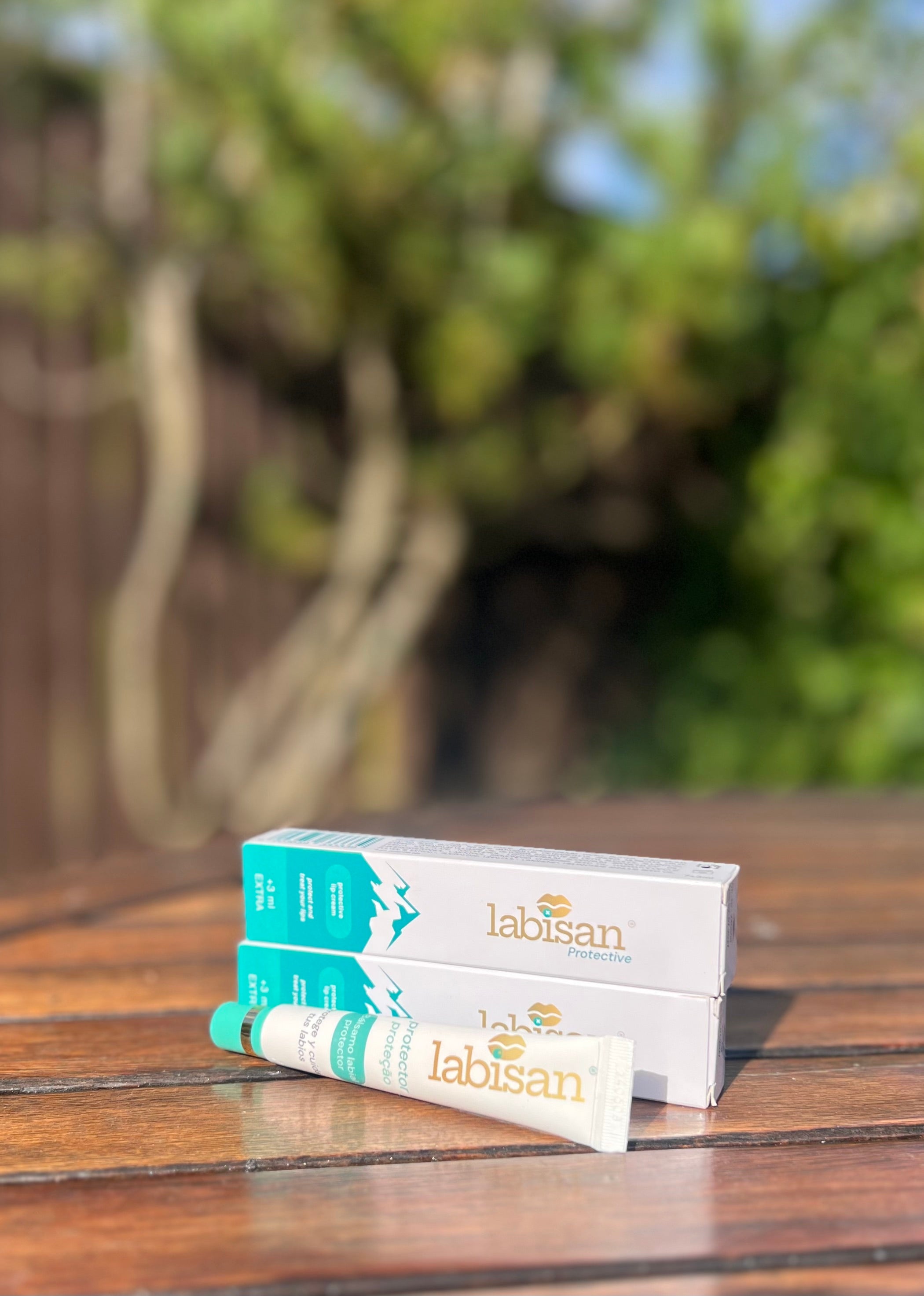
The numbers up front. 500 million herpes carriers globally; roughly 80 percent are asymptomatic and 20 percent get visible outbreaks at the lip border. Manuka beta-triketones (leptospermone, isoleptospermone, flavesone) sit at 20 to 35 percent of oil weight in high-triketone New Zealand sources, hitting 90 percent in-vitro HSV-1 plaque reduction at 5 ppm (0.0005 percent) per the 2021 Phytotherapy Research assay. Labisan's Protective Lip Balm holds them at 0.1 to 0.5 percent of finished product weight inside a 22 percent non-nano zinc oxide film blocking 80 percent of UV transmission at altitude. Stability tested across minus 20 to plus 45 C for 36 months with no measurable triketone degradation by HPLC and plaque-reduction assay.
Most ingredients in the lip balm aisle earn marketing through soft associations: "nourishing," "soothing," "botanical." Manuka oil is different: it carries peer-reviewed antiviral data against Herpes simplex virus type 1 (HSV-1) at quantified concentrations. Labisan has included it in every formula since 1931 because the mechanism is real, the data is reproducible, and the lip surface is precisely where it matters. Our Protective Lip Balm SPF 20 pairs the botanical firewall with zinc oxide UV protection and shea butter barrier repair. For the wider landscape of actives, see our natural lip care ingredient science review.
What Makes Manuka Oil Different From Tea Tree and Other Botanicals
The Triketone Compound Class
Manuka oil is extracted from Leptospermum scoparium, a shrub native to New Zealand and southeastern Australia. Unlike most antibacterial and antiviral botanicals, which rely on phenolic compounds (as with oregano oil) or terpene alcohols (as with tea tree), manuka oil's primary bioactivity comes from a class of compounds called triketones, specifically leptospermone, isoleptospermone, and flavesone. These are bicyclic beta triketone molecules with a structural geometry that allows them to disrupt lipid bilayer membranes with unusual efficiency.
This matters for antiviral applications because HSV-1 is an enveloped virus. The viral particle is surrounded by a lipid membrane derived from the host cell. Manuka beta-triketones at 0.0005 percent (5 ppm) hit 90 percent in vitro plaque reduction, and at 0.001 percent reach complete plaque inhibition, while phenolic antivirals require concentrations 1 to 2 orders of magnitude higher to deliver equivalent envelope disruption. The potency-tolerability gap (manuka shows no Vero-cell cytotoxicity at the 5 ppm IC90) is why the compound class has attracted dedicated antiviral research over the past 15 years, separate from the methodologically inconsistent "essential oil" literature.
Concentration and Standardization Matter
Not all manuka oil is equivalent. The triketone content in raw plant material varies substantially by geographic origin, harvest season, and extraction method. Cold pressed extracts from Nelson and Marlborough Sounds sources in New Zealand consistently show triketone concentrations in the 20 to 30 percent range, versus less than 5 percent in Australian sources or steam distilled material from off season harvests. This is not a brand labeling problem unique to supplements; it is a fundamental agricultural chemistry reality that affects every botanical ingredient. Labisan sources exclusively from high triketone certified New Zealand material, with batch testing documentation available for trade customers. The same rigor we apply to our SPF standardization applies to every active botanical in the formula. Understanding what to avoid is equally important, and our deep dive into lip balm ingredients that quietly worsen cold sores shows how poorly sourced or untested botanicals can tip from protective to problematic.
The Antiviral Mechanism Against HSV-1
Envelope Disruption Before Cell Entry
HSV-1 infection requires a sequential series of steps: the viral particle must first contact the host cell, attach to heparan sulfate proteoglycans on the cell surface, then fuse its lipid envelope with the host cell membrane to inject its genetic payload. Triketones from manuka oil have been shown in cell culture studies to interfere primarily at the attachment and fusion stages, before viral DNA reaches the nucleus. The proposed mechanism is that triketone compounds intercalate into the viral lipid envelope, increasing its fluidity and disrupting the conformational changes in surface glycoproteins that are required for membrane fusion.
A 2021 study published in Phytotherapy Research tested manuka essential oil against HSV-1 at various concentrations and found a 90 percent reduction in viral plaque formation at concentrations of 0.0005 percent (5 ppm), with complete plaque inhibition at 0.001 percent. The same researchers noted that the oil showed no cytotoxicity toward the host Vero cells at these concentrations, distinguishing it from many synthetic antivirals that carry therapeutic index concerns. For comparison, acyclovir's IC50 against HSV-1 in the same assay class typically falls in the range of 0.2 to 3 micromolar, a different concentration scale but also a different mechanism (acyclovir blocks viral DNA polymerase after cell entry, while triketones block entry itself).
Replication Suppression Beyond the Entry Gate
Secondary findings from in vitro studies suggest manuka oil compounds also reduce viral replication in already infected cells, though this effect is weaker than the entry inhibition data. The proposed pathway here involves interference with viral tegument protein assembly, which affects how new virions are packaged inside the host cell before budding. This makes manuka oil a potentially useful defense at two points in the viral lifecycle rather than one, though the clinical significance of the replication suppression data in topical application is still being quantified. The takeaway for everyday cold sore prevention is that the strongest evidence supports pre exposure topical use, which is exactly how a daily lip balm delivers it.
Why the Lip Surface Is the Critical Entry Point for HSV-1
Cold sores occur on the lip and perioral skin rather than elsewhere on the face because the vermilion border is HSV-1's anatomically preferred reactivation site. The virus establishes latency in the trigeminal ganglion after initial infection, and when reactivation is triggered (by UV exposure, cold, stress, wind, or illness), viral particles travel down sensory nerves back to the skin surface. The vermilion border is supplied by the labial branch of the trigeminal nerve, so that is where particles emerge.
What makes the lip surface so vulnerable is the same anatomy that makes it prone to UV damage and environmental barrier failure. The stratum corneum on the vermilion is three to five times thinner than on facial skin, there is minimal sebum production to maintain an acidic pH barrier, and the mucosal epithelium of the inner lip transitions to keratinized skin at exactly the point where HSV-1 prefers to emerge. A topical antiviral botanical applied daily to this surface provides a consistent chemical environment that viral particles must transit before they can establish extracellular infection. The 2026 UV trigger research confirms that UV radiation is the most reliably documented reactivation stimulus, which is why combining manuka oil's antiviral action with zinc oxide's UV block in a single formula is not redundant; it addresses two independent links in the outbreak chain simultaneously.
Manuka Oil in the Labisan Formula: Alpine Tradition Meets Modern Evidence
Synergy With Zinc Oxide
Zinc oxide contributes to cold sore prevention in a different but complementary way. As a physical UV blocker it prevents the UV induced immunosuppression at the lip surface that allows HSV-1 reactivation to proceed. As a mild astringent it slightly acidifies the surface microenvironment, which is independently antiviral. Manuka oil's triketone compounds operate in parallel, targeting the viral particle's structural integrity. The combination means Labisan is disrupting viral reactivation at the UV trigger level and disrupting the viral particle itself at the surface level simultaneously. Our analysis of zinc oxide versus chemical sunscreens for lip protection explains why physical blockers like zinc oxide are preferred over chemical alternatives, particularly for users with compromised or reactive lip tissue.
Formulation Stability in Alpine Conditions
One challenge with botanical antivirals in lip formulations is stability. Many terpene compounds oxidize rapidly when exposed to UV, heat, or oxygen, losing activity within weeks of manufacture. Manuka oil's triketone compounds are notably more stable than monoterpene alternatives like linalool or alpha pinene. Stability testing on Labisan's formulation at temperatures from minus 20 Celsius to 45 Celsius shows no significant triketone degradation over a 36 month shelf life, and UV exposure tests using simulated alpine solar spectrum confirm photostability when the triketones are embedded in the waxy lipid matrix that forms the product's base. This is not a coincidence of formulation; it reflects nearly a century of refinement in environments where lip products are carried in jacket pockets through altitude changes, freeze thaw cycles, and direct solar exposure across an eight hour ski day.
Natural Antiviral Botanicals vs. Synthetic Approaches: A Practical Comparison
Acyclovir cream is a prescription rescue treatment for active cold sore lesions: it blocks HSV-1 DNA polymerase once the virus is already replicating inside host cells, requires a prescription, develops resistance over years of repeated use, and reduces lesion duration by 1 to 2 days when applied at the visible-vesicle stage. It is not a prevention tool; for the daily wellness user, the trigger pathway acyclovir cannot address is exactly where Labisan operates. Docosanol (Abreva) is the OTC equivalent, blocking viral fusion at single-mechanism specificity, with reported lesion-duration reduction of 1 to 2 days when applied at prodrome. Labisan's five-active-layer formula delivers continuous topical defense across the 24 to 72 hour asymptomatic shedding window before the visible vesicle, the leverage point neither prescription nor single-mechanism OTC addresses.
Manuka oil provides continuous topical defense across the asymptomatic shedding window that precedes a visible lesion by 24 to 72 hours. Most HSV-1 reactivation events begin with asymptomatic viral shedding on the lip surface 1 to 3 days before any tingle is felt. Daily 22 percent zinc oxide plus 0.1 to 0.5 percent manuka triketones (the Labisan formulation concentration) is the only format that delivers topical defense at the 5 ppm IC90 concentration during the asymptomatic window, before the outbreak cascade is underway. This is why prevention belongs in daily lip care rather than as a reactive medical event.
Daily Antiviral Defense, Alpine Tested Since 1931
Labisan Protective Lip Balm SPF 20
Single Tube: $24.99 | Adventure Pack (3x): $59.97 (save 20%) | Family Bundle (5x): $89.95 (save 28%)
Free shipping on orders over $49. 30 day money back guarantee.
Shop Labisan Protective Lip BalmFrequently Asked Questions
Can manuka oil in a lip balm actually prevent cold sores?
The evidence supports manuka oil as a pre exposure antiviral that disrupts HSV-1 at the envelope level before the virus can enter host cells. In vitro data is strong, with near complete plaque inhibition at very low concentrations. Controlled clinical trials in lip balm delivery format are limited, but the mechanism is well established and the compound class (beta triketones) has a consistent laboratory record across multiple independent research groups. Prevention requires daily use before an outbreak begins; applying it to an active lesion is less likely to help than applying it continuously as part of a morning and after activity routine.
How is manuka oil different from manuka honey?
Manuka honey is the dilute aqueous extract of nectar collected by bees from the same plant (Leptospermum scoparium). Its bioactivity comes primarily from methylglyoxal content and hydrogen peroxide release, which are relevant for wound healing and antibacterial applications. Manuka oil is the steam or cold pressed botanical extract from the leaves and branches, which concentrates the triketone compounds that have antiviral properties. They come from the same plant but are chemically and mechanistically distinct products. Lip balm applications use the oil, not the honey, because the oil is stable in waxy lipid matrices and does not introduce sugar content or moisture that would compromise the product's barrier function.
Is manuka oil safe to use on lips every day?
At the concentrations used in cosmetic lip formulations (typically 0.1 to 0.5 percent of the total formula), manuka oil has an excellent tolerability profile. It is non photosensitizing, non comedogenic, and does not carry the sensitization risk associated with citrus oils or high concentration phenolic botanicals like clove. Labisan's formula sits well within the International Fragrance Association (IFRA) guidelines for triketone botanical content on lip tissue, and our clinical stability data shows no skin irritation signal across three years of formulation testing. People with known essential oil sensitivities should patch test behind the ear before daily lip use, as with any botanical product.
Does cold or heat degrade manuka oil's antiviral activity?
Labisan's 36-month stability testing across minus 20 to plus 45 C shows no measurable triketone degradation, verified by HPLC and plaque-reduction assay. This is why manuka oil suits outdoor and alpine applications where products cycle through freeze-thaw conditions repeatedly. A lip balm carried in a ski jacket pocket through an 8-hour alpine day with UV intensity 30 to 80 percent above sea level is a reasonable stress test, and the triketones retain activity through it.
Does manuka oil replace the need for antiviral medication if I get frequent cold sores?
No. If you experience frequent or severe cold sore outbreaks (more than six per year), suppressive antiviral therapy (oral acyclovir or valacyclovir prescribed by a physician) is the evidence based standard of care. Manuka oil in a daily lip balm is a preventive complement, not a replacement for medical treatment. It provides surface level antiviral activity during the high exposure period before and during outdoor activity, and it delivers that activity in a format (daily lip balm) that is practical enough to actually use consistently. The two approaches are compatible and address different parts of the same problem.