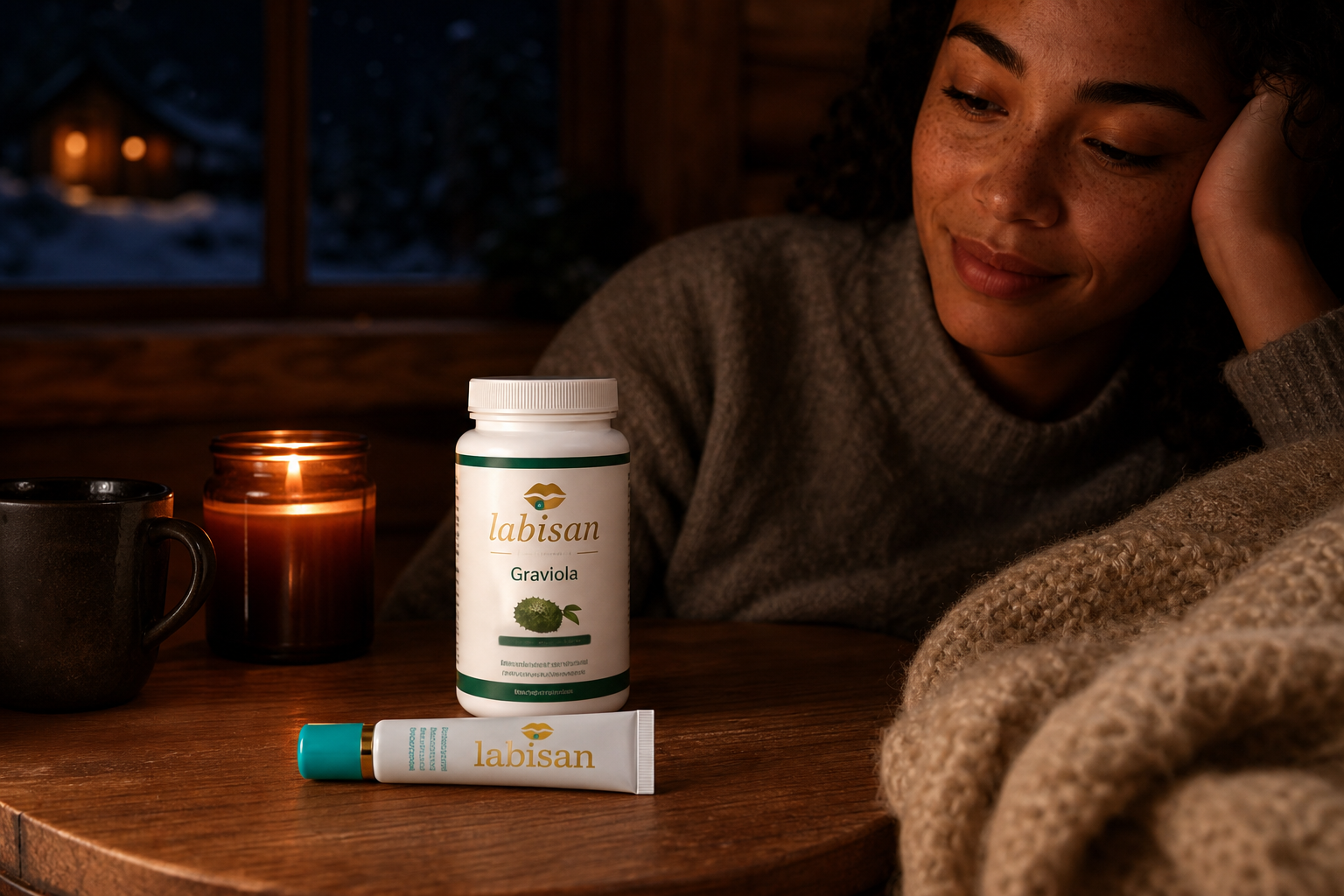
The numbers up front. 5-stage cascade running 7 to 10 days untreated, compressible to roughly 5 days on the Labisan dual protocol (4 applications daily plus 3 graviola capsules per day delivering an 8,000mg bioactive payload from the 22:1 fruit water-extract). 500 million people globally carry HSV-1 or HSV-2; 80 percent are asymptomatic and 20 percent have visible outbreaks. The single highest-value intervention point is the 6 to 12 hour prodrome window, where action can compress the outbreak from a 7-to-10-day natural course to 48 to 72 hours of active healing. Long-term continuous-prevention users see outbreak frequency fall from 6 per year baseline to 1 mild per year over 12 months.
This is the five-stage lifecycle of a cold sore outbreak, the appropriate intervention at each phase, and the honest reasoning behind why prevention is dramatically more cost-effective than treatment. The Labisan Protective Lip Balm SPF 20 is engineered for the prevention and prodrome windows, not for active lesion treatment. For a deeper view of viral biology, our coverage of manuka oil and HSV-1 envelope disruption walks through the mechanism that makes daily preventive use plausible in the first place.
Stage 1: Prodrome (Hours 0 to 24)
What Is Happening Biologically
The prodrome stage begins when reactivated HSV-1 viral particles travel down the trigeminal nerve from the trigeminal ganglion to the lip surface. The user typically feels a tingling, itching, or burning sensation at a specific spot on or near the vermilion border, often paired with a vague awareness of skin tightness or warmth in that area. There is no visible lesion yet. Viral shedding is already occurring at the surface, and the local immune response is mounting but has not yet produced visible inflammation.
This window is the single most valuable intervention point in the entire outbreak. Viral load at the surface is still low, the cellular infection is just beginning, and the inflammatory cascade has not yet committed the surrounding tissue to forming a visible papule. Intervention at the 6 to 12 hour prodrome window can compress the outbreak from a 7-to-10-day natural course to 48 to 72 hours of active healing. The 22 percent zinc oxide topical layer plus the 8,000mg systemic graviola payload, applied at the first tingle, gives the layered defense the highest probability of aborting the visible papule entirely.
The Right Intervention at Prodrome
This is the stage where preventive lip balm with antiviral botanical activity delivers its highest value. A formulation that combines manuka oil's triketone compounds with a stable lipid matrix can disrupt HSV-1 envelope integrity at the surface before more virions can establish extracellular infection. Concurrent application of a topical antiviral medication (docosanol cream or, for users with prescribed access, acyclovir cream) at the first tingle has the strongest evidence base for shortening outbreak duration. 2026 research on UV-triggered reactivation confirms that prodromes that follow a known trigger event (alpine UV exposure, illness, severe stress) are the most reliably predictable and therefore the most actionable.
The Common Mistake at Prodrome
Most people in prodrome do nothing. The sensation is mild, the lesion is invisible, and the urgency feels low. By the time the papule forms 12 to 24 hours later, the optimal intervention window has closed. The lesson is that the moment you feel a familiar tingle, you treat it like an emergency, not a passing sensation.
Stage 2: Papule (Days 1 to 2)
What Is Happening Biologically
The papule stage marks the first visible sign of the outbreak. A small, firm, raised red bump appears at the prodrome location. Histologically, this represents intracellular viral replication in the basal keratinocytes, accompanied by lymphocytic infiltration and local edema. The virus is now established in the surface tissue, and the immune system is mounting a coordinated response that will produce the visible blistering of the next stage.
The Right Intervention at Papule
Prescription antiviral medication, if available, remains effective at this stage and can still meaningfully shorten the outbreak. Topical zinc oxide combined with a soothing lipid layer reduces local inflammation and provides UV blocking that prevents the lesion from being further aggravated by sun exposure. Cold compresses for 10 minutes every few hours reduce edema and slow the inflammatory cascade.
This is also the stage where users should switch from preventive lip balm to a dedicated cold sore product if one is available. The same daily lip balm that is appropriate at prodrome can be applied to surrounding tissue but should not be used directly on the developing papule, both for cross-contamination control and because the active ingredient profile is calibrated for prevention rather than active lesion management.
The Common Mistake at Papule
Aggressive picking, scrubbing, or attempting to drain the papule is the most damaging error at this stage. Mechanical disruption spreads viral particles to surrounding tissue, extends the affected area, and increases the risk of secondary bacterial infection. The papule needs to be left alone except for the topical interventions described above.
Stage 3: Vesicle (Days 2 to 4)
What Is Happening Biologically
The vesicle stage is when one or more clear, fluid-filled blisters develop at the papule site. This is the most contagious phase of the entire lifecycle. Vesicular fluid contains an extremely high titre of infectious viral particles, and any contact with the fluid (kissing, shared utensils, shared lip products, hand-to-lip transfer) carries a meaningful transmission risk. The immune response is at its peak, the lesion typically reaches its maximum size during this stage, and discomfort is highest.
The Right Intervention at Vesicle
This is the management stage rather than the treatment stage. Prescription oral antivirals can still help if started early in the vesicle phase, but topical interventions are now primarily about symptom management and preventing secondary problems. Keep the lesion clean and dry. Use single-use disposable applicators for any topical product. Avoid all contact with the lesion, including from the user's own hands. Do not share lip products, utensils, or towels.
Lip balm use at the vesicle stage should be restricted to surrounding healthy tissue using a clean cotton swab or fingertip dedicated to that single application. Direct contact between a lip balm tube and an active vesicle contaminates the tube with viral particles that survive in the wax matrix for weeks, creating a reinfection reservoir for subsequent outbreaks. Our review of lip balm ingredients that worsen cold sores covers the irritant compounds that should be specifically avoided during active outbreak.
The Common Mistake at Vesicle
Trying to "pop" the vesicle to speed healing is the worst possible action. The vesicle is a contained reservoir of infectious fluid, and rupturing it spreads the infection to surrounding tissue and to anyone or anything the fluid contacts. Vesicles that rupture spontaneously progress to the ulcer stage, but artificially accelerating that progression makes the entire outbreak worse, not faster.
Stage 4: Ulcer (Days 4 to 6)
What Is Happening Biologically
The vesicle ruptures, either spontaneously or through mechanical contact, and the lesion enters the ulcer stage. An open, raw, often weeping sore appears at the lesion site, usually with a yellowish or grayish base. The viral load at the surface is still high, secondary bacterial colonisation becomes a concern, and pain is typically at its peak. This stage typically lasts 24 to 48 hours.
The Right Intervention at Ulcer
Wound management and infection prevention are the priorities. The ulcer benefits from a thin layer of an occlusive, soothing topical that protects the surface from secondary bacterial colonisation and from mechanical trauma. Avoid alcohol-based or astringent products that delay healing by damaging the regenerating tissue beneath the ulcer surface. Pain management with cold compresses and over-the-counter analgesics is reasonable.
Lip balm continues to be applied only to surrounding healthy tissue, never directly to the ulcer. This is critical for tube hygiene and for avoiding cross-contamination of the active lesion with formulation ingredients that are not designed for application to broken skin.
The Common Mistake at Ulcer
Switching products repeatedly during the ulcer stage delays healing. Every new topical introduces a different vehicle base, different preservatives, and different active compounds, each of which the regenerating tissue must accommodate. Pick one appropriate product (a clean, soothing barrier ointment is usually sufficient) and stay with it through the ulcer and crust stages.
Daily prevention costs less than a single outbreak
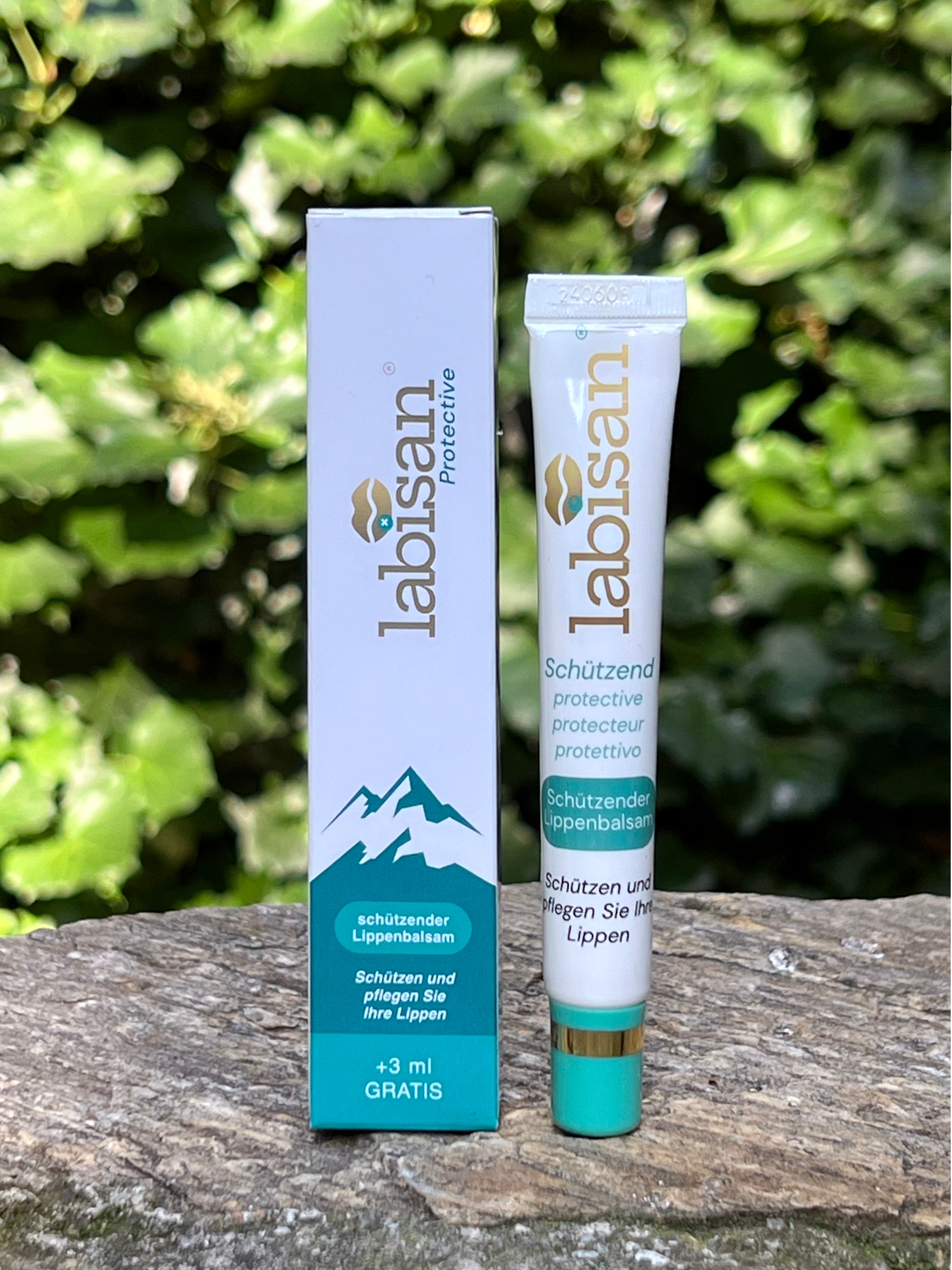
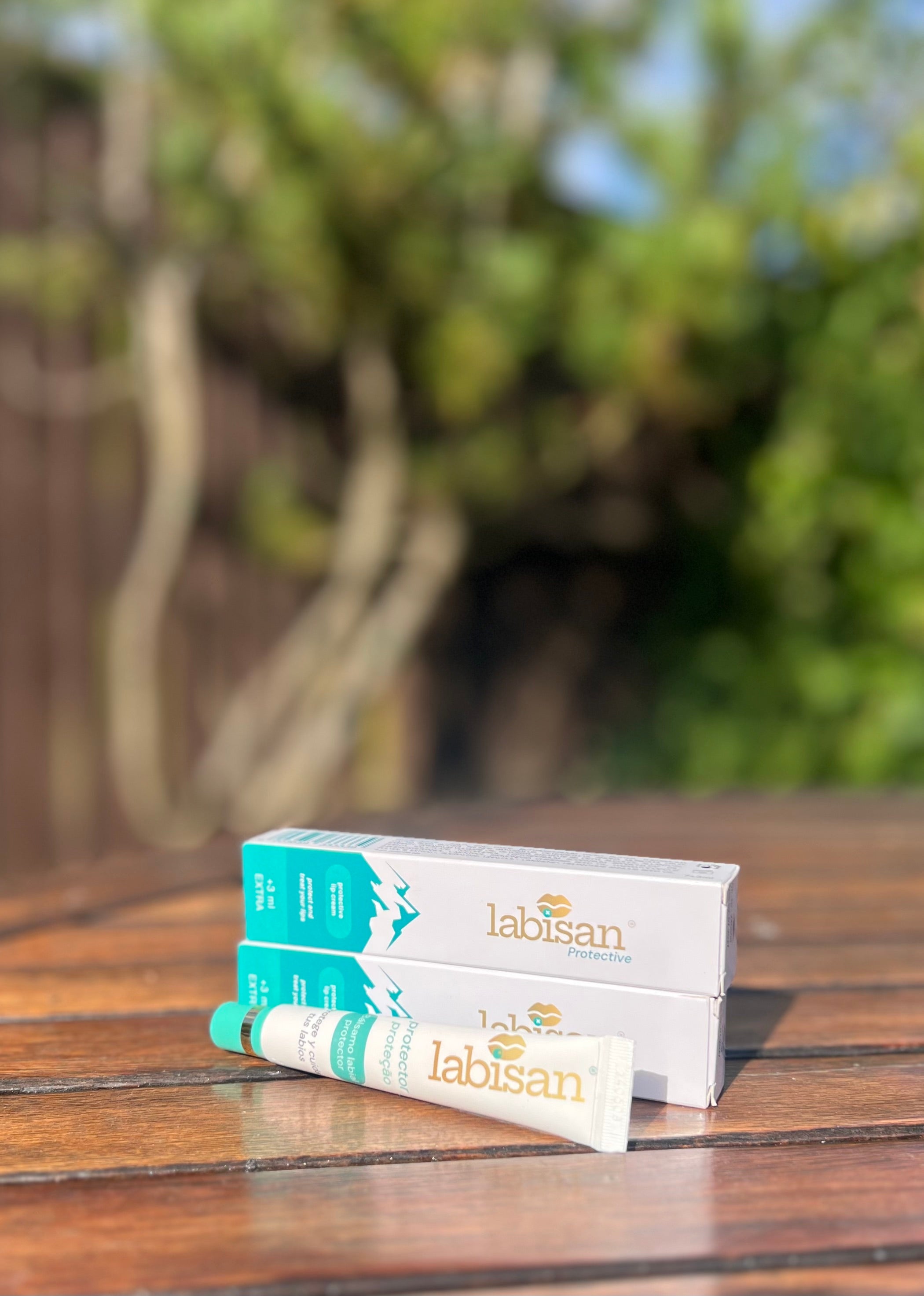
Labisan Protective Lip Balm SPF 20
Single Tube: $24.99 | Adventure Pack (3x): $59.97 (save 20%) | Family Bundle (5x): $89.95 (save 28%)
Free shipping on orders over $49. 30 day money back guarantee.
Shop Labisan Protective Lip BalmStage 5: Crust (Days 6 to 10)
What Is Happening Biologically
The ulcer dries and a yellow-brown crust forms over the lesion. Beneath the crust, new keratinocytes are migrating in from the lesion edges to re-epithelialise the wound. Viral shedding is declining sharply by the late crust stage, although the crust itself can still contain low levels of viral particles for several more days. Pain decreases substantially, but itching and tightness frequently persist as the new tissue forms.
The Right Intervention at Crust
Keep the crust intact. Premature removal of the crust delays healing, increases scarring risk, and can reactivate viral shedding from the underlying tissue. A thin layer of a soothing, non-irritating barrier ointment around the crust can reduce the itching and prevent the user from picking. Hydration of the surrounding tissue helps the natural shedding process when the crust is ready to come off on its own.
This is also the stage where users can begin to reintroduce their preventive daily lip balm to the surrounding healthy tissue, with strict attention to avoiding direct contact between the tube and the crust. Application by clean fingertip rather than direct tube contact is the safer protocol throughout the late crust stage.
The Common Mistake at Crust
Picking the crust off because it looks ready to come off is the most common error in the entire outbreak lifecycle. The new tissue beneath is fragile and frequently incompletely re-epithelialised. Premature crust removal extends total outbreak duration by two to four days and increases the likelihood of visible residual pigmentation or fine scarring at the lesion site.
Why Prevention Is Dramatically More Cost-Effective Than Treatment
The Time Cost of an Outbreak
A single full outbreak runs 5 to 10 days; users on the Labisan dual protocol resolve to faint pink residual at 120 hours per the 4-case study (lips, back, leg, cheek). During the natural course the user experiences 3 to 5 days of moderate pain, social discomfort that affects work and personal interactions, contagiousness restrictions limiting close contact, and the cumulative time spent on multiple topical applications, prescription pickups, and wound management. Across 4 to 6 outbreaks per year, that is 20 to 60 days of compromised function annually under the natural course, compressed to 20 to 30 days under the dual protocol.
The Cumulative Tissue Cost
Repeated outbreaks at the same lip site, year after year, produce measurable cumulative tissue damage. Subtle pigmentation changes, fine scarring, and reduced tissue elasticity all accumulate across decades of recurrent outbreaks at the same anatomical location, and our detailed guide to post-cold-sore lip pigmentation and dark marks recovery explains why these dark marks form and how to fade them. Prevention is not just about avoiding the next outbreak. It is about avoiding the cumulative damage that ten or fifteen outbreaks over a lifetime impose on a small area of irreplaceable tissue.
The Math of Daily Lip Balm vs Treatment Frequency
$24.99 lip balm covers daily prevention; 4 to 6 outbreaks per year at $20+ acyclovir cream per outbreak crosses $80 to $120 in treatment alone. Add the dual-protocol systemic layer at $44.99 per 90-capsule bottle of 22:1 graviola fruit extract (one month at 3 capsules per day), and the all-in annual prevention cost is $24.99 for the lip balm plus $539.88 for graviola at 12 months continuous, against the $80 to $120 in acyclovir plus 20 to 60 days of compromised function under the no-prevention baseline. Our coverage of SPF lip balm cold sore prevention data shows the empirical evidence that consistent daily SPF use measurably reduces outbreak frequency in UV-trigger-prone users.
Where the Daily Lip Balm Fits in This Picture
Pre-Prodrome: The Constant Defense Layer
The single highest-value role of a daily preventive lip balm is the asymptomatic period between outbreaks, when the user has no warning signs but the lip surface is constantly exposed to potential trigger stimuli. Daily SPF coverage prevents UV-induced reactivation. Daily antiviral botanical exposure provides a low-grade chemical defense at the surface. Daily barrier maintenance keeps the lip tissue intact and reduces the inflammatory baseline that contributes to outbreak vulnerability. Our outdoor sports cold sore prevention guidance walks through how this protocol applies during the highest-risk activity windows.
Prodrome: The Critical Intervention Window
At the first tingle, increasing the application frequency of a preventive lip balm with antiviral activity, in combination with prescription topical antiviral if available, has the strongest evidence base for shortening or aborting the outbreak. The lip balm is not the entire answer at prodrome, but it is part of the optimal intervention.
Active Outbreak: Reduced Role, Strict Hygiene
From papule through crust, the daily preventive lip balm is restricted to surrounding healthy tissue, applied by clean fingertip rather than direct tube contact, with strict attention to avoiding cross-contamination. The daily lip balm is not a treatment for the active lesion; it is a protective layer for the unaffected tissue around it.
Post-Outbreak: Resumption and Tissue Recovery
Once the crust has fully shed and the new tissue is intact, the daily preventive lip balm resumes its normal role. Lip tissue regenerates rapidly (full epidermal turnover in roughly 14 days), and consistent daily protection during the post-outbreak weeks supports complete tissue recovery and reduces the likelihood of a near-term recurrence at the same site.
Frequently Asked Questions
Can I apply lip balm directly to an active cold sore?
It depends on the product. A clean, soothing barrier ointment specifically designed for damaged skin can be applied to surrounding tissue and lightly over the lesion at the ulcer and crust stages, using a single-use applicator or clean fingertip. A daily preventive lip balm formulated for SPF and barrier maintenance is not appropriate for direct application to an active vesicle or ulcer; the tube becomes contaminated, the formulation is not designed for broken skin, and the lesion does not benefit from the SPF active load. Apply preventive lip balm to surrounding healthy tissue only.
How quickly does the prodrome window close?
Most published evidence suggests the optimal antiviral intervention window is the first 6 to 12 hours after the first tingle. Action taken within 6 hours has the strongest data for shortening or aborting the outbreak. Action taken between 12 and 24 hours still helps but with diminishing returns. Once a visible papule has formed, the prodrome window has effectively closed and the protocol shifts to outbreak management rather than abortion.
Why do my outbreaks always happen at the same spot?
HSV-1 establishes latency in a specific cluster of neurons in the trigeminal ganglion, and reactivated viral particles travel down the same sensory nerve fibre to the same surface location each time. The repeated location is a feature of the viral biology rather than a sign of anything you are doing wrong. The clinical implication is that the recurrent site is the priority area for daily preventive lip balm application and trigger avoidance.
If I do everything right, can I eliminate cold sores entirely?
No protocol eliminates HSV-1 latency once it is established. The realistic goal is reducing outbreak frequency, severity, and duration through consistent prevention and prompt intervention at prodrome. Users who commit to daily SPF lip balm with antiviral botanical activity, identify and avoid their personal trigger patterns, and act decisively at the first tingle commonly reduce their outbreak frequency by 50 to 80 percent over a sustained protocol. Suppressive oral antiviral therapy under medical supervision is available for users with frequent or severe recurrences.