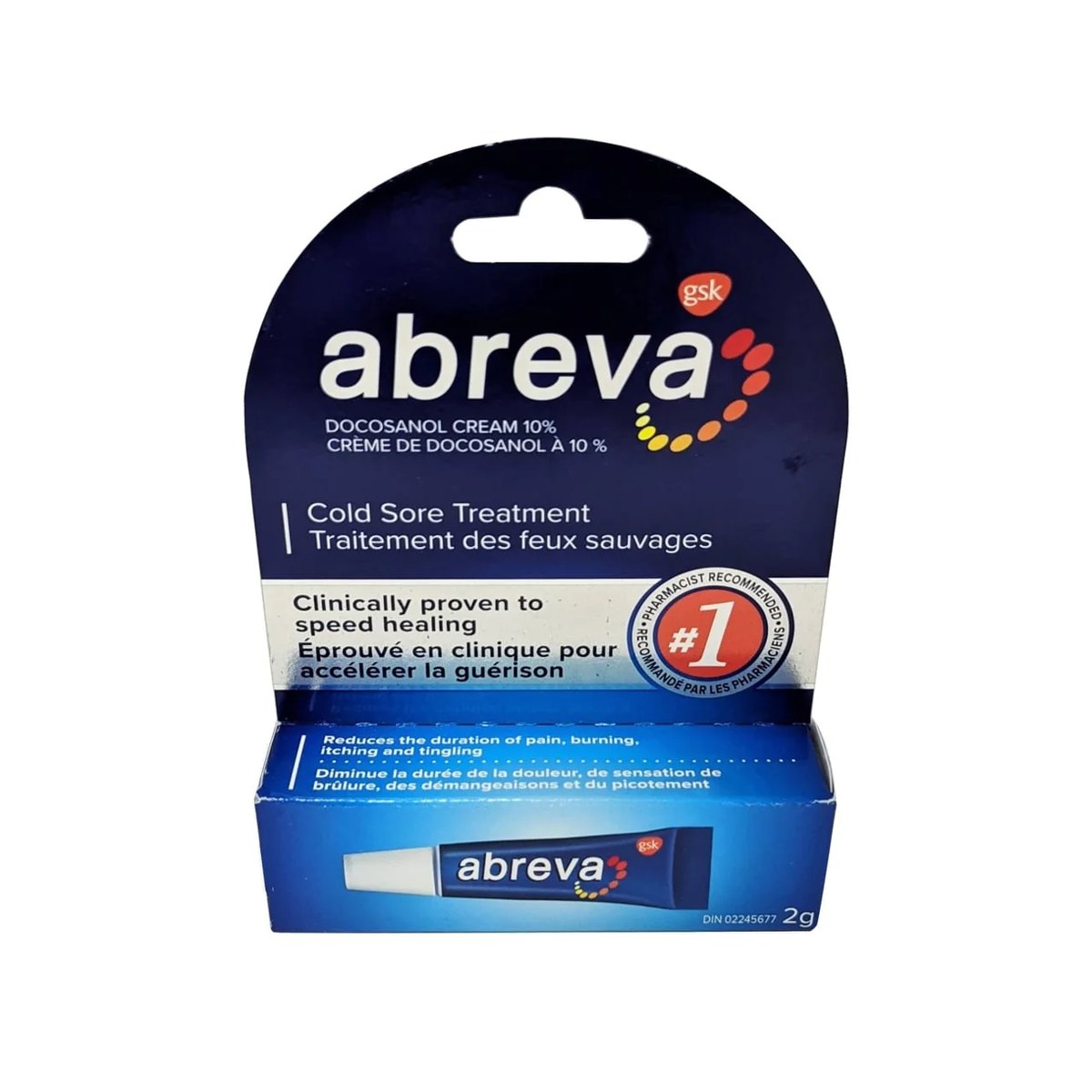
Abreva has owned the cold sore aisle for two decades for a defensible reason: it is the only over the counter antiviral the FDA has cleared to shorten a herpes labialis outbreak. But two things send people looking for alternatives. The first is price, roughly $15 to $35 for a two gram tube depending on the pharmacy, which makes it one of the most expensive products per gram anywhere in the drugstore. The second is scope. In the pivotal trial that earned its approval, docosanol shortened healing by about eighteen hours against vehicle control. That is a real effect, and it is also a modest one, and it only applies on the days you already have a sore.
So the honest framing for this guide is not "what beats Abreva". It is "what job are you actually trying to do". Shortening an active blister, hiding one before a wedding, numbing the pain, and reducing how often you break out in the first place are four different jobs, and no single product does all four. Below are seven alternatives grouped by the job they do, with what the evidence supports and what it does not. Our full ranked lineup lives in the best lip balm for cold sore prone lips buyer's guide.
The Four Jobs, Before You Buy Anything
Every product below sits in one of four lanes. Getting the lane right matters more than getting the brand right, because a treatment used for prevention wastes money and a prevention product used on an active blister disappoints.
| Alternative | Active or mechanism | Job it does | Typical cost | Prescription? |
|---|---|---|---|---|
| Generic docosanol 10% | Docosanol 10% | Shortens an active sore | $16 to $22 per 2g | No |
| Acyclovir 5% cream | Acyclovir | Shortens an active sore | Around $40 per 4g | Yes |
| Oral valacyclovir or famciclovir | Systemic antiviral | Shortens, and can suppress | $15 to $25 per course | Yes |
| Compeed hydrocolloid patch | Moist wound barrier | Conceals and protects | $12 to $20 per pack | No |
| Zilactin gel | Benzyl alcohol 10% | Numbs and seals | $10 to $15 | No |
| Lip Clear Lysine+ | Zinc oxide 1.2%, menthol, lysine | Soothes an active sore | $10 to $14 | No |
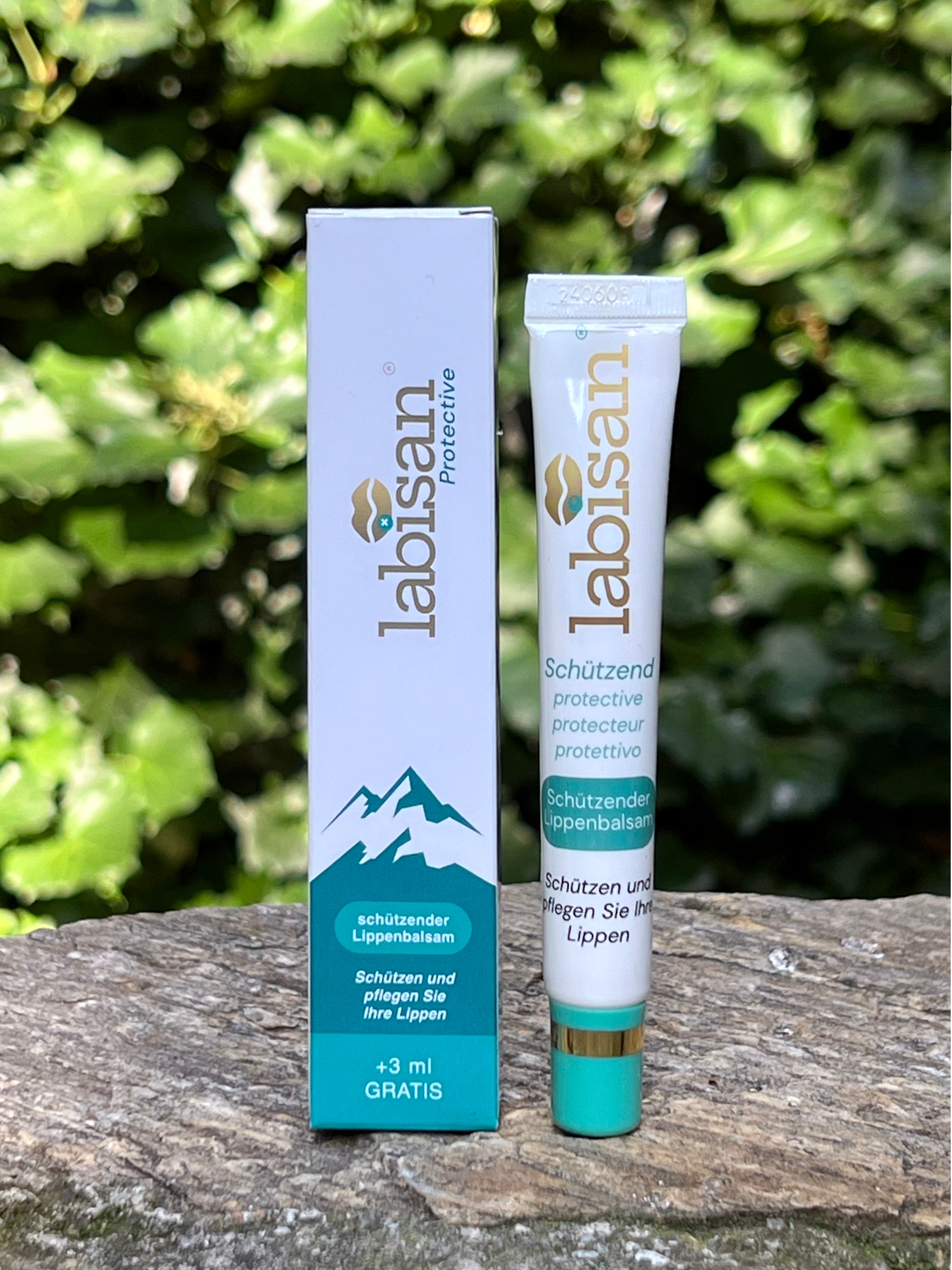
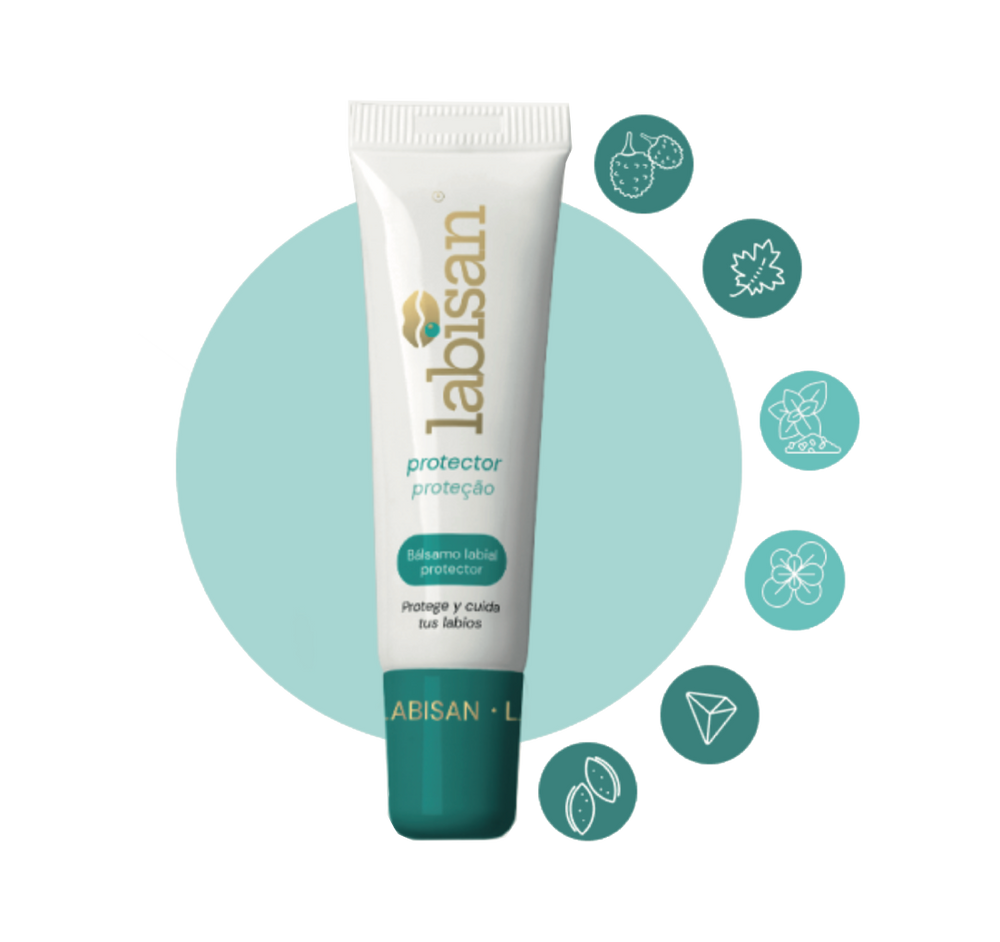
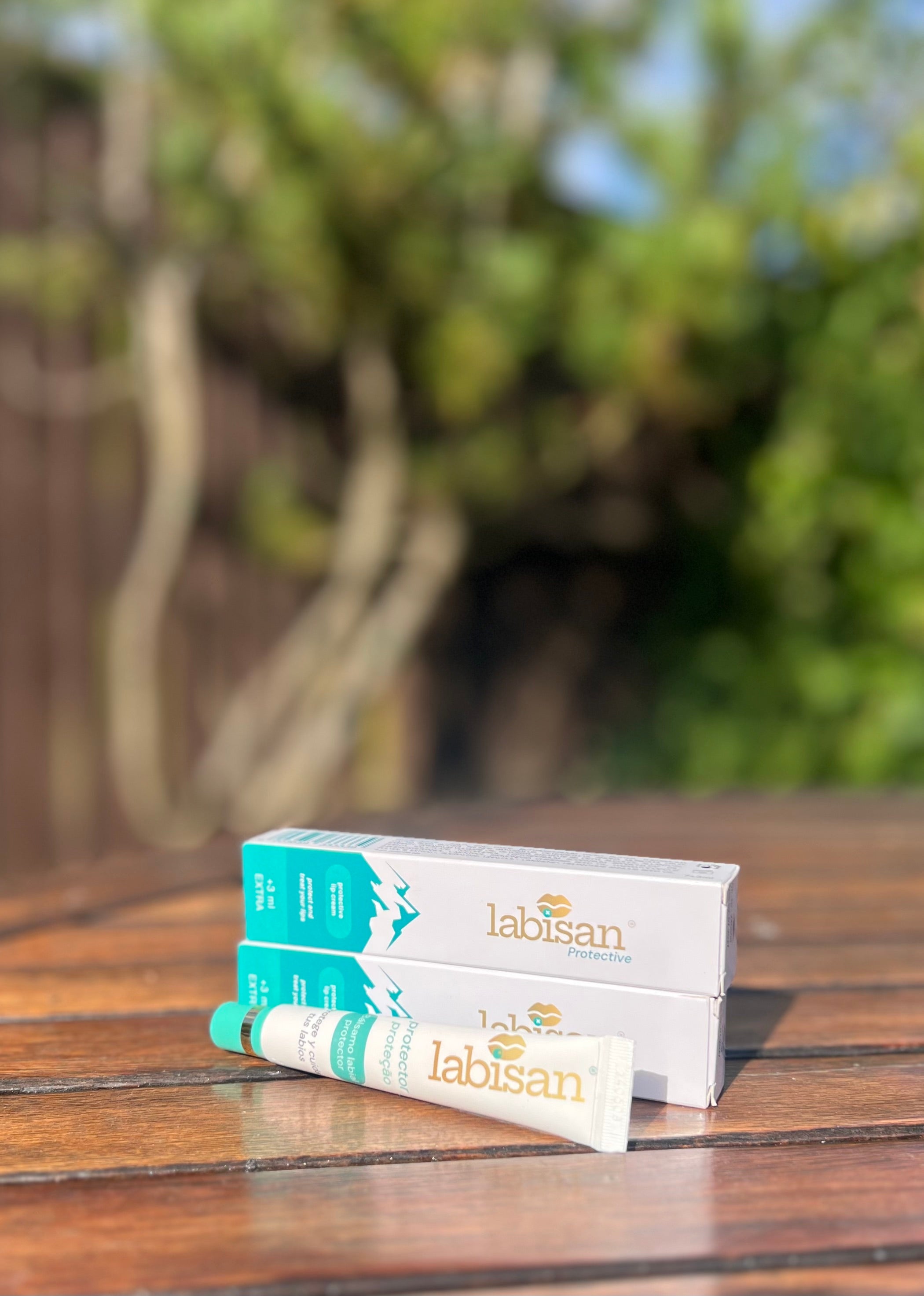
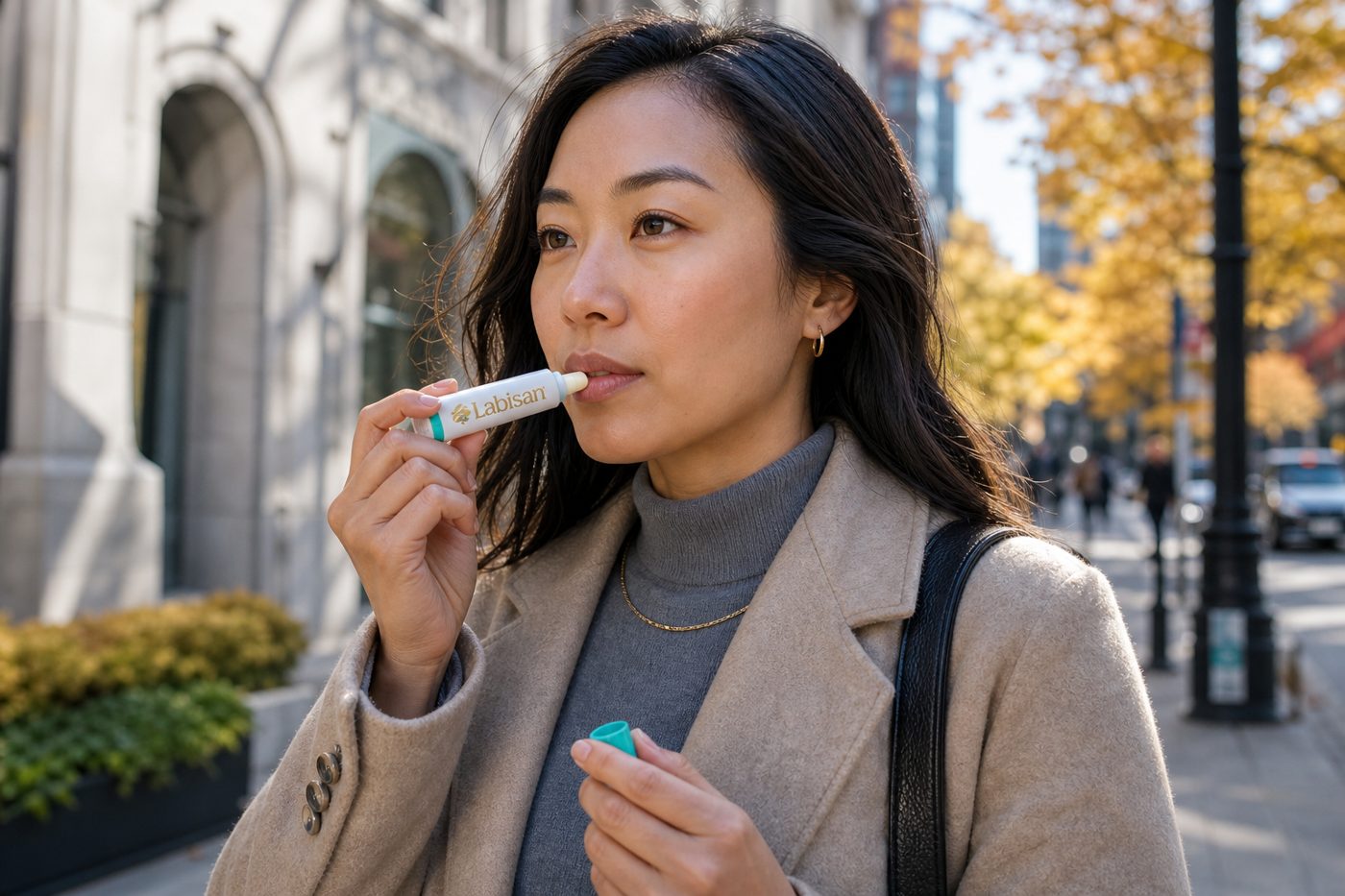
| Labisan Protective SPF 20 | Mineral zinc oxide barrier | Blocks the UV trigger daily | $24.99 | No |
1. Generic Docosanol 10%, the Same Molecule for Roughly Half
The most direct alternative to Abreva is Abreva's own active ingredient sold under someone else's label. Rugby and various pharmacy store brands market docosanol 10% cream at around $16 to $22 for a two gram tube, and because the FDA monograph governs the active concentration, you are buying the identical 10% docosanol at the identical strength. The base and packaging differ, the pharmacology does not.
Pros: same active, same strength, frequently half the price of the brand, available without a prescription.
Cons: not every pharmacy stocks it, so you may need to ask them to order it, which is a problem when the tingle started this morning. Buy it before you need it.
The honest caveat applies to the whole docosanol category, brand or generic. The benefit measured in the registration trials was around half a day of faster healing, and it depends heavily on catching the outbreak at the prodrome, the tingling and itching hours before anything is visible. Applied after the blister has formed, the effect shrinks considerably. We broke down the trial data alongside the lysine literature in our review of lysine versus docosanol and what the evidence actually shows.
2. Prescription Acyclovir 5% Cream
Acyclovir is a genuine antiviral, a nucleoside analogue that interferes with viral DNA replication, and in laboratory work it shows more potent antiviral activity than docosanol. Sold as Zovirax cream and as generics, it runs about $40 for a four gram tube and needs a prescription in the United States.
Pros: a stronger antiviral mechanism, larger tube, familiar to every prescriber, often partly covered by insurance.
Cons: requires a doctor visit, costs more per tube, and the clinical results in real patients are more modest than the laboratory potency suggests. Systematic reviews of topical acyclovir, penciclovir and docosanol land in similar territory, roughly half a day to a day of faster healing, with several studies showing little or no measurable effect at all.
The useful conclusion from that literature is uncomfortable for the entire topical antiviral category: the three main options are more alike than the marketing implies, and none of them changes how often you break out.
3. Oral Antivirals, the Pill in the Pocket
If you want the largest treatment effect available, it is not a cream. Single dose or two dose oral regimens of famciclovir have been reported to improve healing time by around two days, and valacyclovir taken as a short high dose course at the first sign of tingling performs well too, at roughly $15 to $25 for a one day cold sore course with a discount card. Both need a prescription.
Pros: the biggest measured reduction in outbreak duration of anything in this guide, and for people with frequent recurrences a doctor can prescribe daily suppressive therapy, which does reduce outbreak frequency.
Cons: prescription only, systemic rather than local, and the "pill in the pocket" approach only works if you actually have the pill in your pocket when the tingle starts, which means getting the prescription filled while you are perfectly healthy.
This is the option most worth discussing with a clinician if you get more than five or six outbreaks a year. It is also the option that most clearly separates the medical lane from the cosmetic lane, and it is worth being blunt: no product in this guide, prescription included, eliminates HSV-1 from the body. The virus remains latent in the trigeminal ganglia for life.
4. Compeed Cold Sore Patches, for the Days You Have to Face People
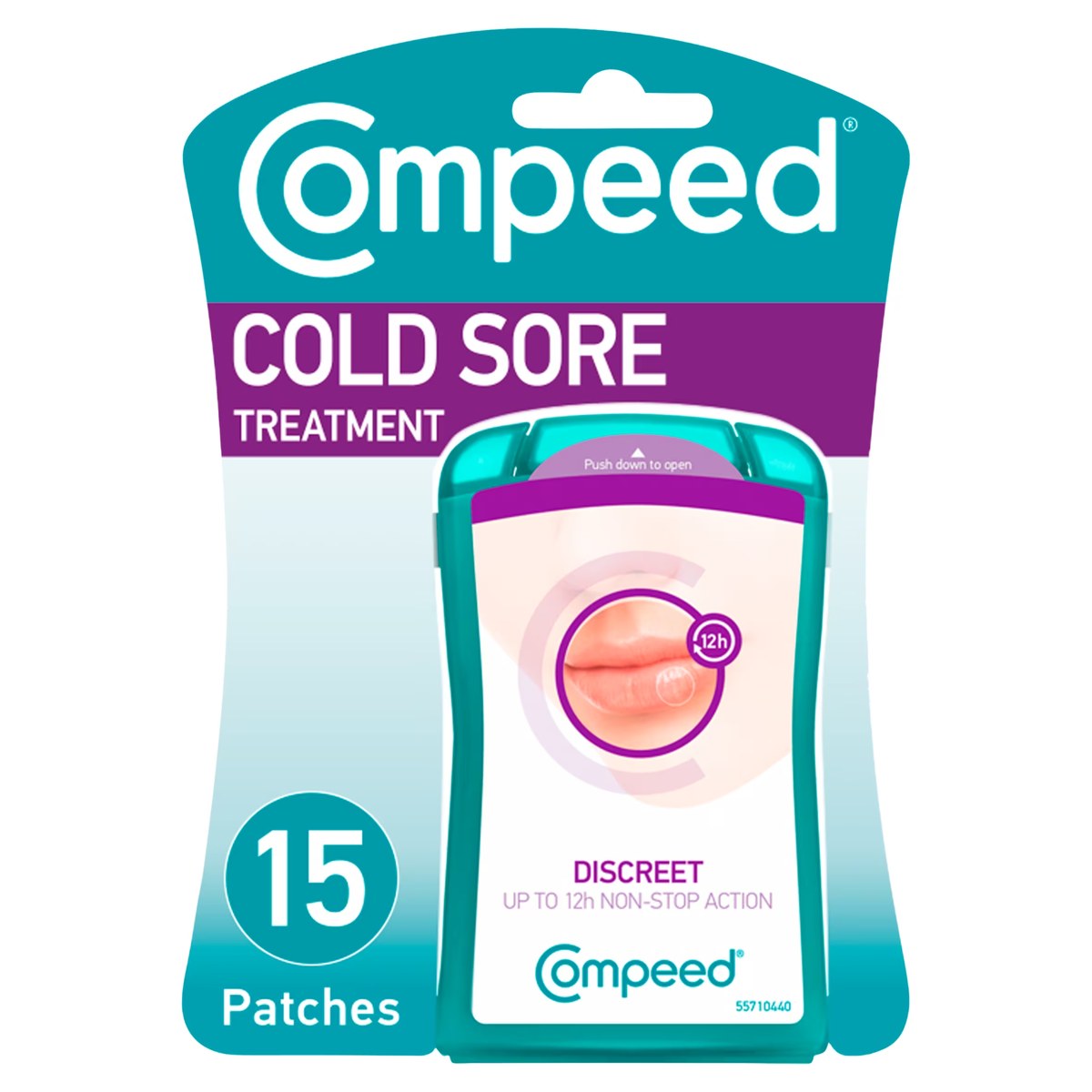
Compeed's invisible patches take a completely different approach. Instead of an antiviral, they apply hydrocolloid gel technology, the same moist wound healing principle used in blister and acne patches, creating a sealed environment over the sore that reduces crusting and keeps the fluid contained. A pack of fifteen patches is designed for wear of up to twelve hours at a time.
Pros: genuinely discreet under makeup, reduces the visible scab that makes the healing phase so conspicuous, contains the fluid so you are less likely to spread the virus by touching your face, comfortable enough to sleep in.
Cons: no antiviral action whatsoever, so it does not attack the virus, adhesion fails at the lip border and while eating, and for someone with six outbreaks a year the per episode cost accumulates. Some users also find that patches applied over an already weeping blister lift within a couple of hours.
Used well, patches are a confidence product rather than a treatment product, and there is nothing wrong with that. Many people run a patch over the daytime and a docosanol or acyclovir cream overnight.
5. Zilactin and the Numbing, Sealing Gels
Zilactin Cold Sore Gel uses benzyl alcohol 10% in a film forming base that dries into a flexible seal over the sore. Related products in this corner of the aisle include Zilactin-L, a non film forming liquid for the developing stage, Releev with benzalkonium chloride 0.13% as an antiseptic, and Orajel's numbing formulations built on benzocaine or dyclonine.
Pros: fast, tangible pain and itch relief, cheap at roughly $10 to $15, and the film forming versions protect the sore from food, drink and friction.
Cons: these are symptom products, not antivirals. They do not shorten the outbreak. The initial sting when the alcohol base hits an open lesion is significant, and several of them are not intended for use on broken skin at all, so read the carton.
Pick one of these if pain is your main complaint. Do not pick one expecting a shorter outbreak.
6. Lip Clear Lysine+ Ointment
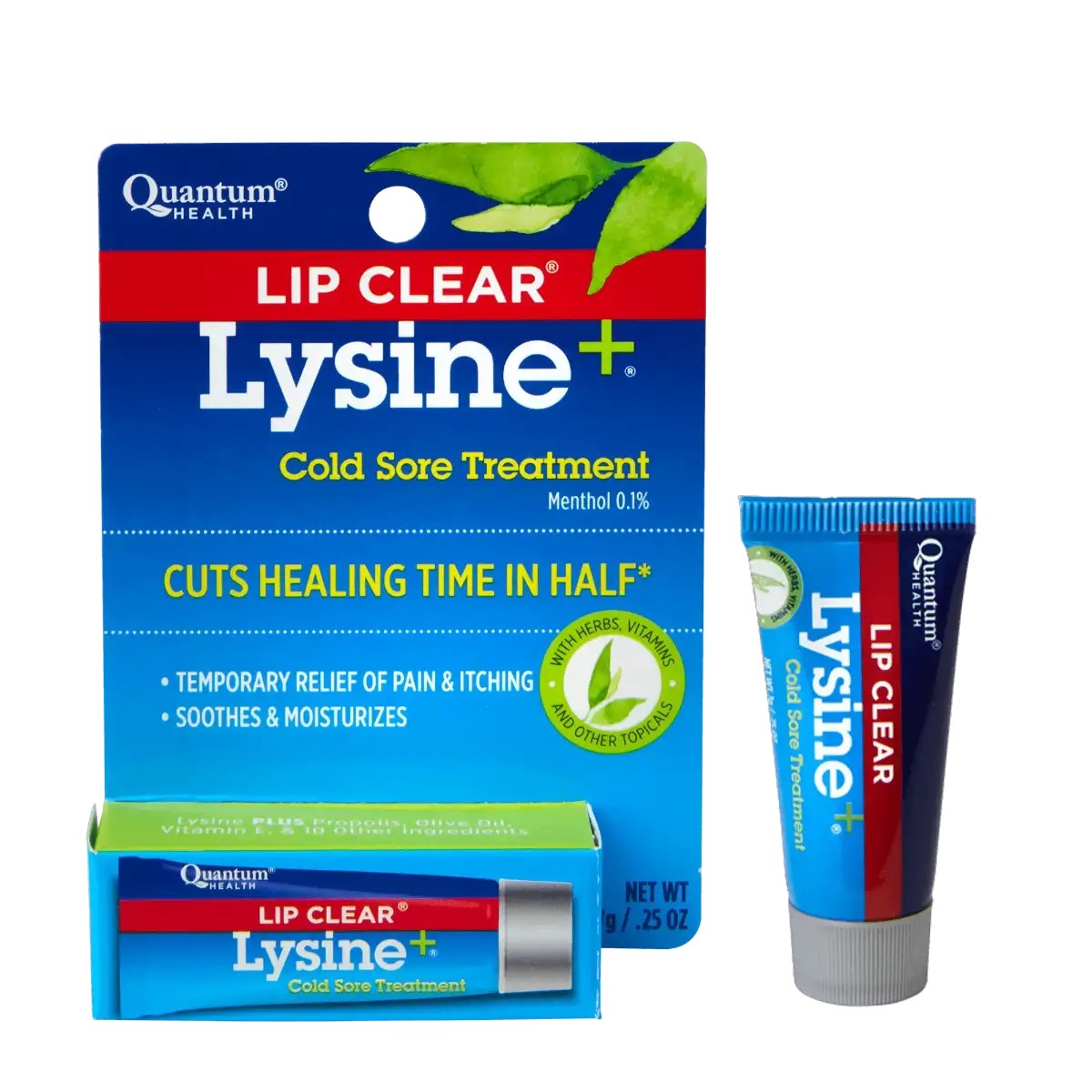
Lip Clear Lysine+ is the natural leaning option people reach for when they want to avoid the pharmaceutical aisle. Its labelled active is zinc oxide 1.2%, with menthol providing the cooling relief and lysine, the amino acid, as the headline marketing ingredient. The manufacturer cites a clinical study run at Southern California University of Health Sciences reporting that 40 percent of participants were free of symptoms after three days.
Pros: pleasant to apply, moisturising rather than drying, inexpensive at roughly $10 to $14, and a strong following among people who prefer a plant and mineral formulation.
Cons: the supporting study is small and manufacturer linked, which places it well below the evidentiary standard behind docosanol or acyclovir. The clinical case for topical lysine specifically remains thin, and the ointment leaves a visible white film, so it is an overnight product rather than an office one.
7. The Prevention Alternative: Labisan Protective Lip Balm SPF 20
Every option above shares one structural limitation. Each of them is deployed after reactivation has already begun. They compete on how much of an outbreak they can salvage. None of them reduces the number of outbreaks you get, and for most people that number is the thing that actually shapes the year.
This is where the prevention lane matters, and where the evidence is unusually clean. Ultraviolet light is the most reproducible external trigger for herpes labialis. In a 1991 Lancet trial, experimentally applied UV light provoked cold sores in 71 percent of susceptible subjects using a placebo, and in 0 percent of the same subjects when a sunscreen was applied to the lip beforehand. A trigger that never fires is an outbreak that never starts, and it is the only intervention in this entire guide that operates before the virus reactivates. We covered the mechanism in cold sore treatments with the evidence compared side by side.
Labisan Protective Lip Balm is built entirely around that finding. It uses zinc oxide as a mineral SPF 20 filter rather than the chemical filters common in medicated drugstore sticks, in a shea butter and wax base engineered for cold, wind and altitude, from an Austrian formulation house working on lip protection since 1931. It is our editors' pick in this lineup, and the reason is narrow and specific: it is the only entry here that can plausibly reduce how often you break out rather than how long each episode lasts.
The honest limitation, stated plainly: Labisan Protective does not treat an active cold sore. If you have a blister today, this is not the product for today. Use docosanol, acyclovir or an oral antiviral for the active sore, and use a daily SPF barrier for the eleven and a half months of the year when you do not have one. Those are complementary purchases, not competing ones. The full daily routine is laid out in our cold sore protocol guide.
Stop the Trigger Instead of Chasing the Outbreak
Labisan Protective Lip Balm, SPF 20 mineral barrier, $24.99
Austrian formulation since 1931. Free EU shipping over $49. 30 day satisfaction guarantee.
Shop Labisan ProtectiveHow We Would Actually Combine These
If you get one or two outbreaks a year, generic docosanol kept in the bathroom drawer plus a daily SPF balm covers you completely. If you get four or more, book the conversation about oral antivirals, keep a patch pack for the visible days, and treat the daily balm as non negotiable rather than seasonal. If your outbreaks cluster around ski trips, beach weeks or long days outdoors, the prevention lane is not one option among seven for you, it is the main event.
Frequently Asked Questions
Is there a cheaper alternative to Abreva with the same ingredient?
Yes. Generic docosanol 10% cream, sold by Rugby and as various pharmacy store brands, contains the identical active ingredient at the identical 10 percent strength, typically for $16 to $22 per two gram tube against $15 to $35 for the brand. Not every pharmacy stocks it, so buy it in advance rather than during an outbreak.
What works better than Abreva for cold sores?
For shortening an active outbreak, oral antivirals do. Short course famciclovir has been reported to improve healing time by roughly two days, compared with about half a day to a day for topical docosanol or acyclovir. Oral antivirals require a prescription. For reducing how often you get outbreaks, no cream competes with blocking the UV trigger daily, which is a different job entirely.
Can I use Abreva alternatives to prevent cold sores rather than treat them?
Most of them, no. Docosanol, acyclovir cream, hydrocolloid patches and numbing gels all act after reactivation has started. The two prevention approaches with real support are daily lip SPF, which blocks the best documented external trigger, and prescription suppressive antiviral therapy for people with frequent recurrences. A prevention balm such as Labisan Protective SPF 20 targets the trigger, but it does not treat a sore that has already appeared.
Do cold sore patches work as well as Abreva?
They do a different job. Hydrocolloid patches like Compeed contain no antiviral and do not attack the virus, but they conceal the sore, reduce scabbing and limit the risk of spreading fluid to your fingers and face. If your priority is looking normal at work this week, patches win. If your priority is a shorter outbreak, an antiviral wins. Many people use both, a patch by day and a cream overnight.
Is lysine a legitimate alternative to docosanol?
The evidence is much weaker. Docosanol's approval rests on controlled trials, while the case for topical lysine products rests largely on small, often manufacturer linked studies. Lysine ointments are soothing and inexpensive, and plenty of people like them, but they should not be treated as equivalent to an antiviral with regulatory clearance.
This article is educational content, not medical advice. Nothing described here cures HSV-1 or HSV-2, and the virus remains latent for life regardless of treatment. Prices are typical United States retail ranges as of August 2026 and vary by pharmacy and region. Talk to a doctor or pharmacist before starting any new treatment, especially if you are pregnant, immunocompromised, or your outbreaks are frequent, unusually severe, or spreading near the eyes.
Wondering whether the original earns its shelf space at all? Read our evidence review: Does Abreva actually work?