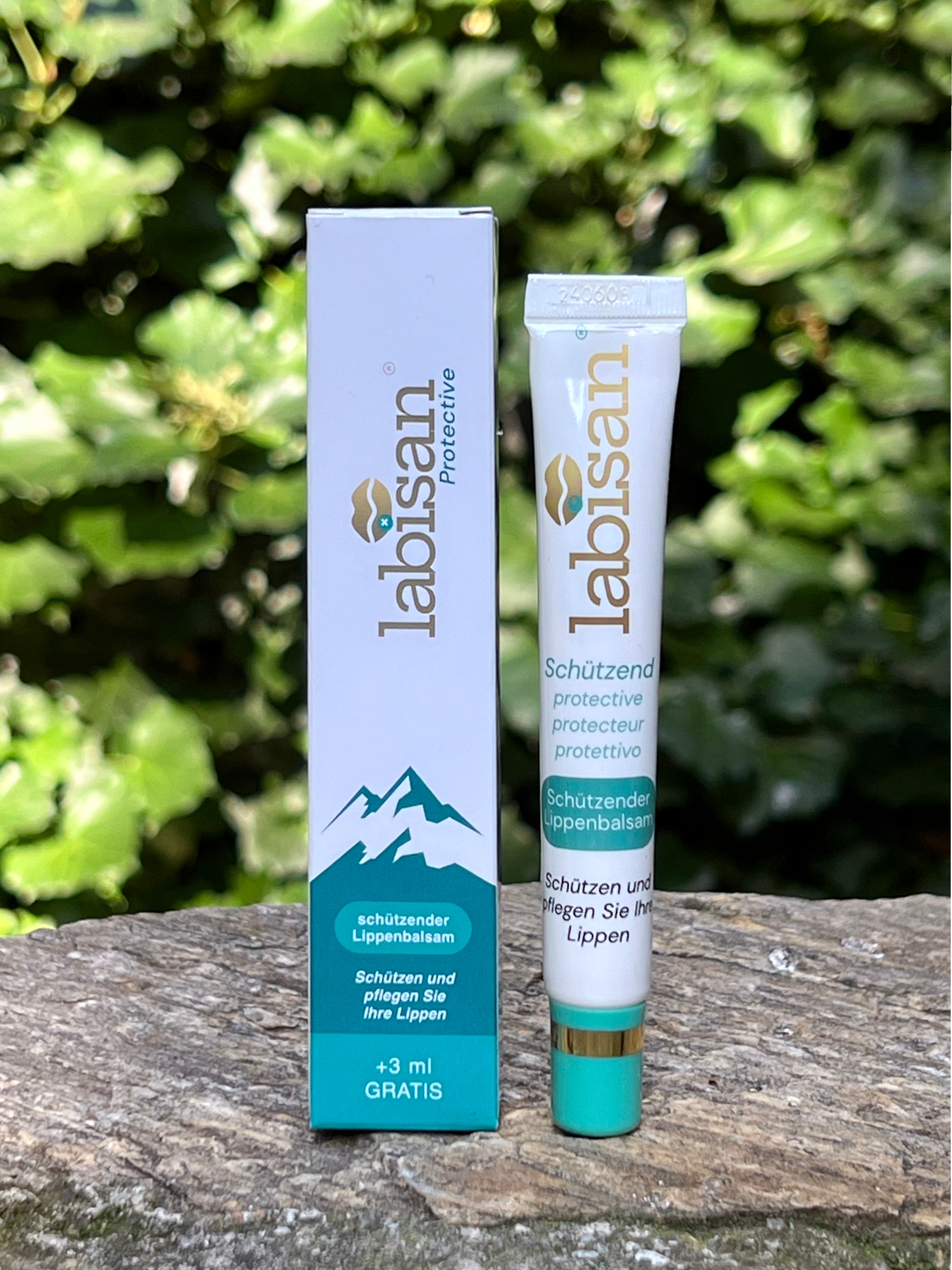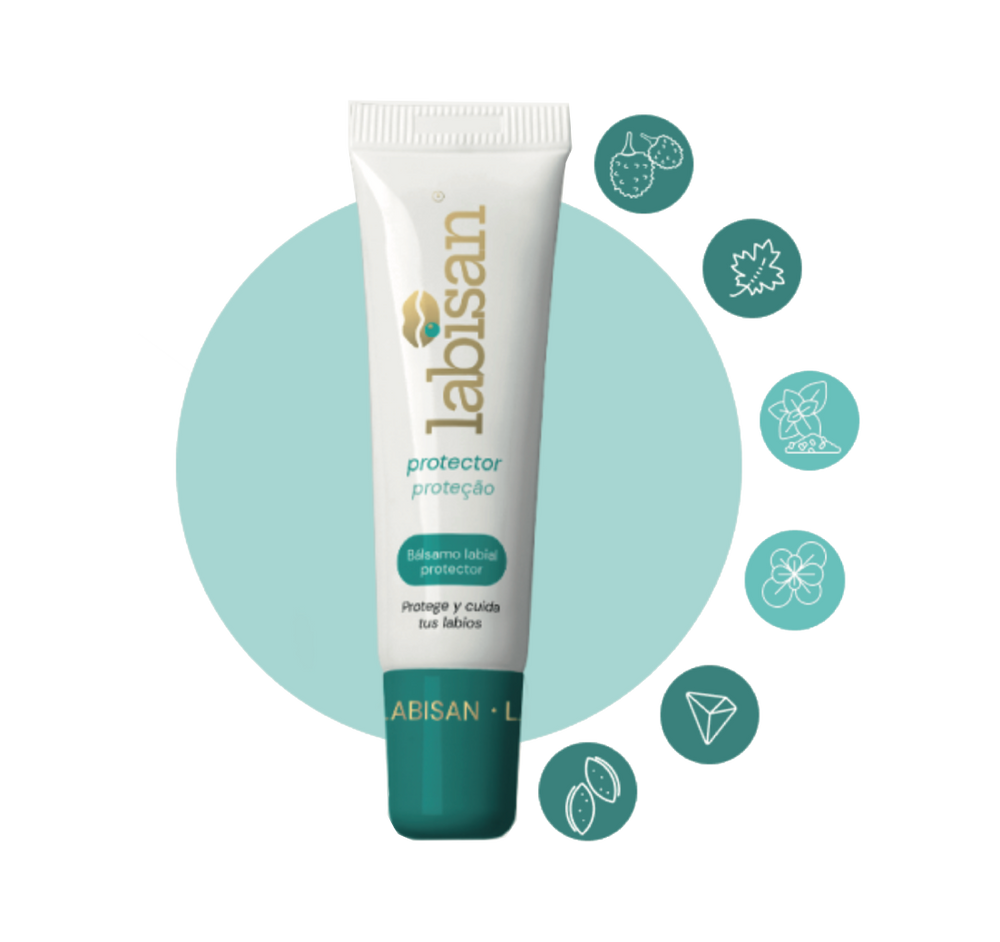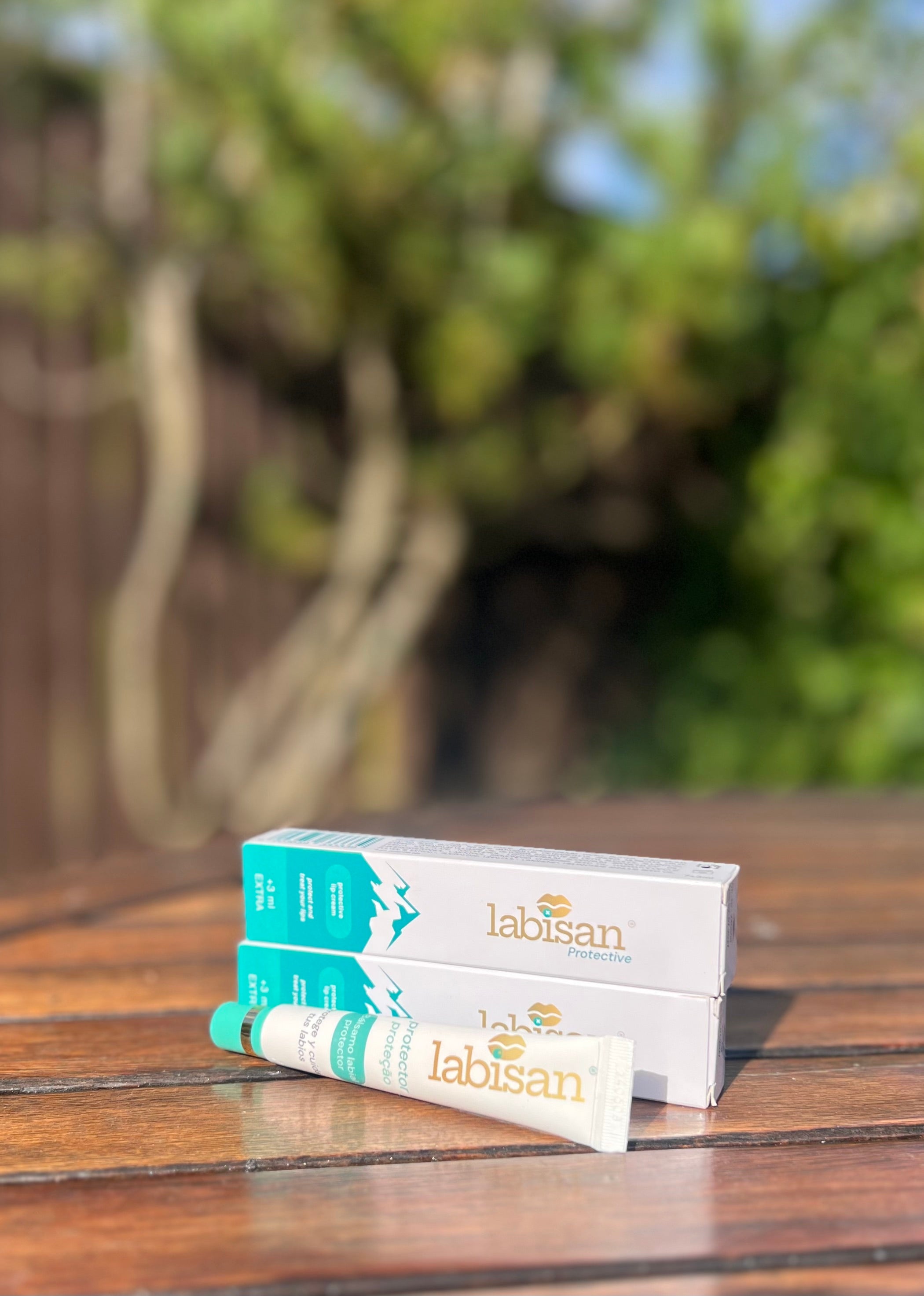
Pure beeswax lip balms have a long marketing tradition behind them. They feel solid in the tube, they smell pleasantly of honey, and they read as a clean, single-ingredient story. At sea level on a mild day, the difference between a beeswax-only formulation and a properly compounded balm is subtle enough that most users never notice. Take the same tube to 2,500 metres on a south-facing slope in spring, and the gap becomes obvious within a few hours. The wax softens unevenly, the protective film fragments, the lip surface starts to tighten, and the active ingredients (if there are any) lose effectiveness faster than the user can reapply. This is not a manufacturing problem. It is a lipid chemistry problem that single-wax formulations cannot solve, and it is exactly why the Labisan Protective Lip Balm SPF 20 is built around a beeswax, shea butter, and lanolin matrix rather than wax alone.
This is the science behind why beeswax-only balms fail at altitude, what a properly engineered multi-lipid system does differently, and why the formulation tradition that survived nearly a century of alpine use is more than a heritage detail. For a wider view of the same environment, our explainer on high altitude UV reflection science covers the radiation side of the equation that beeswax-only products are equally unprepared for.
The Lipid Melting Point Math
Why Beeswax Behaves Differently Above 2,500 Metres
Beeswax has a melting point range of roughly 62 to 65 degrees Celsius. That number alone tells you very little about how it performs on a lip. What matters is the softening point, which is closer to 35 to 38 degrees Celsius for natural beeswax depending on its origin and processing. Lip surface temperature in active outdoor use varies between 28 and 36 degrees Celsius, depending on ambient air, sun exposure, and circulation. At sea level on a temperate day, beeswax sits comfortably in its solid range on the lip surface and forms a stable film.
At altitude the variables shift. Direct solar radiation on exposed skin can lift the local lip surface temperature above the wax softening point even when ambient air temperature is below freezing. The wax film softens, becomes mechanically vulnerable to wind shear, and is removed from the lip surface in patches rather than as a continuous protective layer. Once that fragmentation begins, the underlying tissue is exposed to UV, cold air, and wind simultaneously, with no consistent barrier above it.
The Sea Level Test Is the Wrong Test
Most lip balm stability and performance testing is conducted under laboratory conditions calibrated to standard atmospheric pressure and moderate radiant load. A formulation that performs well in those conditions can still fail in alpine use because the alpine environment delivers a combination of stressors that sea level testing does not replicate. Lower atmospheric pressure changes the volatility profile of essential oil constituents. Higher UV flux accelerates oxidation. Repeated freeze and thaw cycles fracture single-wax films at microscopic scale, reducing their structural integrity even before the user notices any visual change.
This is why generations of mountaineers, ski guides, and high alpine workers gravitated toward formulations that combined beeswax with butters and animal-derived lipids long before modern stability data existed. The empirical evidence accumulated faster than the laboratory work. The history of Labisan from the Austrian Alps to the 1953 Everest expedition covers how that field testing shaped the formulation we still produce today.
UV Oxidation and the Acceleration Problem
Beeswax Is Not Immune to Photo-Oxidation
Pure beeswax is often described as a stable lipid, and at sea level under indoor conditions it largely is. Above 2,000 metres the UV-B and UV-A flux on exposed surfaces is materially higher than at ground level. UV exposure increases roughly 10 percent per 1,000 metres of elevation, and snow or rock reflection can amplify the effective dose by a further 30 to 80 percent depending on terrain. Under that radiation load, the long-chain hydrocarbon and ester components of beeswax undergo measurable photo-oxidation, generating peroxide species and free radicals that propagate through the wax film and the underlying lipid layer of the lip itself.
The practical consequence is that a beeswax-only film, after a few hours of direct alpine sun exposure, becomes a source of low-grade oxidative stress on the very surface it was meant to protect. Users frequently describe the sensation as a paradoxical tightness or burning that appears mid-afternoon despite continued reapplication. The wax has not disappeared; it has chemically transformed into something less protective and more inflammatory than it was when first applied.
Why Antioxidant-Rich Lipid Co-Ingredients Matter
Shea butter contains tocopherols, triterpene esters, and phenolic compounds that quench free radicals before they can propagate through the wax film. Lanolin, while structurally different, contributes cholesterol esters and lanosterol derivatives that integrate into the lip surface lipid matrix and stabilise the wax phase against oxidative fragmentation. Together with a low concentration of antioxidant essential oils such as manuka, the multi-lipid system continues to function even after several hours of high UV exposure. Manuka oil's antiviral and stabilising profile contributes to both the chemical and biological resilience of the film.
The Wax-to-Active Ratio That Breaks the Barrier
Why Single-Wax Formulations Crowd Out the Actives
A typical beeswax-only lip balm runs at 25 to 40 percent beeswax by weight, with the balance split between a carrier oil and minor ingredients. To deliver a stable solid stick, the formulator has very little room to add high concentrations of biologically active compounds without compromising the structural integrity of the product. Add too much liquid oil to dissolve the actives, and the stick softens. Add too much wax to compensate, and the active concentration drops below the threshold where it can do useful work on the lip surface.
This is the engineering trap that a beeswax-only design imposes. The wax is asked to do two incompatible jobs at once: hold the product together and provide the entire barrier function. There is no third structural component carrying load, so any change to the formulation forces a tradeoff between physical stability and biological activity.
The Multi-Lipid Matrix Solves the Tradeoff
A beeswax, shea butter, and lanolin system distributes the structural load across three lipid classes with different melting profiles, different mechanical properties, and different oxidative stability profiles. Beeswax provides the primary structural film. Shea butter contributes a softer, semi-solid phase that fills microscopic gaps in the wax film and donates fatty acids to the underlying stratum corneum. Lanolin adds a heavier, more occlusive phase that survives at temperatures where beeswax begins to soften, holding the matrix together when the wax phase is locally compromised.
The result is a system where the active ingredient load can rise to meaningful concentrations (zinc oxide for physical SPF, manuka oil for antiviral defense, vitamin E for antioxidant support) without destabilising the stick or thinning the protective film. The formulation has structural redundancy that single-wax balms cannot match. Our coverage of cold weather barrier failure walks through the broader stratum corneum repair argument that the multi-lipid system supports.
What Alpine Conditions Actually Demand
Mechanical Resilience Against Wind Shear
Sustained wind at altitude removes single-wax films faster than most users expect. Wind shear at 30 to 50 kilometres per hour, combined with ambient temperatures near or below freezing, mechanically lifts the wax film from the lip surface in fragments. A multi-lipid system with a softer butter phase resists this fragmentation because the butter component flows slightly under shear stress and self-heals microscopic gaps before they propagate.
Thermal Cycling Stability
An alpine day repeatedly cycles a tube of lip balm through freeze and thaw conditions. The product warms in a chest pocket during ascent, cools during a stop on a ridge, warms again during descent. Single-wax formulations are vulnerable to crystalline rearrangement under repeated cycling, which produces a grainy texture and uneven application after a few days of use. A multi-lipid matrix tolerates cycling because the different lipid phases buffer one another against crystallisation, maintaining a smooth, uniform application stick across an entire season of use.
Compatibility With SPF Active Loading
Zinc oxide is the only physical UV blocker with the photostability and breadth of spectrum required for serious lip protection. Our analysis of zinc oxide versus chemical sunscreens for lips explains why physical filters are the appropriate choice. Suspending zinc oxide at meaningful concentration (typically 6 to 10 percent for SPF 20 lip protection) requires a lipid matrix that can hold the mineral particles in even distribution without sedimentation. A beeswax-only formulation tends to drop zinc oxide particles to the bottom of the molten phase during manufacture, producing an uneven SPF distribution across the finished product. The shea butter and lanolin components in a multi-lipid matrix provide the viscosity and surface chemistry needed to keep the mineral filter evenly distributed throughout the stick.
Built for the altitudes that break single-wax balms
Labisan Protective Lip Balm SPF 20
Single Tube: $24.99 | Adventure Pack (3x): $59.97 (save 20%) | Family Bundle (5x): $89.95 (save 28%)
Free shipping on orders over $49. 30 day money back guarantee.
Shop Labisan Protective Lip BalmHow the Labisan Formulation Earns Its Altitude Profile
Beeswax as the Structural Anchor
The Labisan formula uses cold-filtered European beeswax as the structural backbone, contributing roughly the same proportion of total wax content as a traditional single-wax balm but functioning as the structural anchor rather than the entire system. This preserves the familiar feel of a quality wax stick without asking the wax to carry the entire barrier load.
Shea Butter as the Self-Healing Layer
Unrefined shea butter contributes triglycerides, triterpene esters, and a small percentage of phenolic antioxidants that integrate into the wax phase during compounding. On the lip surface, the shea component flows microscopically under body heat and mechanical stress, filling gaps in the wax film that would otherwise expose the underlying tissue. This is the self-healing property that single-wax balms cannot replicate.
Lanolin as the High-Altitude Backup
Pharmaceutical-grade lanolin is structurally distinct from plant-derived lipids. Its cholesterol ester profile closely mimics the lipid composition of human stratum corneum, allowing it to integrate seamlessly with the lip surface barrier rather than sitting on top of it as an inert film. At altitude, when local surface temperatures push the wax phase toward its softening point, lanolin remains structurally intact and holds the formulation together. This is the layer that prevents complete film failure during sustained sun exposure on snow.
Active Ingredients That Survive the Day
Within the multi-lipid matrix, Labisan suspends zinc oxide for physical SPF 20 protection, manuka oil for antiviral and antioxidant defense, vitamin E for radical quenching, and a low concentration of carnauba wax for additional thermal stability. Each active is present at a concentration that matches the published evidence for its mechanism, and each is held in even distribution by the matrix that single-wax formulations simply cannot provide. Our 90 minute reapplication rule explainer covers why even a well-designed SPF lip balm needs disciplined reapplication during sustained exposure.
The Field Test That Matters
Empirical performance at altitude is the only test that ultimately matters for this product category. The Labisan formulation has been refined across nearly a century of use in the Austrian Alps, the Dolomites, and on expeditions including the 1953 first ascent of Everest. The formula has changed at the margins as ingredient supply chains improved and as new evidence emerged for specific actives, but the multi-lipid architecture has remained constant. It works because the engineering tradeoff that single-wax formulations cannot escape is solved at the structural level rather than worked around at the marketing level.
Users who switch from a beeswax-only balm to the Labisan formulation typically describe the difference in terms of duration rather than initial feel. Both products feel comfortable at first application. The Labisan film is still functioning at hour four of an alpine day, while the single-wax product has fragmented and required three or four reapplications without delivering equivalent protection. The math is the same whether the user calculates it explicitly or just experiences the result.
Frequently Asked Questions
Why does my pure beeswax lip balm feel fine on cold days but fail when the sun is strong?
Direct solar radiation on exposed skin lifts the local lip surface temperature well above ambient air temperature, often into the softening range of natural beeswax even when the air is below freezing. Once the wax softens, wind shear and mechanical contact (talking, eating, drinking) fragment the film faster than reapplication can keep up. A multi-lipid matrix with shea butter and lanolin tolerates that local temperature swing because the structural load is distributed across components with different softening profiles, so the film remains continuous even when the wax phase is partially compromised.
Is beeswax bad for lip balm?
No. Beeswax is an excellent structural component when used as part of a multi-lipid matrix. The problem is using beeswax as the only wax in a formulation that also has to carry meaningful concentrations of SPF active and biological ingredients. Beeswax cannot solve every problem on its own, and asking it to do so produces a stick that is physically stable in the package but chemically and structurally vulnerable on the lip surface.
How much does altitude actually change UV exposure on lips?
UV exposure increases roughly 10 percent per 1,000 metres of elevation, and snow or rock reflection can amplify the effective dose by 30 to 80 percent depending on terrain. At 2,500 metres on a clear spring day with snow cover, the cumulative UV dose to exposed lip tissue can reach three to four times what the same person would receive at sea level on a midsummer afternoon. Our deep dive on the high altitude UV math covers the full breakdown.
Can I just reapply a beeswax-only balm more often to get the same protection?
Reapplication helps with the dryness side of the problem but does not fix the SPF distribution issue or the photo-oxidation issue. A beeswax-only product without consistent zinc oxide loading cannot deliver SPF 20 reliably even with frequent reapplication, and reapplying oxidised wax on top of already irritated tissue compounds the inflammation rather than relieving it. Frequency is part of the answer; formulation is the other part.