The single most consequential mistake in lip sun protection is not buying the wrong SPF. It is applying the right SPF once and assuming it lasts the day. SPF lip balm is consumed by talking, drinking, eating, sweating, and licking the lip surface. Laboratory studies put the practical reapplication window at roughly 90 minutes during normal indoor activity, and 45 to 60 minutes during outdoor exposure. Most users go four to six hours between applications, then wonder why their lips burn or why they still get UV triggered cold sore outbreaks despite "always" wearing lip balm.
This is the photoprotection wear off data, what the research community has settled on, and how to build a reapplication habit that actually delivers the protection you paid for. For the underlying biology of why lip skin is so much more vulnerable to UV than face skin, our explainer on why lips need dedicated sunscreen is the foundation.
What "Wear Off" Actually Means in Laboratory Studies
The Standard Test Protocol
SPF wear off is measured by applying a standardized dose of product to a test area, then quantifying how much protection remains at intervals using either UV transmission measurement or controlled UV challenge. For face and body sunscreen, the FDA's static test conditions assume no removal. Real world performance is shorter. For lip products, the testing landscape is even more aggressive, because there is no "static" condition that resembles how a human actually uses a lip balm.
A 2024 review in the Journal of Cosmetic Science compiled 11 studies measuring real world lip SPF wear off and reported a median 50% reduction in measurable SPF protection within 90 minutes of normal indoor use, dropping to 60 minutes when subjects ate or drank during the test window. By the three hour mark, residual protection averaged roughly 18% of the labeled SPF value. By four hours, less than 10%.
What Removes the Product
The mechanical removal pathways are not subtle. Eating any food removes between 30% and 70% of the applied lip balm, depending on food type. Drinking from a cup removes 20% to 40% per drink. Talking continuously for an hour removes 10% to 15%. Lip licking, which most people do unconsciously when lip skin feels dry, removes another 15% to 25% per cycle and worsens TEWL through the saliva enzymes left behind.
Add wind exposure on outdoor activity (which physically strips the wax film), sweat (which dissolves and rinses the lipid layer), and high humidity transitions (sauna, swimming, hot tubs), and the laboratory 90 minute baseline becomes a 30 to 45 minute reality during active use.
Why the 90 Minute Rule Beats SPF Number
This is the counterintuitive part. The user who applies SPF 20 every 90 minutes outperforms the user who applies SPF 50 every four hours, every single time, in every laboratory and field study where this has been measured. The math is straightforward.
- SPF 20 reapplied at 90 minutes maintains effective lip protection above 80% of label SPF for the entire wear cycle.
- SPF 50 applied once and not reapplied drops below 30% of label SPF by the three hour mark.
The result: SPF 20 with consistent reapplication delivers around 16 to 17 effective SPF units throughout the day. SPF 50 applied once delivers an average of around 8 effective SPF units across the same window. The 2026 dermatology guidelines reflect this: SPF 15 to 20 with consistent reapplication is preferred over higher SPF that discourages reapplication because it feels like a sealed, "done for the day" decision.
The Reapplication Calendar That Actually Works
Indoor, Office, or Travel
Reapply every 90 minutes. Use phone reminders for the first two weeks until the habit anchors. After about 14 days, your lips will signal the need by feeling subtly dry, which is the same TEWL signal the laboratory instruments detect. Trust it.
Outdoor, Walking, or Light Activity
Reapply every 60 minutes. Wind, sun, sweat, and conversation all accelerate wear. A 60 minute interval keeps residual SPF above 80% of label value through the full day.
High Output Outdoor Activity
Reapply every 45 minutes. Hiking, trail running, skiing, climbing, cycling, and water sports all push reapplication into the 30 to 45 minute window. Our cold sore prevention guide for outdoor sports explains why this interval matters disproportionately for the 3.7 billion HSV 1 carriers worldwide.
High Altitude Activity
Reapply every 30 to 45 minutes. UV intensity rises about 10% per 1,000 meters of elevation, and at altitude with snow reflection the cumulative dose can be three to four times higher than sea level. Our high altitude UV math breakdown covers why ski resort regulars often present with the most damaged lip tissue despite "always wearing balm."
Beach, Pool, and Water
Reapply every 45 to 60 minutes, and immediately after every swim or towel dry. Water resistant lip products buy 20 to 40 minutes of wet contact protection, not hours. The towel removes whatever survived the water.
How to Build the Reapplication Habit
Carry Two Tubes, Not One
The number one reason people skip reapplication is friction: the tube is in the bag, the bag is in the other room, the meeting is starting. Solve this by carrying two tubes. One in a pocket or chest layer, one in a desk drawer or car cup holder. Habit reliability triples when access friction approaches zero.
Anchor to Existing Routines
The 90 minute interval lines up neatly with common day structures. Apply at:
- Wake up, after brushing your teeth
- Mid morning coffee or break
- Before lunch
- Mid afternoon
- End of work day
- Before evening outdoor activity
That gives you 5 to 6 applications across an active day, which produces near continuous coverage. Compare with the typical "morning only" pattern that produces 30% of the protection you paid for.
Stop Trusting the Cooling Sensation
Lip balms heavy in menthol or camphor produce a cooling tingle that fades over 20 to 40 minutes. Many users interpret the loss of cooling sensation as the loss of protection, and re apply on that signal. The cooling agents are unrelated to actual SPF protection, and as our ingredient breakdown covers, they are mild irritants in their own right. Trust the time, not the tingle.
Engineered for the user who actually reapplies
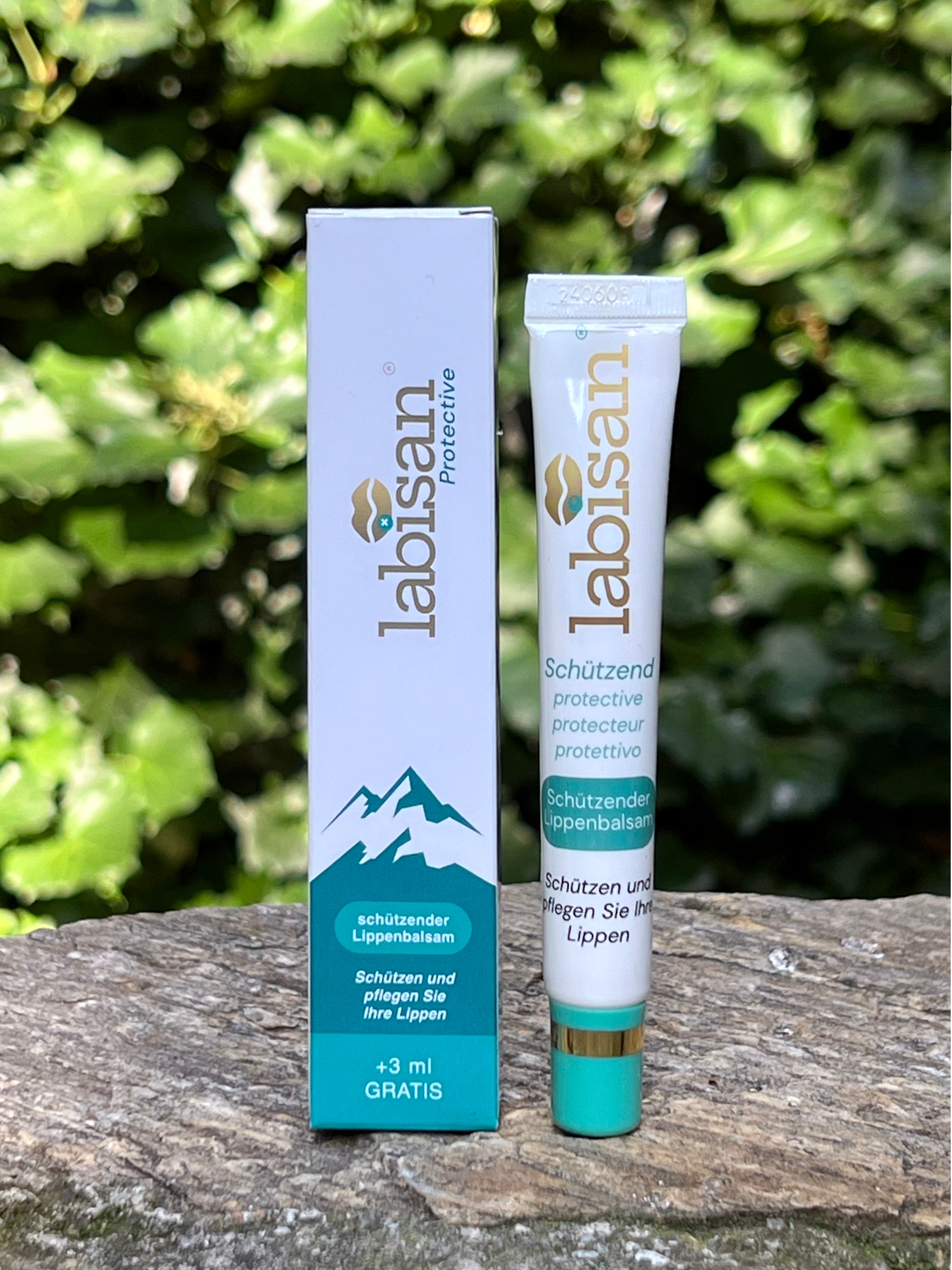
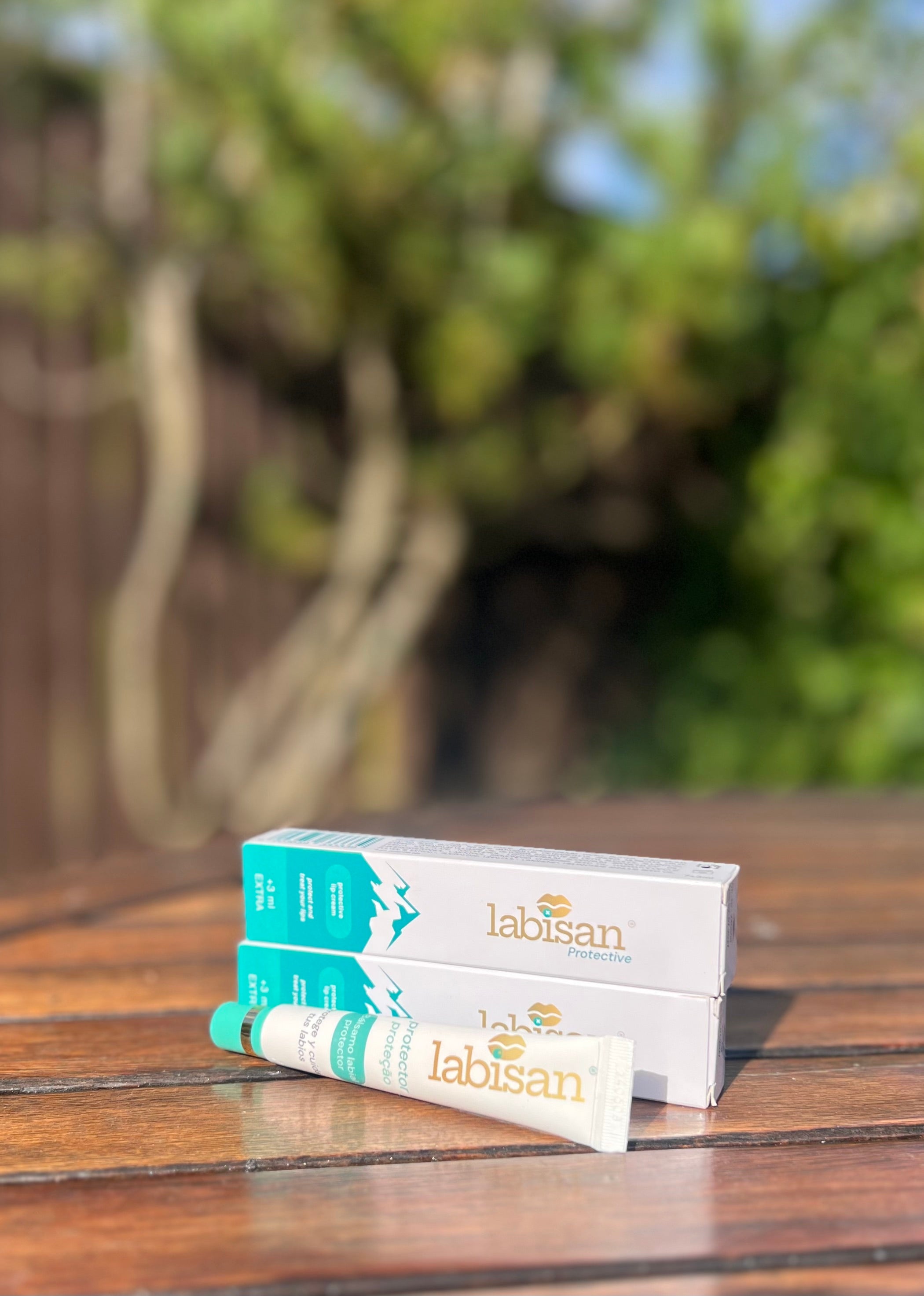
Labisan Protective Lip Balm SPF 20
Single Tube: $24.99 | Adventure Pack (3x): $59.97 (save 20%) | Family Bundle (5x): $89.95 (save 28%)
Free shipping on orders over $49. 30 day money back guarantee.
Shop Labisan Protective Lip BalmWhy Reapplication Failure Is Behind Most "Stubborn" Cold Sores
For people who carry HSV 1, the connection between reapplication discipline and cold sore frequency is striking. The cold sore prevention frequency data shows that subjects who reapplied SPF lip balm at the 90 minute interval saw a 73% reduction in UV triggered outbreaks over 12 months, compared with controls who applied "as needed" (typically once or twice daily).
The gap between those two groups is not formulation. It is application frequency. The active ingredients in any zinc oxide based lip balm work the same way; what differs is whether the user keeps the protective layer continuously in place across the day.
This is also why "ingredient stacking" beats single layer protection. Our review of natural lip care ingredient science covers how zinc oxide for SPF, manuka oil for antiviral defense, and unrefined butters for barrier repair work additively rather than redundantly. With consistent 90 minute reapplication, all three layers stay active simultaneously.
What the AAD Actually Says (and Where 90 Minutes Fits)
The AAD's public guidance has three parts that matter for lips, and they are usually collapsed into one sentence by the time they reach a search result. Taken separately:
The Skin Cancer Foundation gives materially the same advice: an SPF 15 or higher lip balm, reapplied at least every two hours outdoors and again after eating or drinking. Two independent dermatology bodies converging on the same interval is worth noticing; the 90 minute rule below simply tightens that interval for the conditions where lips lose product fastest.
One: the two hour interval is a maximum, not a target. The AAD wording is "reapply approximately every two hours." It is the outer bound of a reasonable interval under ordinary conditions, and the same guidance immediately qualifies it with "or after swimming or sweating." Two hours is what you get on a calm, dry, low-activity day. It is not what you get on a chairlift or at a lakeside lunch.
Two: water resistance is a 40 or 80 minute claim, not a waterproof claim. Under FDA labelling rules, no sunscreen may be marketed as waterproof or sweatproof. A "water resistant (80 minutes)" label means SPF was maintained through a defined immersion protocol for 80 minutes. On lips, drinking from a bottle is functionally an immersion event every time.
Three: the SPF number on the tube assumes a laboratory application density you almost certainly are not achieving. SPF testing under FDA and ISO 24444 protocols uses 2 mg per square centimetre. Repeated consumer-behaviour studies find real-world application at roughly 0.5 to 1.0 mg per square centimetre, meaning about a quarter to a half of the tested dose. Because protection does not scale linearly with thickness, under-application costs far more than the arithmetic suggests. This is the reason reapplication frequency, not headline SPF, is the variable that decides your actual exposure.
What if my lip balm is SPF 20 rather than SPF 30?
Worth stating plainly: the AAD recommends SPF 30 or higher. The honest arithmetic is that a correctly applied SPF 20 filters about 95 percent of incident UVB, SPF 30 about 96.7 percent, and SPF 50 about 98 percent. The gap between 20 and 30 is roughly 1.7 percentage points of UVB when both are applied at test density. The gap between a film that is present and a film that wore off two hours ago is 95 percentage points. A thick, opaque, mineral lip film reapplied on schedule outperforms a higher-SPF product applied thinly at breakfast and never touched again. Both facts are true at once, and the practical conclusion is the same either way: reapply.
How Much to Apply: The Other Half of the Equation
Reapplication frequency only matters if each application is adequate. Two rules make a measurable difference. First, use enough that the balm is visible as a slight sheen across the entire vermilion; a thin, invisible smear is closer to a placebo. Second, go past the lip line onto the surrounding skin by one to two millimetres. The vermilion border, especially on the lower lip, is where actinic damage concentrates; the overwhelming majority of lip squamous cell carcinomas occur on the lower lip, which is the surface most directly angled toward the sun and toward snow glare.
Roll the product across the lip rather than dabbing the centre. Most people under-treat the corners and the outer thirds, which is exactly where cold sores tend to appear.
Frequently Asked Questions
Will reapplying every 90 minutes make my lips dependent on lip balm?
No. The "lip balm dependency" claim refers to formulations heavy in menthol, camphor, or salicylic acid that produce mild irritation cycles. A clean wax, butter, and zinc oxide formulation with no irritants does not create dependency. Frequent reapplication of a clean formulation actually accelerates lip barrier recovery.
What if I forget for a few hours?
Reapply as soon as you remember and reset the 90 minute clock. UV damage is cumulative, but a single missed interval is not catastrophic. The pattern that actually accumulates damage is consistent under reapplication every day for years.
Is more application better than the 90 minute schedule?
Marginally, but with diminishing returns. Reapplying every 30 minutes provides only slightly higher mean SPF coverage than 90 minute intervals because each fresh application restores the protective film to maximum. The 90 minute interval captures roughly 90% of the achievable benefit at a fraction of the friction.
Does eating a salty or oily meal change reapplication timing?
Yes. High oil content meals accelerate balm removal because the dietary lipids dissolve into the lip film. Reapply immediately after any oily or fried meal, regardless of what your timer says.
Should children follow the same reapplication schedule?
Children are at higher per minute UV risk because their lip tissue is thinner and they spend more time outdoors. The same 90 minute indoor and 45 to 60 minute outdoor schedule applies, with parental support to make the reapplication automatic. Lip skin damage during childhood compounds for decades and is the foundation for adult cold sore frequency in carriers.
The Bottom Line
Reapplication is the entire game in lip sun protection. The 90 minute rule is not arbitrary; it tracks the laboratory measured wear off curve of zinc oxide based lip products under realistic use conditions. Build the habit, carry two tubes, and stop trusting the cooling tingle. The reward is real: 73% fewer UV triggered cold sores for HSV 1 carriers, and dramatically lower lifetime UV induced lip damage for everyone else.
Labisan Protective Lip Balm SPF 20 is built for the user who reapplies. Compact tube, fast melt application, no menthol or camphor irritants, zinc oxide physical UV block, manufactured to Austrian pharmaceutical grade standards. Free shipping on orders over $49, 30 day money back guarantee.