The numbers up front. Lip stratum corneum is 3 to 5x thinner than cheek skin. Winter transepidermal water loss runs 2.1x summer baseline per 2024 lip TEWL data. Cold air at minus 5 C holds 3.4 g of water per cubic metre versus 10 g at 20 C, a 66 percent absolute-humidity drop. Indoor heating pushes relative humidity below 20 percent; aircraft cabins run at 10 to 15 percent. UV intensity rises 10 percent per 1,000m of elevation and snow reflects 30 to 80 percent of incoming UV, which is why a 22 percent non-nano zinc oxide film blocking roughly 80 percent of UV transmission is the only barrier layer that holds at altitude through 4 hours of continuous sun.
500 million people globally carry HSV-1 or HSV-2; roughly 80 percent are asymptomatic and 20 percent develop visible outbreaks at the lip border. The cold-weather mechanism below is the predictable thermodynamic failure of the thinnest barrier on the body, and the formulation response that fixes it. For the UV side of the same conversation, our explainer on UV triggered cold sore reactivation covers why the season also drives cold sore reactivation in carriers.
What Actually Happens to Your Lips in Cold Air
Humidity Collapse
The 60 to 20 percent indoor-humidity drop and the 10 g to 3.4 g per cubic metre outdoor absolute-humidity drop combine across the season. Lips swing between dry outdoor air and forced-air-heated indoor air with almost no recovery window. Aircraft cabins running at 10 to 15 percent relative humidity make travel days the worst single exposure.
Transepidermal Water Loss Doubles
TEWL is the rate at which water evaporates outward through the skin and the standard laboratory measurement of barrier integrity. A 2024 study in Skin Research and Technology tracked TEWL on the vermilion border of the lip across seasons and found winter TEWL was 2.1x summer baseline, even in subjects who used moisturizing balm daily. The lip barrier loses water faster than topical moisturizer can replace it. Glycerin-heavy balms make this worse: in dry winter air the humectant pulls water out of deeper tissue rather than pulling it in from the atmosphere.
Wind and Cold Wax Stripping
Beyond humidity, mechanical wind exposure physically strips the protective lipid layer. Cold reduces the fluidity of the natural wax esters that lock moisture into the upper lip surface. Combined with wind shear during outdoor activity, the protective lipid film fragments and lifts away. Cold sore prevention guidance for outdoor sports covers the same mechanism from the viral reactivation angle, but the dehydration consequence is just as serious for non carriers.
Why Most Lip Balms Cannot Fix This
Open the average drugstore lip balm. The ingredient list usually leads with petrolatum or mineral oil, often paired with cheap synthetic flavorings, menthol, camphor, and sometimes phenol. Each of those secondary ingredients fails the winter test in a specific way.
Petrolatum forms an occlusive film that wears off in 60 to 90 minutes of eating, drinking, talking. It seals the lip surface temporarily but contributes nothing to barrier repair, no UV block, no antiviral activity, and no integration with the underlying lipid matrix. By the 90-minute mark the underlying lip surface is no better off than before application.
Menthol and camphor create a cooling sensation that masks dryness. The user feels relief and applies less. Meanwhile both compounds are mild irritants that increase microvascular blood flow, which can accelerate moisture loss in compromised tissue. Our breakdown of lip balm ingredients that quietly worsen cold sores covers the same compounds from the antiviral defense angle.
Phenol and salicylic acid based "medicated" balms are designed for cold sore lesion management, not winter prevention. Daily use on intact tissue accelerates barrier thinning over a season.
Heavy fragrance and flavor systems introduce sensitizing compounds (cinnamaldehyde, limonene, linalool) that can produce subclinical contact dermatitis. The user experiences "winter chapping" that is actually low grade chemical irritation worsened by environmental dryness.
What a Cold Weather Lip Formulation Has to Do
Layer 1: Replace the Stripped Lipid Film Quickly
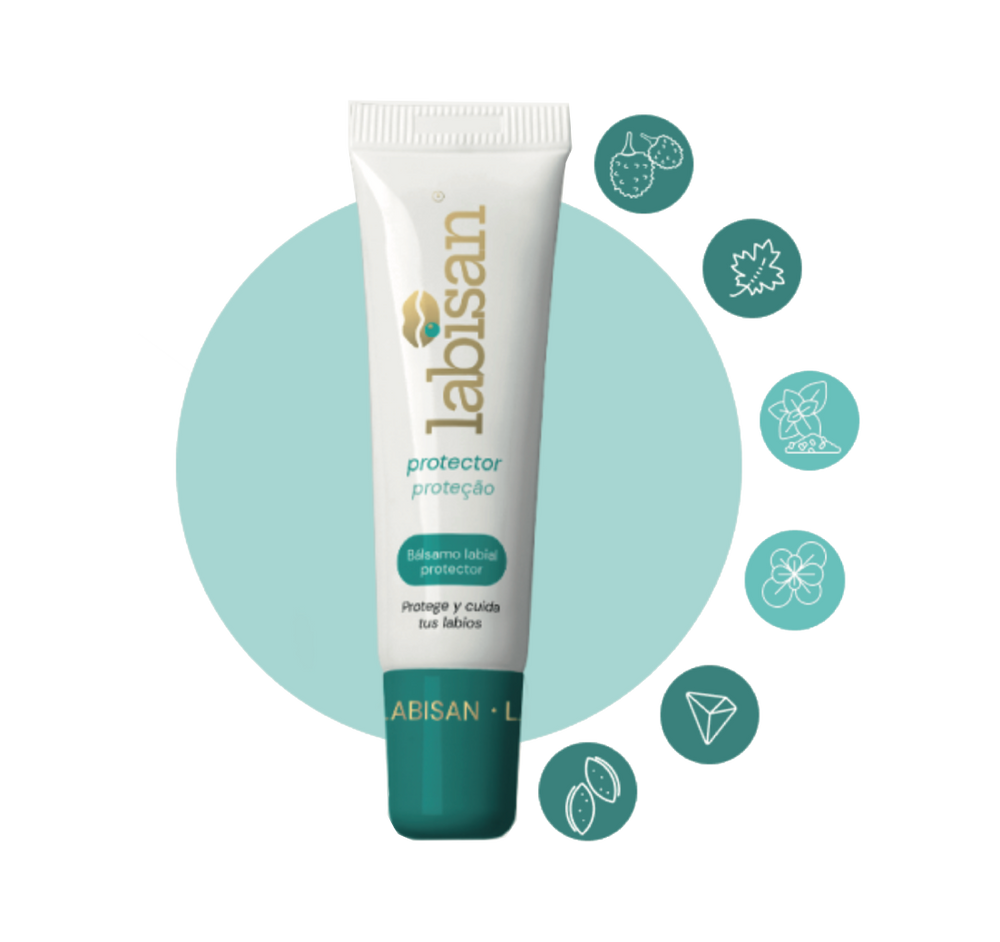
The first job of a winter lip balm is restoring the wax ester layer that wind and cold have stripped. Carnauba and beeswax melt at 35 to 38 degrees C, sit solid in the normal lip surface range of 28 to 36 C, and form a flexible protective film that survives cold air without cracking. Labisan's multi-lipid base of beeswax plus shea butter plus cocoa butter plus almond oil holds the 22 percent zinc oxide layer at even distribution; pure beeswax-only sticks sediment mineral particles during manufacture and crack at sub-zero temperatures. Petrolatum sits on top in an inert layer and offers no structural reinforcement.
Layer 2: Slow Transepidermal Water Loss
Below the wax film, the formulation has to slow water loss from the underlying tissue. This is where unrefined butters and triglyceride rich plant oils contribute. Shea butter, jojoba, and rosehip seed oil all donate fatty acids that integrate into the lipid matrix of the stratum corneum and reduce TEWL over hours, not minutes. The combination is what produces lasting comfort versus the 30 minute gloss that drugstore balms deliver.
Layer 3: Supply Antiviral and Antimicrobial Defense
Winter is also the season when chapped, broken lip skin becomes a viral and bacterial entry point. Manuka oil delivers beta-triketones at 20 to 35 percent of oil weight, hitting 90 percent in-vitro HSV plaque reduction at 5 ppm (0.0005 percent) per published assay data. Oregano oil delivers carvacrol at 60 to 80 percent of oil weight plus thymol, with documented HSV envelope-disruption activity. Our review of natural lip care ingredient science walks through the laboratory evidence in detail. A 22 percent non-nano zinc oxide film blocks roughly 80 percent of UV transmission at altitude, which is what shifts a winter formulation from cosmetic moisturizer to barrier defense product.
Layer 4: SPF, Even in Winter
UV does not take winter off. Snow reflects up to 80% of incident UV, and high altitude winter activity (skiing, snowshoeing, ice climbing) delivers some of the highest cumulative lip UV doses of any season. The high altitude UV math spells this out: at 2,500 meters with snow reflection, UV exposure on lip tissue can be three to four times higher than a summer beach day. Zinc oxide based physical SPF is the only block that provides immediate, photostable, broad spectrum coverage without irritating already compromised tissue.
Built for the seasons that break other balms
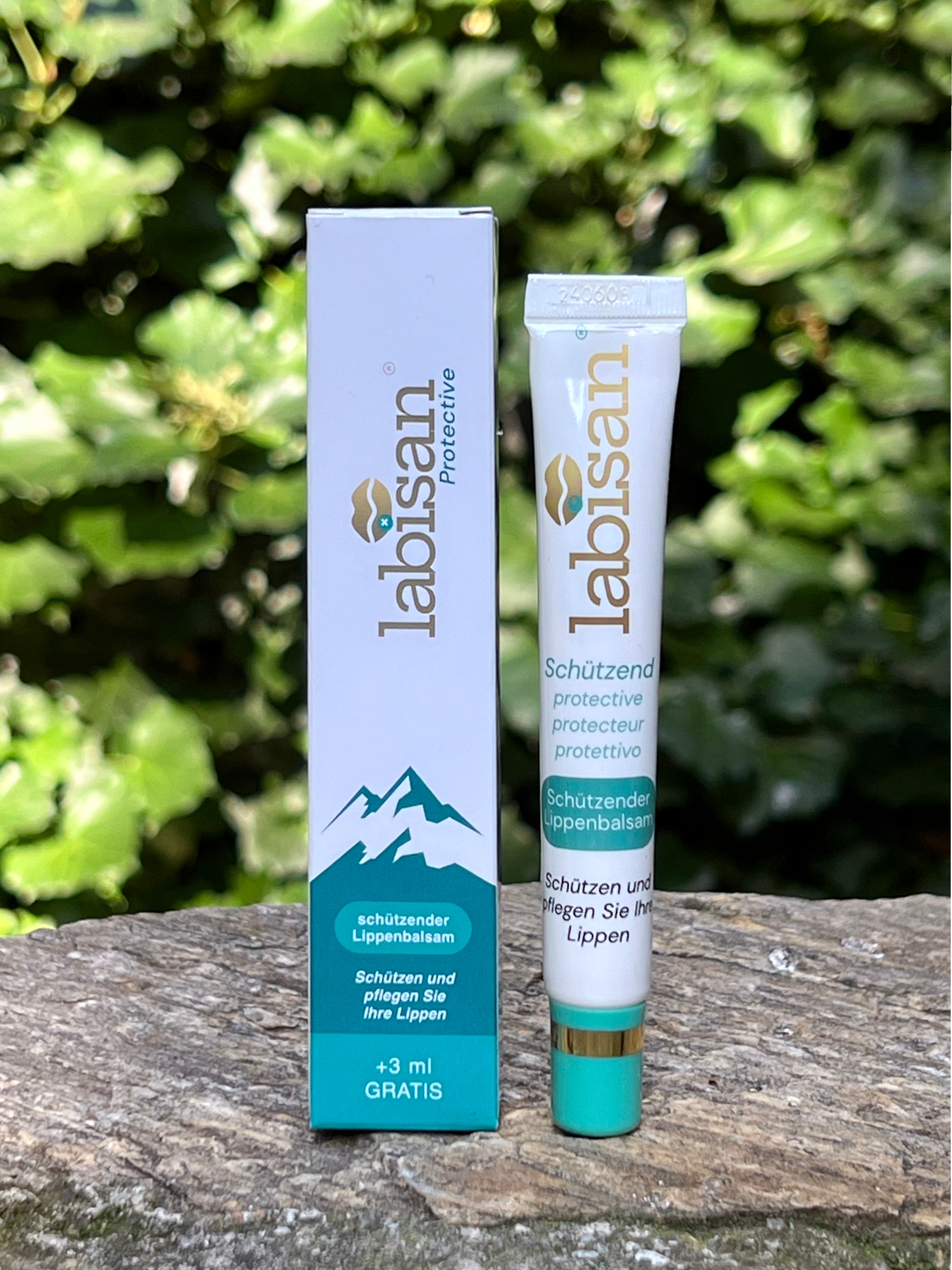
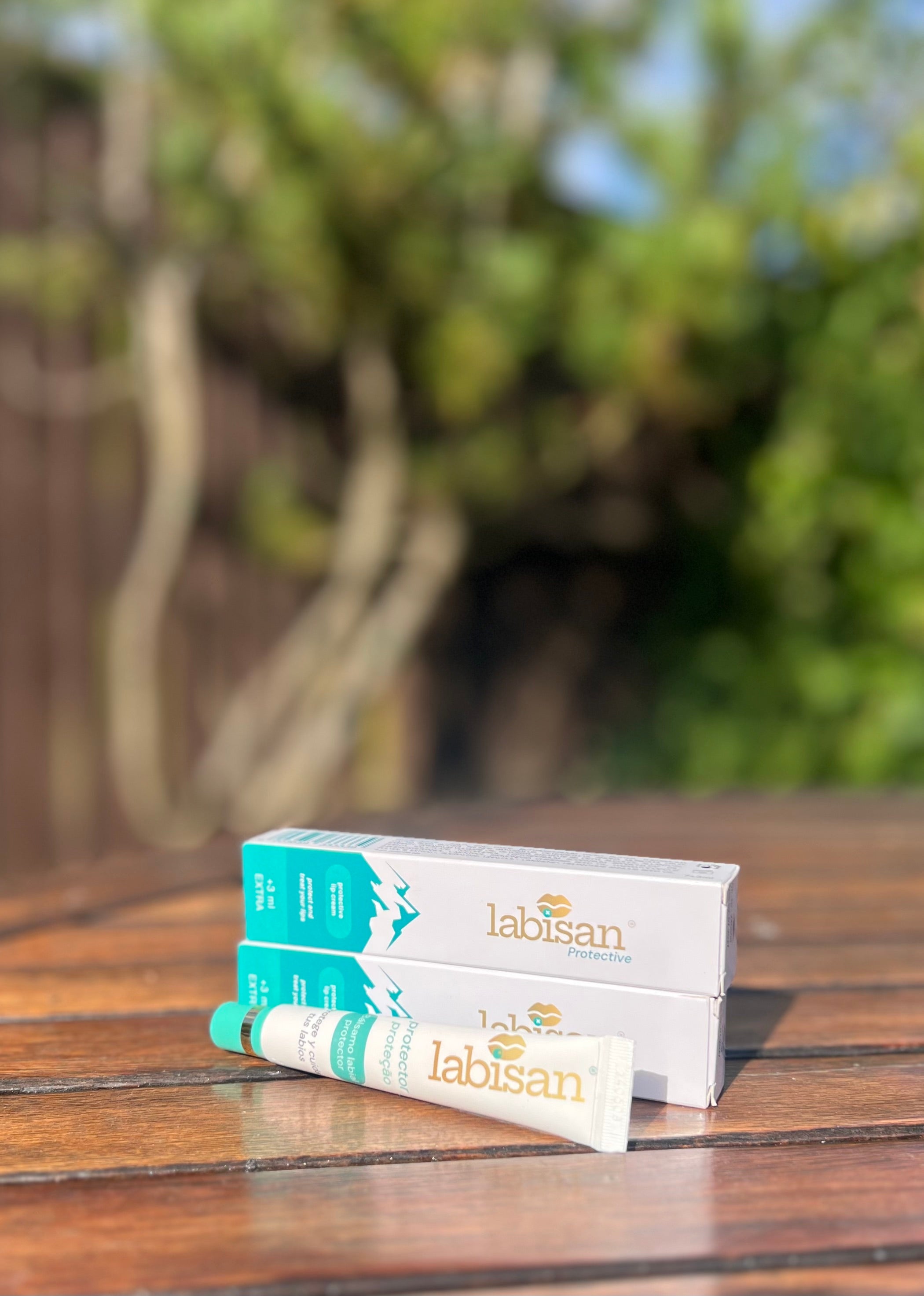
Labisan Protective Lip Balm SPF 20
Single Tube: $24.99 | Adventure Pack (3x): $59.97 (save 20%) | Family Bundle (5x): $89.95 (save 28%)
Free shipping on orders over $49. 30 day money back guarantee.
Shop Labisan Protective Lip BalmThe Daily Winter Lip Protocol That Actually Works
Morning
Apply Labisan Protective Lip Balm SPF 20 immediately after brushing your teeth, before you face dry indoor air or step outside. This sets the lipid film and SPF baseline for the day. Heavy application is unnecessary; a thin even layer that fully covers the vermilion border outperforms a thick smear.
Mid Morning Through Afternoon
Reapply every 90 minutes during sustained outdoor exposure, and after every meal or beverage. The single biggest cold weather mistake is applying once at 7am and assuming the protection lasts to noon. It does not. Wax films are physically removed by talking, eating, drinking, and ambient wind, regardless of how premium the formulation is.
Evening
For overnight repair, apply a heavier layer of the same balm before sleep. The wax and butter combination works on a different timescale during rest, with no continuous mechanical removal, allowing the fatty acids to integrate fully into the lipid matrix overnight.
Outdoor Activity Days
Skiing, hiking, ice climbing, and any high altitude or high wind activity drops reapplication interval to 45 to 60 minutes. Carry the tube in a chest pocket, not a backpack. The single biggest reason people fail at winter lip protection is not the product; it is the friction of digging through layers to reach it.
Frequently Asked Questions
Why do my lips peel even when I apply lip balm constantly?
Two likely causes. First, the balm contains humectants without an occlusive seal, which in low humidity actually accelerates water loss. Second, the balm contains menthol, camphor, or fragrance that produces low grade contact dermatitis you have learned to ignore. A clean, wax and butter forward formulation without irritants typically reverses chronic peeling within 5 to 10 days.
Is petroleum jelly enough for winter lip care?
Petroleum jelly is occlusive but does nothing to repair the underlying lipid matrix or supply UV protection. It is a temporary seal, not a winter solution. Skiers and outdoor athletes who rely on it through a winter season typically end the season with the most chronically compromised lip tissue.
How much does altitude change winter lip risk?
Significantly. UV exposure increases roughly 10% per 1,000 meters of elevation, and snow reflects up to 80% of incident UV. A day at 2,500 meters in winter delivers more UV to your lips than a midsummer afternoon at the beach. Our deep dive on high altitude UV math walks through the numbers.
Does drinking more water fix chapped lips?
Hydration matters but is not sufficient. Lips lose water transepidermally regardless of internal hydration status. Even a fully hydrated person in dry winter air will experience measurable barrier degradation without topical protection. Both layers (internal hydration plus topical lipid film) are necessary.
Will my lips ever fully heal?
Yes. Lip tissue regenerates rapidly, with a full epidermal turnover cycle of roughly 14 days. Once you remove the irritants and provide consistent barrier support, even chronically chapped lips recover to a soft, intact baseline within two to three weeks. The mistake most people make is switching balms repeatedly mid recovery; pick one clean formulation and stay with it.
The Quiet Cost of Ignoring This
Winter chapping does not feel serious. It feels like an annoyance, a baseline that millions of people accept for 4 to 5 months a year. The cumulative cost is measurable. For carriers, 12 to 18 cumulative outbreaks per decade compress the same lip border, layering pigmentation and fine scarring; chronically compromised lip tissue becomes more susceptible to viral infection, loses pigmentation evenness over decades, and develops fine lines that no cosmetic intervention reverses cleanly later.
The fix is not exotic. It is consistent application of a well designed barrier balm with SPF, manufactured to a standard that matches what you would expect from European pharmaceutical grade quality control. Labisan Protective Lip Balm SPF 20 was engineered specifically for the alpine winter environment that other balms quietly fail in. Free shipping on orders over $49, 30 day money back guarantee.