The realistic timeline you have to work with. A cold sore intercepted at the tingle stage typically takes 5 days to reach faint-pink residual mark on the Labisan dual protocol. A cold sore intercepted at the visible papule stage typically takes 5 to 6 days. A cold sore allowed to progress untreated takes 7 to 10 days. The 72-hour problem is that none of those timelines match a Saturday wedding when the tingle started on Wednesday morning. The emergency protocol below is the most aggressive version of the dual protocol, calibrated for the highest-stakes 72-hour window. The realistic outcome: you arrive at the event with a crust (coverable) rather than a vesicle (not coverable), and the lesion is non-obvious from 1.5 metres under normal lighting.
The clock
The protocol depends heavily on where you are when you start it. Three starting points:
- 72 hours out, tingle stage: best case. Aggressive intervention now will have you at faint pink mark by event time, very coverable.
- 48 hours out, papule or early vesicle: realistic. You will likely be at early crust stage at event time, coverable with the 5-step makeup sequence.
- 24 hours out, vesicle stage: hardest case. The lesion will likely be at mature vesicle or weeping stage at event time. Hydrocolloid patch is mandatory and the cosmetic outcome will be acceptable but not invisible.
The dosing escalation for the 72-hour case
This is the aggressive emergency dose. Do not run this dose continuously; it is calibrated for a 3-day window only.
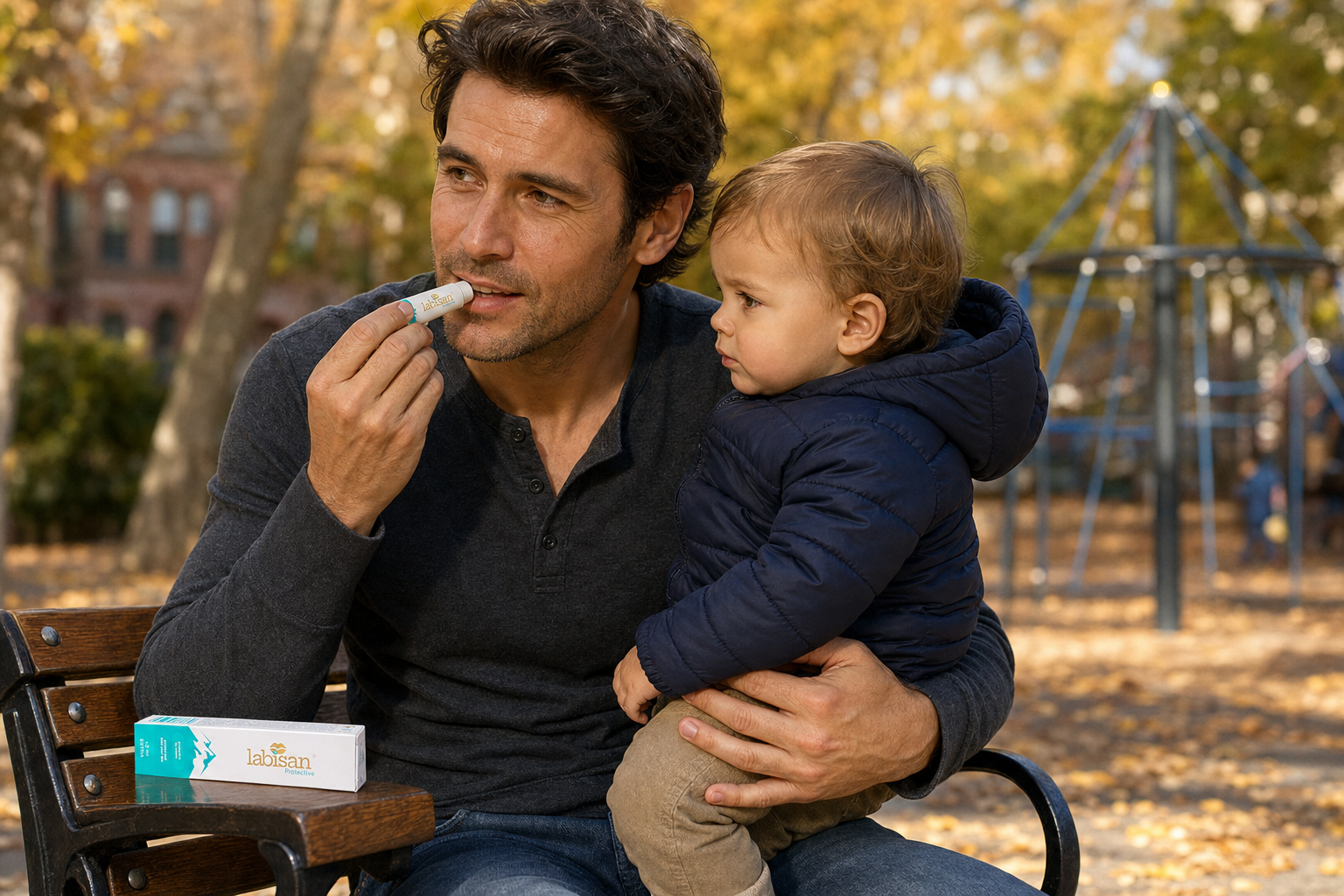
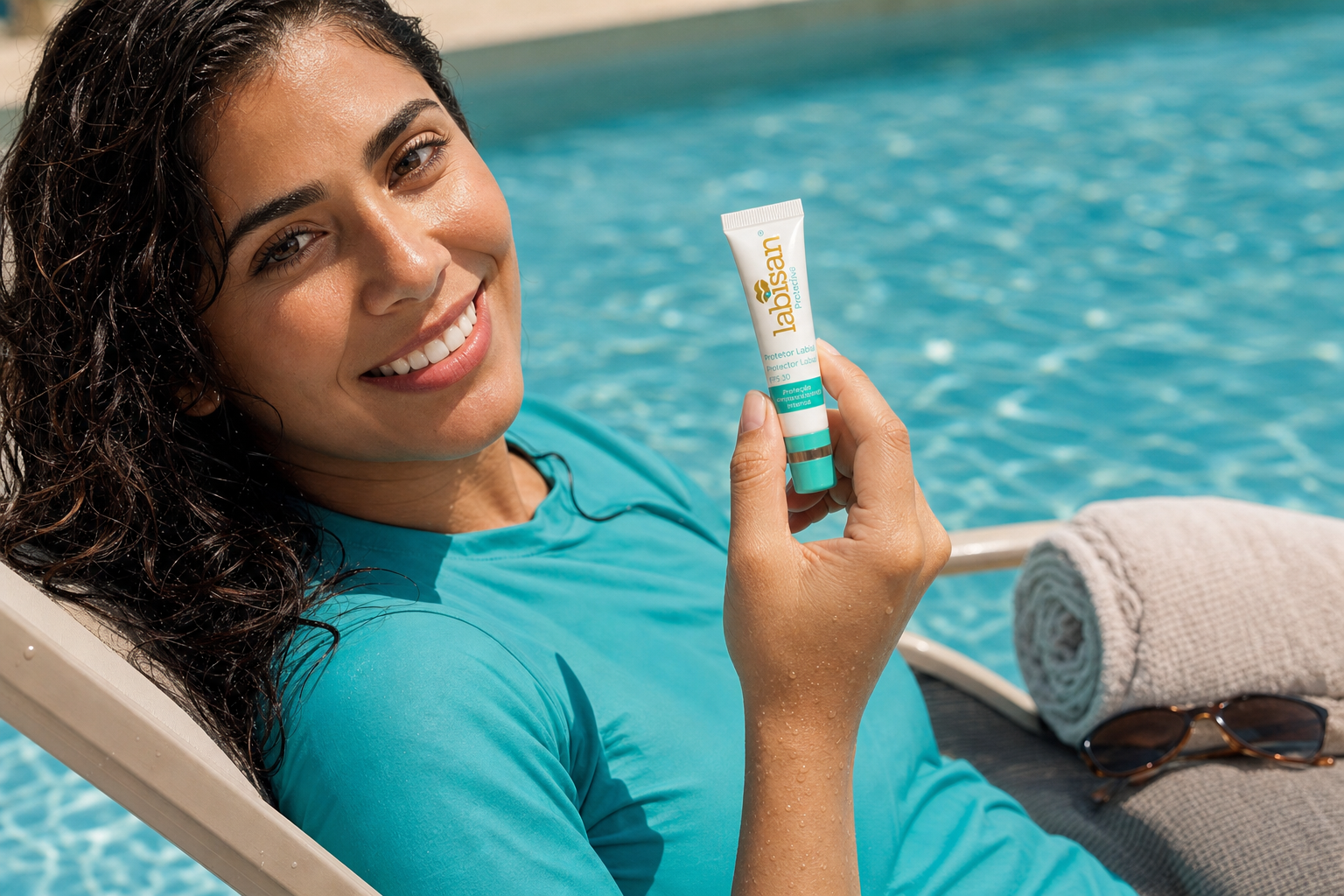
Topical (Labisan Protective Lip Balm): 6 applications per day across the 72-hour window, then back to 4 per day for the recovery phase. Application schedule: on waking, mid-morning, lunchtime, mid-afternoon, after dinner, before bed. Heavy coverage including 8 mm of adjacent skin around the felt or visible area. Wash your hands thoroughly before and after each application; the active outbreak is contagious.
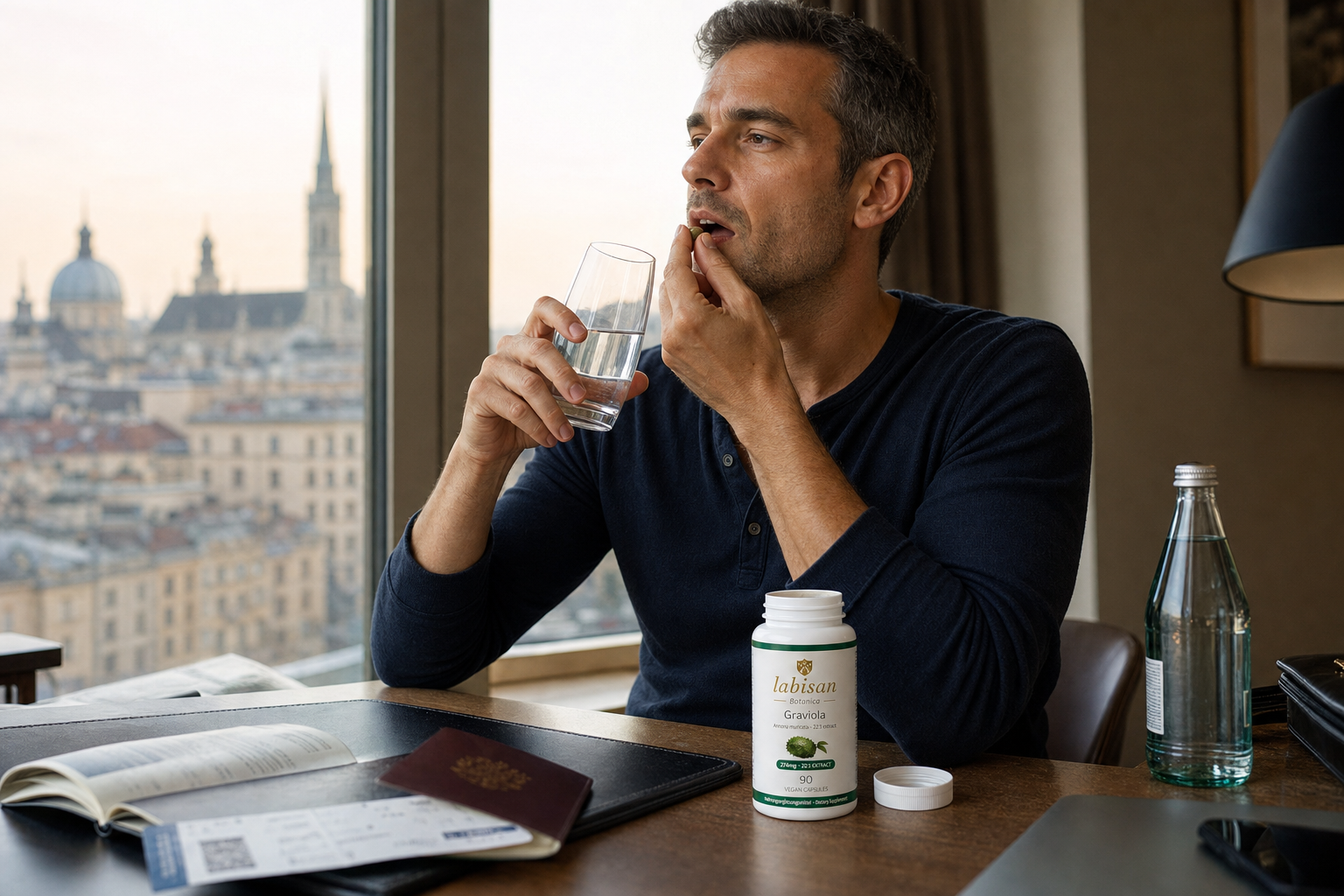
Systemic (Labisan 22:1 Graviola): 6 capsules per day across days 1 and 2 of the 72-hour window, dropping to 4 per day on day 3. Spread the doses: 2 capsules with breakfast, 2 with lunch, 2 with dinner. Take with food and a full glass of water. This is the highest acceptable acute dose and should not be sustained beyond the 72-hour window. Drop to maintenance 2 per day from event day onward.
Painkillers (over the counter): Paracetamol (acetaminophen) for any discomfort. NOT ibuprofen. Ibuprofen is anti-inflammatory in a way that can slow lesion healing in early stages. Paracetamol manages pain without interfering with the healing cascade.
Sleep: Aggressive sleep prioritisation for all 3 nights. Immune containment of HSV-1 reactivation happens overwhelmingly during sleep. A wedding-prep week is often a sleep-deficit week; the protocol cannot fully compensate for sustained sleep loss. Aim for 8 hours every night of the 72-hour window even if it means reshuffling other commitments.
Hydration: 2.5 to 3 litres of water per day. Dehydration slows mucosal healing.
No alcohol, no spicy or acidic foods. Alcohol mildly suppresses immune containment and dehydrates. Spicy and acidic foods (citrus, tomato, hot sauce) directly irritate the lesion area on the way past. Eat blandly for 72 hours.
What to expect at each checkpoint
Hour 0 (tingle start): begin the protocol within an hour. The earlier within the tingle window, the better the outcome.
Hour 12: tingle should have noticeably reduced. Vesicle should NOT have formed yet if you caught it early enough. If a papule is forming, that is acceptable; if a fluid vesicle is forming, the timing was already past the tingle stage at start and the outcome shifts to the 48-hour or 24-hour scenarios below.
Hour 24: the lesion should be at most a small papule or pink patch, not a fluid vesicle. If it is a vesicle, you are running the 48-hour scenario. Continue the protocol.
Hour 48: the lesion should be consolidating into a tight crust if it produced a vesicle, or fading if it stayed at papule stage. This is the critical transition checkpoint. A crust at hour 48 means the event-day outcome will be a faint pink mark, very coverable.
Hour 72 (event day morning): the lesion should be either a thin late-stage crust or a faint pink residual mark. Either is coverable with the 5-step makeup sequence from the makeup guide. Apply the morning topical 60 to 90 minutes before makeup so it has time to absorb and the makeup sits cleanly.
The 48-hour fallback scenario
You did not catch it at the tingle. You caught it at the papule or early vesicle stage with 48 hours to event. The protocol is the same but the realistic outcome is a crust at event time rather than a faint pink mark. Coverable with makeup but more visible up close. After the event, if that pink mark hardens into a darker patch, our guide to recovering from post-cold-sore lip pigmentation and dark marks walks through the fade timeline.
Specific 48-hour additions:
- Add a hydrocolloid pimple patch (Compeed Invisible or equivalent) overnight from the moment vesicles form. The mechanical seal accelerates crust formation by approximately 12 to 18 hours.
- Apply the Labisan topical heavily after each patch removal (the lip skin needs the mineral barrier between patch sessions).
- If the vesicle is still active on event-day morning, the patch becomes the cover; you apply makeup around the patch rather than over the lesion directly.
The 24-hour scenario
You felt the tingle yesterday afternoon, the vesicle formed overnight, and the event is tomorrow. This is the hardest case and the protocol still helps but the cosmetic outcome will be visibly compromised.
Two practical decisions you should make tonight:
- Is rescheduling possible? For interviews and photo shoots, often yes. A polite "I have an unexpected health issue, can we move this 3 days?" is professional, no further explanation needed. For a wedding, no.
- Hydrocolloid patch all night, every night until the event. The Compeed-style patch is the highest-cover option for an active vesicle. The lesion will be sealed under the patch, the patch is nearly skin-tone, and on event day you apply makeup around the patch perimeter. The patch is visible up close but reads as "skin texture" rather than "cold sore" from conversation distance.
The dosing protocol still applies fully in the 24-hour scenario. The 6-cap-per-day dose for 1 to 2 days plus the heavy topical compresses the visible lesion as much as biologically possible in the available time.
The day-after
The event happened. You survived. Drop the emergency dose immediately the morning after.
- Capsules drop to 4 per day for 3 more days, then to maintenance 2 per day
- Topical drops to 4 per day for 4 more days, then to maintenance 2 per day
- Resume normal alcohol, normal food, normal life
The post-event period is also when many users decide to start the long-term prevention protocol permanently. Having just been through a 72-hour panic, the prospect of going 12 months on continuous prevention to avoid the next panic looks like an obvious trade.
What the emergency protocol does not do
It does not produce zero lesion in 72 hours. No protocol does. The biology of cold sore healing has a floor of approximately 4 days from tingle to coverable crust even with the most aggressive interception. The protocol produces the best achievable outcome within that floor, not an outcome that beats it.
It also does not prevent future outbreaks at the same trigger. The protocol manages the current outbreak only. Long-term prevention requires continuous-use maintenance dosing, addressed in the hybrid system post.
Both products are on labisan.shop. The starter bundle is sized for 1 active outbreak plus 3 weeks of recovery and maintenance, which covers the typical event-prep window plus the post-event return to normal.