Ultraviolet (UV) radiation is one of the best-documented triggers of recurrent herpes labialis (cold sores), and the beach concentrates that trigger more than almost any other environment. Dry beach sand reflects roughly 15 to 20 percent of incoming UV, and sea foam and the water surface can bounce back an additional 10 to 25 percent, meaning your lips receive a meaningful UV dose from below and from the side even when you are sitting under an umbrella. The lower lip is especially exposed: it protrudes, it has a thin stratum corneum, and it carries almost no melanin to absorb radiation. Controlled trials dating back to a 1991 study in The Lancet showed that a sunscreen lip balm prevented UV-induced cold sore recurrences in skiers, while a placebo balm did not, establishing that blocking the UV stimulus, not treating the lesion afterward, is the decisive variable. For anyone who has a history of sun-triggered outbreaks, the beach is not a place to improvise.
Why the beach is a uniquely high-risk environment for cold sores
About two-thirds of the global population under age 50, roughly 3.7 billion people, carry HSV-1 according to the World Health Organization, and most carriers are asymptomatic most of the time. The virus lives dormant in the trigeminal ganglion and reactivates when local or systemic conditions shift. The beach stacks several of those conditions at once. First is the UV load described above; the reflective combination of sand, water, and open sky can push your effective exposure well past what the same hours would deliver in a city park. We break down the underlying virology in our overview of HSV-1 global epidemiology by the numbers, which is worth reading before any sun-heavy trip so you understand what you are actually defending against.
Second is desiccation. Salt water and salt-laden wind are hygroscopic: they pull moisture out of the lip surface, and a cracked, fissured lip is a compromised barrier that makes viral shedding and secondary irritation more likely. Third is heat and the systemic stress of travel itself, including short sleep, alcohol, dehydration, and time-zone disruption, all of which can tip the immune balance that normally keeps the virus suppressed. A beach day is rarely one trigger; it is four or five acting together.
The UV mechanism: how sun exposure reactivates HSV-1
UVB radiation damages the DNA of epithelial cells in the lip and provokes a local immunosuppressive response. Specifically, UV exposure depletes and disables Langerhans cells, the antigen-presenting immune sentinels in the skin, and triggers release of inflammatory mediators. With local immune surveillance temporarily blunted, virus that has traveled down the nerve to the lip can replicate unchecked and produce the familiar tingle, then blister, then crust sequence. This is why the prodrome (the tingling or itching warning) often appears 24 to 48 hours after a big sun day, not during it. The practical takeaway is that prevention has to happen before and during exposure, because by the time you feel the tingle the immunosuppressive window has already opened. If you want to see how that timeline plays out lesion by lesion, our cold sore recovery timeline across four real cases shows the lag between trigger and breakout clearly.
Your beach cold sore prevention protocol
Effective beach cold sore prevention rests on one principle: block the UV reaching your lips and keep the lip barrier intact, hour after hour, for the whole exposure window. Here is the step-by-step seaside routine.
1. Apply an SPF lip balm before you leave the room
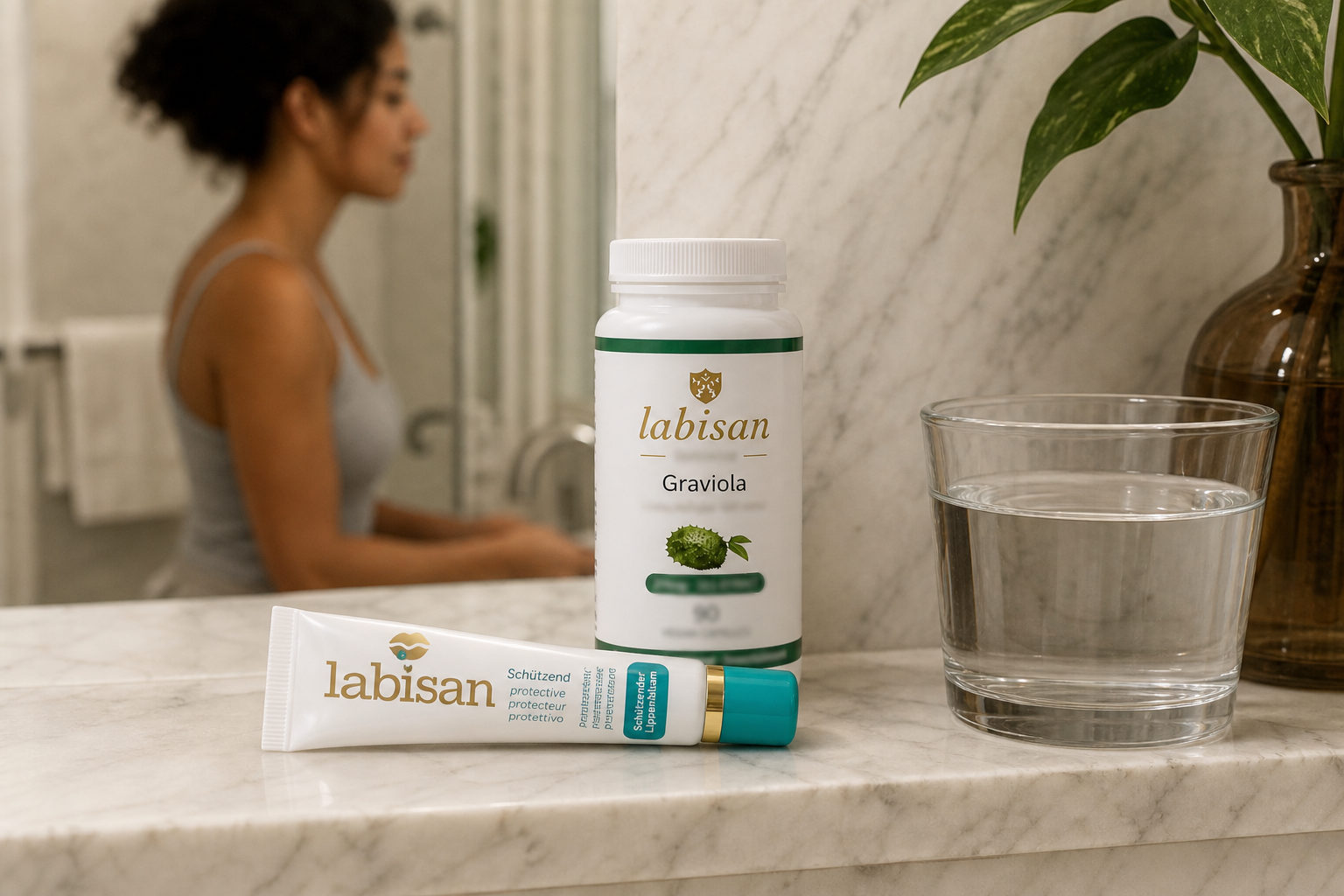
Put on a broad-spectrum SPF lip balm 15 minutes before sun contact so it has time to bind to the lip surface. A zinc oxide formula is ideal at the beach because zinc is a physical (mineral) blocker that reflects UVA and UVB immediately on application and does not degrade as quickly under bright light as some chemical filters. Labisan Protective Lip Balm SPF 20 combines non-nano zinc oxide with shea butter and manuka oil, so it shields against radiation while reinforcing the barrier against salt-driven moisture loss in a single pass.
2. Reapply every two hours, and after every swim
SPF on lips is not a once-a-day decision. Talking, eating, drinking, swimming, and simply licking your lips strip the film. The beach standard is reapplication every two hours and immediately after toweling off from the water, because salt water and the towel both remove product. Set a phone timer if you tend to lose track; under-reapplication is the single most common reason a "protected" person still breaks out.
3. Add physical shade for your lower lip
A wide-brim hat is the most underrated piece of seaside lip protection. Because so much beach UV arrives by reflection from sand and water below eye level, a brim alone will not fully shield the lower lip, but combined with positioning (facing away from the brightest water glare during peak hours) and a balm layer it cuts the cumulative dose substantially. Aim to limit direct lip exposure during the 10 a.m. to 4 p.m. peak UV window whenever the day allows.
4. Defend the lip barrier against salt and wind
Rinse salt off your lips with fresh water when you leave the sea, then reapply balm to lock in moisture. A balm with shea butter and emollient oils restores the lipid layer that salt strips away; a dry, cracked lip is both more uncomfortable and more vulnerable. Drink water consistently through the day, because systemic dehydration shows up fast on thin lip tissue.
5. Manage the systemic triggers travel piles on
UV is the headline trigger, but the supporting cast matters. Protect your sleep, moderate alcohol (a known outbreak trigger and a diuretic that worsens dehydration), and keep stress in check. For people with frequent recurrences, supporting baseline immune resilience in the weeks around a trip is part of a complete strategy. Labisan Graviola Capsules are used for immune support and to help reduce HSV outbreak frequency over time; they are not a cure and do not treat an active lesion, but they fit into the preventive layer alongside UV blocking. We document how the two products work together in our 30-day hybrid system diary.
What to do if you feel the tingle anyway
If the prodrome arrives despite your best efforts, act immediately. Keep the area protected and moisturized, avoid touching or picking, and do not share towels, cups, or balm with others, since cold sores are most contagious during shedding. Be aware that HSV-1 can also transmit to other sites through contact; the asymmetry of oral and genital infection is covered in our explainer on cross-site HSV transmission. If you get frequent or severe outbreaks, talk to a clinician about prescription antivirals such as acyclovir or valacyclovir, which work best when started at the very first sign.
Block the beach trigger before it starts your next outbreak
Labisan Protective Lip Balm SPF 20
Single: $24.99 | Adventure Pack (3x): $59.97 | Family Bundle (5x): $89.95
Free shipping over $49. 30 day satisfaction guarantee.
Shop NowFrequently Asked Questions
Can you really get a cold sore from a day at the beach?
Yes. UV radiation is one of the most consistently documented triggers of recurrent cold sores, and the beach delivers an unusually high UV dose because sand and water reflect additional radiation onto your lips. The outbreak typically appears 24 to 48 hours after the sun exposure, once the UV-induced dip in local skin immunity lets dormant HSV-1 reactivate.
What SPF lip balm is best for the beach?
Choose a broad-spectrum balm with a physical (mineral) blocker like zinc oxide, which reflects UVA and UVB on contact and holds up well in bright light. Labisan Protective Lip Balm SPF 20 pairs zinc oxide with shea butter and manuka oil so it blocks radiation and protects the lip barrier against salt and wind at the same time.
How often should I reapply lip balm at the beach?
Reapply at least every two hours, and always immediately after swimming or toweling off. Salt water, the towel, eating, drinking, and lip-licking all strip the protective film, and under-reapplication is the most common reason people still break out despite using SPF.
Does salt water cause cold sores?
Salt water does not contain the virus or directly cause an outbreak, but it dries and cracks the lip barrier, which leaves the tissue more vulnerable and uncomfortable. Combined with seaside UV, dehydration, and travel stress, that barrier damage is part of why beach trips so often end in a cold sore. Rinse with fresh water and reapply balm after every swim.
Can Graviola capsules prevent a cold sore on vacation?
Labisan Graviola Capsules are used for immune support and to help reduce the frequency of HSV outbreaks over time; they are not a cure and do not treat an active lesion. For a single beach trip, the decisive measures are UV blocking and barrier protection. Graviola fits the longer-term preventive layer for people who get frequent recurrences and is best started in the weeks before travel, not the morning of.