A recurrent cold sore is one of the most temporally predictable lesions in dermatology. Once herpes simplex virus type 1 (HSV-1) reactivates from the trigeminal ganglion, where it has been latent since primary infection, it travels down the sensory nerve axon at roughly 2 to 5 millimetres per hour and reaches the lip epithelium within about 12 to 24 hours. From that arrival, the lesion runs a stereotyped course of five stages over 8 to 12 days in an immunocompetent adult. The World Health Organization estimates approximately 3.8 billion people under 50 carry HSV-1 globally, about 64 percent of that age group; of those infected, roughly 20 to 40 percent experience recurrent labial lesions, and a large fraction of those recur at least twice a year. Viral shedding is highest in the first 48 to 72 hours, when a single vesicle can contain on the order of 10^6 viral particles per millilitre of fluid. Critically, the antiviral evidence base, including the docosanol and acyclovir trial literature, converges on one point: treatment initiated during the prodrome, before a vesicle is visible, shortens healing by roughly a day, whereas treatment started after blistering produces little measurable benefit. The prodrome is not a warning. It is the intervention window.
Stage 1: The Prodrome, or Tingle Stage (Hours 0 to 24)
The cold sore tingle stage is a neurological event, not a skin event. Before anything is visible, replicating virions irritate the sensory nerve endings feeding that patch of vermilion border, producing a distinctive constellation: tingling, itching, burning, a tight or "hot" sensation, sometimes a dull ache in the gum or tooth on that side. Many long-term carriers can point to the exact square centimetre where the lesion will emerge, and they are usually right, because HSV-1 tends to reactivate along the same nerve branch each time.
Duration is typically 6 to 24 hours, occasionally up to 48. There is no visible lesion yet, or at most a faint flush of erythema. This is the only stage at which the viral load in the epidermis is still low enough that intervention meaningfully changes the outcome. It is also the stage most people ignore, because nothing looks wrong. If you are prone to sun-triggered recurrences, this is when protective, occlusive lip care matters most, and the same UV-blocking discipline described in our beach vacation cold sore prevention guide applies to any high-UV exposure, not just holidays.
How to tell prodrome from ordinary chapping
Chapped lips feel dry, rough, and diffuse across the whole lip. Prodrome feels sharp, localised, and neurological: pinpoint, often described as electric or prickling, and usually confined to one spot at the lip border rather than spread across the lip surface. Chapping does not usually cause referred tooth or jaw sensation. Prodrome sometimes does.
Stage 2: The Blister, or Vesicle Stage (Day 1 to Day 3)
Now the event becomes visible. Fluid-filled vesicles appear, typically 1 to 3 millimetres across, often clustered rather than solitary, sitting on an inflamed erythematous base. The fluid is clear at first and clouds as neutrophils arrive. Biologically, HSV-1 is lysing keratinocytes in the epidermis; the vesicle roof is the remaining stratum corneum, and the fluid is a mixture of viral particles, cellular debris, and inflammatory exudate.
This is the peak contagious phase. Vesicle fluid is loaded with infectious virus, and autoinoculation to the eye (herpes keratitis) or to fingers (herpetic whitlow) is a real, documented risk. Transmission is not limited to lip-to-lip; oral HSV-1 can be transferred to genital tissue through oral contact, a route we cover in detail in our analysis of HSV-1 to genital and HSV-2 to oral cross-site transmission. Do not pop the vesicles. Rupturing them accelerates nothing and spreads virus everywhere.
Stage 3: The Ulcer, or Weeping Stage (Day 3 to Day 5)
The vesicle roofs break down, usually within 48 to 72 hours of appearing, leaving a shallow, red, weeping erosion. Several adjacent vesicles often coalesce into one larger irregular ulcer. This is the most painful stage and, cosmetically, the most conspicuous, because there is no intact epidermis, just an open, glistening, often bleeding surface.
Systemically, this is when the adaptive immune response is doing its heaviest work: CD8+ T cells and interferon-gamma signalling are shutting down viral replication and beginning to re-establish latency in the ganglion. Viral titres in the lesion fall sharply through this stage. Pain peaks around day 3 to 4 and then declines. The mistake most people make here is aggressive drying agents or repeated picking, both of which extend the ulcer phase by damaging the migrating keratinocytes at the wound edge.
Stage 4: The Crust, or Scab Stage (Day 5 to Day 8)
A yellow-brown crust forms as serum, fibrin, and dead cells dry over the erosion. Underneath it, re-epithelialisation is already running. The crust is functional wound dressing, not waste, and premature removal is the single most common cause of a cold sore that seems to "keep coming back" within the same episode. Each time the scab is pulled, the wound edge is re-injured, healing restarts, and the risk of a residual mark rises sharply.
This stage also produces the characteristic cracking-and-bleeding cycle: the crust is rigid, the lip is mobile, and every smile or yawn splits it. Keeping the crust supple with an occlusive balm rather than letting it dry hard reduces splitting without interfering with healing. If yours consistently drags past day 8, the recovery patterns documented across four individual cases in our cold sore recovery timeline case series are a useful benchmark against your own arc.
Stage 5: Healing and Resolution (Day 8 to Day 12)
The crust separates on its own, revealing new epithelium that is pink, thin, and slightly shiny. There may be residual erythema or mild post-inflammatory pigmentation for one to three weeks after. Uncomplicated recurrent cold sores do not scar, because the injury is confined to the epidermis; visible scarring almost always means the lesion was picked, secondarily infected with bacteria, or unusually deep.
Meanwhile, HSV-1 has already retreated up the axon and re-established latency in the trigeminal ganglion. It is not gone; it is silent. The next reactivation depends on what disturbs that silence, and the best-characterised trigger by a wide margin is ultraviolet radiation. This is the whole reason a healed cold sore is a strategic moment rather than an ending.
Why Labisan Treats the Cause and Not Just the Lesion
Look at what the cold sore category actually offers. Docosanol (Abreva), acyclovir and valacyclovir, hydrocolloid patches (Compeed), lysine-based products, and standard medicated balms are all, without exception, reactive. They are applied after HSV-1 has already reactivated, travelled the nerve, and begun destroying epidermal cells. They work, within their limits, and the honest limit is well documented: roughly half a day to a day off healing time when started early, and progressively less benefit the later you start. That is a legitimate product doing a legitimate job. It is simply a job that begins after the damage.
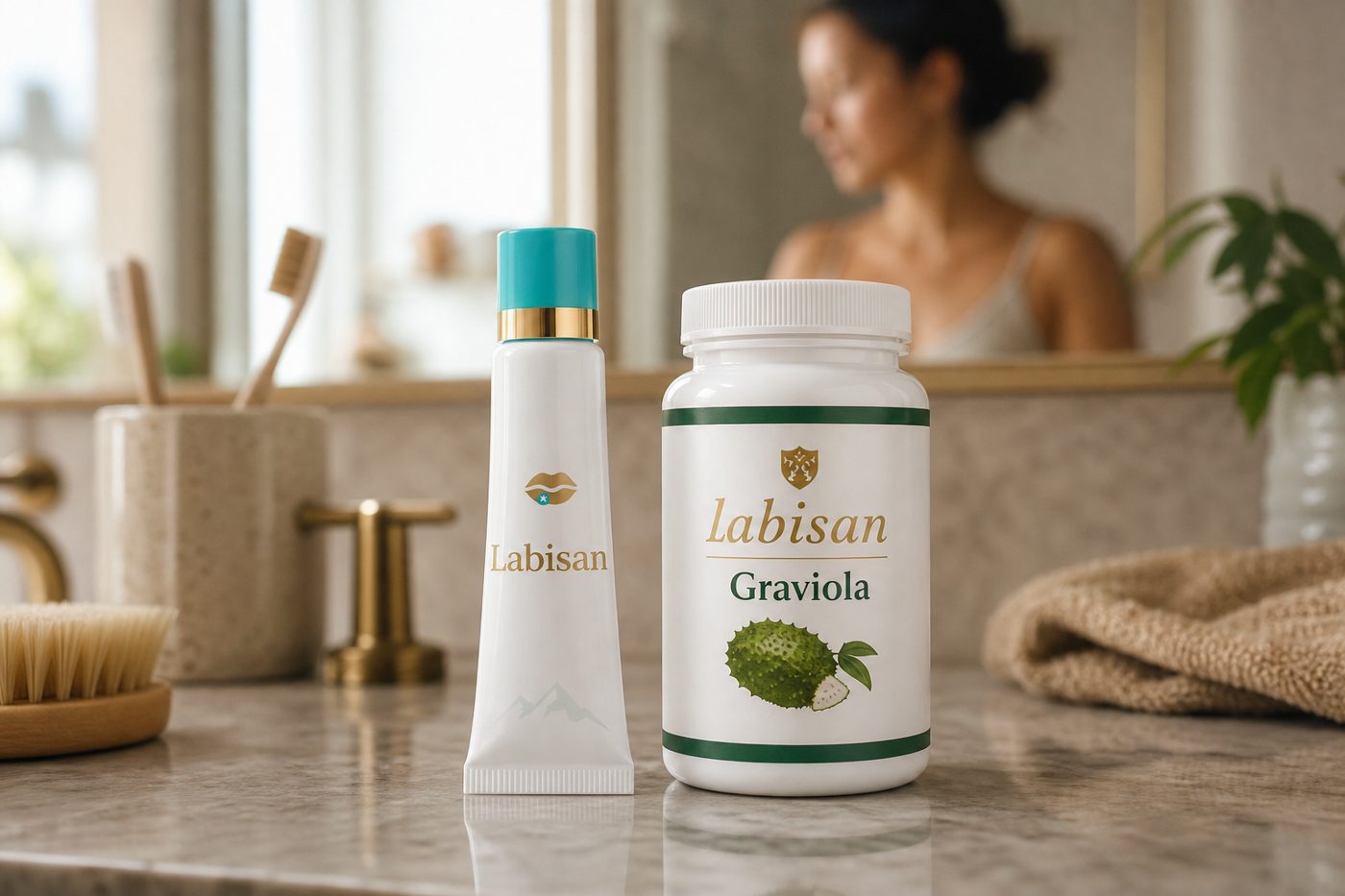
UV exposure is the most reproducible experimental trigger of labial HSV-1 recurrence known; controlled UV-provocation studies have been used for decades precisely because sunlight reliably induces outbreaks in susceptible carriers. Ultraviolet light both stresses lip keratinocytes and transiently suppresses local Langerhans cell immune surveillance, which is why skiers, climbers, sailors, and beachgoers report seasonal clustering. Labisan Protective Lip Balm SPF 20 targets that mechanism directly: zinc oxide provides broad-spectrum mineral UV blocking at the vermilion border, where most balms fail because they are cosmetic rather than protective; shea butter maintains the barrier so micro-cracking does not offer an entry point; and manuka oil plus supporting antiviral botanicals contribute at the skin surface. You can see the full formulation rationale on the Labisan Protective Lip Balm SPF 20 product page.
The second half is internal. Labisan Graviola Capsules support normal immune function, and immune competence is what governs how often latent HSV-1 escapes ganglionic control. This is a frequency argument, not a cure argument: no supplement eliminates HSV-1, nothing does, and any product claiming to is lying to you. What is reasonable is fewer episodes over a year rather than a shorter episode this week. The two together are complementary rather than competing with antivirals: block the dominant external trigger at the lip, support immune surveillance from the inside, and keep a docosanol product for the outbreaks that still get through. Our breakdown of the Labisan lip balm and Graviola hybrid system sets out exactly how the two layers stack, and why prevention economics beat treatment economics for anyone recurring more than twice a year.
Stop the Trigger Before the Tingle Ever Starts
Labisan Protective Lip Balm SPF 20
Single: $24.99 | Adventure Pack (3x): $59.97 | Family Bundle (5x): $89.95
Free shipping over $49. 30 day satisfaction guarantee.
Shop NowFrequently Asked Questions
How long do the cold sore stages take from start to finish?
In a healthy adult, the full arc runs 8 to 12 days: prodrome 6 to 24 hours, blister day 1 to 3, ulcer day 3 to 5, crust day 5 to 8, and final healing day 8 to 12. First-ever (primary) infections are longer, often 2 to 3 weeks, and can include fever and swollen lymph nodes. Episodes consistently exceeding two weeks warrant medical review.
Can you stop a cold sore during the tingle stage?
Sometimes. Intervention during the prodrome is the only point at which the outcome is meaningfully changeable, and topical antivirals started at first tingle can shorten healing by around a day or occasionally abort a lesion outright. Once a vesicle is visible, the epidermal damage is already done and you are managing the course rather than preventing it.
Which cold sore stage is most contagious?
The blister and early ulcer stages, roughly day 1 to day 4, when vesicle fluid carries the highest viral load. Contagiousness declines through crusting but is not zero until the skin is fully re-epithelialised. Avoid kissing, sharing utensils, lip products, and towels for the whole episode, and wash hands after any contact with the lesion.
Should I let a cold sore scab dry out or keep it moist?
Keep it supple. A hard, dry crust cracks with normal lip movement, re-opens the wound, and prolongs the healing stages. A protective occlusive balm keeps the crust flexible without softening it into detachment. Do not pick it off, however tempting; premature removal restarts healing and raises the risk of a lingering mark.
Why do my cold sores keep coming back in the same spot?
Because HSV-1 lies latent in a specific cluster of trigeminal ganglion neurons and travels down the same sensory branch each time it reactivates, delivering virus to roughly the same square centimetre of lip. Recurrence frequency, not location, is what you can influence: control UV exposure at that site and support immune function, as outlined in our HSV-1 global epidemiology breakdown.