
The numbers up front. More than 85 percent of the global adult population is seropositive for herpes simplex virus type 1, HSV-1. In industrialised countries, the seroprevalence rate reaches 40 percent by age 12 and continues climbing through adulthood, with most studies converging around 67 to 80 percent adult seropositivity depending on the region and the cohort. HSV-2 sits substantially lower, between 10 and 20 percent of the global adult population, with the highest rates in Sub-Saharan Africa and the lowest rates in East Asia and Western Europe. Approximately one in three carriers will experience visible recurrent outbreaks at some point in their lives; the remaining two thirds carry the virus asymptomatically. Rare but real complications include herpes simplex encephalitis at roughly one case per 250,000 to 500,000 person-years, and severe disseminated infection in immunosuppressed patients. The reference epidemiology is published in HNO (the German ENT journal) and in the global review chapter at Springer Link.
The practical implication of these numbers is the part most people miss. HSV-1 is not a rare condition that happens to a small number of unlucky people. It is the modal condition of the adult population, and the daily question is not whether you have it but how to manage the trigger profile that drives reactivation if you do. Labisan Protective Lip Balm exists for exactly that daily-management problem. Labisan Graviola Capsules exist for the systemic immune-resilience side of the same protocol. This post walks through what the epidemiology actually says and what it means in practice.
85 Percent: What Seropositive Means
Seropositive means the body has been exposed to HSV-1, has mounted an antibody response, and now carries detectable IgG antibodies in the blood long-term. Once seropositive, almost always seropositive for life. The serology does not tell you whether the person experiences visible outbreaks. Roughly two thirds of HSV-1 seropositive adults are asymptomatic carriers who will never develop a noticeable cold sore but will still shed virus occasionally and can still transmit. The remaining one third experience recurrent visible outbreaks, typically at the vermilion border of the lip, triggered by UV exposure, stress, hormonal cycles, immune challenges, or local trauma.
The 85 percent global figure is an average across regions and ages. Sub-Saharan Africa runs above 90 percent. South Asia runs around 80 to 90 percent. North America and Western Europe sit between 60 and 75 percent in the adult population, with the figure rising steeply through childhood and stabilising in early adulthood. The bottom-line read is that HSV-1 is a near-universal feature of the human population.
40 Percent by Age 12: Childhood Transmission
One of the more striking numbers in the literature is the childhood acquisition rate. By age 12, roughly 40 percent of children in industrialised countries have already become HSV-1 seropositive. The route is overwhelmingly non-sexual: contact with adult saliva via shared utensils, kisses on the mouth from infected family members, daycare cross-contamination, or contact with active lesions from a carrier in the immediate environment. Primary HSV-1 infection in early childhood is often subclinical or presents as a mild gingivostomatitis that resolves in a few days and is rarely diagnosed as herpes. The child grows up not knowing they are a carrier, and the virus quietly establishes latency in the trigeminal ganglion where it will sit indefinitely waiting for a reactivation trigger. Because current medicine cannot clear that reservoir, the billions of carriers behind these numbers keep watching the science, and our breakdown of whether an HSV cure is coming in the 2026 research pipeline sets out what latency-targeting approaches might realistically deliver.
By late adolescence the seroprevalence has typically risen to 50 to 60 percent. By adulthood it sits at 67 to 80 percent depending on the cohort. The adult-acquisition curve flattens compared to the childhood acquisition curve but does not stop. New HSV-1 infections in adulthood, often through sexual contact and increasingly often in the genital region, continue to accumulate.
HSV-1 Versus HSV-2: A Site-Bias Story
HSV-1 and HSV-2 are closely related double-stranded DNA viruses with substantial genomic overlap. They differ in transmission route bias and in site preference. HSV-1 is acquired earlier in life, more often non-sexually, and historically establishes oral latency. HSV-2 is acquired later, almost exclusively through sexual contact, and historically establishes genital latency. The site bias is real but not absolute, and the modern picture has shifted substantially in the last two decades.
HSV-2 sits at 10 to 20 percent global adult seroprevalence with very wide regional variation: above 30 percent in Sub-Saharan Africa, around 12 to 18 percent in North America, around 7 to 14 percent in Western Europe, and below 5 percent in East Asia. Most HSV-2 carriers are unaware of their status, because the virus is asymptomatic in 60 to 80 percent of seropositive individuals.
The non-obvious recurrence pattern is the part of the comparison clinicians notice most. HSV-1 at its preferred oral site recurs frequently and visibly, often four to six times a year in symptomatic carriers. HSV-1 at the genital site, where it can establish following oral-genital sexual contact, recurs much less often, typically once or less per year. HSV-2 at its preferred genital site recurs frequently, often four to eight times a year in symptomatic carriers. HSV-2 at the oral site, when it occurs, recurs rarely. The pattern matters for the practical management question and is covered in detail in the HSV-1 genital and HSV-2 oral crossover post.
The Rare Serious Complications
The vast majority of HSV-1 infections cause mild, self-limited oral lesions. A small minority cause serious disease. Three categories matter.
Herpes simplex encephalitis is the most feared complication. It occurs at roughly one to four cases per million person-years globally. Onset is typically with fever, headache, and rapidly progressive confusion, seizures, or focal neurological signs. Untreated mortality approaches 70 percent. Treated with intravenous acyclovir, mortality drops to roughly 20 percent but neurological sequelae remain common. The condition is a medical emergency and is one of the few situations where an HSV infection is genuinely life-threatening.
Neonatal herpes occurs when a mother with active genital HSV infection transmits the virus during vaginal delivery. The incidence is between 1 in 3,000 and 1 in 20,000 live births depending on the region and the cohort. Outcomes range from localised skin lesions to disseminated infection with high mortality. The condition drives most of the prenatal HSV screening and management protocols and is the reason genital HSV infection in pregnancy is treated aggressively.
Disseminated infection in immunosuppressed patients, including those on chemotherapy, organ transplant recipients, and HIV patients with advanced disease, can produce widespread cutaneous, visceral, and central nervous system involvement. This is the population that often co-presents with cytomegalovirus, another member of the herpes family, and where standard topical or oral antiviral treatment is replaced by intravenous therapy under inpatient supervision.
These complications are rare. The point of naming them is not to alarm; it is to keep the reader oriented to where HSV-1 lives on the disease severity spectrum. For 99 percent of carriers, the management problem is recurrent lip outbreaks and the daily prevention of UV-triggered reactivation. For the small minority, the problem is much more serious and belongs in a clinical setting.
The daily prevention layer for the 85 percent
Labisan Protective Lip Balm: 22 Percent Zinc Oxide, 5-Active Antiviral, SPF 20
Single tube: $24.99 | Adventure Pack 3x: $59.99 | Family Bundle 5x: $89.99
Free shipping on orders over $49. 30 day money back guarantee.
Shop Protective Lip BalmWhat the Numbers Mean for the Daily Carrier
If you carry HSV-1 and experience visible outbreaks, the question the epidemiology answers for you is whether you are dealing with a fundamental life-changing condition or a manageable daily-protocol problem. The answer is the second. The mechanism is well understood. The triggers are characterised. The prevention layer is straightforward. The treatment layer is mature. The condition is shared by the majority of the adult population and almost none of them think about it most days because the daily-protocol approach actually works.
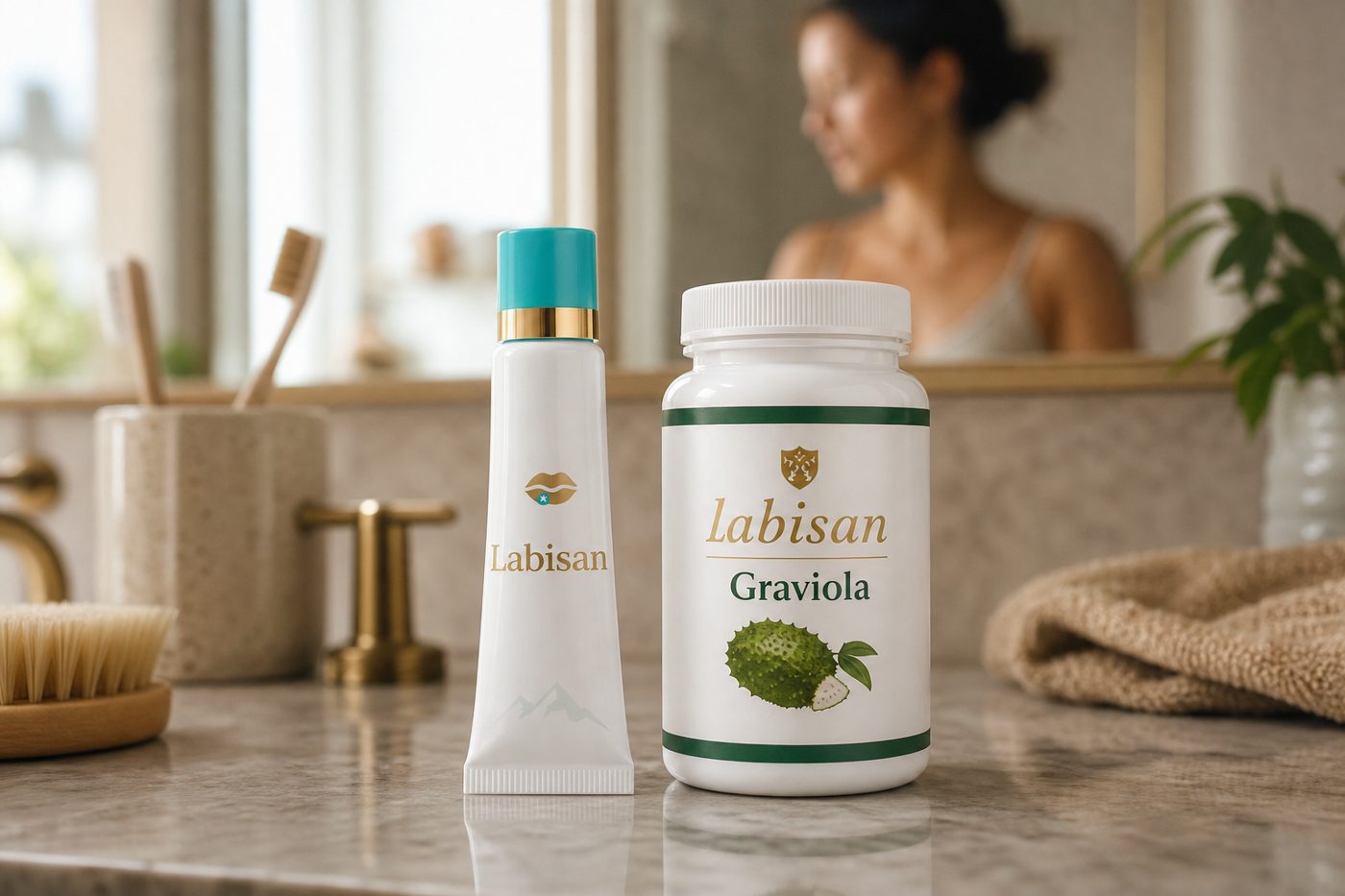
The daily protocol has two layers. The external layer is a lip-surface barrier that blocks the UV trigger which drives roughly half of all reactivations in symptomatic carriers. Labisan Protective Lip Balm delivers a 22 percent zinc oxide mineral SPF film alongside a five-active antiviral layer of manuka oil, melissa officinalis, oregano oil, graviola fruit extract, and beeswax-stabilised vitamin E. Applied three times a day, the film holds through ski, beach, summer hiking, and aircraft cabin conditions. The SPF reapplication post covers the application cadence.
The internal layer is a systemic immune-resilience supplement that supports the host-cell environment HSV needs to replicate in. Labisan Graviola Capsules deliver a 22:1 fruit water extract with the full polyphenol-flavonoid co-fraction documented in the flavonoid profile post. Three capsules per day, one with each main meal. The combined system maps to the 12-month outbreak reduction protocol we publish.
What the Numbers Mean for the Non-Carrier
If you do not carry HSV-1, the epidemiology says you are in a shrinking minority. Most adults you interact with carry the virus and most are asymptomatic. Direct contact with active lesions is the highest transmission risk and is straightforward to avoid. Shared utensils and lip products are a secondary risk; do not share. The cold sore recovery timeline post covers the contagion window if you live with a carrier.
If you have a partner who carries genital HSV-1 or HSV-2, transmission risk per sexual contact is on the order of 4 to 10 percent per year of monogamous contact without antiviral suppression. With daily antiviral suppression by the carrier partner and consistent condom use, the per-year risk drops below 1 percent. The partner transmission and disclosure post covers the protocol in detail.
Bottom Line
HSV-1 is the modal condition of the adult human population. Eighty-five percent global seroprevalence. Forty percent infected by age 12 in industrial countries. Sixty-seven to eighty percent in adults depending on the cohort. HSV-2 sits at 10 to 20 percent. The rare serious complications are real and warrant medical attention. The common condition is a daily-protocol management problem with a mature prevention and treatment toolkit. Labisan Protective Lip Balm and Labisan Graviola Capsules are designed for that daily-protocol toolkit, manufactured in Austria under EU GMP standards. Free shipping on orders over $49, 30 day money back guarantee on both products.