The short answer most search results bury. HSV-1 and HSV-2 are two related viruses in the same family. HSV-1 prefers the mouth and lip area but can occur genitally. HSV-2 prefers the genital area but can occur orally. Globally, roughly 65 percent of adults carry HSV-1, roughly 11 percent carry HSV-2. The clinical disease, the transmission routes, the social stigma, and the long-term outlook are different enough that they deserve separate analysis. This post walks through what is the same, what is different, and how the Labisan protocol applies to each.
What is the same
Both HSV-1 and HSV-2:
- Are lifelong infections once acquired. Neither has a cure as of 2026.
- Establish latency in nerve ganglia (HSV-1 typically trigeminal, HSV-2 typically sacral) and reactivate intermittently.
- Cause vesicular lesions on the skin or mucosa during outbreaks.
- Respond to the same antiviral medications (Acyclovir, Valacyclovir, Famciclovir).
- Are most contagious during active visible outbreaks but can shed asymptomatically.
- Have the same major trigger classes (UV for HSV-1 oral, stress, illness, hormonal cycle for both).
- Are sensitive to the same antiviral botanical compounds (the Labisan formula's graviola acetogenins, manuka triketones, melissa terpenoids, oregano carvacrol all work on both viruses).
What is different
The clinically meaningful differences:
Anatomical preference. HSV-1 prefers the trigeminal ganglion (face, mouth, lip area). HSV-2 prefers the sacral ganglion (genital, buttock, thigh area). The virus type is named by its typical anatomical home but either virus can take up residence in either area. About 50 percent of new genital herpes diagnoses in adults under 25 in the US in 2026 are HSV-1 not HSV-2, transmitted via oral-genital contact.
Outbreak frequency. HSV-2 outbreaks are typically more frequent than HSV-1 outbreaks at the same anatomical site. A genital HSV-2 carrier may have 4 to 8 outbreaks in the first year post-acquisition; a genital HSV-1 carrier typically has 1 to 2 outbreaks total over the same period. Oral HSV-1 outbreaks (the classic cold sore) sit between these in frequency.
Long-term outbreak trajectory. HSV-2 outbreaks tend to plateau or decline slowly over years. HSV-1 outbreaks tend to decline more rapidly with age, particularly after 50.
Transmission. HSV-1 transmits primarily via direct contact with active lesions or oral fluid. The common transmission route is kissing or sharing items contaminated with saliva, and our guide to common cold sore transmission myths about toilet seats, bath water, and towels explains which of the routes people fear actually carry HSV-1. HSV-2 transmits primarily via sexual contact and is much more efficient at sexual transmission than HSV-1.
Asymptomatic shedding rate. HSV-2 sheds asymptomatically on roughly 10 to 15 percent of days. HSV-1 oral sheds asymptomatically on roughly 5 to 10 percent of days. HSV-1 genital sheds far less (under 5 percent of days).
Social and dating context. HSV-1 (cold sores) carries minimal social stigma in most cultures because the prevalence is so high. HSV-2 carries significant social stigma despite being just as biologically benign. The disclosure conversation is therefore much more loaded for HSV-2 than for HSV-1.
The "can I catch one if I have the other" question
Common question with a nuanced answer. Pre-existing HSV-1 infection provides partial cross-protection against HSV-2 acquisition. Roughly 50 percent reduction in HSV-2 acquisition risk for someone with established HSV-1 versus someone with neither virus. The protection is not complete and HSV-1 carriers can still acquire HSV-2 with prolonged exposure to an HSV-2 positive partner.
Pre-existing HSV-2 provides much weaker cross-protection against HSV-1 acquisition. Most HSV-2 carriers can still acquire HSV-1 through standard transmission routes.
Once both types are acquired, they coexist in different ganglia and behave separately. The total outbreak frequency does not increase relative to one virus alone; the patterns are independent.
Can a cold sore become genital herpes (or vice versa)?
The viruses themselves do not transform. HSV-1 stays HSV-1; HSV-2 stays HSV-2. But the location of infection can spread.
Oral to genital transmission of HSV-1. Possible during oral sex when one partner has an active oral HSV-1 outbreak. The result is genital HSV-1, which is still HSV-1 (recurrence less frequent than genital HSV-2), but located genitally. This is the route by which roughly half of new genital herpes diagnoses in younger adults are HSV-1.
Self-spread from oral to other body parts. Touching an active oral cold sore then touching the eyes, nose, fingers, or genitals can produce HSV-1 infection in the new location. This is why the 6-step application technique matters; see the technique post.
Treatment and protocol comparison
Prescription antivirals. Acyclovir, Valacyclovir, and Famciclovir all work on both HSV types. Dosing for HSV-2 suppression is typically higher (Valacyclovir 500 mg daily for HSV-2 vs 500 mg twice weekly or as needed for HSV-1) because HSV-2 reactivates more aggressively.
The Labisan dual protocol. The systemic graviola capsule layer works at the viral replication level for both HSV-1 and HSV-2. The acetogenin and flavonoid mechanism is not virus-specific. Users with HSV-2 (genital) who run the capsule protocol report similar magnitude of outbreak frequency reduction to HSV-1 users.
The topical lip balm is calibrated specifically for the oral lesion environment (lip vermilion, UV exposure, mineral SPF). The same formula can be applied to non-oral HSV-1 lesions (cheek, chin) and works similarly. For genital HSV-1 or HSV-2 lesions, the topical is not the right product (mineral SPF is irrelevant, and the lip-specific texture is not what you want on mucosal genital tissue).
The Labisan position on HSV-2. The capsule layer is appropriate for HSV-2 carriers who want a systemic prevention layer alongside or instead of prescription antivirals. The topical is not appropriate for genital lesions. Users with HSV-2 who want a topical genital option should consult their doctor; appropriate alternatives include topical Acyclovir cream (prescription) and various aloe and propolis-based natural alternatives, none of which are Labisan products.
Testing
If you do not know whether you have HSV-1, HSV-2, both, or neither, a Type-specific IgG blood test from a doctor or sexual health clinic distinguishes them. Standard STI panels in most countries do not include HSV testing by default because the prevalence is high enough that universal testing produces more anxiety than clinical benefit. You typically have to request it specifically.
Test interpretation: a positive HSV-1 IgG means you have been exposed and are carrying the virus, regardless of whether you have ever had a visible outbreak. A positive HSV-2 IgG same. Negative does not rule out very recent exposure (the antibody response takes 6 to 12 weeks to develop fully after acquisition).
The simple summary table
| Question | HSV-1 | HSV-2 |
|---|---|---|
| Most common location | oral / lip | genital |
| Adult prevalence | ~65 percent | ~11 percent |
| Outbreak frequency year 1 | 2 to 6 | 4 to 8 |
| Trajectory over years | decreases | plateaus |
| Primary transmission | oral contact, saliva | sexual contact |
| Asymptomatic shedding | 5-10 percent of days | 10-15 percent of days |
| Social stigma | minimal | significant |
| Cross-protection from the other | strong from prior HSV-1, weak from prior HSV-2 | weak from prior HSV-1 |
| Cure available 2026 | no | no |
| Labisan topical works | yes (lip area) | not appropriate (genital) |
| Labisan capsule works | yes (any HSV) | yes (any HSV) |
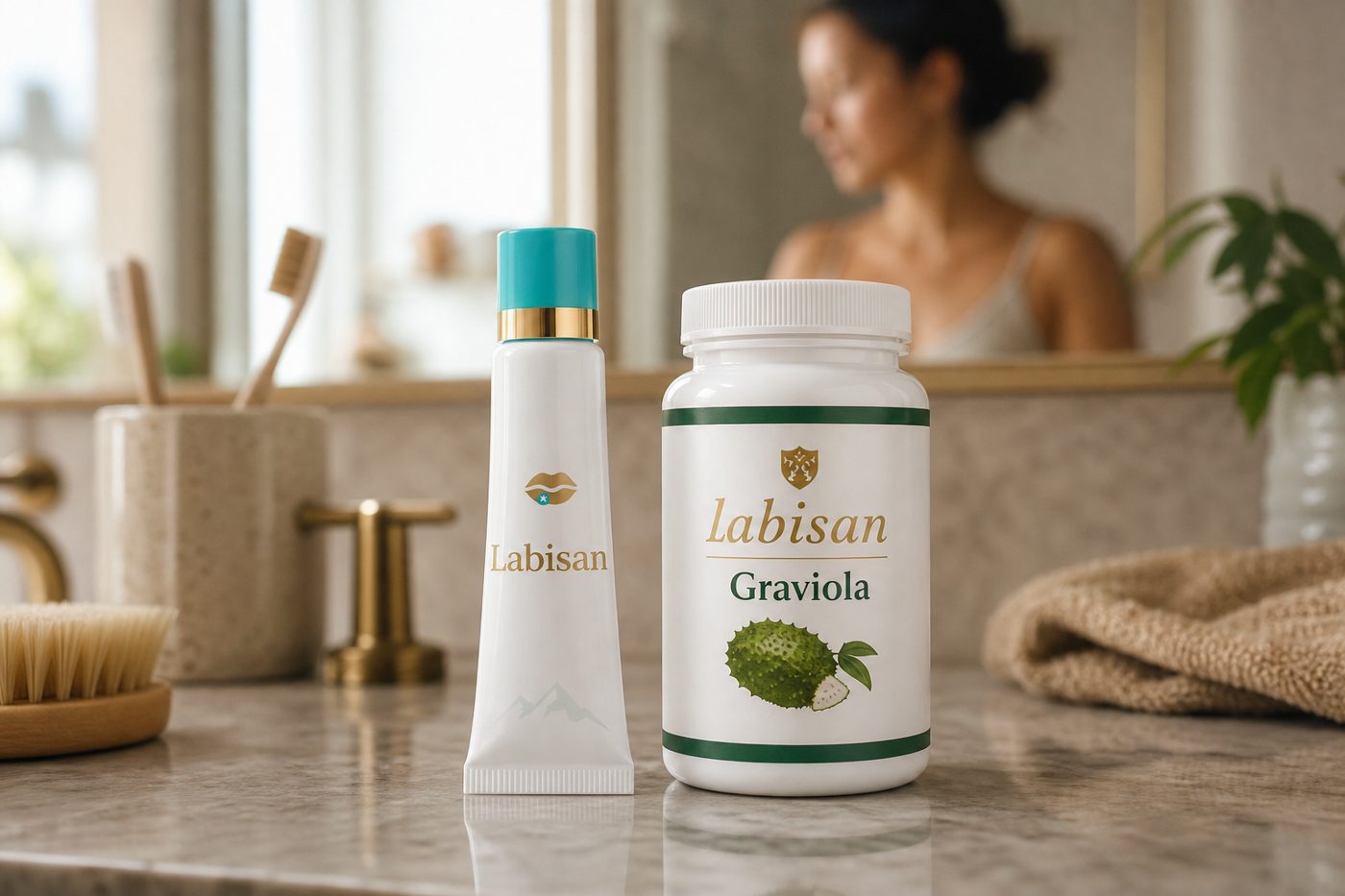
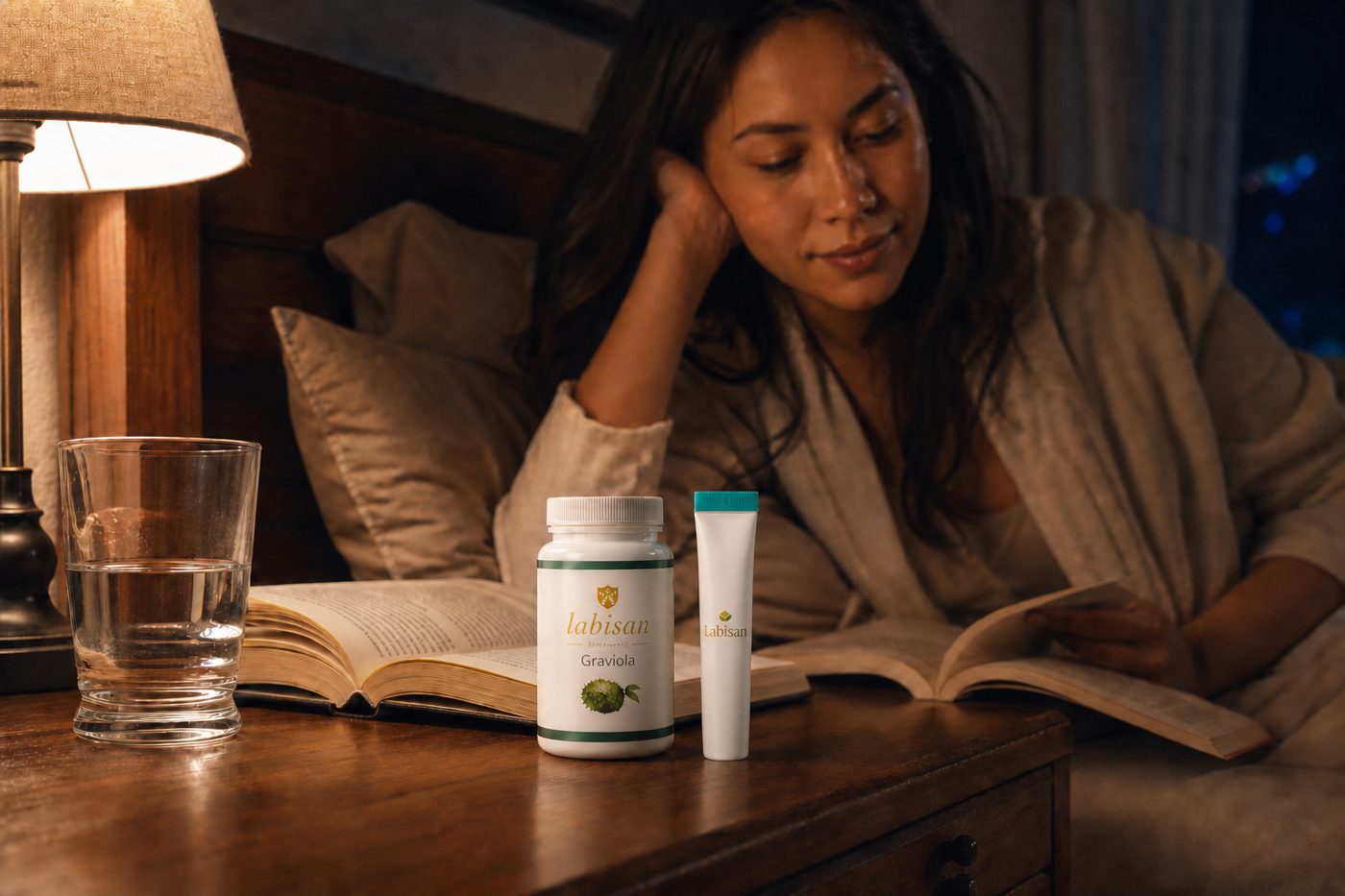
Both Labisan products are available on labisan.shop. The topical is calibrated specifically for the lip vermilion environment; the capsule provides systemic viral suppression that applies to both HSV-1 and HSV-2 carriers.