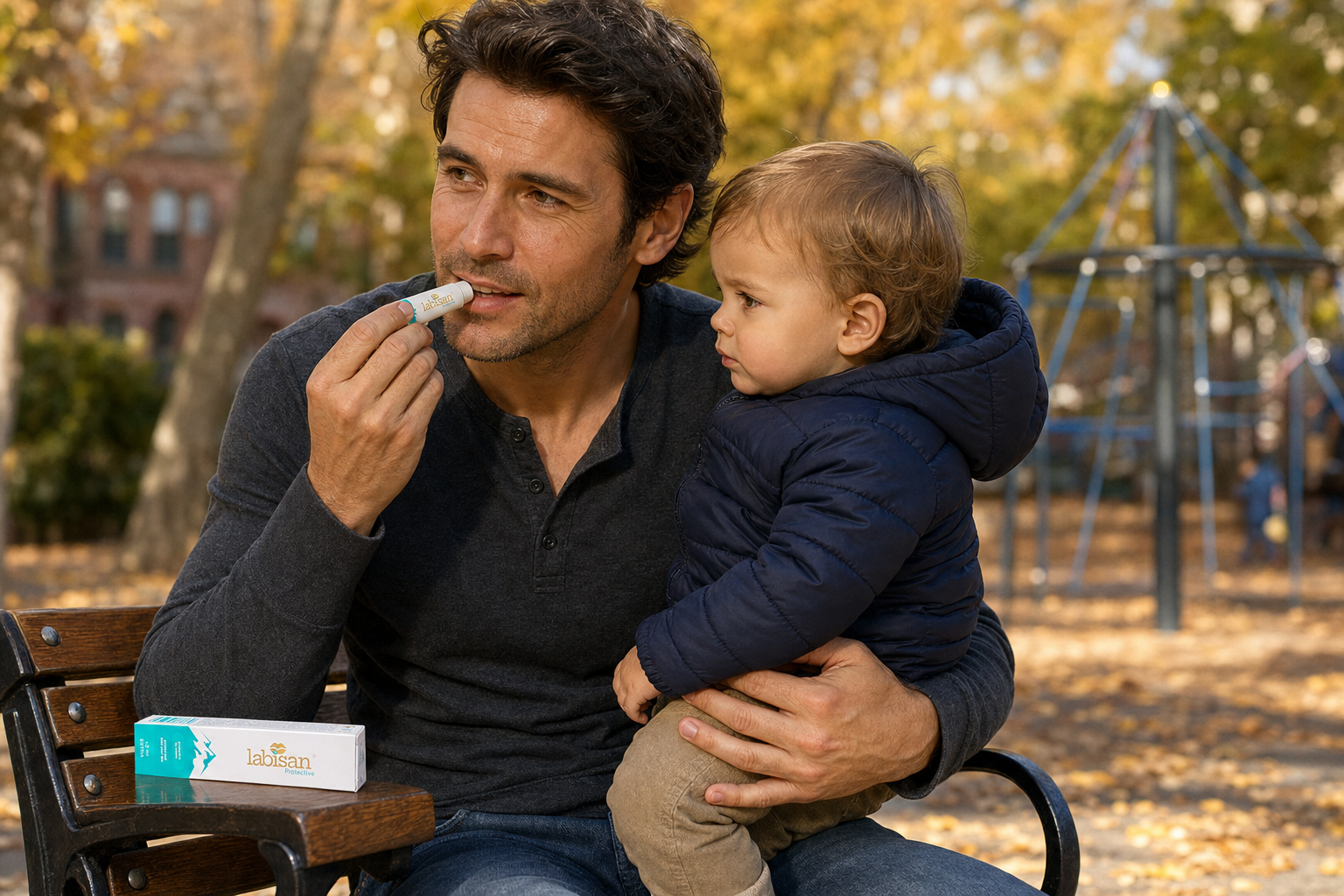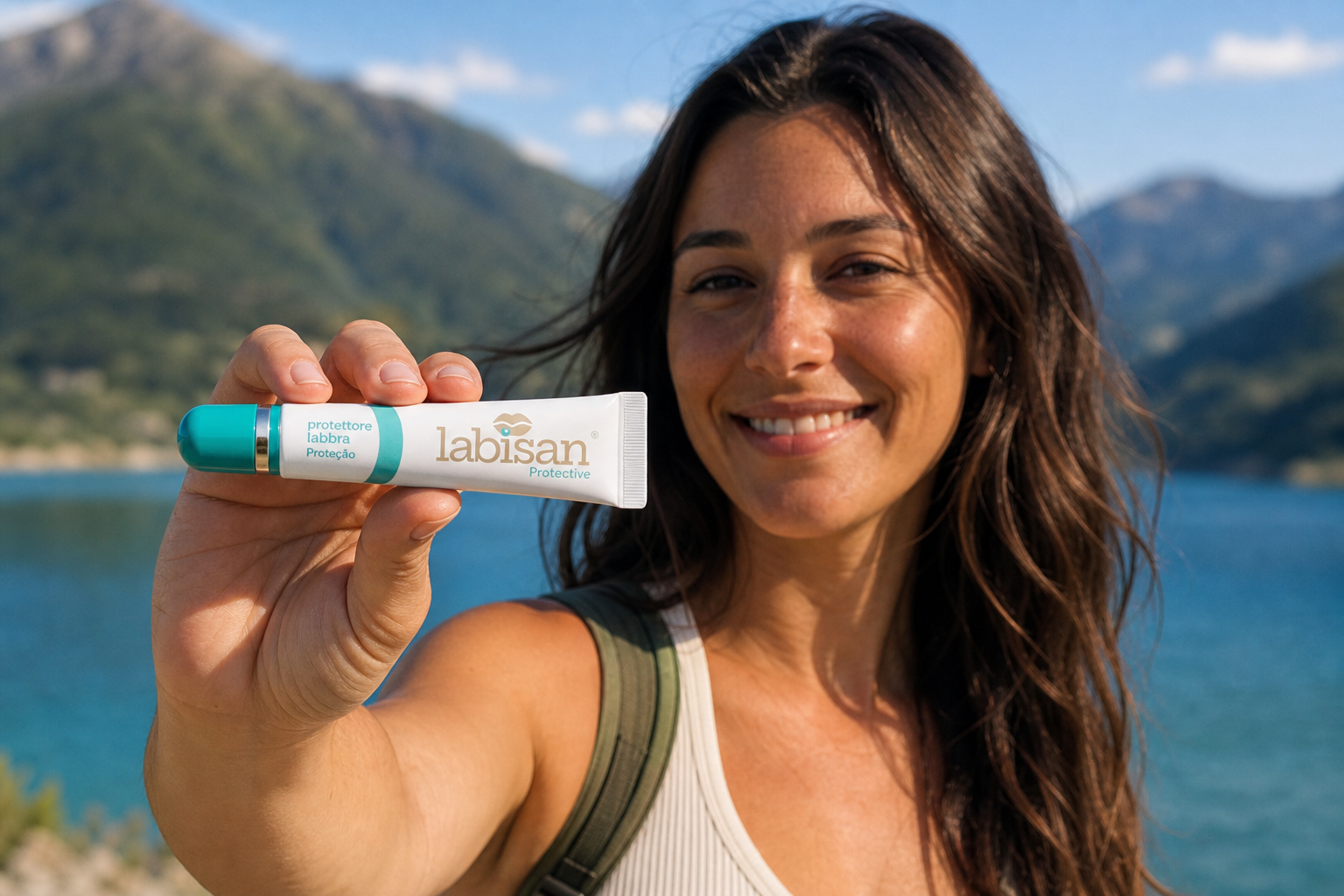

What goes wrong with standard application. The instinctive way most people apply lip balm to a cold sore is to twist the tube up, drag it across the lip multiple times in alternating directions, contact the lesion directly with the tube tip, replace the cap, put the tube back in a pocket, and continue with whatever they were doing. Almost every step in that sequence creates a problem. The tube contaminates with viral particles. The cap traps moisture against the contaminated tip. The hand picks up viral particles during application and transfers them to the eye, nose, or genital area within hours. The lesion spreads laterally to adjacent lip skin from the dragging motion.
The 6-step technique below solves all of these problems. It takes 40 seconds per application once practised. The investment is worth it both for personal lesion containment and for not infecting a partner, child, or yourself in a new location.
Step 1: Wash hands thoroughly BEFORE application
Counterintuitive but critical. Most people wash hands AFTER touching a cold sore. The before-wash is more important than the after-wash. Reason: viral particles that were on your hands from earlier contact with the lesion (or from anything else you have touched recently) can be deposited on the lip balm tube during application, where they survive for hours and re-infect at the next application.
Twenty seconds with soap and warm water before touching the tube. If a sink is not available, a hand sanitiser with 60 percent alcohol minimum is acceptable. Plain water alone is not enough.
Step 2: Open the tube WITHOUT touching the tip
Twist the cap off and place it cap-down on a clean surface (a clean tissue, paper towel, or the back of a clean hand). Do not place it on the bathroom counter directly if that counter has been used for other things. Do not hold the cap in your palm during the application; it complicates the rest of the sequence.
Twist the lip balm tube up 2 to 3 mm of product, no more. You want enough product for one application without over-extruding. Extra product on the tube tip after application is the highest contamination risk.
Step 3: First contact is always on healthy skin, NOT the lesion
The application begins on clean lip skin OR on healthy skin 5 mm beyond the lesion. Never start the application directly on the lesion itself.
Why: the first stroke is the cleanest stroke. By touching healthy skin first, you transfer balm-from-tube to healthy skin without first contaminating the tube with lesion fluid or viral particles.
Beginning at the lesion and working outward does the opposite: viral particles transfer to the tube tip on the first contact, then back to healthy skin as you stroke outward, seeding viral material across the entire application area.
Step 4: Single-direction strokes, from healthy to lesion
The motion is always FROM clean healthy skin TOWARD the lesion. Three to five strokes covering the entire lip surface and 5 to 8 mm of adjacent skin around any felt or visible spot.
Do not stroke back and forth. Do not drag in alternating directions. Each stroke lifts off the lip surface, returns to a clean starting point on healthy skin, and strokes inward toward the lesion. This pattern keeps the contaminated direction always inward and away from clean skin.
The final stroke is the one that directly covers the lesion itself. After that stroke, the application is done. Do not return to add more product. Do not "go over it again to make sure."
Step 5: Replace the cap on the tube without contact between cap interior and tube tip
The cap goes back on the tube. Do this in one smooth motion. The interior surface of the cap should not touch the tube tip if you can avoid it (the cap should slide on from the side, not press down onto the tip from above). This is not always perfectly achievable but the spirit is to minimise inner-cap contact with the dose that just touched the lesion.
The tube goes back wherever it was stored: pocket, drawer, bag. Designate this tube as the active outbreak tube and do not share it with anyone for any reason during the visible phase.
Step 6: Wash hands AGAIN immediately after application
Twenty seconds with soap and warm water. This removes any viral particles deposited on your hands during application. Specifically critical before:
- Touching your eyes (HSV-1 can cause ocular herpes; meaningful complication)
- Touching your nose (HSV-1 can spread to adjacent facial skin)
- Preparing food
- Touching a partner, child, or anyone else
- Touching shared surfaces (door handles, light switches, phones)
If you cannot wash immediately, use an alcohol-based hand sanitiser. The 30 to 60 seconds between application and hand-wash is the highest-risk window for self-spread.
Variations for specific situations
Reapplying outdoors (no sink available). Carry alcohol hand wipes in the same pocket as the lip balm tube. Use one wipe before opening the tube, one after replacing the cap. Throw the wipe in a sealed bag if a bin is not available; do not flick it to the ground.
Reapplying after eating. Wait 10 to 15 minutes after finishing the meal so food residue on the lips is gone. Wipe the lip surface gently with a clean tissue first (single-pass, then discard). Then apply.
Reapplying after kissing or close-face contact. Wash hands and gently rinse the lip area before reapplying. The other person's mouth or face has likely touched the lesion area; the tube must not be contaminated by whatever they left on your skin.
If your eye becomes irritated or red after a cold sore. This is a medical emergency. Ocular herpes can damage vision permanently. See a doctor within 24 hours. The Labisan topical is not appropriate for eye application.
What this technique is NOT
It is not a guarantee against transmission. Properly applied lip balm with this technique still leaves residual viral particles on hands and tube. The technique reduces risk by an order of magnitude relative to careless application; it does not zero it.
It is not a substitute for separating the contagion-period behaviours: not kissing during active vesicles, not sharing utensils, not sharing the lip balm with anyone else for any reason. These behaviours sit on top of the technique.
One more consideration: when to throw the tube out
The Labisan tube does not need to be discarded after a cold sore outbreak if the 6-step technique was followed throughout. The mineral and beeswax-based formula does not actively grow microbes the way water-based products do, and the antimicrobial actives in the formula (manuka, oregano, melissa, zinc) provide additional protection.
However, if at any point during the outbreak you applied the balm casually (skipped a hand wash, double-dipped, etc.), the conservative move is to discard that tube at the end of the outbreak and start a fresh tube for the next prevention cycle. The cost of one tube is small relative to the risk of re-infection.
Both Labisan products are available on labisan.shop. The 22 percent zinc oxide formula provides the topical antiviral barrier the 6-step technique applies; the technique is most relevant when running the active outbreak protocol.
Frequently Asked Questions
Can applying lip balm actually spread a cold sore?
Yes, careless application is one of the main ways a lesion spreads. Dragging the tube back and forth across the lip can push viral particles onto healthy adjacent skin, and touching the lesion with the tube tip contaminates the product for every future application. The 6-step technique reduces this risk by an order of magnitude, though it does not eliminate it entirely.
Should the balm touch the cold sore first or last?
Always last. Begin on clean healthy skin, or on skin about 5 mm beyond the lesion, and stroke in one direction only, from healthy skin toward the sore. The final stroke is the one that covers the lesion itself; after that, stop and do not go back over it.
Do I need a sink every time I reapply during an outbreak?
Ideally yes: twenty seconds with soap and warm water before and after each application. If no sink is available, a hand sanitiser with at least 60 percent alcohol is acceptable, and outdoors you can carry alcohol hand wipes, using one before opening the tube and one after replacing the cap. Plain water alone is not enough.
Is it safe to keep using the same tube after the outbreak heals?
If you followed the hygiene technique throughout, the Labisan tube does not need to be discarded; the mineral and beeswax-based formula does not actively grow microbes the way water-based products do, and the manuka, oregano, melissa and zinc actives add further protection. If you ever applied casually, skipped a hand wash or double-dipped, the conservative move is to discard that tube once the outbreak ends and start fresh.