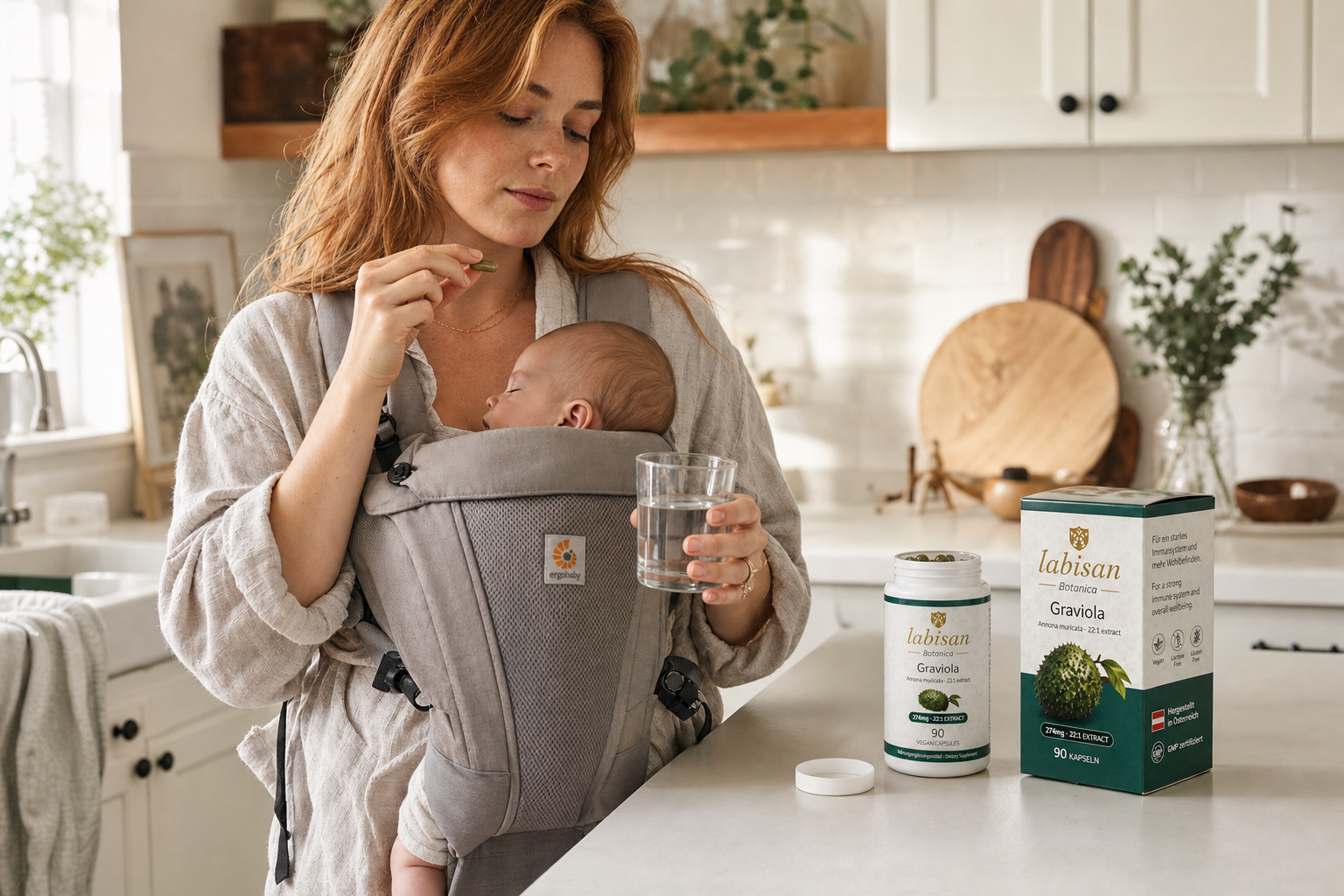
Up front, the most important medical caveat in any of our posts. The Labisan 22:1 Graviola Capsule is NOT recommended during pregnancy or breastfeeding. The annonaceous acetogenin and alkaloid load in the capsule has not been studied in pregnancy and is theoretically capable of crossing the placenta and affecting fetal mitochondrial function. The Labisan position, consistent with how cautious supplement brands handle this, is that the capsule is for non-pregnant adults. The Labisan Protective Lip Balm topical is a clean formula and is safe to use throughout pregnancy and breastfeeding. The protocol below is the topical-only protocol calibrated for the pregnancy and immediate post-pregnancy period, plus the safe path to resume the full hybrid system once weaning is complete.
If you are reading this because you are pregnant and have an active cold sore right now, the practical answer is: apply the Labisan topical 4 times today, talk to your doctor or midwife about whether short-course oral Acyclovir is appropriate for your specific case, and read on for the longer-term plan.
Why pregnancy changes the cold sore management equation
Three things shift simultaneously in pregnancy that affect both outbreak frequency and treatment options.
1. Immune system rebalancing. Maternal immune system shifts toward Th2-dominant response during pregnancy (to tolerate the genetically-distinct fetus). This shift downregulates the cell-mediated T-cell response that contains latent HSV-1. The practical effect: many recurrent HSV-1 sufferers experience more frequent or more severe outbreaks during pregnancy, particularly in the second and third trimester. Some women who have not had an outbreak in years suddenly get one in month 5 or 6 of pregnancy. This is normal biology, not a sign of anything wrong.
2. Treatment options narrow. Oral antivirals (Acyclovir, Valacyclovir) are FDA pregnancy category B, meaning animal studies have shown no fetal harm but human data is limited. They are generally considered safe to use if the clinical benefit clearly outweighs the theoretical risk, but most obstetricians prefer to avoid them in the first trimester and use them with caution thereafter. Lysine supplementation, sometimes used for cold sore prevention, has limited safety data in pregnancy. Most herbal antiviral supplements are explicitly not recommended.
3. The visible cosmetic and social stakes change. Many cold sore outbreaks in pregnancy coincide with photos, baby showers, hospital tours, and the run-up to delivery. A cold sore on the day of a 20-week ultrasound is its own emotional weight that the cold sore itself does not produce in non-pregnancy contexts.
What is in the Labisan topical, and why it is safe in pregnancy
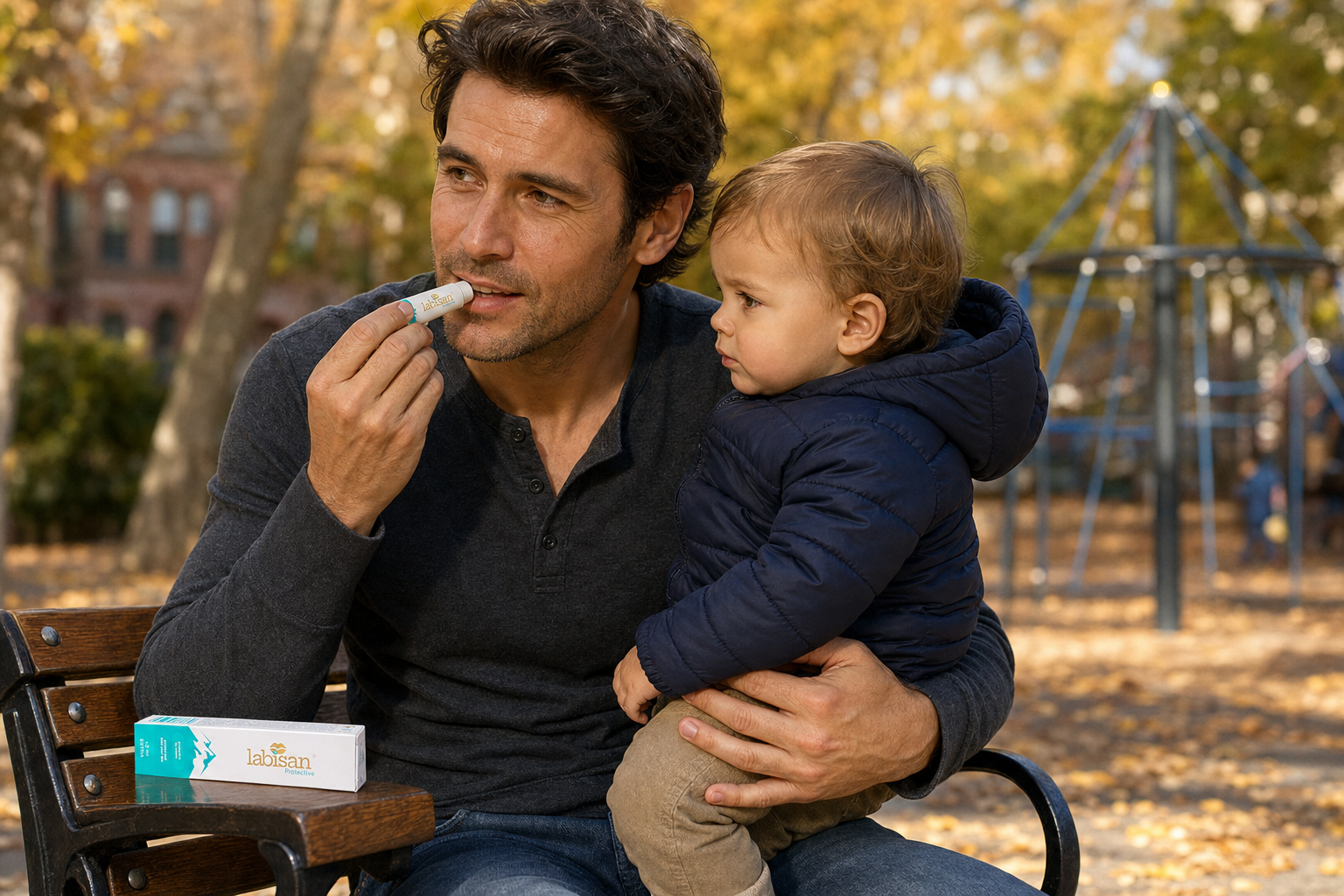
The Labisan Protective Lip Balm is a topical formula applied to the lip surface with negligible systemic absorption. Each of the active ingredients has either established safety in pregnancy or no plausible mechanism of fetal exposure given the topical route and dose.
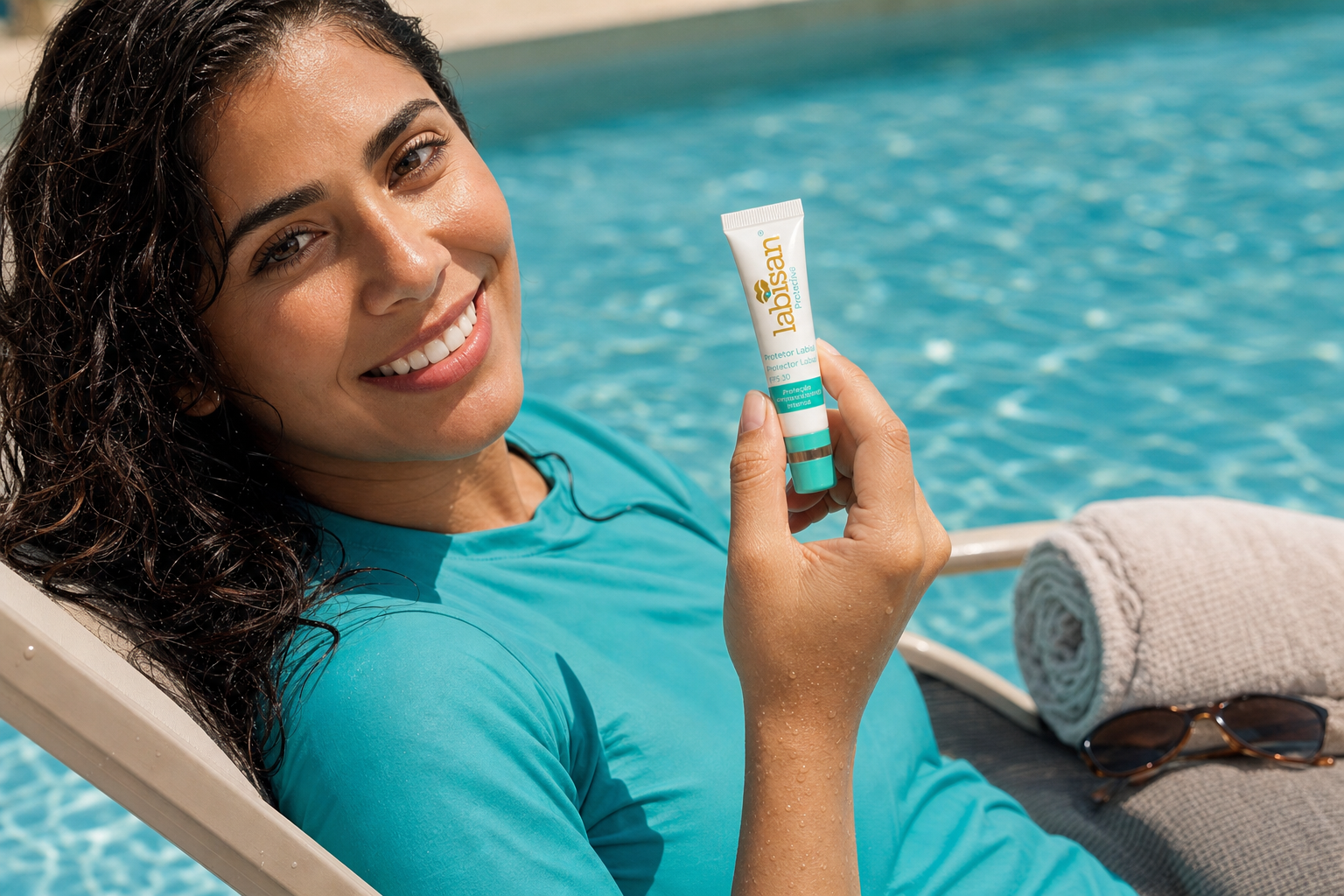
- 22 percent non-nano zinc oxide. Mineral SPF. Non-nano means the zinc oxide particles are large enough to sit on the skin surface and not penetrate to the dermis. Considered safe in pregnancy across major obstetric guidelines, including American College of Obstetricians and Gynecologists (ACOG) statements on sun protection. Mineral SPFs are explicitly preferred over chemical SPFs in pregnancy.
- Austrian beeswax. Inert lipid base. No pregnancy concern.
- Sweet almond oil. Carrier oil. No pregnancy concern at topical doses.
- 5 percent graviola fruit-extract. Applied topically to the lip surface. Topical absorption of the acetogenin load through intact lip skin is minimal (estimated 1 to 3 percent over a single application, and most of that is metabolised by lip epithelial enzymes before reaching systemic circulation). The total daily systemic dose from 4 topical applications is on the order of micrograms, well below any threshold of concern. Labisan's pregnancy position on the topical is that it is acceptable but, if you prefer extra caution, you can ask Labisan customer service for the older formulation (pre-2023, no graviola in the topical) which is still available on request. Most pregnant users continue with the standard formula.
- Manuka oil trace. Triketones at the trace concentration in the lip balm have no documented pregnancy concern. Topical antifungal use of manuka oil during pregnancy is considered acceptable by aromatherapy and integrative-medicine references.
- Oregano oil trace. At the lip balm concentration, no pregnancy concern. The exception is high oral doses of oregano oil (multiple capsules of high-strength oregano extract), which are not recommended in pregnancy and which Labisan does not sell.
- Menthol 0.3 percent. At this concentration, no pregnancy concern. Higher menthol concentrations in other products (e.g. some chest rubs at 4 to 7 percent) can theoretically have effects but are not relevant at the lip-balm dose.
- Vitamin E, almond oil, allantoin. All considered safe.
The summary: the Labisan topical is appropriate to use throughout pregnancy and breastfeeding. The Labisan capsule is not.
The pregnancy topical-only protocol
This protocol is calibrated for the case where you cannot use the systemic capsule. It compensates for the missing layer by being more aggressive on the topical front, particularly on UV protection and prevention.
For active outbreaks during pregnancy:
- 5 topical applications per day for the first 4 days, dropping to 4 from day 5 onward (heavier topical loading compensates for the absence of the systemic layer)
- Begin within 1 hour of the first tingle if possible. The tingle window is even more important during pregnancy because you cannot fall back on systemic dosing.
- If the outbreak is severe or coincides with the third trimester (where any maternal stress affects late fetal environment), discuss short-course oral Acyclovir with your obstetrician. Topical-only outbreak management is appropriate for mild to moderate outbreaks in pregnancy. Severe outbreaks merit a clinician conversation.
For prevention during pregnancy:
- 3 daily topical applications: morning, mid-day if outdoors, before bed. The morning and any midday outdoor applications are the most important. UV is still the dominant trigger.
- Avoid sun exposure of the lip vermilion specifically, especially in the second and third trimester when immune modulation is at its strongest. A wide-brimmed hat in summer is a low-cost addition.
- Track triggers using the 8-week trigger journal. Even without the capsule layer, mapping your personal pattern lets you reinforce the topical at the highest-risk windows.
- Sleep and stress management matter more during pregnancy because the maternal stress response is itself a trigger. The protocol cannot compensate for sustained sleep deficit; the lifestyle side is doing more of the work.
What to discuss with your obstetrician or midwife
Bring the following questions to your next appointment if you are an HSV-1 carrier and pregnant:
- What is the threshold at which you (the clinician) would prescribe oral Acyclovir during pregnancy? For some women in suppressive therapy pre-pregnancy, continuation is recommended. For others, episodic use only.
- How does your clinic handle HSV-1 risk to the newborn at delivery? HSV-1 transmission to neonates is rare but serious. Most clinics have a specific protocol if maternal active outbreak is present near term.
- If a primary HSV-1 infection occurs during pregnancy (rare but possible), the management is different from a recurrent outbreak in an existing carrier. Make sure your clinician is informed if you suspect a primary infection.
The breastfeeding window
Breastfeeding follows the same logic as pregnancy: topical safe, capsule not recommended. The acetogenin load is theoretically excretable in breast milk and infant exposure is not established as safe. Labisan's position is that the capsule should remain on pause for the full duration of breastfeeding.
One practical concern during breastfeeding: an active cold sore on the lip is contagious to the infant during the vesicle stage. Direct lip contact with the infant should be avoided until the lesion has crusted (typically day 4 to 5). This applies regardless of whether you are using any treatment. The Labisan topical reduces the time to crust formation by 24 to 48 hours, which shortens the contact-precaution window proportionally.
Resuming the full hybrid system after weaning
Once you are no longer breastfeeding, the Labisan capsule layer can resume. The transition is gentle:
- Start at 1 capsule per day for week 1, with food. This is a half-dose to verify tolerance.
- Move to 2 capsules per day from week 2 onward, which is the standard maintenance dose.
- Continue the topical at 2 to 3 daily applications, same as you have been using through pregnancy.
- Plasma steady state is reached by day 10 to 14 of consistent capsule dosing. The prevention benefit begins to compound from there.
Many users find their post-pregnancy cold sore frequency is higher than pre-pregnancy for the first 6 to 12 months even after weaning. The maternal immune system takes 6 to 12 months to fully reset to pre-pregnancy patterns. The resumed hybrid protocol compensates for this transition window.
The simple summary
The Labisan topical is safe and effective during pregnancy and breastfeeding. The Labisan capsule is not recommended during these periods. The topical-only protocol manages active outbreaks acceptably and supports prevention reasonably well. The full hybrid system resumes after weaning.
If you are pregnant and reading this in advance of needing a cold sore plan, the simplest path is to keep a Labisan tube on hand throughout your pregnancy. The morning application of mineral SPF is a sensible daily habit during pregnancy regardless of cold sore concerns. The topical is also a high-quality general lip balm that addresses winter dryness, sun exposure, and the dry lips that are common during pregnancy from increased blood volume and circulation changes.
The Labisan Protective Lip Balm is available on labisan.shop. The Graviola Capsules are also listed but the pregnancy and breastfeeding disclaimer is shown on the product page itself, with a recommendation to resume only after weaning.