The short version dermatology societies agree on: the vermilion border of the lip has a stratum corneum roughly three to five cell layers thick against the fifteen-plus layers found on facial skin, contains almost no melanin, and has no sebaceous or sweat glands to build a protective hydrolipid film. It is, in practical terms, the least defended square centimetre of sun-exposed tissue on the human body. The consequences are measurable. The lower lip accounts for roughly 90 percent of all lip cancers, because it sits at an angle that receives a far higher cumulative UV dose than the shaded upper lip. Squamous cell carcinoma arising on the lip metastasises several times more often than squamous cell carcinoma elsewhere on the skin. Its precursor, actinic cheilitis, is common in outdoor workers and older fair-skinned adults, with commonly cited malignant transformation rates in the region of 10 to 20 percent over time. And yet surveys of beachgoers, skiers, and outdoor workers repeatedly find that fewer than 40 percent report using any SPF product on their lips at all, even among people who reliably apply sunscreen to their face. The American Academy of Dermatology, the Skin Cancer Foundation, and their European counterparts all now list lip protection as a distinct, non-optional step rather than a footnote to facial sunscreen. This article turns that guidance into a checklist you can actually follow, and explains where a well-formulated mineral balm such as the Labisan Protective Lip Balm SPF 20 with 22 percent zinc oxide fits into it.
What the dermatology guidelines actually say
Strip away the differences in wording between societies and the consensus positions are remarkably consistent. Five points recur in essentially every major guideline document.
One: use a dedicated lip product with SPF, not facial sunscreen. Lotion sunscreens are not formulated to survive on mucosal tissue, taste unpleasant, and are ingested within minutes. A balm or stick base is the recommended vehicle.
Two: broad spectrum is mandatory, not optional. UVB drives the direct DNA damage behind squamous cell carcinoma; UVA penetrates deeper, drives oxidative damage, and passes through window glass and cloud cover. A product labelled only with an SPF number and no broad spectrum designation is protecting against half the problem.
Three: SPF 30 or higher is the headline recommendation for skin, with the honest caveat that adherence matters more than the number. More on that below, because it is the single most misunderstood point in the entire guideline set.
Four: reapply at minimum every two hours, and immediately after eating, drinking, swimming, or towelling. For lips specifically, that interval is generous rather than conservative. We have written separately on why the 90-minute reapplication rule for SPF lip balm is a better real-world target than the standard two-hour figure, since the lips are subject to constant mechanical removal that facial skin is not.
Five: sunscreen is one layer of a system. Guidelines consistently pair topical protection with a wide-brimmed hat, seeking shade between roughly 10am and 4pm, and awareness of the UV index. A brim that shades the face reduces lower-lip UV exposure substantially, which is why hat-plus-balm outperforms either alone.
Why the lip is the weakest link in your sun protection
Three anatomical facts explain the disproportionate risk. First, the vermilion is transitional tissue: thinner than skin, with a keratin layer that offers minimal physical UV attenuation. Second, melanin density at the vermilion is very low, so the pigmentary defence that protects surrounding facial skin is largely absent. Third, there are no sebaceous glands on the vermilion proper, so the lip cannot manufacture the lipid film that keeps the rest of your face hydrated and barrier-competent. Anything protective on your lips got there because you put it there.
Environment amplifies all three. UV intensity rises by roughly 10 to 12 percent for every 1,000 metres of altitude gained, and fresh snow reflects up to 80 percent of incident UV back upwards, directly at the underside of the chin, the nostrils, and the lower lip. A skier at 2,500 metres on a bluebird day is receiving something close to double the sea-level UV dose from above, plus a large reflected dose from below that a hat brim does nothing to block. Water reflects around 10 percent and dry sand around 15 percent, which is why sailors and beach runners sit in the same elevated-risk bracket as mountain guides.
Cold and wind compound the damage by stripping the lipid barrier first, which is why winter lip injury so often presents as combined photodamage plus fissuring. We cover that mechanism in detail in our guide to cold weather chapped lips and barrier failure. The practical takeaway: a plain wax balm with no UV filter can leave lips feeling comfortable while photodamage accumulates unimpeded, which is exactly the failure mode described in our analysis of why beeswax-only lip balm fails at altitude.
The UV and cold sore connection dermatologists cite
Guideline documents on lip protection almost always reference herpes labialis, because the link between ultraviolet exposure and HSV-1 reactivation is one of the better-characterised trigger relationships in dermatology. Controlled experimental work in the 1980s demonstrated that suberythemal UVB exposure to the lip could induce recurrent lesions in a substantial proportion of susceptible subjects. The most-cited intervention study, published in The Lancet in 1991 by Rooney and colleagues, used a crossover design in patients with UV-inducible herpes labialis: in the placebo arm, 27 of 38 UV exposures produced a lesion; in the sunscreen arm, 0 of 35 did.
Honesty requires the counterweight. A field trial in skiers using lip sunscreen did not reproduce that effect, which most reviewers attribute to real-world application failure rather than mechanistic failure: people in the field apply too little, too infrequently, and lose product to eating, drinking, and wind. That distinction matters enormously. It suggests UV blocking at the lip is a genuinely powerful lever, and that the limiting factor is whether the product is still physically present on the lip at the moment of peak exposure. Which brings us back to reapplication discipline rather than SPF numbers.
The dermatologist lip protection checklist for 2026
Product selection
Choose a broad spectrum lip balm in a balm or stick base. Prefer mineral filters, zinc oxide in particular, for the lip: zinc oxide is photostable, does not degrade into reactive intermediates under prolonged exposure, covers the full UVA and UVB range in a single filter, and has a very low irritancy profile on tissue that is repeatedly ingested. Check that the product is fragrance-light and free of known lip sensitisers. Avoid camphor, menthol, and phenol at high levels, which produce a cooling sensation while increasing transepidermal water loss.
Application technique
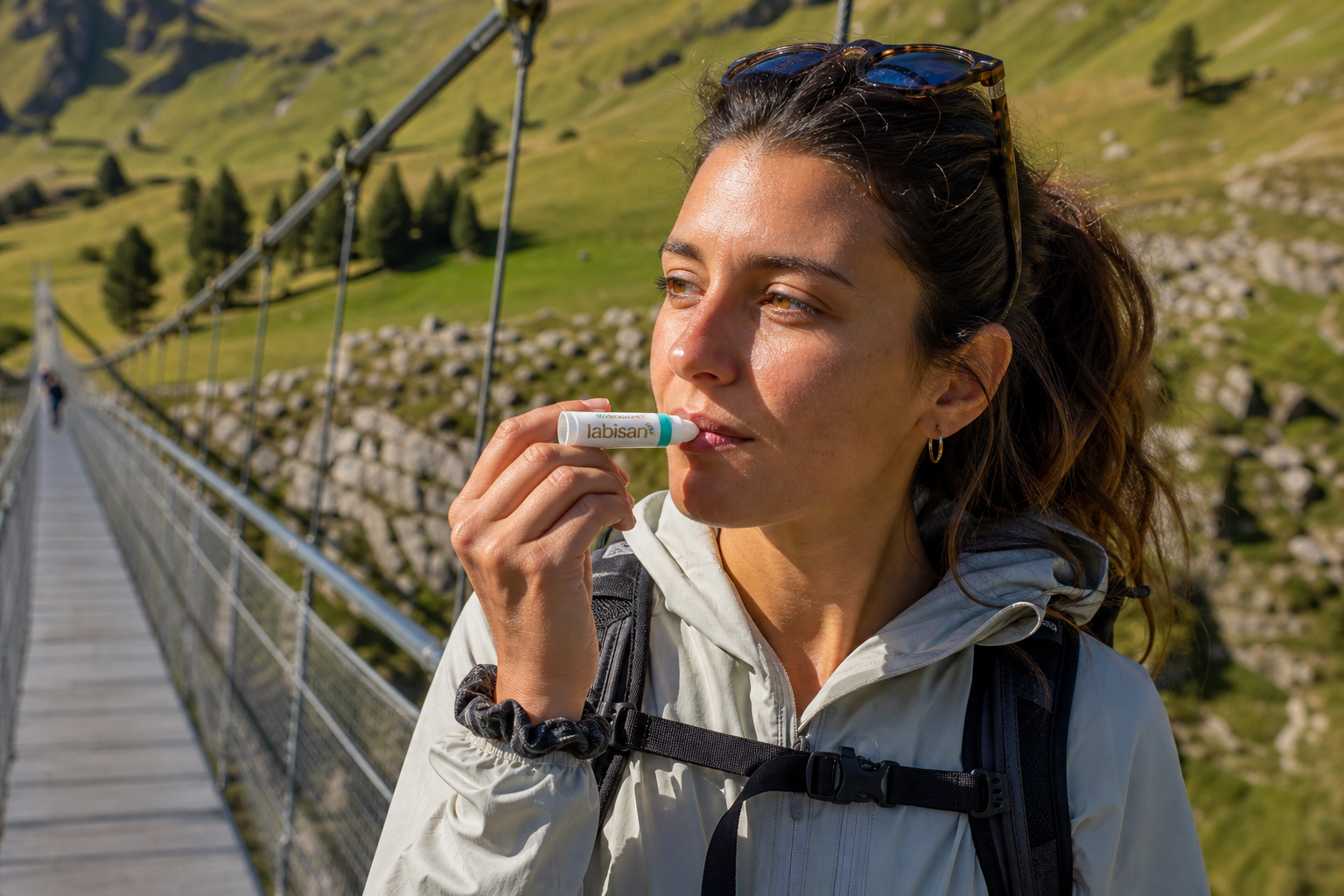
Apply a visible layer, not a translucent smear. SPF ratings are established at 2 mg per square centimetre, and almost nobody applies that much. Extend past the vermilion border onto the surrounding skin by one to two millimetres, since perioral skin is a common site for actinic damage and for lesion recurrence. Apply 15 minutes before exposure. Reapply every 90 minutes outdoors, and after every meal, drink, and nose-blow.
Environmental adjustment
Increase frequency at altitude, on snow, on water, and between 10am and 4pm. Reapply after towel contact. Wear a wide-brimmed hat rather than a cap, because a brim shades the lower lip while a cap peak does not.
Surveillance
See a dermatologist about any lip lesion, patch of persistent roughness, blurred vermilion border, white plaque, or crust that has not resolved within three weeks. Persistent scaling on the lower lip is the classic presentation of actinic cheilitis and it is highly treatable when caught early.
SPF number versus application reality
Here is the point the guidelines make quietly and the marketing ignores loudly. SPF 30 filters roughly 96.7 percent of UVB; SPF 50 filters roughly 98 percent. The difference between them is about 1.3 percentage points of transmitted UVB. The difference between a product applied at the full test thickness and one applied as a thin swipe is far larger, because protection falls off steeply, not linearly, with reduced film thickness. A nominal SPF 50 applied once at 8am and never again is delivering close to nothing by mid-morning on a mountain.
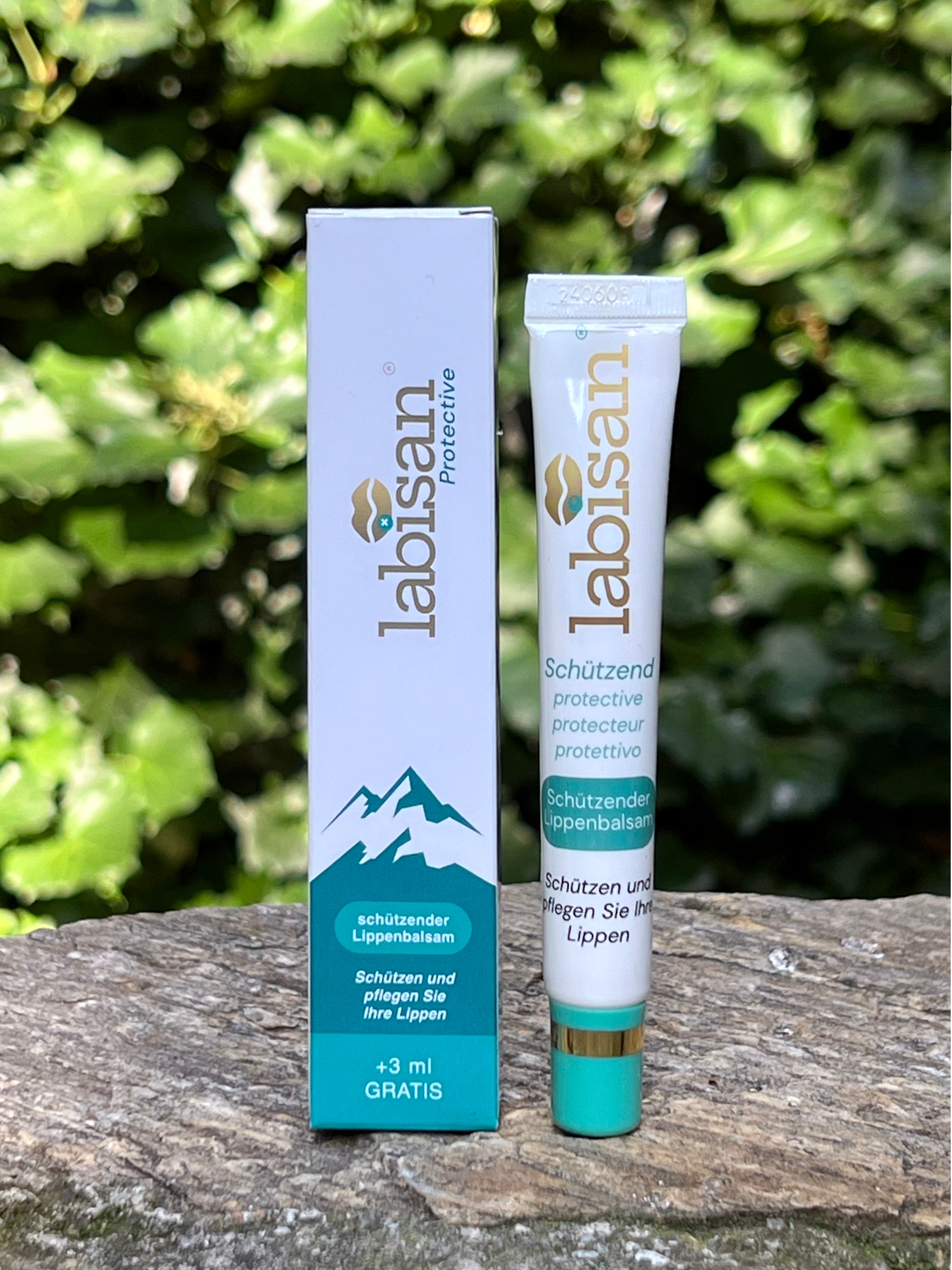
This is why Labisan formulates at SPF 20 using 22 percent zinc oxide in a rich occlusive base rather than chasing a higher label number with a thinner, more cosmetically elegant film. The design goal is a balm you will reapply five times a day without hesitation because it feels good and does not sting, laying down a genuinely opaque mineral film each time. If your dermatologist has recommended SPF 30 or higher for a specific clinical reason, such as a history of actinic cheilitis, immunosuppression, or photosensitising medication, follow that advice. For the general outdoor case, the honest hierarchy is: reapplication frequency first, film thickness second, broad spectrum coverage third, and SPF number fourth. If you have been told mineral SPF balms cause dependency, our piece on the lip balm addiction myth and mineral SPF covers what the evidence actually shows.
Why the Labisan dual protocol is the smarter long-term choice
Look honestly at the cold sore category and a structural pattern appears. Docosanol creams, acyclovir and valacyclovir, hydrocolloid patches, and lysine supplements are all, without exception, reactive. They are deployed after HSV-1 has already reactivated, travelled down the trigeminal nerve, and begun replicating in the epithelium. They can shorten an episode by a day or so if started at the first tingle. Every one of them is a legitimate product doing a legitimate job. But none of them is doing anything on a sunny Tuesday in February when the actual reactivation event is being set in motion.
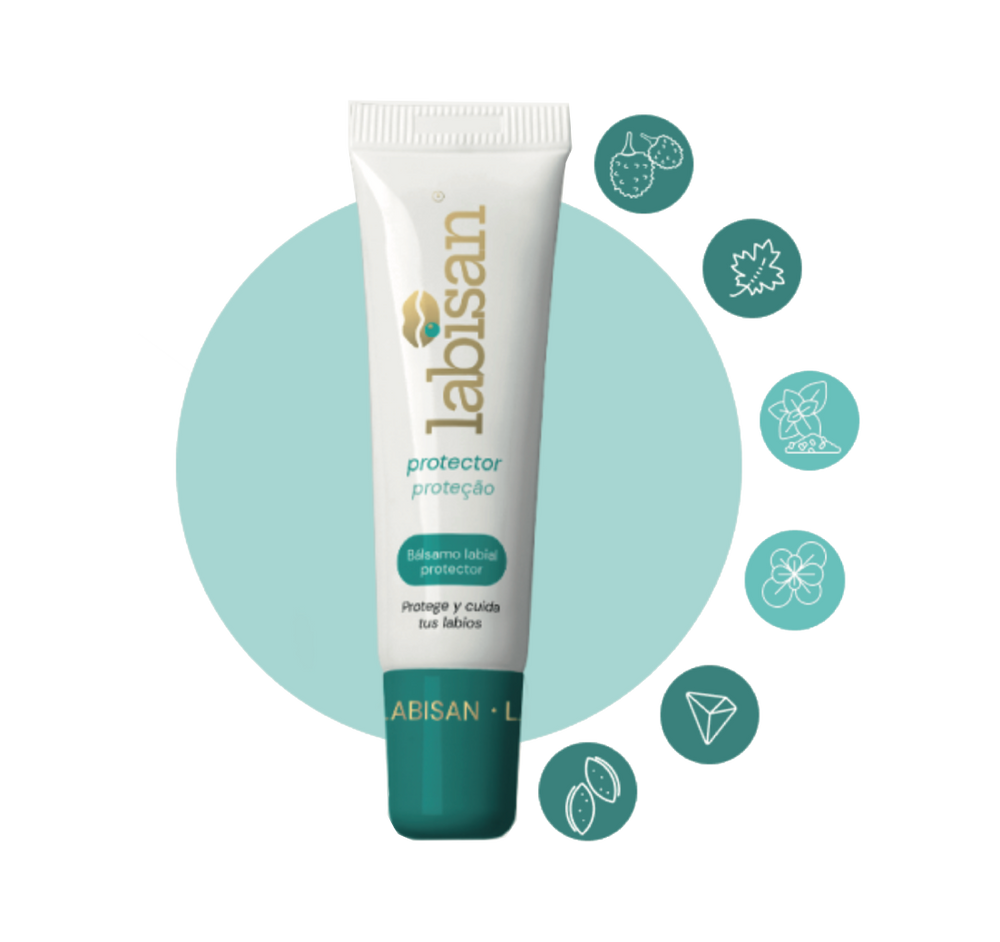
Labisan is built around the other end of that timeline. The Protective Lip Balm SPF 20 addresses the single most consistently documented environmental reactivation trigger for HSV-1: ultraviolet exposure at the lip itself. That is not a marketing frame; it is the mechanism the Rooney trial isolated and the reason dermatology guidance on herpes labialis includes lip photoprotection at all. The 22 percent zinc oxide load handles the UV; manuka and oregano oils contribute topical botanical support, discussed in our review of the science behind manuka oil in antiviral lip balm; shea butter and beeswax rebuild the barrier that cold and wind strip away.
Labisan Graviola Capsules work the second axis: general immune support from the inside, aimed at reducing outbreak frequency over months rather than treating any individual episode. To be explicit and to stay within what the evidence supports: graviola is not a cure for HSV-1 or HSV-2, does not eliminate latent virus, and should never replace antiviral medication prescribed by your doctor. Latency is permanent with current medicine. What is realistically within reach is reducing how often the trigger conditions convert into a visible lesion.
Prevention plus frequency reduction, run continuously, is a different strategy from treatment run episodically. It also happens to be the strategy that aligns with what every dermatology society already tells you to do for lip cancer prevention. One habit, two payoffs.
Guideline-grade lip protection you will actually reapply
Labisan Protective Lip Balm SPF 20
Single: $24.99 | Adventure Pack (3x): $59.97 | Family Bundle (5x): $89.95
Free EU shipping over $49, $19.99 worldwide. 30 day satisfaction guarantee.
Shop NowFrequently Asked Questions
What SPF do dermatologists recommend for lips?
The headline recommendation from major dermatology societies is broad spectrum SPF 30 or higher, reapplied at least every two hours. The important qualifier is that measured protection depends heavily on how much product is applied and how often it is renewed. A well-applied SPF 20 mineral balm reapplied every 90 minutes will typically outperform a single morning application of SPF 50. If you have a personal history of actinic cheilitis, immunosuppression, or take photosensitising medication, follow your dermatologist's specific instruction.
Is mineral or chemical SPF better for lips?
Mineral, specifically zinc oxide, is generally preferred for the lip. It is photostable across prolonged exposure, covers UVA and UVB with a single filter, has a low irritancy profile, and does not require absorption into tissue that is repeatedly ingested. Chemical filters are not unsafe, but they degrade faster in sunlight and are more frequently associated with stinging on compromised or fissured lips.
Can lip sunscreen prevent cold sores?
It can meaningfully reduce UV-triggered recurrences in people whose outbreaks are sun-associated, which is a large share of cold sore sufferers. The controlled evidence for this is strong; the field evidence is weaker, and the gap is best explained by inconsistent reapplication rather than by the mechanism failing. No lip balm eliminates latent HSV-1 or HSV-2, and none should replace prescribed antiviral therapy.
What is actinic cheilitis and how do I spot it?
Actinic cheilitis is chronic UV damage to the lip, presenting most often on the lower lip as persistent dryness, scaling, white or grey patches, and a blurred, indistinct vermilion border. It is considered a precancerous condition with commonly cited transformation rates around 10 to 20 percent over time. Any lip change persisting beyond three weeks warrants a dermatology appointment.
Do I need lip SPF in winter or on cloudy days?
Yes. UVA passes through cloud cover and glass largely unimpeded, and winter conditions actively increase risk rather than reduce it: UV rises roughly 10 to 12 percent per 1,000 metres of altitude, fresh snow reflects up to 80 percent of incident UV upwards at the underside of the lip, and cold dry air degrades the lipid barrier before the UV even arrives. Skiers and winter hikers are among the highest-exposure groups of the entire year.