Walk the base of any sunny crag on a summer morning and you will see climbers diligently applying sunscreen to their faces, the backs of their necks, and the tops of their ears. Almost none of them touch their lips. It is the single most exposed and most neglected piece of skin on the route. The lip border has no functional stratum corneum to speak of, almost no melanin, and a sebaceous output close to zero, which means it cannot self-defend against ultraviolet light the way cheeks and forearms can. For the roughly 67 percent of adults carrying latent HSV-1, the lip is not just sunburn-prone tissue. It is the doorway where the virus sits dormant in the trigeminal ganglion, waiting for a local immune opening that ultraviolet light reliably provides.
Rock climbing assembles an unusually efficient version of that opening. Start with ultraviolet albedo bouncing off pale rock, which adds 25 to 40 percent more reflected dose to whatever falls from the sky. Add altitude amplification at most destination crags. Add climbing chalk, an alkaline desiccant that pulls moisture and lipids out of the lip surface hour after hour. Then add the structural reality of a climbing day: six to eight hours of continuous exposure with no natural reapplication breaks, because your hands are busy and your tube is at the base of the wall. The cold sore that surfaces on day 2 or day 3 of a climbing trip is not bad luck. It is the predictable output of a stacked trigger that nobody intercepted on day 1.
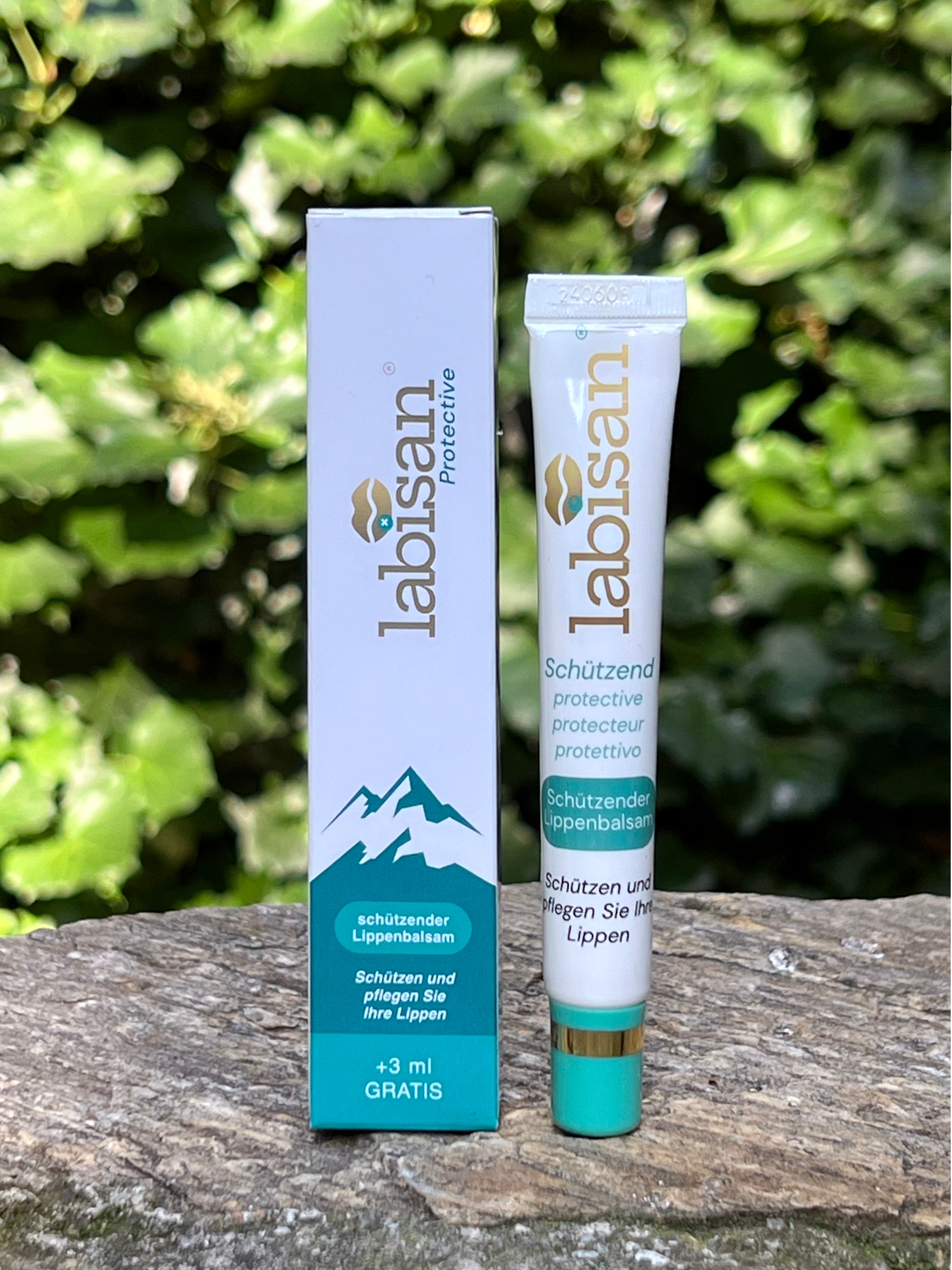
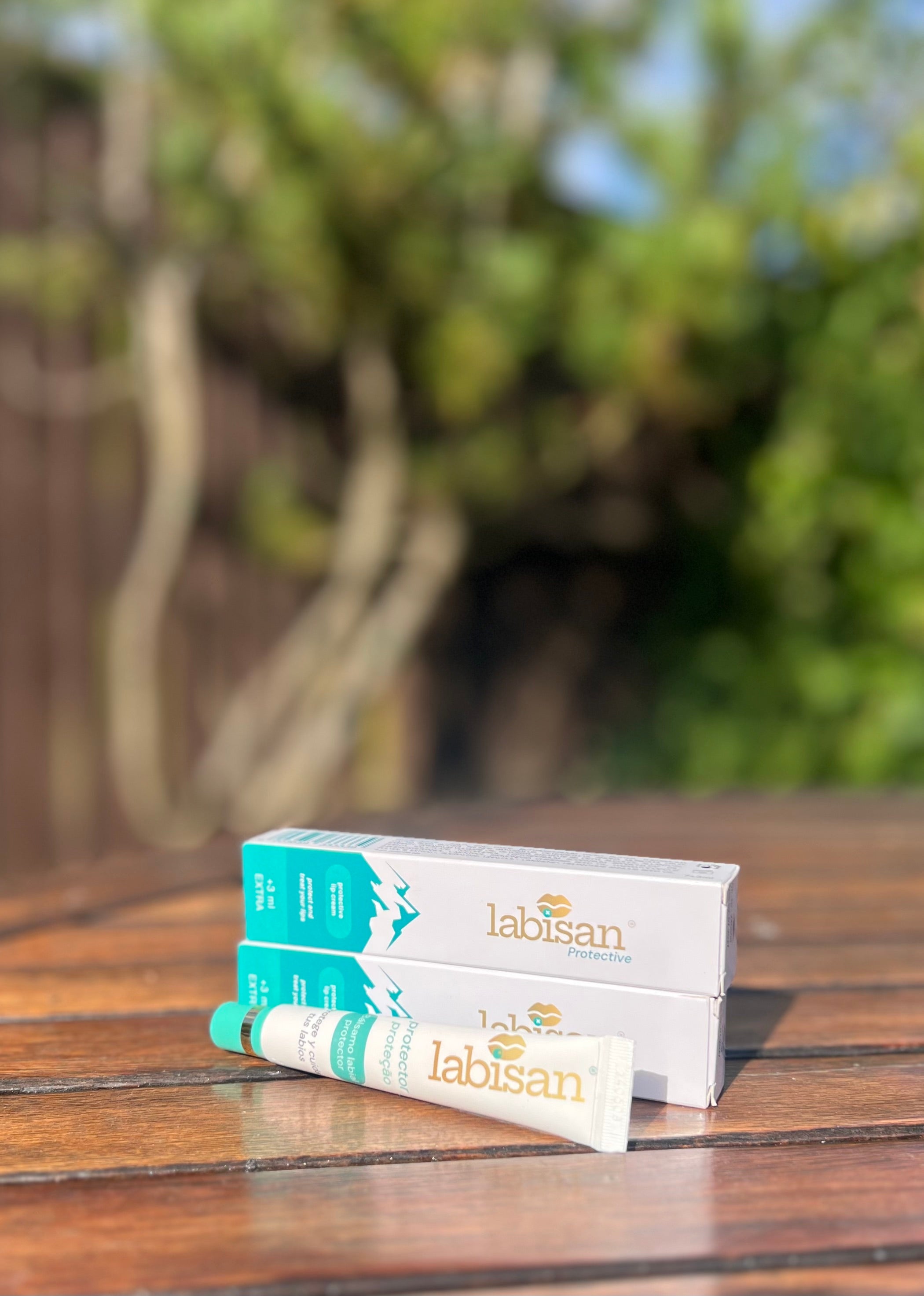
The good news is that this stack is interruptible, and the intervention is small. The principles overlap heavily with our broader cold sore prevention guide for outdoor sports, but climbing has three quirks that change the protocol. A mineral barrier that does not photodegrade is the foundation, which is why Labisan Protective Lip Balm SPF 20 built its formula around 22 percent non-nano zinc oxide rather than chemical filters. The rest of this guide explains why pale rock, chalk, and altitude conspire against your lips, why the outbreak waits two days to appear, and exactly how to block it before you leave the ground.
The Albedo Problem: UV From Below and From the Side
The mental model most people carry for sun exposure is top-down: the sun is overhead, so you protect the upward-facing surfaces. That model is built for an open field. On a rock face it is simply wrong. A climber is pressed against a large, bright, near-vertical reflector, and that surface throws ultraviolet light sideways and upward into the face from angles the sky never reaches. Pale granite and limestone carry an albedo of roughly 25 to 40 percent, meaning a quarter to nearly half of the ultraviolet striking the rock is reflected back rather than absorbed.
Stack the reflected component on top of the direct sky dose and the picture changes fast. A climber working a pale slab receives an estimated 40 to 60 percent more ultraviolet at lip level than a hiker standing at the same altitude on an open trail, because the hiker only contends with the downward dose while the climber contends with downward plus reflected plus the geometry of a face turned toward bright stone. The lower lip, angled slightly down toward the rock as you look for the next hold, sits directly in the reflected path.
This is also where chemical sunscreen filters fail the climber specifically. Organic ultraviolet filters work by absorbing photons and degrading in the process, and in this elevated-dose environment they photodegrade meaningfully within about 90 minutes. A mineral block does not get consumed by the light it reflects. The difference matters enough that we wrote a full comparison of zinc oxide versus chemical sunscreens on lips for exactly this kind of high-reflectance setting.
Chalk and the Lip Barrier
Climbing chalk is magnesium carbonate, and it is on your hands for one reason: it is a highly effective, highly alkaline desiccant that pulls moisture off skin to improve friction. That moisture-absorbing property does not politely stop at the second knuckle. Chalk migrates to the lips all day long through three routes: direct touch when you wipe your mouth or eat a snack with chalked fingers, brush-off as you slap excess powder from your hands, and airborne particles that drift up every time you dip into the chalk bag at your waist.
Once chalk reaches the lip, its chemistry does the damage. Healthy lip skin sits at a mildly acidic surface pH, and the lipid barrier that seals in moisture depends on that acidity to stay organized. Alkaline chalk raises lip pH above 5.5, which disrupts the lipid lamellae, accelerates transepidermal water loss, and opens micro-fissures in the vermilion border. Those fissures are precisely the kind of compromised, inflamed entry point that a reactivating HSV-1 virion can exploit on its way from the nerve to the surface.
Now combine the two threats. Ultraviolet light suppresses the local immune surveillance that normally keeps the virus in check, and chalk physically degrades the barrier that keeps the virus walled off. Chalk plus ultraviolet is a compound attack on both defensive layers standing between HSV-1 and the trigeminal nerve at once. Trail dust produces a similar but milder barrier-thinning effect, which is why our hiking lip protection at altitude guide covers the same principle, but the chalk version is far more concentrated because you are deliberately coating your hands in the desiccant and reaching for it dozens of times an hour.
Altitude: The UV Amplifier at Popular Climbing Destinations
Ultraviolet intensity climbs with elevation at a rate of roughly 7 percent per 300 metres of gain, because there is less atmosphere overhead to scatter and absorb the incoming photons. Most of the world's destination crags sit well above sea level, and several of them combine high elevation with the pale rock that makes albedo worst. Here is how the elevation maps onto risk at popular climbing areas:
- Yosemite, California: valley floor around 1,200m, upper walls reaching up to 2,400m, which adds roughly 56 percent more ultraviolet versus sea level on the higher pitches.
- Dolomites (Tre Cime area), Italy: routes between 2,200 and 3,000m on bright, pale limestone, a very high risk combination of altitude and albedo.
- Kalymnos, Greece: essentially sea level, but the Mediterranean summer ultraviolet index runs 9 to 11, so the dose is severe even without elevation.
- Red Rocks, Nevada: 900 to 1,600m, where extreme desert air desiccation compounds the chalk effect on the lip barrier.
- Chamonix granite, France: 1,000 to 2,500m, with south-facing slabs that take full solar exposure for most of the climbing day.
Put altitude and pale-rock albedo together and the effective ultraviolet dose at lip level becomes comparable to high-elevation ski terrain, which is a setting most people instinctively respect. Climbers tend not to, because the air is warm and the sun feels benign. That same delayed, stacked pattern is exactly what we documented in the day-3 cold sore trigger pattern on ski trips, and the underlying physics is laid out in our deep dive on altitude UV reflection and cold sore risk.
Why the Outbreak Arrives on Day 2 or 3
The most confusing thing about a climbing-trip cold sore is the lag. You spend a beautiful day on the rock, feel fine all evening, and then a blister appears 48 hours later with no obvious cause. That delay is not random. Ultraviolet-induced HSV-1 reactivation runs on a 36 to 72 hour latency between the triggering dose and the visible outbreak, because the virus has to travel from the ganglion down the nerve to the surface before it can erupt. The timeline almost always looks like this:
- Day 1: seven to nine hours on pale rock, during which ultraviolet light quietly suppresses local immune surveillance at the lip.
- Late day 1 to early day 2: viral reactivation begins in the trigeminal ganglion, with no visible sign whatsoever.
- Day 2 evening: the prodrome arrives as tingling and itching along the lip border, which most climbers wave off as ordinary tiredness or wind-chapping.
- Day 3: a visible vesicle forms, the outbreak is committed, and you are looking at a 7 to 12 day lifecycle.
The practical lesson is that the meaningful intervention window sits before day 1, not after the tingle on day 2. By the time you feel the prodrome, the virus has already made its run. Understanding the full arc of an outbreak makes this concrete, which is why we mapped the entire sequence in our cold sore 5-day lifecycle protocol.
The Climbing-Specific Application Protocol
The standard outdoor lip-care advice assumes an athlete who can stop, stand still, and reapply on a fixed schedule. A climber on a route can do none of that, and the chalk problem is unique to the sport. Three modifications turn general guidance into a protocol that actually works on rock.
Pre-route loading. Apply heavily before you leave the ground, not in a thin smear. You want a genuine deposit of zinc oxide on the lip before your hands are committed to the wall, because the first reliable reapplication opportunity may be an hour or more away. Then treat every belay anchor as a reapplication point: on a multi-pitch route, reapplying lip balm should be the first task you do when you clip in, before you even pull up rope. Anchors are the only naturally occurring pause in the climbing day, so use them.
Pre-trip loading. The barrier you build before the trip matters as much as what you do on the wall. In the 48 hours before you arrive at the crag, increase to four applications daily to saturate the lip with protective lipids and zinc before the exposure even starts. This pre-charging approach is detailed in our 48-hour pre-trigger loading protocol, and it is the single highest-leverage habit for trip-triggered outbreaks.
Chalk migration mitigation. Never reapply with chalked fingertips, because you will trowel the alkaline desiccant straight onto the lip you are trying to protect. Apply with the back of the hand or the inside of the wrist instead, where chalk coverage is lighter. Keep the tube in a harness pocket or a chest pocket so it is accessible at every anchor, not buried in a pack at the base of the crag where you will never retrieve it mid-route.
Ready to Protect Your Lips at the Crag?
Labisan Protective Lip Balm SPF 20
22% non-nano zinc oxide, graviola fruit extract, manuka oil, oregano oil, shea butter base.
Single Tube: $24.99 | Adventure Pack (3x): $59.97 (save 20%) | Family Bundle (5x): $89.95 (save 28%)
Free shipping on orders over $49. 30-day money-back guarantee.
Shop NowFrequently Asked Questions
Can rock climbing really trigger a cold sore outbreak?
Yes, and the mechanism is well established. Ultraviolet exposure is one of the most reliable triggers for HSV-1 reactivation, because it suppresses the local skin immune response that normally keeps the latent virus contained. Climbing intensifies the standard outdoor ultraviolet dose in three ways: pale rock reflects an extra 25 to 40 percent of incident light back at your face, altitude amplifies the dose at most destination crags, and the typical climbing day delivers six to eight hours of continuous exposure with no reapplication breaks. Add chalk degrading the lip barrier on top, and a climbing trip becomes one of the most efficient real-world cold sore triggers there is. The outbreak simply lags 36 to 72 hours behind the day on the rock.
How do I follow the 90-minute reapplication rule mid-climb without losing time?
On a route you cannot follow a clock, so anchor your reapplication to events instead of intervals. Treat every belay station as a mandatory reapplication point and make it the first thing you do when you clip in, before pulling rope. On long single pitches, reapply during any natural rest on a no-hands stance or a good ledge. The underlying target is still the 90-minute window in our 90-minute reapplication rule, but because outdoor exposure and chalk accelerate wear-off, you should err toward more frequent application. Keeping the tube in a harness pocket rather than at the base of the wall is what makes event-based reapplication actually happen instead of being skipped.
Does climbing chalk directly cause cold sores?
Chalk does not cause cold sores by itself; it has no effect on the virus directly. What it does is weaken one of your two defensive layers. Magnesium carbonate is an alkaline desiccant, and as it migrates to your lips it raises surface pH above 5.5, strips lipids, accelerates water loss, and opens micro-fissures in the lip border. Those fissures are exactly the kind of compromised, inflamed tissue a reactivating HSV-1 virion can exploit. The real risk is the combination: ultraviolet light reactivates the virus and suppresses immune surveillance while chalk degrades the barrier meant to wall it off. Neither factor alone is decisive, but stacked together over a climbing day they reliably open the door.
Is SPF 20 sufficient on pale granite at altitude, or do I need SPF 50?
SPF 20 reapplied properly outperforms SPF 50 applied once, every time the comparison is measured. The number on the tube describes peak protection from a fresh, full coat, not protection across a real climbing day, and a single application of any SPF drops below a third of its label value within a few hours. The variable that actually governs your dose is reapplication frequency, not the headline number. SPF 20 reapplied at every anchor holds effective protection above 80 percent of label value all day, while SPF 50 applied once at the car is below 30 percent by mid-route. With a non-photodegrading mineral block and event-based reapplication, SPF 20 is the right tool on pale granite at altitude.