The cold sore that appears three days after a long training run is one of the most predictable events in endurance sports, and also one of the most avoidable. Runners spend more continuous hours under direct UV radiation than almost any other outdoor athlete. A two-hour Sunday run at a moderate UV index of 6 delivers roughly the same lip UV dose as a full day at moderate altitude, and that dose accumulates week after week across an entire training block. Add the continuous alkaline assault of sweat stripping the lip moisture barrier, the documented immune dip that follows every bout of sustained aerobic exercise, and the cortisol cascade of race week, and you have a stacked trigger system that explains exactly why cold sores cluster around hard training sessions and goal races rather than appearing randomly throughout the year.
The virus responsible is herpes simplex type 1, known as HSV-1, carried in latent form by approximately 67 percent of adults worldwide. It sits dormant in the trigeminal ganglion, a nerve cluster near the base of the skull, and reactivates when local immune surveillance at the lip surface falls low enough for the virus to replicate unchallenged. Ultraviolet radiation has a well-documented mechanism for creating exactly that opening: it suppresses the Langerhans cells, the resident immune sentinels in the lip epithelium, in a dose-dependent way. For runners, that dose is not an occasional event. It is a scheduled, recurring feature of every training week.
The framework for understanding UV as the primary driver is covered in detail in our cold sore prevention guide for outdoor athletes, but running carries several quirks that set it apart from other sports and demand a slightly different protocol. This post focuses on those quirks: the arithmetic of a long run's UV load, the chemistry of what sweat does to the lip barrier, the timing of the post-effort immune window, and how race week assembles the worst possible trigger stack in a compressed period.
Why Runners Are Among the Highest-Risk Groups for HSV-1 Reactivation
Consider a typical marathon training block: five runs per week, with one long run exceeding ninety minutes. Most runners schedule long runs in the morning, but midday UV peaks between 10am and 2pm, and many workday runners have no choice but to train during those hours. A ninety-minute run at a UV index of 7 delivers a lip UV dose that would register as a significant exposure event by any dermatological standard, and unlike a beach day, the runner is not resting in a shaded spot: they are moving continuously, face often tilted upward, with no opportunity to duck into shade.
The lips are particularly exposed compared to the rest of the face. They have no melanin worth mentioning, no stratum corneum as protective as the surrounding skin, and almost no intrinsic sebum output to form a protective lipid layer. Every runner who finishes a long run with dry, slightly chapped lips has just witnessed their lip barrier in mechanical retreat. The UV damage is already done, whether or not a cold sore follows.
The UV Arithmetic of a Long Training Run
UV exposure accumulates linearly with time outdoors and multiplicatively with elevation. At sea level on a clear summer day with a UV index of 8, ninety minutes of midday running delivers approximately 12 to 14 standard erythemal doses to the lip surface, well above the threshold associated with Langerhans cell suppression in clinical models. A trail runner at 2,000 metres faces an additional 20 percent UV amplification per 1,000 metres of altitude, a mechanism explored in depth in our post on UV intensity and altitude exposure for outdoor athletes. A mountain runner at that elevation, on a three-hour effort, is receiving a lip UV dose that most people would associate with a full week of sun holidays, compressed into a single morning.
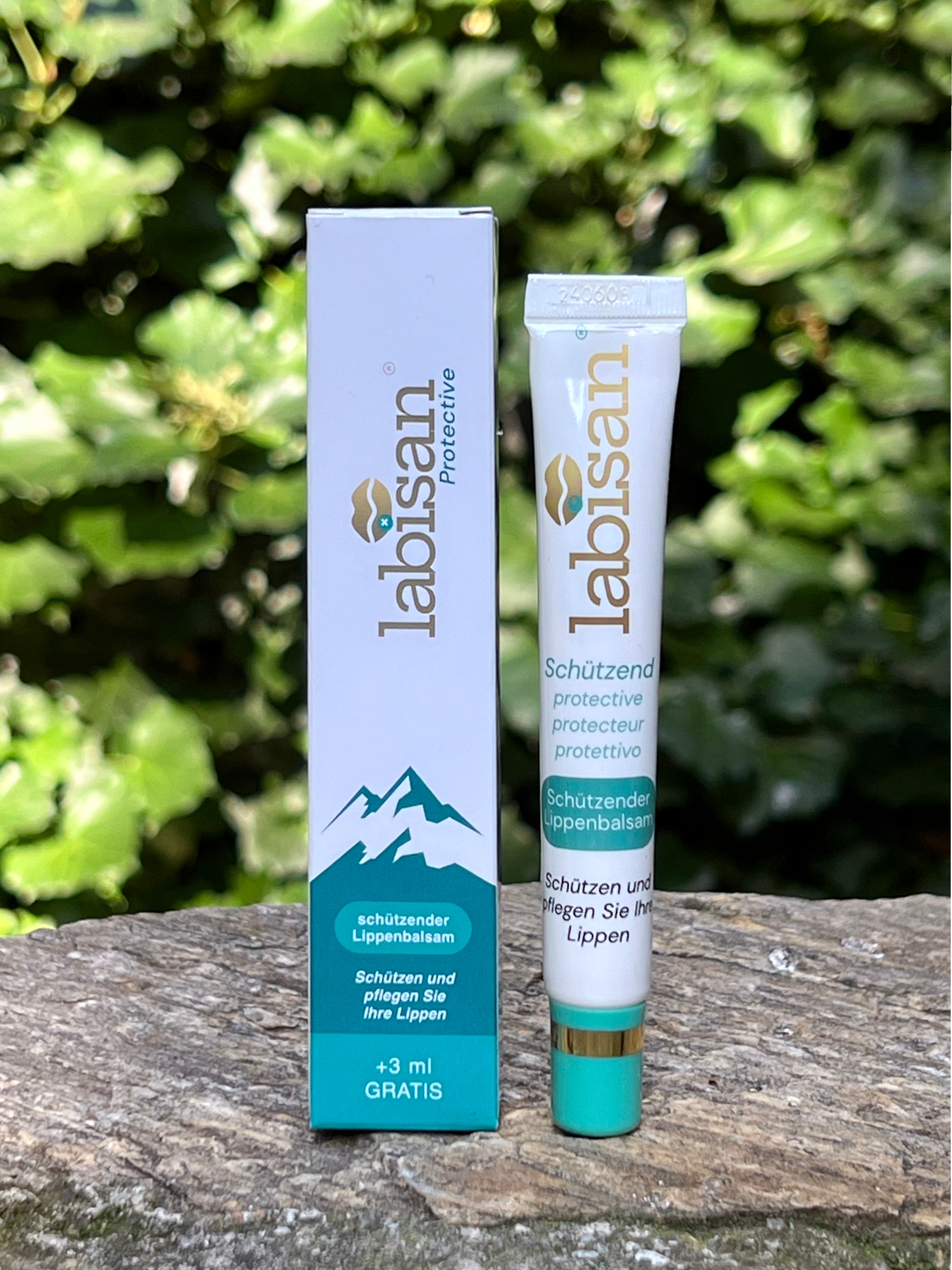
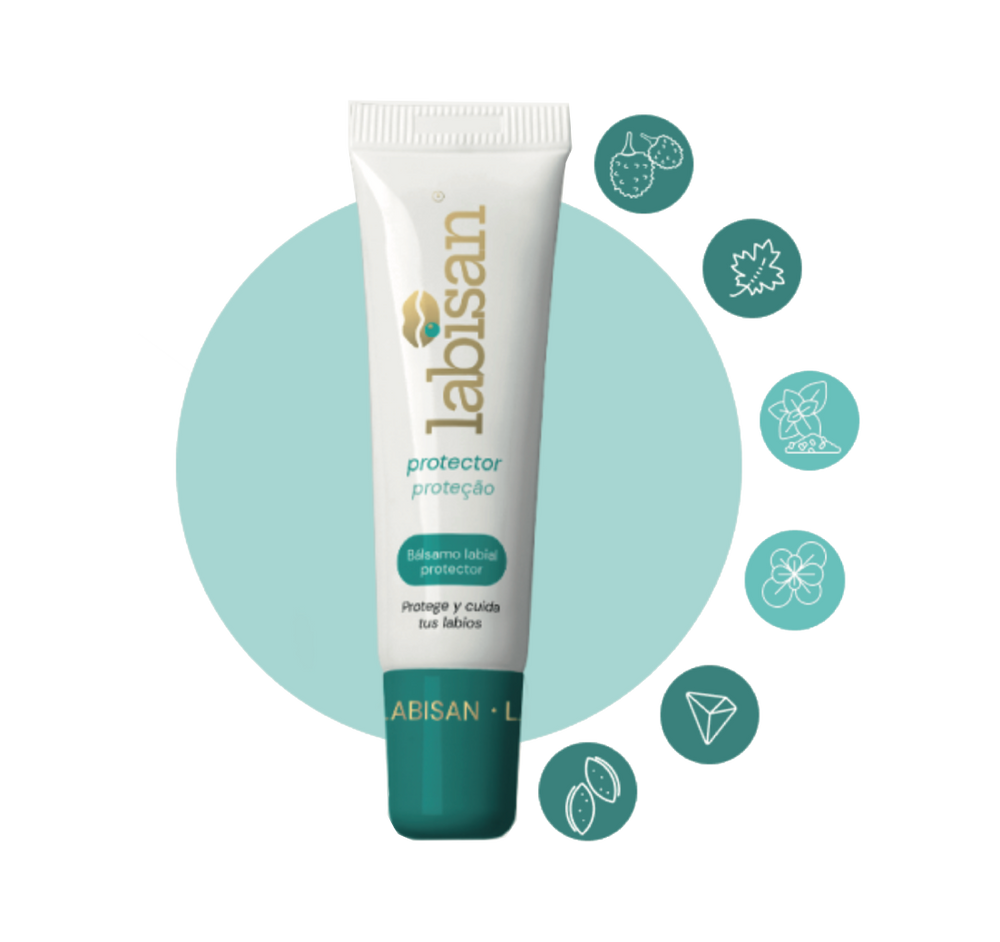
Chemical sunscreen filters in standard lip products degrade with UV exposure and can lose 50 to 80 percent of their stated SPF within sixty minutes of application. A runner wearing a chemical SPF lip balm applied at the trailhead has, by the time they turn for home, a product with a fraction of its initial protection. Mineral zinc oxide does not photodegrade. It sits on the surface and scatters UV photons continuously, which is why our Labisan Protective Lip Balm SPF 20, built on 22 percent non-nano zinc oxide, maintains its rated protection across the full duration of a long run rather than just the first hour.
Sweat and the Alkaline Assault on Your Lip Barrier
Human eccrine sweat has a pH of roughly 4.5 to 7.5 depending on sweat rate and individual variation. At moderate to high exertion, sweat pH tends toward the alkaline end of that range. The lip's natural surface pH hovers around 5.5, which is the environment in which the acid mantle's barrier function operates correctly. When alkaline sweat runs continuously across the lip surface during a sustained run, it shifts the local pH, disrupts tight junction proteins in the epithelium, and accelerates trans-epidermal water loss. The result is visible: lips noticeably drier and more chapped at the end of a sweaty run than at the start, even on a cool day.
This barrier disruption is a co-factor for viral reactivation independent of UV. A compromised epithelium is more easily penetrated by viral particles migrating outward from infected neurons, and less able to mount the inflammatory response that normally contains replication before a visible lesion forms. Runners who train in humid conditions and produce high sweat volumes face this mechanism even on cloudy days, which explains why cold sores can appear after indoor treadmill sessions and not only during outdoor summer runs.
Post-Effort Immune Suppression: The Window the Virus Uses
Exercise immunology has documented an open window effect following sustained aerobic effort: the period immediately after a hard workout where circulating natural killer cell activity, salivary immunoglobulin A levels, and mucosal immune competence are all transiently reduced. This window typically lasts between one and twelve hours depending on the intensity and duration of the effort, and is more pronounced after truly hard sessions (threshold pace or above, exceeding sixty minutes) and overtraining states.
Combined with the UV-mediated Langerhans cell suppression that accumulated during the run itself, the post-run window creates a compounding vulnerability. The UV suppression begins during the run. The post-effort immune dip follows it. A runner who trains hard on Monday and again on Wednesday with incomplete recovery between sessions can find themselves in a state of near-continuous lip immune compromise across a full training week, which is precisely why cold sores cluster in the heaviest weeks of a training block rather than appearing randomly across the calendar.
Race Week and the Cortisol Spike
Race week is a uniquely hostile environment for HSV-1 management, and the mechanism is hormonal. The anticipatory stress of a goal race, combined with travel, disrupted sleep, altered nutrition, and the physical stress of the race itself, produces a cortisol elevation that is measurable from the Thursday before a Sunday marathon and does not return to baseline until days after crossing the finish line. Cortisol suppresses the adaptive immune response by reducing T-cell proliferation, impairing cytotoxic lymphocyte function, and lowering the barrier to viral replication at peripheral sites including the lip.
Taper Anxiety Is a Real Immunological Event
Runners are familiar with taper madness, the psychological restlessness that accompanies the drop in training volume in the final two to three weeks before a major race. What many do not know is that this period is also associated with measurable changes in immune markers. The sudden reduction in exercise volume removes the hormetic immune stimulus of regular training while leaving the psychological stress of impending competition in place. The net effect for some runners is a transient immune dip during the taper itself, separate from the race-week cortisol response. Cold sores that appear in the week before a race, seemingly out of nowhere after months of clear skin, are often explained by this mechanism.
The running community's experience here closely parallels what hikers encounter on multi-day routes, where cumulative UV and physical stress exceed any single session. Our altitude and UV lip protection guide for hikers covers the cumulative-dose framework in detail, and the same logic applies directly to runners preparing for mountain or trail races where altitude, UV, and physical stress converge on a single event.
Building a Runner's Lip Protection Protocol
The goal of a runner's lip protocol is to interrupt each trigger independently rather than hoping that addressing one is enough. UV suppression requires a photostable mineral barrier, not a chemical filter that degrades mid-run. Barrier support requires occlusive emollients to offset sweat-driven water loss. Antiviral botanical support addresses the cellular environment at the lip surface, where reactivation begins before any visible lesion forms.
Pre-Run Application
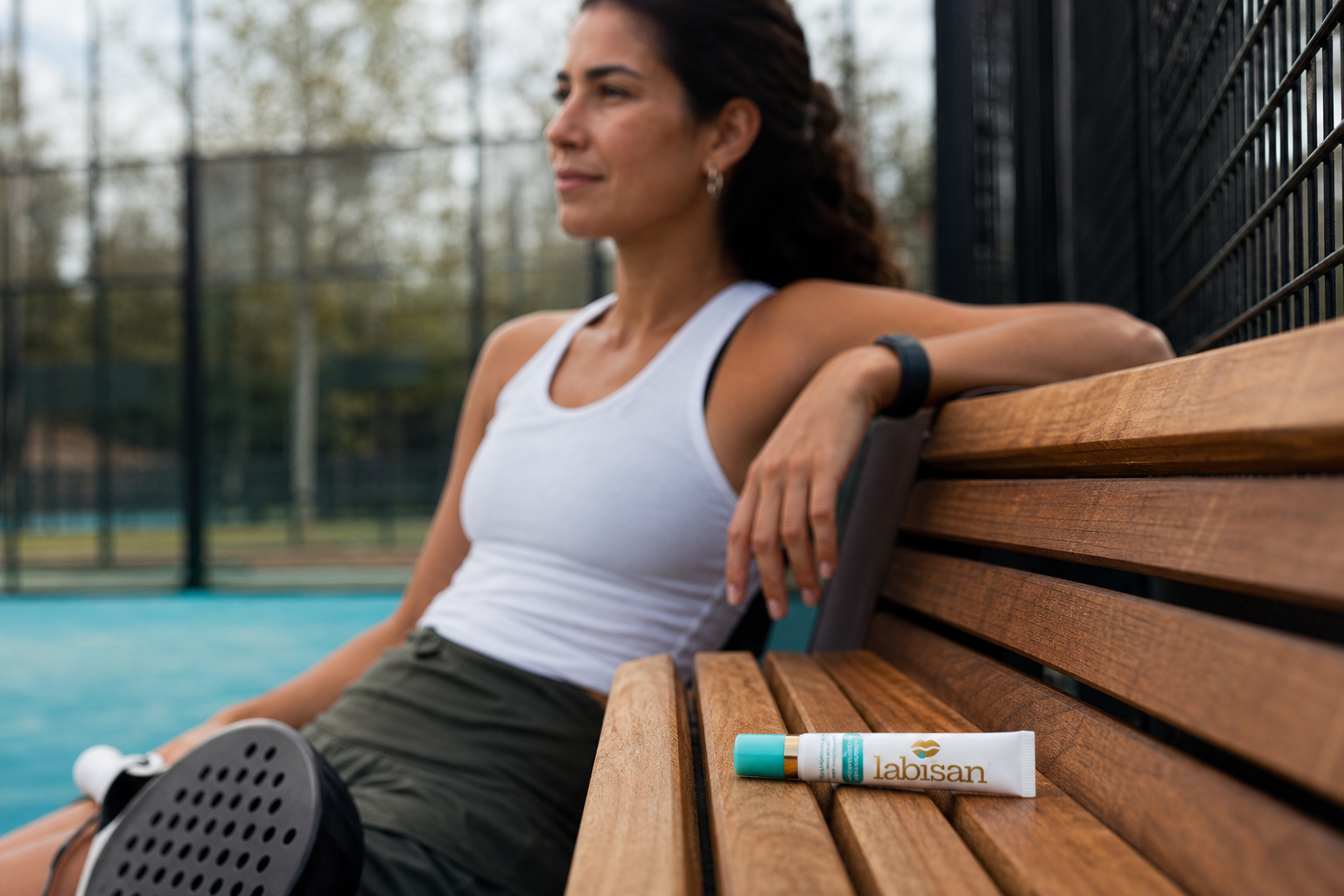
Apply one full pass of mineral lip balm five minutes before heading out. Five minutes allows the zinc oxide film to settle on the lip surface before sweat begins. Apply a second pass at any scheduled water stop after the first sixty minutes. On runs exceeding two hours, a third application around the ninety-minute mark maintains coverage through the back half of the effort. The single most common error runners make is treating lip balm application as a one-time pre-run ritual rather than a mid-run maintenance task, equivalent to thinking that one water bottle is enough for a three-hour effort.
Post-Run Recovery Window
The first thirty minutes after finishing are the highest-risk period for viral reactivation, because post-effort immune suppression is deepest immediately after the run while UV-mediated Langerhans cell damage from the session is still active. Re-applying a mineral barrier immediately after finishing, rather than waiting until after a shower, covers this window. If there is a known prodrome signal (tingling, tightness, or mild burning at the vermilion border), applying more frequently during the post-run window is a rational response based on how the virus behaves before a visible lesion forms. Our hour-by-hour guide to the five-day cold sore lifecycle explains why the prodrome window is the highest-leverage moment in the entire sequence and why early intervention determines the outcome.
Shea butter, a component of the Labisan formula, has documented occlusive and emollient properties that directly offset sweat-driven trans-epidermal water loss during and after a run. Manuka oil provides the antiviral botanical layer at the surface. The 22 percent non-nano zinc oxide supplies photostable UV protection that holds across a three-hour effort without degradation, which is the structural difference between a mineral and a chemical sunscreen-based formula. For a detailed comparison of why mineral filters outperform chemical alternatives for active outdoor use, see our analysis of zinc oxide versus chemical sunscreen filters for lip protection.
Practical Tips for Race Day
- Apply one full pass on waking, before coffee or breakfast, so the film has time to bond to lip tissue before eating and drinking begin.
- Carry a tube in your race kit pocket or tuck one under a wristband. The weight is negligible and the access matters when your hands are busy.
- If your race has an aid station at the half-way point, treat reapplication as a mandatory stop, not optional, regardless of whether the sky is overcast.
- On multi-day events and stage races, apply before sleep as well. Cortisol and physical fatigue accumulation make overnight protection relevant, not just daytime coverage.
- Start your protective lip protocol in the ten days before a major race, not just on race morning, to address the taper-week immune dip before it opens a reactivation window.
Protect Your Lips on Every Run
Labisan Protective Lip Balm SPF 20: photostable zinc oxide mineral protection, shea butter barrier support, and antiviral botanicals in one formula built for sustained outdoor effort.
Single Tube: $24.99 | Adventure Pack (3x): $59.97 | Family Bundle (5x): $89.95
Free shipping on orders over $49. 30 day money back guarantee.
Shop NowFrequently Asked Questions
Can I use a standard facial sunscreen on my lips instead of a dedicated SPF lip product?
Facial sunscreens are formulated for skin, not mucous membrane tissue. The lip border has a different pH environment, a much thinner stratum corneum, and constant mechanical stress from speaking, eating, and breathing through the mouth. Most facial sunscreens contain alcohol, fragrance, or film-forming agents that are not designed for mucous membrane contact. A dedicated SPF lip balm uses an occlusive, emollient base that maintains coverage under the friction and moisture conditions of a long run in ways a standard facial product cannot reliably replicate. Additionally, facial sunscreens are rarely designed to be incidentally ingested, which is a relevant consideration for a product applied to the lips during a two-hour run.
Is there any point in applying SPF lip balm on overcast days or indoor treadmill runs?
Overcast conditions reduce visible light significantly but reduce UV radiation far less than most people expect. A thin overcast layer blocks perhaps 20 to 30 percent of UV, leaving 70 to 80 percent of the clear-sky dose reaching the lip surface. The sweat-driven barrier disruption and post-effort immune window operate regardless of cloud cover. Indoor treadmill runs eliminate the UV component, but the sweat and post-effort immune factors remain fully active. For runners with frequent cold sore histories, applying an occlusive barrier before treadmill sessions addresses the non-UV triggers that can still drive reactivation independent of sun exposure.
My cold sores always appear the day before a big race rather than during training. Why?
Pre-race cold sores are almost always cortisol-mediated. The anticipatory stress response, including the sleep disruption and travel disruption common on race weekends, elevates cortisol days before the event itself, and cortisol suppresses the adaptive immune components that hold HSV-1 in check at the lip surface. Many runners also experience increased lip dryness in the days before a race due to changed hydration patterns (carbohydrate loading shifts fluid balance) and altered breathing patterns from anxiety. The combination of hormonal immune suppression and compromised lip barrier is the classic pre-race cold sore driver. Starting a protective protocol in the ten days before a major race, not just on race morning, is the most effective way to address this pattern.
How often should I reapply during a long run or ultra-marathon?
The practical guideline is every sixty to ninety minutes of continuous outdoor running, reduced to every forty-five minutes in conditions of very high sweat rate, UV index above 8, or altitude above 2,000 metres. For ultra-marathons covering six or more hours, treating aid station stops as mandatory reapplication checkpoints is the most reliable system, because memory and self-monitoring degrade with physical fatigue and are not a reliable cue for a task that needs to happen regularly regardless of whether your lips feel like they need attention.
Does running in winter eliminate the UV cold sore risk compared to summer training?
Winter running reduces UV index considerably, but does not eliminate UV exposure, and it adds a second cold sore trigger that summer running does not: sustained wind-driven moisture loss from the lip surface at sub-zero or near-zero temperatures. Cold air holds very little water vapour, and continuous mouth breathing during winter effort delivers a drying airstream across the lip surface for the full duration of the run. A runner training through an Alpine or mountain winter faces a different trigger profile than a summer track athlete, but the protective logic is the same: a photostable mineral barrier with occlusive emollient support covers both UV and cold-wind moisture loss within a single application.