A multi-day summer festival stacks three of the best-documented cold sore triggers into one weekend: prolonged ultraviolet exposure, sleep deprivation, and physical and emotional stress. Roughly two-thirds of the world's under-50 population (about 3.7 billion people) carries herpes simplex virus type 1 (HSV-1), according to World Health Organization estimates, and most carriers are asymptomatic until something reactivates the virus from the trigeminal nerve ganglion where it lies dormant. Ultraviolet radiation is one of the most reliable triggers: a frequently cited 1991 study in The Lancet by Spruance and colleagues found that experimental UV exposure to the lips induced visible herpes labialis lesions in a significant share of susceptible volunteers. Add a festival's typical 6 to 9 hours of daily sun, 4 to 5 hours of sleep, alcohol, and dehydration, and you have close to a worst-case scenario for the roughly 20 to 40 percent of HSV-1 carriers who get recurrent outbreaks. The good news: because the festival trigger profile is so predictable, it is also one of the most preventable.
Why Festivals Are a Perfect Storm for Cold Sores
Understanding the mechanism is what makes prevention work rather than guesswork. HSV-1 reactivation is not random; it follows a drop in local and systemic immune surveillance. UV-B radiation suppresses the skin's Langerhans cells and local cell-mediated immunity at the lip, which is exactly the immune layer that normally keeps the virus suppressed. That is why a sunburned lip so often precedes a blister within 24 to 72 hours. If you want the deeper numbers on how common the virus is and who tends to recur, our breakdown of HSV-1 global epidemiology by the numbers lays out the prevalence and recurrence data in detail.
Sleep deprivation compounds the problem. Even a single night under 6 hours measurably reduces natural killer cell activity and shifts inflammatory signaling, both of which matter for keeping a latent virus in check. Festivals routinely run 12-plus-hour days with late nights, so by day two or three your immune buffer is thin. Alcohol adds dehydration and further immune suppression; cheap festival food is often high in arginine (chocolate, nuts, beer) and low in the lysine that some carriers use to keep recurrences down. None of these alone is dramatic, but stacked across 72 hours they remove the margin that normally prevents an outbreak.
The lip is uniquely exposed
Lip skin (the vermilion) has no functional melanin layer and a far thinner stratum corneum than facial skin, so it burns faster and offers almost no natural UV defense. Most people apply sunscreen to their face and forget the lips entirely, leaving the single most cold-sore-prone surface completely unprotected for a full day in direct sun. This is the gap that festival lip protection is designed to close.
The Core Move: Block the UV Trigger at the Lip
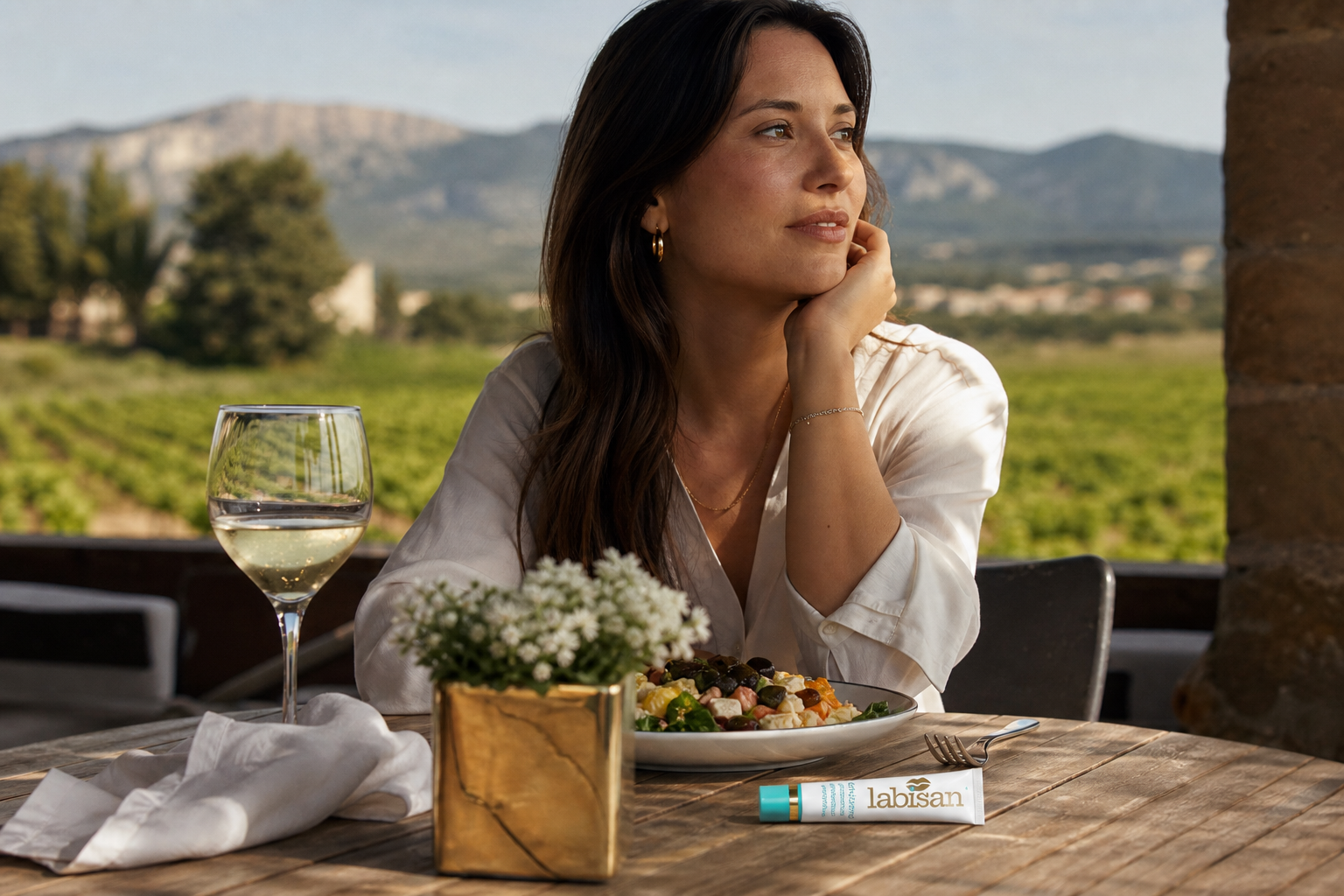
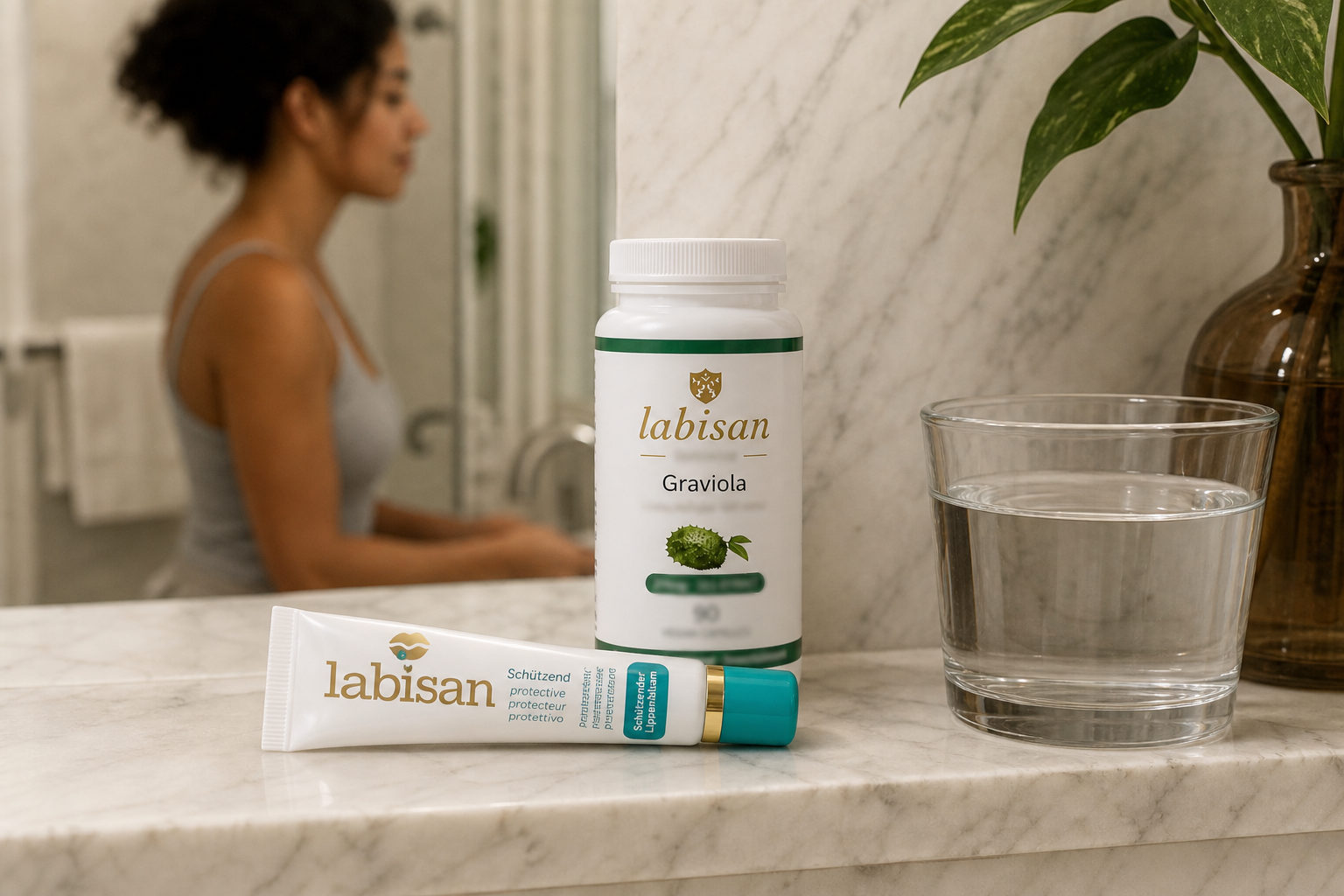
Since UV exposure is the dominant, controllable festival trigger, a mineral SPF lip balm is the highest-leverage single intervention you can make. The Labisan Protective Lip Balm SPF 20 uses zinc oxide as a physical UV blocker, which sits on the lip surface and reflects radiation rather than absorbing it the way some chemical filters do. That matters for lips because you are constantly licking, eating, and drinking; a physical barrier is more predictable on a surface that takes that much abuse. The formula pairs zinc with shea butter to hold moisture, manuka oil, and supporting botanicals so the lip stays conditioned instead of cracking, since a chapped, split lip is itself a route to reactivation.
SPF on lips is not a once-a-day decision. Lip balm wears off through eating, drinking, talking, and sweat far faster than face sunscreen, so the protective film is gone long before the box's SPF rating would suggest. The realistic rule for outdoor concert sun lips is reapplication roughly every 90 minutes during peak daylight, and immediately after anything that wipes the lips. Set a recurring phone alarm for the festival; relying on "I'll remember" is how the trigger gets through.
Your 72-Hour Festival Prevention Plan
One to two weeks before
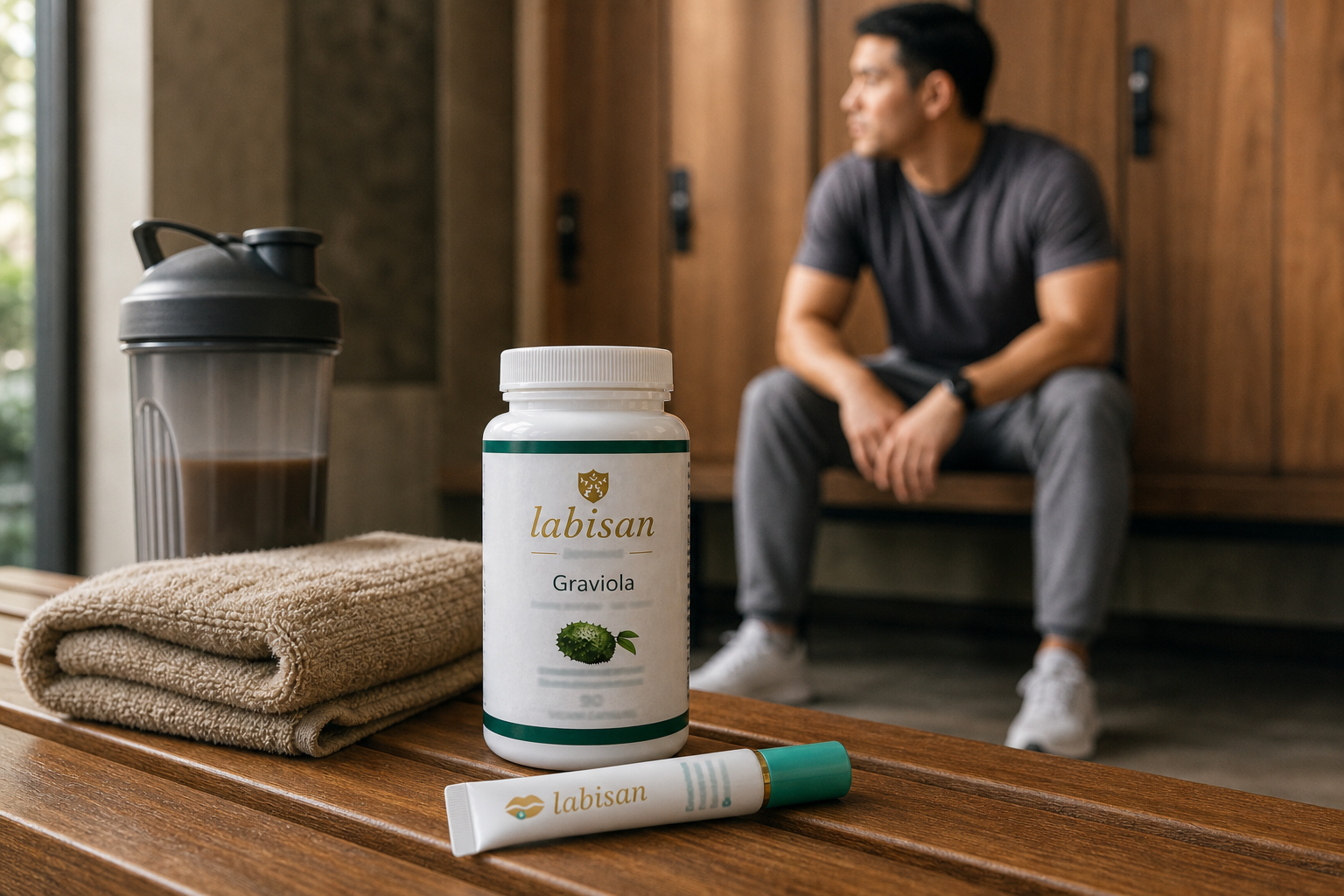
Prevention starts before you arrive, not at the gate. If you know you are an outbreak-prone carrier, the pre-event window is when immune support has time to matter. Labisan Graviola Capsules are taken for general immune support and, for some users, to help reduce HSV outbreak frequency over time; to be clear, graviola is not a cure for HSV-1 and does not eliminate the virus, which remains latent for life. The honest framing is risk reduction over weeks, not an on-the-day fix. Our 30-day diary of the hybrid lip balm and Graviola protocol walks through what a realistic ramp-up actually looks like day by day. If you have a prescription antiviral and a history of frequent recurrences, this is also the moment to ask your doctor about short-term suppressive dosing around the event; that is a medical decision, not something a supplement replaces.
The days of the festival
Build the routine around the trigger profile. Apply SPF lip balm first thing in the morning, before you leave the tent, and reapply every 90 minutes through peak sun (roughly 10am to 4pm). Drink water between alcoholic drinks; dehydration thins your defenses and dries the lip. Protect sleep where you realistically can, even an extra hour helps the immune math. Keep a hat or position yourself in shade during the hottest sets. The goal is not a perfect monastic weekend; it is removing two or three of the stacked triggers so the total load stays under your personal reactivation threshold.
Catch the prodrome
Most recurrent carriers feel a prodrome 6 to 48 hours before a visible blister: a tingle, itch, tightness, or heat at one spot on the lip. This is the single most actionable signal you have. If you feel it, that is the moment to be aggressive: cool the spot, start any antiviral you carry, and avoid touching or picking the area. Acting in the prodrome window can shorten or sometimes abort a lesion. Our cold sore recovery timeline across four real cases shows how much the early-intervention window changes the outcome.
What to Pack in a Festival Cold Sore Kit
A small, deliberate kit beats scrambling at a crowded festival pharmacy stall. Pack: an SPF lip balm (ideally two, since one will get lost), a wide-brim hat or cap, any prescription antiviral you use, lysine if that is part of your routine, lip-safe moisturizer for nighttime, hand sanitizer to reduce the chance of spreading virus by touch, and a refillable water bottle. Keep the lip balm in a pocket, not the bottom of a bag, so reapplication is frictionless. Friction is the enemy of compliance; the easier the routine, the more likely you stick to it across three exhausting days.
One transmission note worth remembering in a crowd: do not share lip balm, drinks, vapes, or utensils, especially during a prodrome or active lesion, when viral shedding is highest. HSV-1 spreads readily through that kind of casual oral contact, and festivals are full of shared everything. If you want the detail on how oral HSV-1 can also transmit to other sites, our piece on oral and genital HSV cross-site transmission covers the mechanism honestly.
If a Cold Sore Still Breaks Through
Sometimes the triggers win, and that is not a failure of the plan; it is the reality of carrying a virus that reactivates under stress. If a lesion appears, keep it clean and moisturized, do not pick the scab, wash your hands after touching it, and keep your own balm to yourself for the duration. A healing cold sore typically runs a 7 to 14 day course through blister, ulcer, crust, and resolution. You can still enjoy the rest of the weekend; you just protect other people and avoid re-irritating the spot with more sun. Continuing to use a physical SPF barrier over a healing lesion also shields the fragile new skin from the UV that started the cycle.
Block the Number One Festival Trigger Before the First Set
Labisan Protective Lip Balm SPF 20
Single: $24.99 | Adventure Pack (3x): $59.97 | Family Bundle (5x): $89.95
Free shipping over $49. 30 day satisfaction guarantee.
Shop NowFrequently Asked Questions
Can a festival really trigger a cold sore?
Yes, and it is one of the more predictable triggers. Festivals combine prolonged UV exposure, which suppresses local immune defense at the lip, with sleep deprivation, alcohol, and stress. Each lowers your immune buffer against latent HSV-1, and stacked over a multi-day event they can push outbreak-prone carriers past their reactivation threshold. UV to the lip is the single most controllable factor, which is why an SPF lip balm is the highest-value prevention step.
How often should I reapply SPF lip balm at an outdoor concert?
Roughly every 90 minutes during peak daylight, and immediately after eating, drinking, sweating heavily, or wiping your mouth. Lip balm wears off far faster than face sunscreen because the lips are constantly in use, so the SPF rating on the box assumes a film that is usually gone within an hour or two. Setting a recurring phone alarm for the day is the most reliable way to keep the barrier intact.
Will Graviola stop me getting a cold sore at a festival?
No. Graviola is taken for general immune support and may help some users reduce how often outbreaks occur over weeks of consistent use, but it is not a cure and does not work as a same-day shield. It cannot remove the latent virus, and it will not override a heavy UV and sleep-deprivation trigger load on its own. Treat it as one part of a longer-term routine, paired with on-the-day UV blocking from an SPF lip balm.
What should I do if I feel a tingle on day one?
Treat the tingle, itch, or tightness as a prodrome, the early-warning window 6 to 48 hours before a visible blister. This is the best time to act: cool the spot, start any prescription antiviral you carry, avoid touching or picking the area, keep it protected from further sun, and do not share anything that touches your lips. Early intervention can shorten a lesion or sometimes prevent it from fully forming.
Is it safe to share drinks or lip balm with friends at a festival?
It is best to avoid it, particularly if you or they have an active or developing cold sore, when viral shedding is highest. HSV-1 transmits easily through shared drinks, vapes, utensils, and lip products. Keeping your own balm and bottle is a simple courtesy that protects everyone, and it also keeps your protective routine consistent rather than handing your only balm to someone else mid-day.