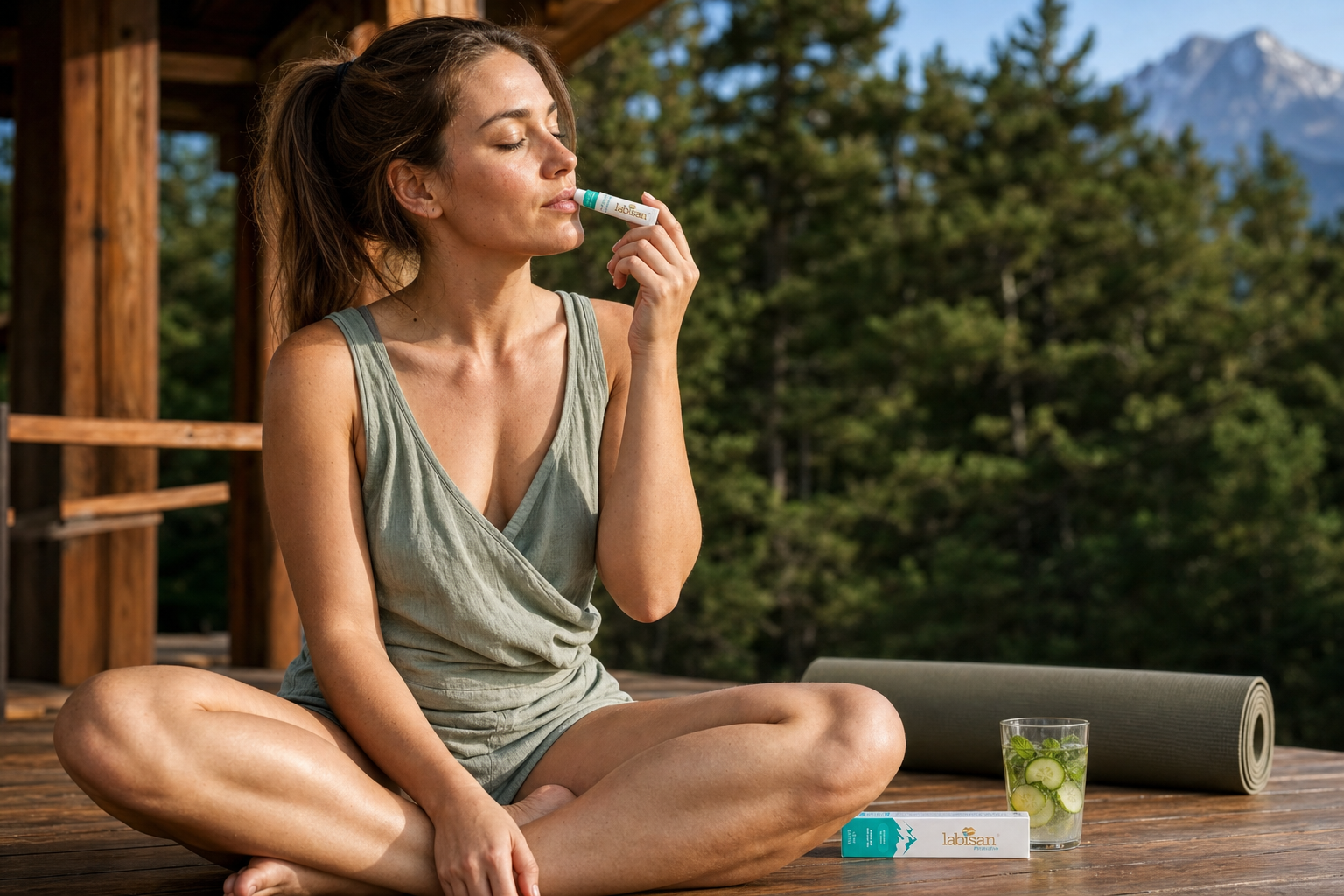
In the weeks around the summer solstice, the UV Index across much of the northern hemisphere routinely reaches 8 to 11+ ("very high" to "extreme" on the World Health Organization scale), and the sun sits at its steepest annual angle, which shortens the path sunlight takes through the atmosphere and raises the ground-level dose of UVB. Your lips are uniquely exposed in these conditions: the vermilion border has a thinner stratum corneum than facial skin, little to no melanin in the lower lip, and almost no sebaceous protection, which is why dermatology bodies flag the lower lip as a high-risk site for actinic damage and for triggering recurrent herpes simplex (HSV-1) cold sores. The catch is mechanical, not chemical: a lip sunscreen is a thin physical film that is steadily removed by talking, eating, drinking, sweating, and lip-licking. Most SPF guidance from bodies such as the American Academy of Dermatology and the FDA converges on the same instruction: reapply at least every 2 hours, and sooner after eating or swimming. During midsummer peak weeks, that interval is not a suggestion; it is the difference between a labeled SPF and an actual one.
Why a single morning coat fails by lunchtime
SPF is a laboratory number measured at a film thickness of 2 milligrams per square centimeter applied to skin that then stays undisturbed. Real lips never meet that condition. Within the first hour of an ordinary morning, a coffee, a glass of water, and a few absent-minded lip presses have already abraded and transferred a meaningful fraction of the film. By the two-hour mark the protective layer is patchy at best, and the spots where it has thinned are exactly where UVB now lands undefended. This "barrier failure by attrition" is the same mechanism we describe for winter in our explainer on how cold weather drives chapped-lip barrier failure; in summer the driver is different but the outcome is identical, an unprotected vermilion border at the worst possible UV moment. The number on the tube does not decay. The film on your lips does.
This is why we treat reapplication as the entire game. A diligently reapplied SPF 20 outperforms a once-and-forget SPF 50 every time, because the higher number is meaningless once the product is gone. We unpack the timing math more fully in our deep dive on the 90-minute reapplication rule for SPF lip balm, but the headline holds: the protective interval is set by how long the film survives, not by the SPF printed on the label.
The midsummer UV curve: when your lips are most exposed
UV intensity is not flat across the day. It tracks the sun's elevation, peaking in a roughly four-hour window centered on solar noon (often around 1pm in regions on summer daylight-saving time). In late June and July this peak window is both higher and longer than at any other point in the year. A practical consequence: the reapplication you do at 11am and the one you do at 1pm are doing far more work than the one you did at 8am. Skipping the midday coat because "I already put some on this morning" is the single most common way people self-inflict a midsummer burn on the lips.
Reflection doubles the dose you forgot to plan for
Peak-season UV also arrives from below and from the side. Water reflects up to roughly 10 to 30 percent of incident UV, dry sand around 15 percent, and at altitude UV rises by approximately 10 to 12 percent per 1000 meters of elevation gain. A lake day, a beach afternoon, or a mountain hike effectively raises the dose hitting the underside of your lower lip, the spot a wide-brim hat does not shade. That geometry is why beach and boat trips burn lips that "never burn" in town, and why your reapplication discipline has to tighten, not relax, on exactly the days that feel like vacation.
Building the 2-hour habit so you don't have to remember it
Reapplication fails for behavioral reasons, not informational ones. Almost everyone knows the rule; almost no one is standing in direct sun thinking about stratum corneum thickness at 1pm. The fix is to remove the need to remember. Habit research (the cue-routine-reward loop popularized by Charles Duhigg, building on decades of behavioral psychology) is unambiguous: durable habits are anchored to existing cues, not to willpower or to the clock alone. Here is the system we recommend for peak weeks:
1. Anchor to meals and drinks. You already eat lunch and sip water on a predictable cadence. Make "finish a drink, swipe the balm" a single fused action. Because eating and drinking are also what removes the film, this anchor is mechanically perfect: you reapply precisely when the protection has just been stripped.
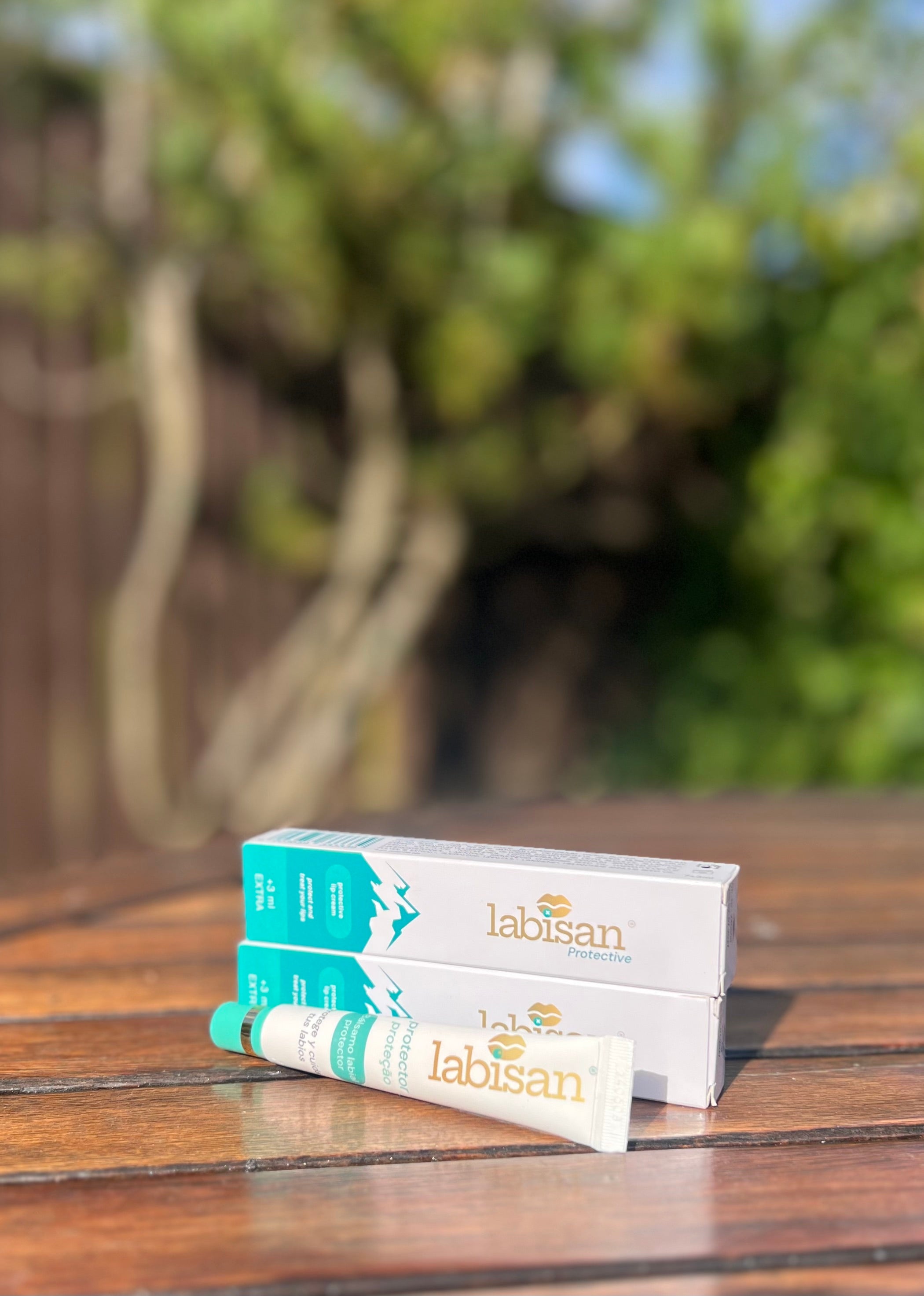
2. Stage the product where your hands already go. One tube in your pocket, one in the car cupholder, one in the beach or hiking bag. The reason multi-packs exist is not a discount gimmick; distributed placement is the highest-leverage behavioral intervention for reapplication compliance. A balm in a drawer at home protects nobody at the lake.
3. Set a single recurring alarm for the peak window only. You do not need an alarm every two hours from dawn. You need one at 11am and one at 1pm on high-UV days, the hours that matter most. Label it so the cue is unambiguous.
4. Check the UV Index, not the temperature. A cool, breezy, overcast June day can still carry a UV Index of 7, because up to 80 percent of UV passes through light cloud. Heat is a poor proxy for UV. Glance at the UV figure in any weather app and let it set your reapplication tightness for the day.
Why the formula on your lips matters for compliance
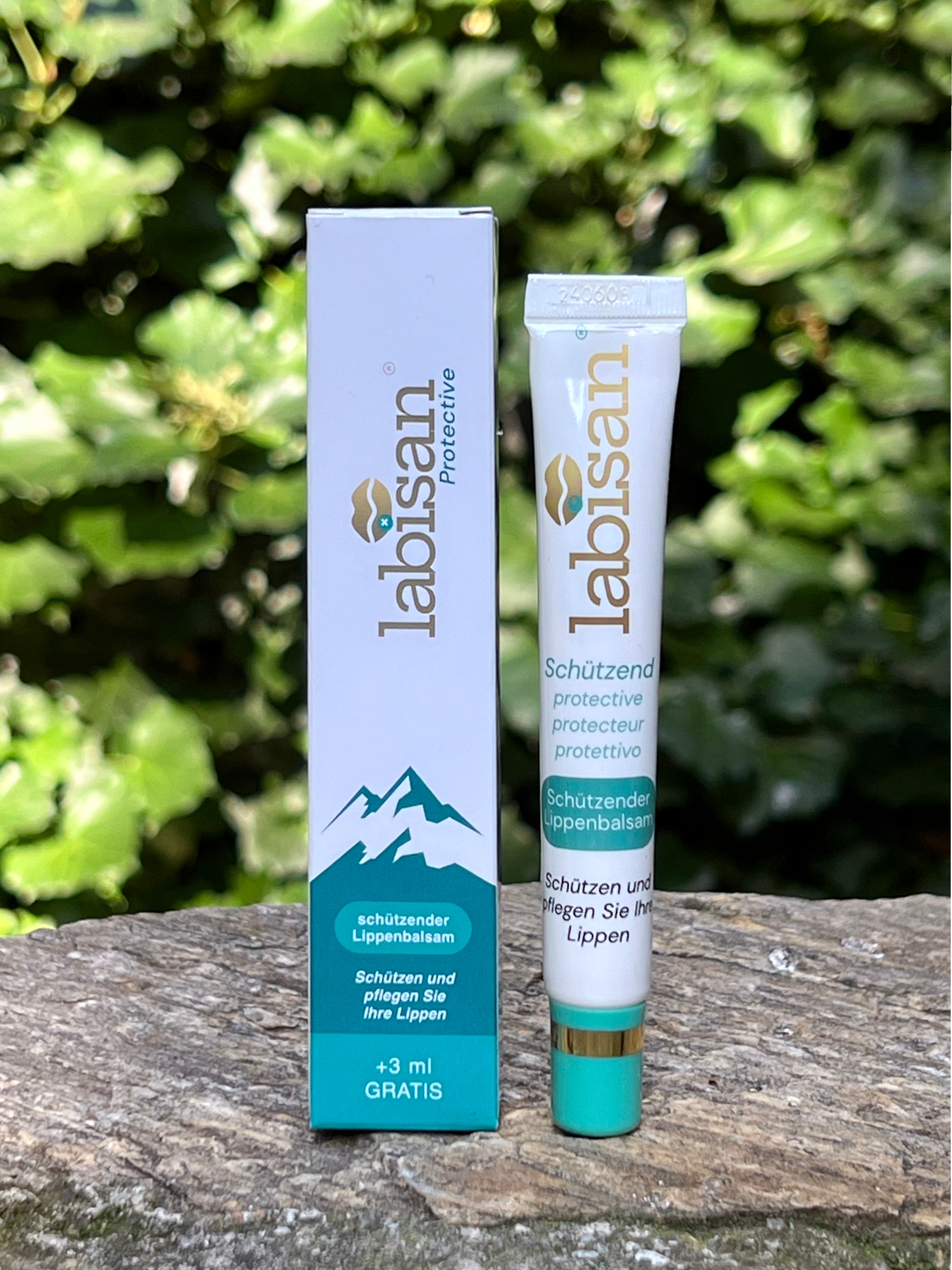
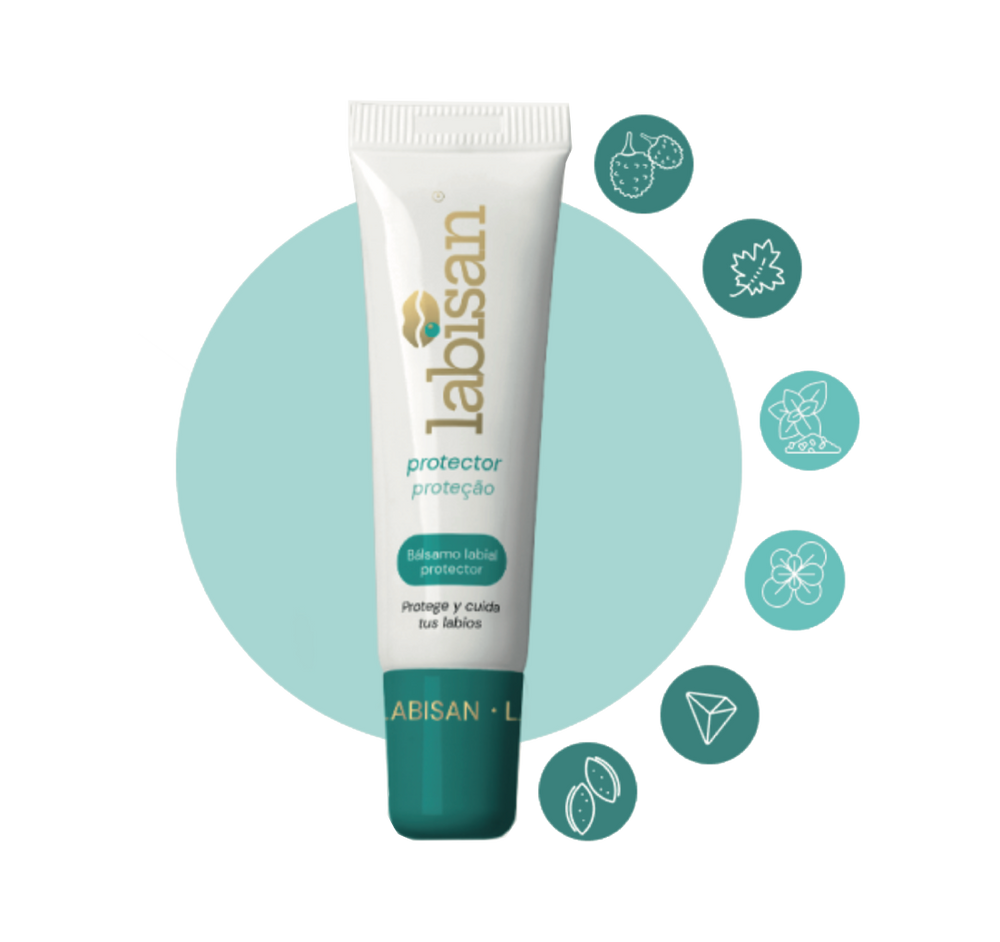
The best reapplication schedule in the world collapses if the product is unpleasant to reapply. This is the quiet reason mineral filters win for lips: zinc oxide is a broad-spectrum physical blocker that sits on the surface and goes to work instantly, with none of the waxy-only slip that fails at altitude (a failure mode we document in our piece on why beeswax-only lip balm fails at altitude). Labisan Protective Lip Balm SPF 20 is built around 22 percent zinc oxide in a shea-butter base, so each reapplication restores both the UV film and the moisture barrier in one swipe, which makes the 2-hour habit something you actually want to keep rather than a chore you resent.
For people whose summer UV exposure reliably triggers cold sores, the prevention math has a second layer. UV is one of the best-documented reactivation triggers for latent HSV-1, so blocking the trigger is the front line. Our lip balm also carries antiviral botanicals including manuka and oregano oil, chosen for laboratory-supported antiviral activity that we cover in our review of the science behind manuka oil in antiviral lip balm. For frequency reduction at the systemic level, some customers add our Graviola Capsules for immune support; to be clear and accurate, Graviola is not a cure and does not treat HSV, it is used as part of a routine aimed at reducing how often outbreaks recur.
Keep one in every bag, and the 2-hour rule keeps itself
Labisan Protective Lip Balm SPF 20
Single: $24.99 | Adventure Pack (3x): $59.97 | Family Bundle (5x): $89.95
Free shipping over $49. 30 day satisfaction guarantee.
Shop NowFrequently Asked Questions
How often should I reapply SPF lip balm in summer?
At least every 2 hours during daylight, and immediately after eating, drinking, swimming, or heavy sweating. During the peak June and July weeks, tighten this to roughly every 90 minutes in the four-hour window around solar noon, because that is when both UV intensity and film loss are highest. The number on the tube does not protect you once the film has worn off, so the reapplication interval, not the SPF figure, is what actually determines your protection.
Is SPF 20 enough for peak midsummer UV on the lips?
Yes, when it is reapplied on schedule. SPF 20 blocks roughly 95 percent of UVB, and a reapplied SPF 20 outperforms a once-and-forgotten SPF 50 every time, because protection depends on the film actually being present. Consistent reapplication beats a higher number you only apply once. For the full timing logic, see our breakdown of the SPF lip balm reapplication rule.
Does cloudy weather mean I can skip lip SPF?
No. Up to about 80 percent of UV passes through light cloud, and UV is driven by sun angle, not temperature, so a cool overcast day in late June can still carry a UV Index of 7 or higher. Check the UV Index in your weather app rather than judging by how warm or bright it feels, and reapply on the same 2-hour cadence.
Why do my lips burn at the beach or on the water when they never burn in town?
Reflected UV. Water bounces back roughly 10 to 30 percent of incident UV and sand around 15 percent, hitting the underside of your lower lip that a hat brim cannot shade. Altitude compounds it, adding about 10 to 12 percent more UV per 1000 meters. These reflective environments are exactly where reapplication discipline needs to tighten.
Can lip balm actually help prevent cold sores in summer?
UV is a well-documented trigger for reactivating latent HSV-1, so blocking that trigger with a consistently reapplied mineral SPF is a sound prevention strategy. A lip balm cannot cure or eliminate the virus, but reducing UV exposure to the lips removes one of the most common outbreak triggers. For the prevention-versus-treatment distinction, see our cold sore 5-day lifecycle protocol.