At sea level near the equator, the UV Index routinely reaches 11 to 14, the range the World Health Organization classifies as "extreme." The Maldives, the Seychelles, Zanzibar, Singapore and the northern Caribbean all sit within roughly 0 to 15 degrees of latitude, where the sun passes nearly overhead and sunlight travels through the thinnest possible column of atmosphere. Lips are uniquely exposed there: the lip vermilion has a stratum corneum only 3 to 5 cell layers thick (versus 15 or more on facial skin), almost no melanin, and no functional sebaceous or sweat glands to buffer it. Add the reflective load (dry sand bounces back about 15 percent of incoming UV, sea foam and water surfaces add more, and altitude or open horizon offer no shade) and the lips of a tropical traveler can absorb a burning dose in well under an hour. This is why tropical vacation lip protection fails so often: people pack an SPF balm, apply it once at breakfast, and treat the job as done.
Why Equatorial UV Is a Different Category
UV intensity is governed mainly by the sun's angle. The closer you are to the equator, the more directly overhead the midday sun sits, and the shorter the atmospheric path its rays travel. According to the WHO and the US EPA UV Index scale, a reading of 8 to 10 is "very high" and 11-plus is "extreme," meaning unprotected skin can burn in 10 to 15 minutes. Tropical beach destinations live in that top band for four to six hours every clear day, all year round, because there is no meaningful seasonal dip near the equator.
Two factors stack on top of latitude. First, reflection: the EPA notes that surfaces can substantially increase your total exposure, and a beach combines bright sand, water and a wide-open sky with no buildings or trees to block scatter. Second, geometry: your lower lip projects forward and slightly upward, presenting an almost perfect target to an overhead sun, which is exactly why the lower lip is the single most common site of actinic (sun-related) cheilitis and lip skin cancers. The same UVB that reddens lips also suppresses local skin immunity, and for the roughly two-thirds of adults who carry HSV-1, that immune dip is the classic trigger for a sun-induced cold sore. We break the mechanism down in our guide to the cold sore 5-day lifecycle protocol, but the short version is that a sunny holiday is one of the most reliable outbreak triggers there is.
Maldives, Caribbean and the Equator Belt: What the UV Actually Does
Maldives and the Indian Ocean
The Maldives sits between roughly 0 and 7 degrees north. Maldives lip sun exposure is intensified by overwater bungalows, snorkeling and long boat transfers where shade is scarce and reflected glare off the lagoon is constant. Snorkelers are especially vulnerable: floating face-down for an hour with the back of the head and the lower lip pointed at the surface delivers a double dose (direct plus reflected), and water washes balm away faster than people expect.
The Caribbean
Most Caribbean islands sit between 10 and 22 degrees north and run a UV Index of 10 to 12 for much of the year. Caribbean lip burn tends to catch cruise passengers and day-trippers who underestimate a "quick" beach excursion, plus anyone fooled by cloud cover. Up to 80 percent of UV passes through light cloud, so an overcast tropical day still burns; it just removes the heat cue that normally tells you to seek shade.
The Equator Belt
Destinations almost exactly on the line (Galapagos, coastal Kenya, Borneo, parts of Brazil and Indonesia) experience the most extreme readings on Earth. Equator uv lips face year-round overhead sun with no off-season at all. The practical takeaway is identical across all three regions: the dose is high, it is continuous, and a single morning application of any lip balm, regardless of its SPF number, is not protection.
The Reapplication Reality Most Travelers Get Wrong
Here is the part the back of the tube does not emphasize: SPF on lips is a consumable, not a coating. It is removed by drinking, eating, talking, licking, sweating, towel-drying and swimming. Independent testing and dermatology guidance converge on the same number for high-exposure conditions: reapply every 80 to 90 minutes, and more often if you are in and out of the water. The SPF printed on the label is measured at a lab application density of 2 milligrams per square centimeter, far more product than most people actually apply, so real-world protection usually lands below the stated number from the first minute. We lay out the timing logic in detail in the SPF lip balm reapplication 90-minute rule, and on a tropical beach that interval should be treated as a hard ceiling, not a suggestion.
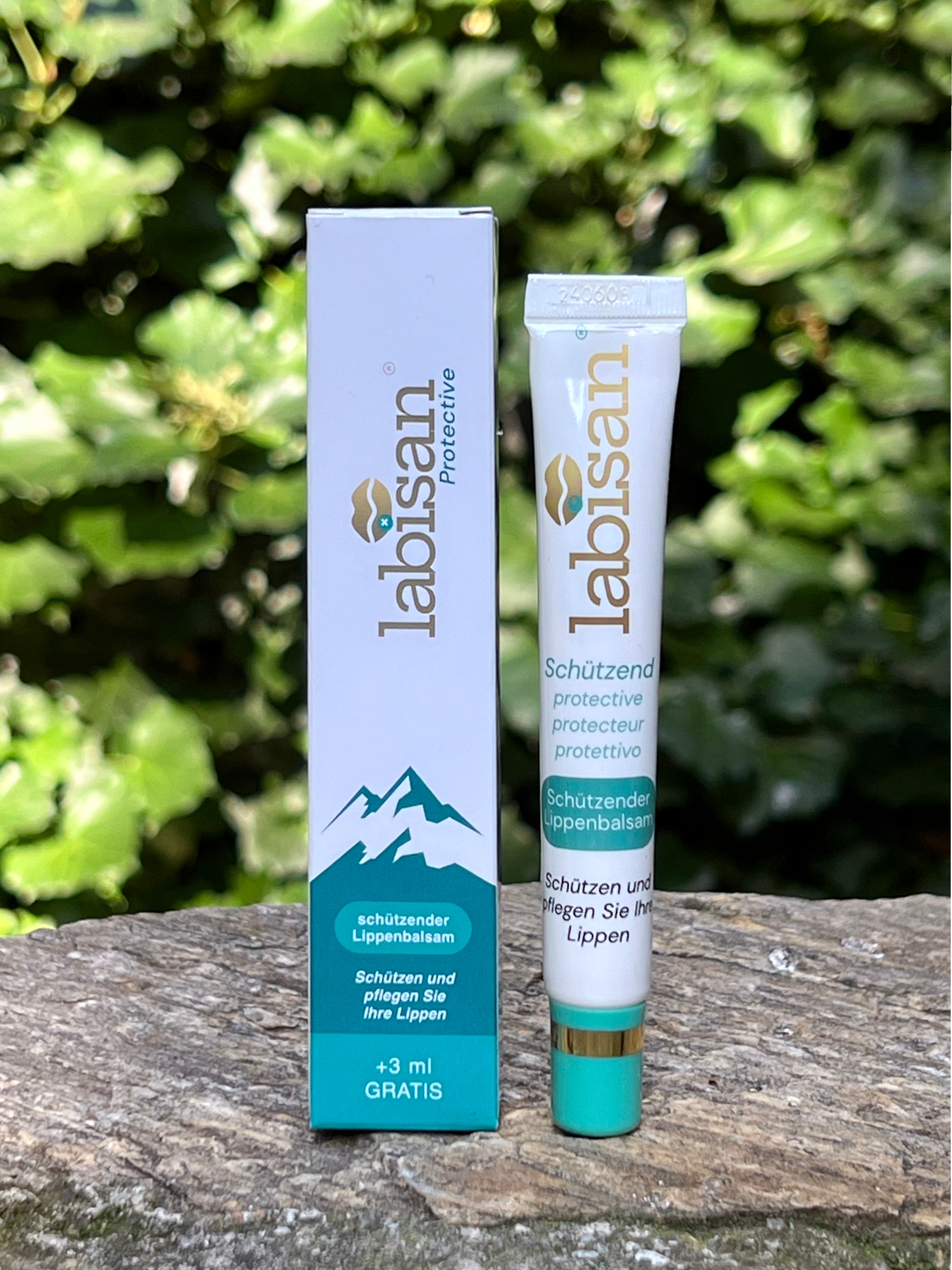
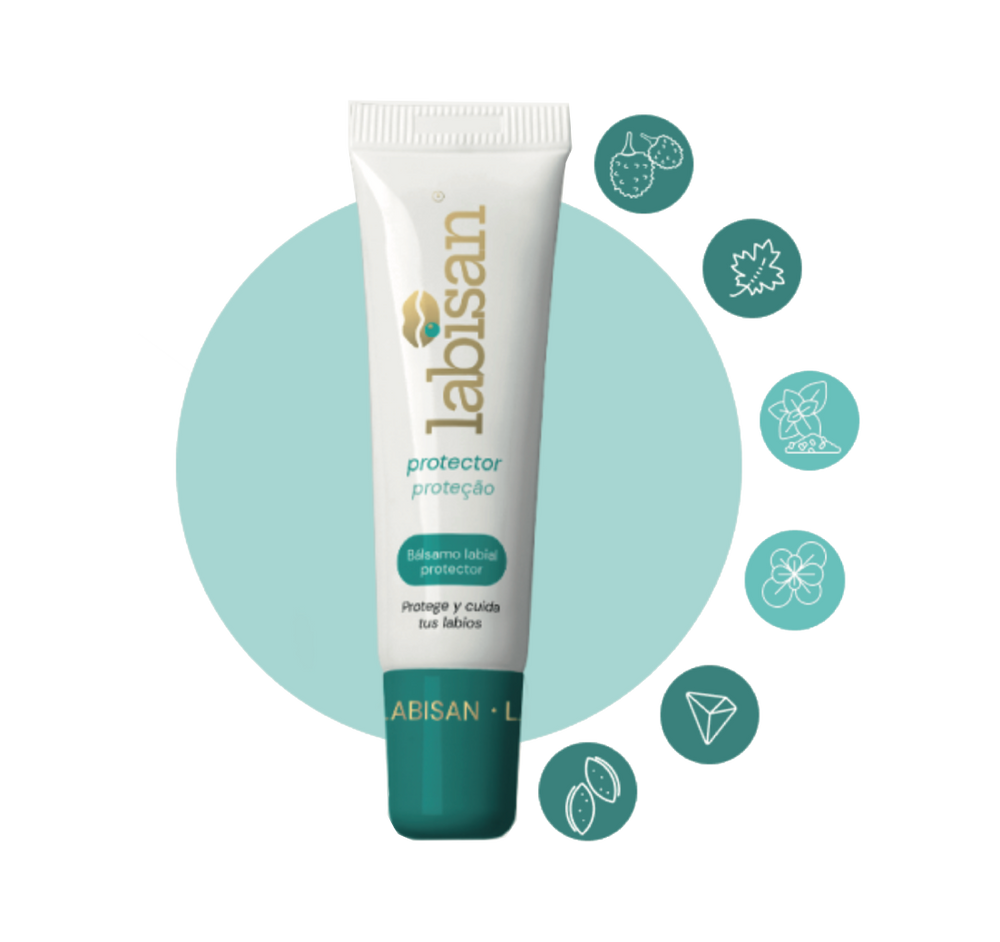
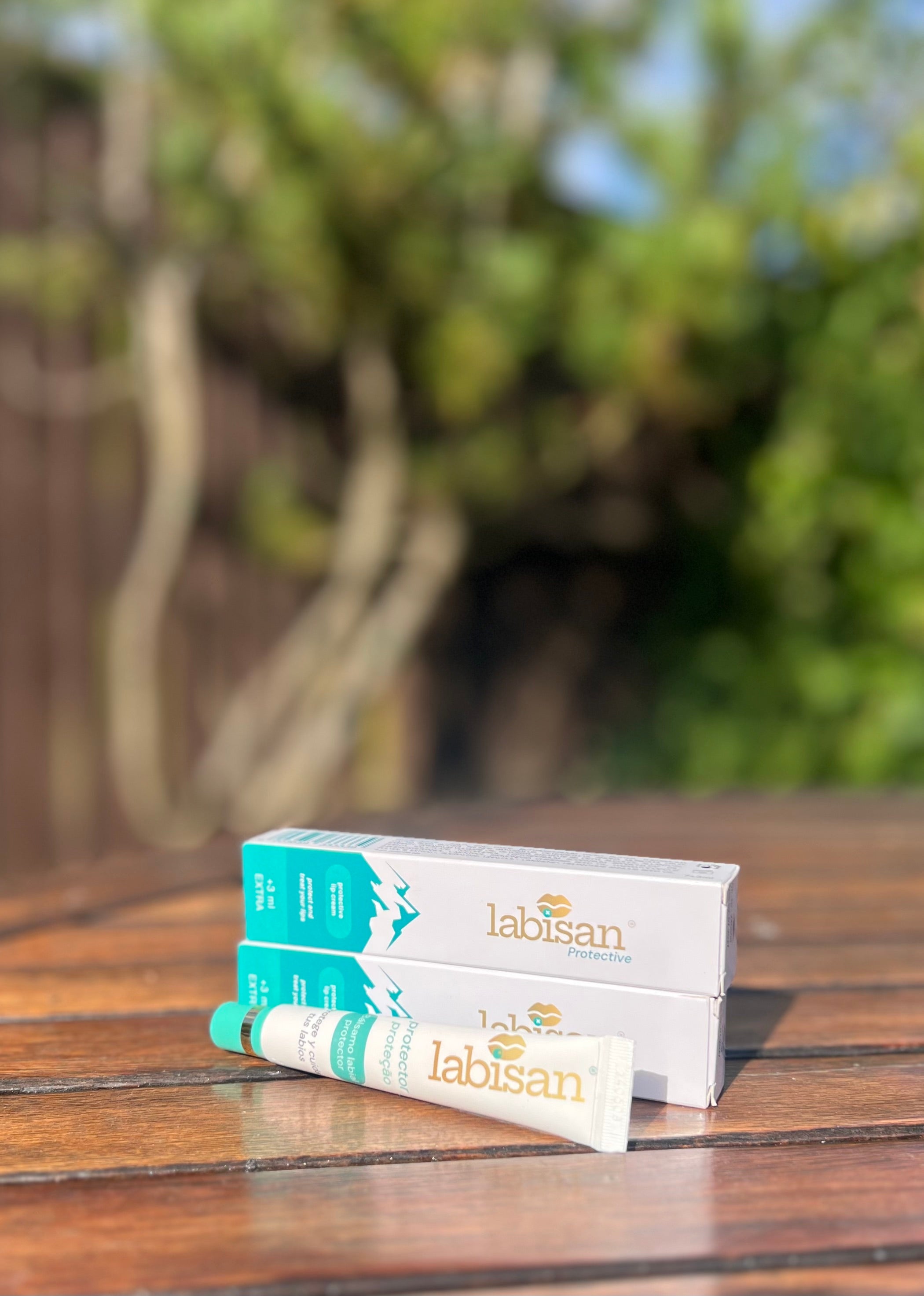
A second issue is the SPF source. Chemical UV filters can degrade in sunlight and need time to absorb, while mineral filters like zinc oxide sit on the surface and reflect UV immediately and stably. That matters on a reef holiday for a practical reason too: many tropical destinations, including parts of Hawaii, Mexico, Palau and several Caribbean marine parks, restrict oxybenzone and octinoxate to protect coral. A non-nano zinc oxide lip balm sidesteps that problem and gives you a reef-considerate, broad-spectrum option you can wear in the water without guilt. Labisan Protective Lip Balm SPF 20 is built on a 22 percent zinc oxide base for exactly this reason.
Why Lips Burn Faster Than the Rest of You
Lips lack the natural defenses your other skin relies on. There is little to no melanin to absorb radiation, the barrier is a fraction of the thickness of cheek skin, and there are no oil glands to keep the surface supple and reflective. In a hot, salty, sun-soaked environment, lips chap and crack quickly, and a compromised barrier lets UV and irritants reach living tissue more easily. The same cascade we describe in cold-weather chapped lips and barrier failure runs in reverse heat: different climate, identical mechanical breakdown of the lip's protective layer.
This is also why a balm's conditioning base matters as much as its SPF. Shea butter and a stable oil phase keep the vermilion from cracking, which preserves the barrier that the mineral SPF is sitting on. A dry, fissured lip sheds product faster and offers UV a path around the filter. Manuka and other antiviral botanicals add a secondary benefit for HSV carriers: keeping the lip calm and intact reduces the micro-trauma that, combined with UV immune suppression, can tip a latent virus into an active sore.
A Practical Tropical Lip Protocol
Treat your lips like a separate sunscreen zone with its own schedule. Apply 15 minutes before sun exposure so the film sets, then reapply on a timer rather than by feel, because lips often stop signaling discomfort once they are mildly burned. A workable equatorial schedule looks like this:
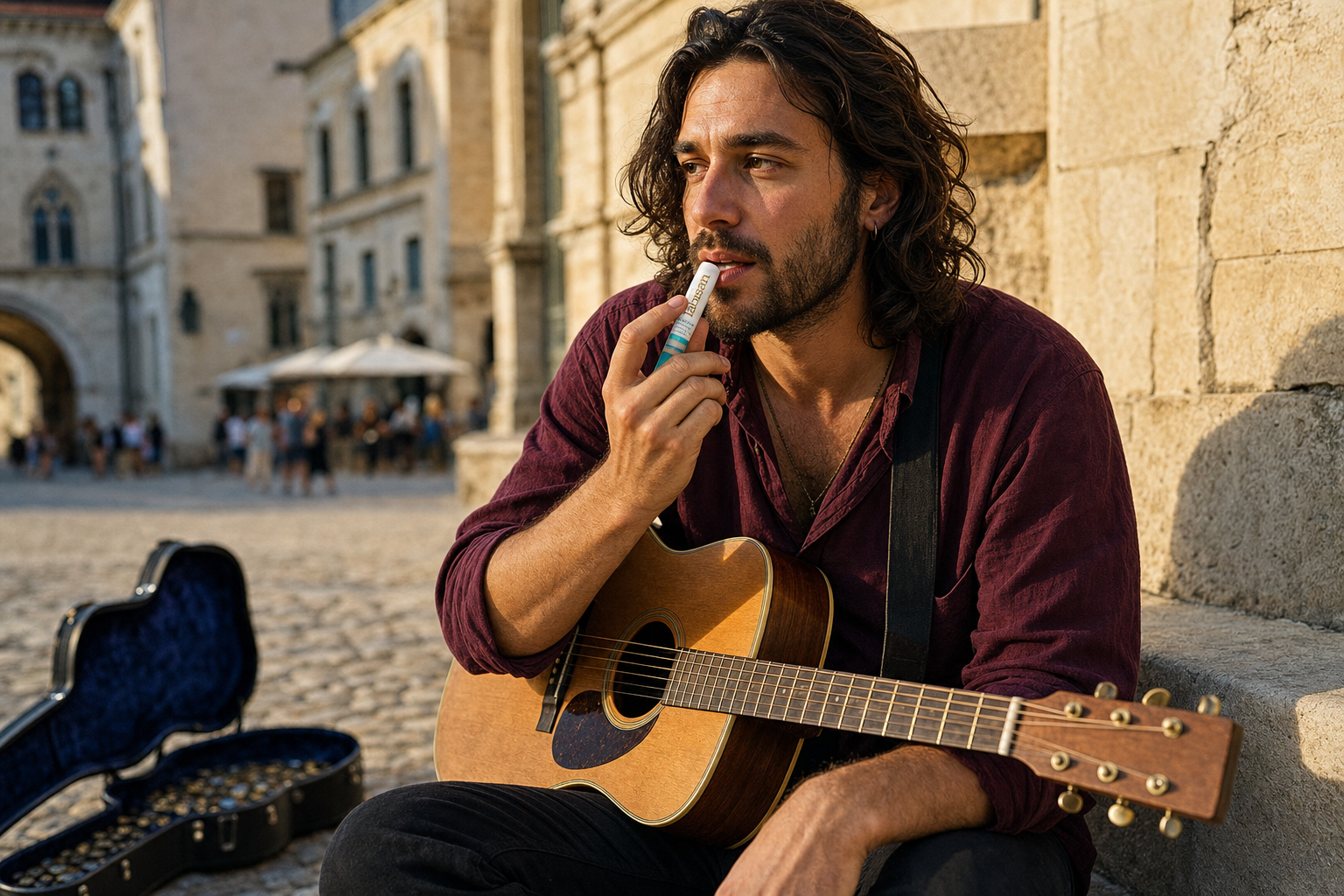
Morning base coat before leaving the room. Reapply every 80 to 90 minutes on land, and immediately after every swim, snorkel session, drink or meal. Set a phone timer for the first day until the rhythm becomes automatic; most people badly overestimate how long a coat lasts in tropical heat. Carry two tubes, one in your beach bag and one on your person, so "I left it back at the lounger" never becomes the reason you skipped an application. If you carry HSV-1 and have a history of sun-triggered outbreaks, this discipline is your single most effective prevention tool, and it is why a multi-tube pack is the sensible buy for a beach holiday.
For travelers who want an added layer of immune support, the Labisan Graviola Capsules are formulated to support general immune resilience and may help reduce how often outbreaks occur over time. To be clear and honest: graviola is not a treatment and not a cure for HSV; it is a supplement aimed at frequency, used alongside, never instead of, diligent UV protection and any antiviral your doctor has prescribed.
Pack Reef-Considerate, Extreme-UV Lip Protection
Labisan Protective Lip Balm SPF 20
Single: $24.99 | Adventure Pack (3x): $59.97 | Family Bundle (5x): $89.95
Free shipping over $49. 30 day satisfaction guarantee.
Shop NowFrequently Asked Questions
What SPF do I need for my lips in the Maldives or the Caribbean?
Use a broad-spectrum lip balm of at least SPF 15 to 20, but understand that the number on the tube matters less than how often you reapply. In an extreme-UV destination, a well-applied SPF 20 reapplied every 80 to 90 minutes outperforms a higher SPF applied once at breakfast. Choose a zinc oxide mineral formula for immediate, stable, broad-spectrum coverage that also tends to be reef-considerate.
How often should I reapply lip balm on a tropical beach?
Every 80 to 90 minutes at a minimum, and immediately after swimming, snorkeling, eating, drinking or towel-drying. Water and friction strip lip SPF far faster than facial sunscreen, and lips often stop signaling discomfort once mildly burned, so reapply on a timer rather than waiting until they feel dry.
Can a beach holiday trigger a cold sore?
Yes. Intense UV is one of the most reliable cold sore triggers for the roughly two-thirds of adults who carry HSV-1, because UVB temporarily suppresses local skin immunity and can reactivate the latent virus. Consistent lip UV protection is the most effective way to lower that risk on a sunny trip; see our cold sore lifecycle guide for what to do if one starts anyway.
Is mineral (zinc oxide) lip balm better for snorkeling and reef areas?
For most tropical travelers, yes. Zinc oxide reflects UV from the moment you apply it and is photostable, and non-nano zinc formulas avoid oxybenzone and octinoxate, two filters restricted in several reef-protection zones including parts of Hawaii, Mexico and the Caribbean. It is a practical choice when you will be in and around the water.
Do graviola capsules cure or stop cold sores?
No. Graviola is not a cure or a treatment for HSV, and we never claim it is. Labisan Graviola Capsules are an immune-support supplement that may help reduce how frequently outbreaks occur over time when used consistently. They are meant to complement, not replace, daily UV protection and any antiviral medication your healthcare provider recommends.