Lips have no protective advantage at the pool. The skin of the lip (the vermilion) carries a stratum corneum only three to five cell layers thick, roughly one third to one fifth the thickness of facial skin, and it has essentially no sebaceous (oil) glands and no melanin to speak of. That means two things happen at once when you swim outdoors. First, pool water disinfected to the typical 1 to 3 parts per million of free chlorine (the range recommended by the US Centers for Disease Control and Prevention and the WHO) strips away the thin lipid film that holds water inside the tissue. Second, ultraviolet radiation reaches the unpigmented, unshaded lip surface directly, and water itself reflects an additional 10 to 30 percent of incoming UV back up at your face. Chlorine lip damage is rarely a single injury; it is a chemical insult and a radiation insult arriving together on tissue that is biologically built to lose this fight. Understanding the two mechanisms separately is the key to defending against the combination.
Why Chlorine Dries And Cracks Lips
Chlorine added to pool water exists partly as hypochlorous acid, a small, reactive oxidizing molecule. Its job is to destroy bacteria and algae by breaking down their cell membranes through lipid oxidation. The problem is that your lip barrier is also a lipid structure: a mortar of ceramides, cholesterol, and free fatty acids that seals moisture between the cells. Hypochlorous acid does not distinguish between a microbe's membrane and your skin's barrier lipids, so prolonged contact oxidizes and thins that protective layer. Once the barrier is degraded, transepidermal water loss accelerates, and the lip dries from the inside out even while it is literally underwater. This is why pool lips dry out in a way that feels paradoxical, and the same mechanism behind cold-weather chapped lips and barrier failure applies here: the trigger is different, but the endpoint, a stripped lipid barrier, is identical.
There is a secondary effect too. Chlorinated water is frequently buffered to a pH around 7.2 to 7.8, and pools that drift alkaline or that use cyanuric-acid stabilizers can leave a faintly irritating residue as the water evaporates off the lip surface. Evaporation concentrates whatever was dissolved in the thin film clinging to your lips, so the last drops to dry are the harshest. The result is the tight, papery, slightly stinging feeling swimmers know well, often followed hours later by flaking and small vertical cracks at the center of the lower lip where the tissue flexes most.
The UV Half Of The Equation
Now add the sun. Because lips lack melanin, they have almost none of the built-in UV defense that the rest of your face relies on. Chronic ultraviolet exposure to the lips is well documented: actinic cheilitis, a precancerous sun-damage condition, appears overwhelmingly on the lower lip precisely because it catches the most direct overhead light. At the pool the dose is amplified. Open water and wet concrete decking reflect UV upward, the absence of shade is the norm, and swimmers tend to stay out for hours during the middle of the day when the UV index peaks. A wet lip offers no meaningful UV filtering; if anything, a film of water can create a mild lensing effect.
The cruel part is the interaction. A barrier already stripped by chlorine is a barrier that sunburns faster and repairs slower. Damaged tissue has less of the antioxidant reserve it needs to neutralize the free radicals that UV generates, so the chemical injury primes the lip for a worse photo injury, and the photo injury slows the repair of the chemical one. Chlorine sun lips are not two problems added together; they multiply. For anyone prone to cold sores, this matters even more, because UV exposure is one of the most reliable triggers for reactivating latent HSV-1. If you are working through the cold sore 5-day lifecycle protocol, a long unprotected pool day is exactly the kind of UV spike that can start the clock on a fresh outbreak.
Why Most Lip Products Fail At The Pool
The instinct is to slather on whatever balm is in the bag, but most lip products are poorly matched to the pool environment. A plain petrolatum or beeswax stick provides a temporary occlusive film, but it offers no UV protection at all, so it does nothing about the radiation half of the damage. Worse, many flavored and "tingly" balms contain menthol, camphor, phenol, or salicylic acid, which feel soothing for a moment but are mild irritants that further provoke an already-stripped barrier.
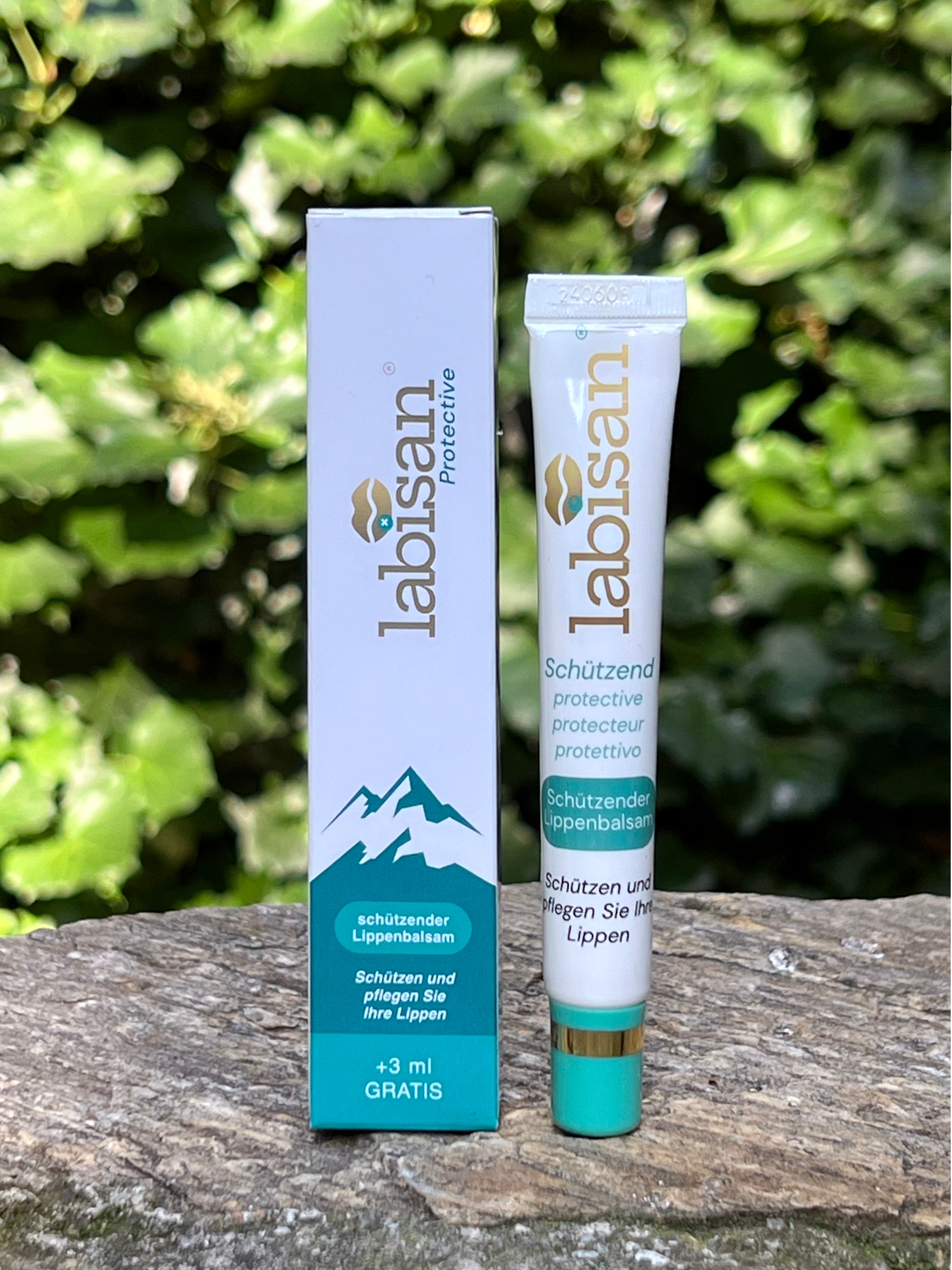
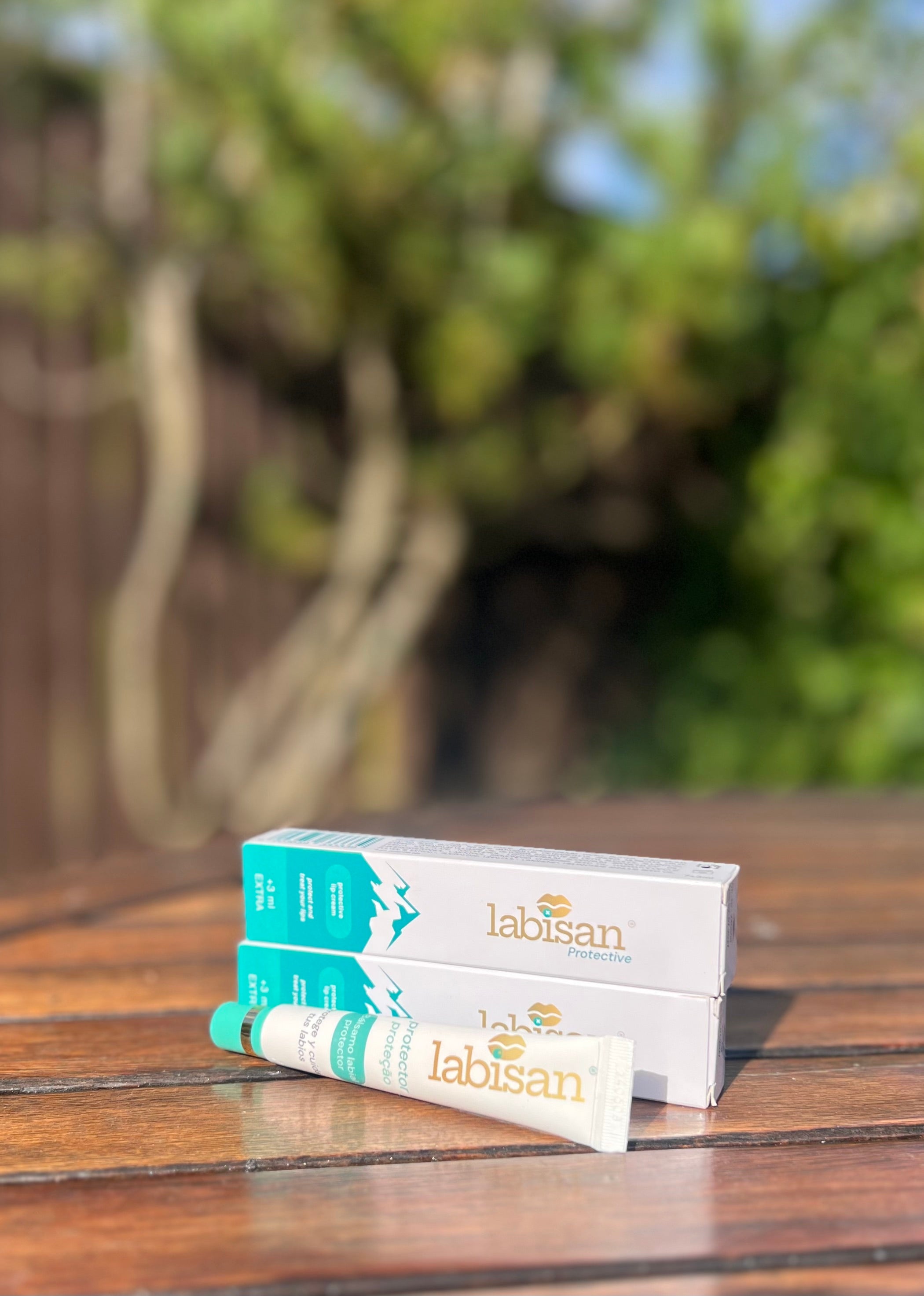
SPF lip balms are a step up, but only if they survive the water and stay on long enough to matter. Most chemical (organic filter) sunscreens are designed to absorb into skin and can wash off or break down quickly with repeated immersion. Mineral filters, principally zinc oxide, sit on top of the lip and physically reflect and scatter UV, which makes them more robust to water and more suitable for the lip surface. This is one reason we built the Labisan formula around 22 percent zinc oxide alongside graviola, manuka, and oregano botanicals: the mineral filter does the UV-blocking, while the rich shea and beeswax base rebuilds the occlusive layer that chlorine keeps stripping away. The other failure mode is simple neglect: even a good balm cannot work once it has washed off, which is why reapplication discipline, the same principle behind the SPF lip balm 90-minute reapplication rule, decides whether you are actually protected or just think you are.
A Practical Pool Protection Protocol
Defending the lip barrier at the pool is about layering and timing, not heroics. The protocol below is built to interrupt both insults.
Before You Get In
Apply a thick layer of a mineral SPF lip balm 15 minutes before sun exposure so it has time to set into a continuous film rather than a thin smear. A generous coat is not cosmetic excess here; it is the physical barrier doing double duty against water and UV. If your lips are already chapped going in, apply once, let it absorb for a minute, then apply a second coat. Wear a wide-brimmed hat where practical; shade is the cheapest UV filter there is.
While You Swim
Reapply after every long immersion or every 80 to 90 minutes, whichever comes first, and always after toweling your face, because the towel removes the film as effectively as the water does. Try to break up midday sessions; the UV index between roughly 10 a.m. and 4 p.m. delivers the bulk of the day's dose. Avoid licking your lips, which feels relieving but accelerates moisture loss as saliva evaporates and leaves digestive enzymes on the surface.
After The Pool
Rinse your face with fresh water to clear residual chlorine before it dries down and concentrates. Pat, do not rub. Then apply a final repair-focused layer of balm to support overnight barrier recovery, when the lip does most of its lipid rebuilding. If you swim daily through a holiday or a training block, treat balm reapplication as routine maintenance rather than a response to symptoms; by the time the lip feels tight, the barrier loss has already happened.
Barrier Repair And Reducing Outbreak Frequency
Topical protection handles the acute, external problem. For people whose pool days reliably end in a cold sore, there is a second, slower lever worth understanding honestly. UV is an immune-relevant stressor; sustained sun exposure transiently suppresses local skin immunity, which is part of why it reactivates latent HSV-1. Labisan Graviola Capsules are taken for general immune support and, in our customers' experience, for reducing how often outbreaks recur over time. They are not a treatment for an active cold sore and they are not a cure for HSV. If a blister has already formed, the right move is the topical antiviral-botanical approach described in our work on manuka oil and the antiviral lip balm cold sore science, not a supplement. Think of prevention as a stack: zinc oxide and a thick occlusive film defend the barrier in the moment, sensible sun timing reduces the trigger, and immune support is a background frequency strategy, never a substitute for blocking the UV in the first place.
Block The UV, Beat The Chlorine: Pool-Proof Lip Protection
Labisan Protective Lip Balm SPF 20
Single: $24.99 | Adventure Pack (3x): $59.97 | Family Bundle (5x): $89.95
Free shipping over $49. 30 day satisfaction guarantee.
Shop NowFrequently Asked Questions
Why do my lips get so dry from swimming when they are literally wet?
Because chlorine oxidizes and strips the lipid barrier that holds water inside the lip tissue. Once that barrier is degraded, water escapes through the surface (transepidermal water loss) faster than the surrounding pool water can compensate. The lip dries from the inside out, which is why pool lips dry and tighten even during immersion. Rinsing with fresh water afterward and reapplying an occlusive balm helps the barrier recover.
Can you get sunburned lips at the pool even on a cloudy day?
Yes. Up to 80 percent of UV penetrates light cloud cover, and open water plus wet decking reflect additional UV upward onto the lower lip, which has almost no melanin to defend itself. Combined with chlorine that has already thinned the barrier, even an overcast pool day can produce sunburned, peeling lips. A mineral (zinc oxide) SPF lip balm, reapplied regularly, is the most reliable defense.
What kind of lip balm works best for chlorine and sun together?
Look for two things: a mineral UV filter (zinc oxide) that physically blocks radiation and resists water better than chemical filters, and a rich occlusive base (shea butter, beeswax) that rebuilds the lipid film chlorine strips away. Avoid menthol, camphor, phenol, and salicylic acid, which irritate an already-compromised barrier. Reapply after every long swim and after toweling off.
Does the sun make cold sores more likely after swimming?
UV exposure is one of the most consistent triggers for reactivating latent HSV-1, and a long, unprotected pool day delivers a large UV dose to lips that have no shade. Blocking the UV with a zinc oxide lip balm is the most direct prevention. For people with frequent recurrences, immune support such as graviola is used to help reduce how often outbreaks happen over time, but it does not treat an active sore or cure the virus.
How often should I reapply lip balm while swimming?
Reapply after every long immersion or roughly every 80 to 90 minutes, whichever comes first, and always after wiping or toweling your face, since the towel removes the protective film as effectively as the water. Apply the first coat about 15 minutes before sun exposure so it sets into a continuous layer rather than a thin, easily-washed smear.