The Mediterranean summer sun is not a gentler version of the sun you know at home; it is measurably more intense. Between June and August, the UV index across southern Europe routinely peaks at 9 to 11 on the World Health Organization scale, where anything above 8 is classified as "very high" to "extreme." Athens, Seville, Naples, and the Greek islands sit between roughly 35 and 40 degrees north latitude, where the midday sun climbs high enough to cut through a short, direct column of atmosphere. Add the reflective load of open water (the sea bounces back around 10 to 30 percent of incoming UV) and pale beach sand (up to 15 percent), and your lips can receive a UV dose far higher than the ambient reading alone suggests. The problem is that lips are uniquely defenseless: the vermilion (the colored part) has a stratum corneum only 3 to 5 cell layers thick versus 15 or more on facial skin, and it produces almost no melanin and no protective sebum. That combination is exactly why mediterranean lip sun protection deserves a dedicated plan rather than a casual swipe of whatever balm is in your bag.
Why Mediterranean Sun Hits Lips Harder Than You Expect
Three factors stack on a southern Europe holiday. First, latitude and season: in July the solar elevation at noon in Crete or southern Spain exceeds 70 degrees, meaning UV travels through less atmosphere and arrives stronger. Second, reflection: if you are on a boat off the Amalfi Coast, in the sea in Mallorca, or on a white-pebble beach in the Ionian, UV reaches your lips from below and the sides, not just overhead, so a sun hat brim does little for the lower lip. Third, duration: holidays mean 6 to 10 hour exposure days, often with alcohol, which is mildly dehydrating, and salt water, which strips lipids from the lip surface and accelerates barrier breakdown. The same mechanism behind how the lip barrier fails in harsh conditions applies in reverse here: instead of cold and wind pulling moisture out, it is heat, salt, and relentless UV degrading the thin lipid film that should be holding water in.
The clinical stakes are real. Actinic cheilitis, sun damage concentrated on the lower lip, is well documented in populations with high cumulative sun exposure, and the lower lip accounts for the large majority of lip cancers precisely because it catches the most direct UV. For a one or two week trip you are not going to develop chronic damage, but you can absolutely get a painful lip sunburn, persistent peeling, and swelling that ruins the back half of your holiday.
The Cold Sore Connection: UV Is a Top Outbreak Trigger
If you carry HSV-1, and the WHO estimates roughly two-thirds of the global population under 50 does, intense sun is one of the most reliable triggers for a cold sore. Ultraviolet radiation suppresses local skin immune surveillance (it depletes Langerhans cells in the exposed area) and creates the opening for latent virus in the trigeminal ganglion to reactivate and travel down the nerve to the lip. Studies on experimental UV exposure have shown reactivation rates high enough that researchers use sunlight as a standardized provocation in trials. This is why so many people return from a sunny holiday with the tell-tale tingle on day 2 or 3. Knowing how a cold sore moves through its 5-day lifecycle helps you act in the prodrome window, but prevention beats reaction every time, and on the Mediterranean prevention means blocking UV at the lip before it ever triggers anything.
This is the part most travelers miss. They diligently apply SPF 30 to their face and shoulders, then leave their lips, the single most reactivation-prone patch of skin they own, completely bare. A dedicated SPF lip balm is not a luxury accessory for a Greek island trip; for anyone with a cold sore history it is the most important single item in the wash bag.
What Actually Protects Lips: SPF, Minerals, and Reapplication
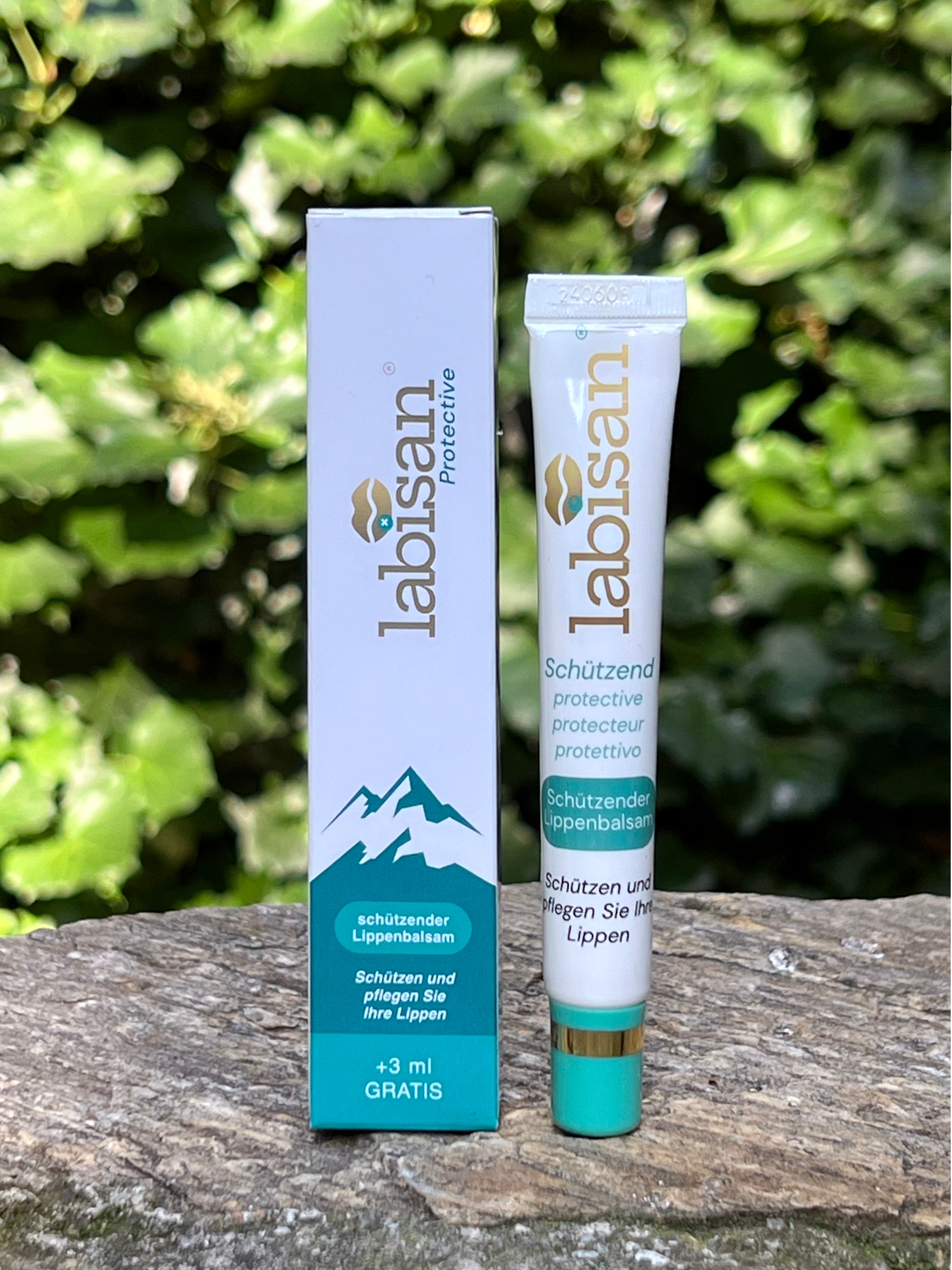
Not all lip protection is equal. A plain beeswax or petrolatum balm gives you a faint, unrated physical sheen and effectively zero meaningful SPF; relying on it under a UV index of 10 is like wearing a vest as a raincoat. You want a balm with a tested SPF rating and, ideally, a mineral (physical) UV filter. Zinc oxide is the workhorse here: it is a broad-spectrum physical blocker that sits on the surface and reflects both UVA and UVB, it is photostable (it does not degrade in sunlight the way some chemical filters can), and it is gentle enough for the thin, frequently-licked lip surface. Labisan's 22 percent zinc oxide formula with manuka and oregano botanicals was built specifically for high-UV, high-stress environments rather than for everyday city use.
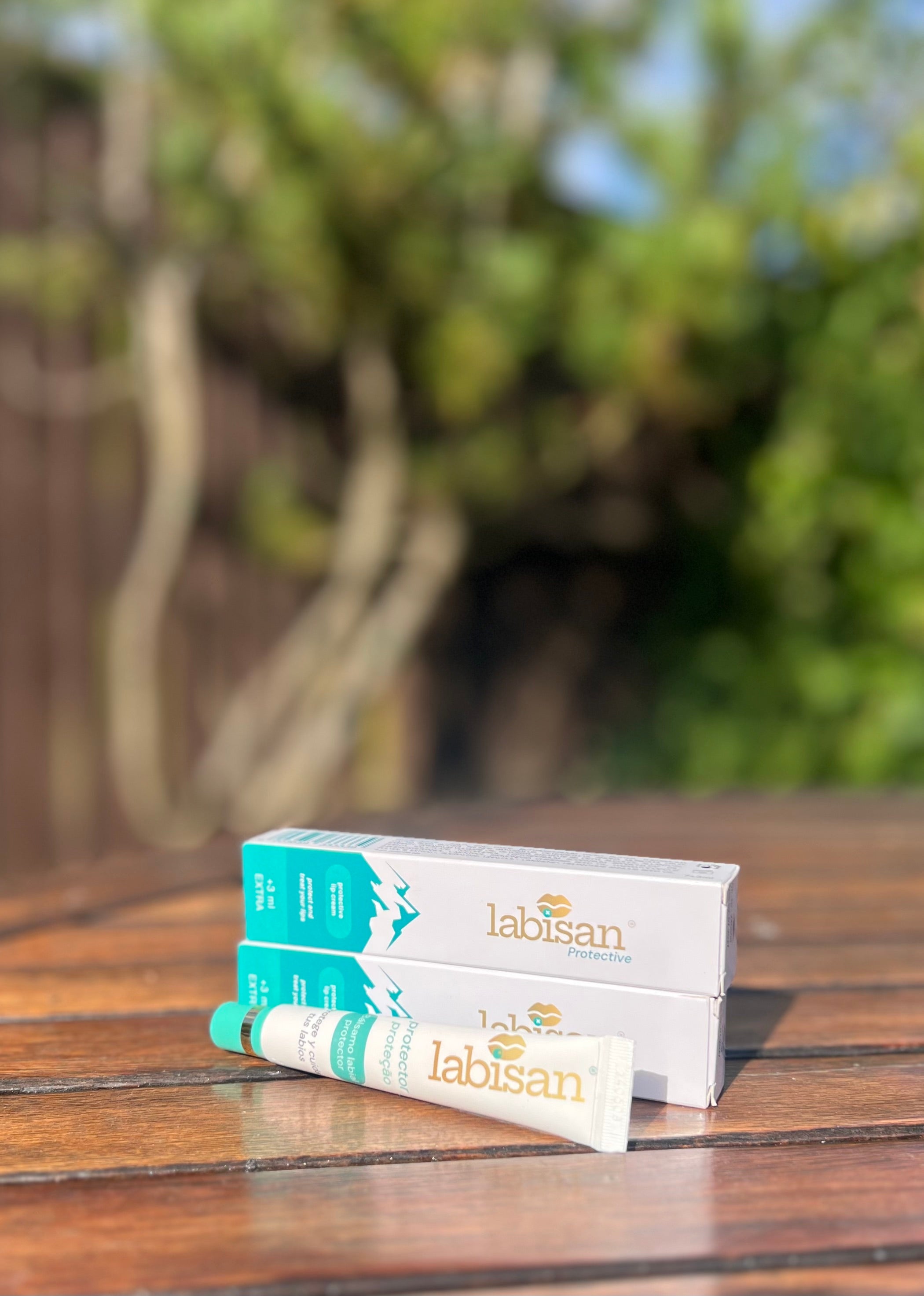
SPF on a lip balm tells you about UVB protection (the burning rays); look for "broad spectrum" to confirm UVA coverage too. But the single biggest mistake is treating SPF as a one-time application. Lips are a high-friction zone: eating, drinking, swimming, talking, and sweating all remove product fast. The protective film does not last the afternoon. The practical rule, covered in detail in our guide to the 90-minute SPF lip balm reapplication rule, is to reapply at least every 90 minutes of sun exposure and immediately after swimming, eating, or towel-drying your face. On a full beach day in Spain or the Greek islands, that is realistically 6 to 8 applications, which is exactly why we recommend the multi-stick Adventure Pack for trips.
Why Manuka and Botanical Oils Matter on a Cold Sore Trip
UV blocking is the front line, but the formulation around the zinc matters for HSV-prone travelers. Manuka oil contains beta-triketones, compounds studied for antiviral and antimicrobial activity, and the combination of botanicals layered into a barrier balm gives a second line of support at the lip surface. We cover the evidence in our breakdown of the science behind manuka oil in antiviral lip balm. To be clear and honest: no lip balm cures or treats herpes, and a topical product cannot eliminate the latent virus. What a well-formulated SPF balm does is remove the single biggest environmental trigger (UV) and support the lip barrier so it stays intact under salt, heat, and friction.
The Mediterranean Lip Protocol: A Day-by-Day Plan
Here is the field-tested routine we recommend for a southern Europe summer trip, whether you are island-hopping in the Cyclades or on the beaches of the Costa del Sol.
Morning, before you leave the room: Apply a generous, opaque layer of SPF 20 mineral balm to both lips, and crucially extend it slightly past the lip line onto the surrounding skin, because the vermilion border is a common cold sore site and gets missed. Do this before sunscreen on the rest of your face so the lips are not left for last and forgotten.
Every 90 minutes in the sun: Reapply. Set a phone reminder for the first day until it becomes a habit. After any swim, reapply immediately even if the balm felt water-resistant, salt water is a lipid solvent and you have likely lost most of the film.
The reflective hours (11am to 4pm): This is when the Med UV index is at its extreme. If you are on a boat or at the beach in this window, pair the balm with shade and a wide-brim hat. Remember the brim does little for the lower lip catching reflected UV from water and sand, so the balm is doing the real work down there.
Evening recovery: After sun, the lips are dehydrated and the barrier is stressed. A bedtime layer of the same balm helps the lipid film recover overnight. If you feel any tingling, itching, or tightness, that is the cold sore prodrome, and that is the moment to be most disciplined about coverage and to keep the area protected from further UV the next day.
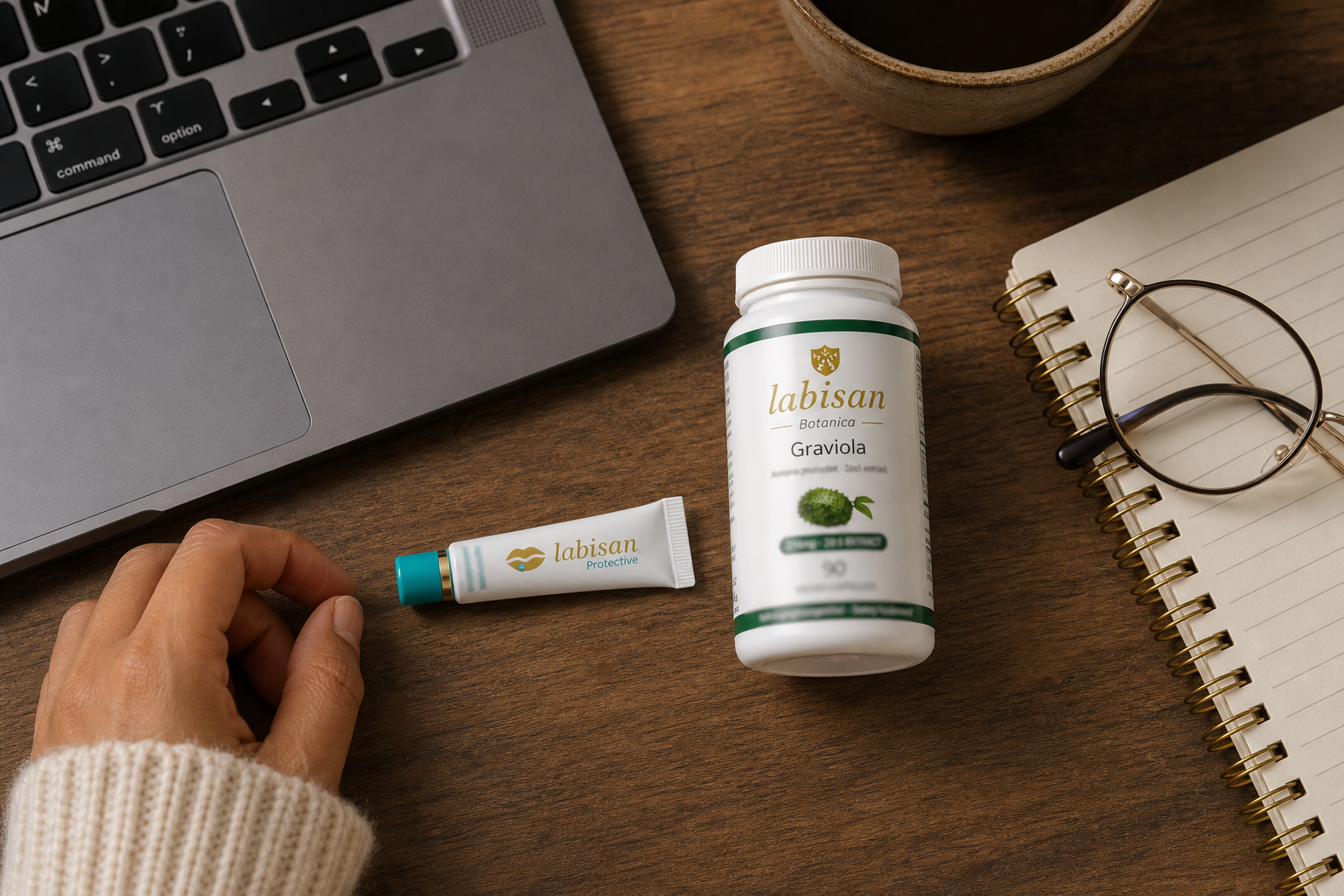
Immune support across the trip: For travelers whose outbreaks cluster around high-stress, high-sun periods, some choose to support general immune resilience with our protective lip care system alongside Labisan Graviola Capsules. Graviola is positioned for immune support and may help reduce how often outbreaks occur for some people; it is not a treatment or cure for HSV, and nothing replaces UV protection at the lip itself.
Packing: How Much Lip Protection to Bring
The most common holiday failure is bringing one tiny tube and rationing it. If the correct protocol is 6 to 8 applications a day across a one or two week trip, a single balm will not last, and the day it runs out is the day you get caught. For a couple or family, the math gets steep fast. A single stick is right for a weekend city break; for a full beach holiday, plan on roughly one stick per person per week of heavy sun use, which is why the Adventure Pack (3x) and Family Bundle (5x) exist. Keep one stick in your beach bag, one in your day pack, and one back at the accommodation so you are never without it. A balm left in a hot car or on a sunny windowsill can soften, so store spares somewhere cool.
Block the Med sun before it triggers a cold sore
Labisan Protective Lip Balm SPF 20
Single: $24.99 | Adventure Pack (3x): $59.97 | Family Bundle (5x): $89.95
Free shipping over $49. 30 day satisfaction guarantee.
Shop NowFrequently Asked Questions
Why do my lips burn so easily in Greece and Spain but not at home?
Southern Europe sits at a latitude where the summer midday UV index reaches 9 to 11, the "very high" to "extreme" range, far stronger than typical northern European or coastal-temperate readings. Add reflection off the sea and pale sand, plus long 6 to 10 hour exposure days, and your lips, which have a stratum corneum only a few cell layers thick and almost no melanin, take a much higher UV dose than they ever would at home.
Does intense summer sun really trigger cold sores?
Yes. UV radiation is one of the best-documented cold sore triggers because it locally suppresses skin immunity and lets latent HSV-1 reactivate. Researchers have used controlled UV exposure to deliberately provoke outbreaks in studies. Blocking UV at the lip with a mineral SPF balm removes that trigger, which is why prevention is far more effective than treating an outbreak after it starts.
What SPF do I need for a Mediterranean beach holiday?
A broad-spectrum SPF rating with a physical (mineral) filter such as zinc oxide is what matters most for lips, because zinc is photostable and reflects both UVA and UVB. SPF 20 mineral protection applied as a generous, opaque layer and reapplied correctly outperforms a higher number applied once and forgotten. Reapplication discipline beats chasing a bigger SPF figure.
How often should I reapply lip balm at the beach?
At least every 90 minutes of sun exposure, and immediately after swimming, eating, drinking, or towel-drying. Lips are a high-friction zone, so the protective film wears off quickly. On a full Mediterranean beach day that realistically means 6 to 8 applications, so bring more product than you think you need.
Can a lip balm or Graviola cure my cold sores?
No. No topical balm or supplement cures or eliminates HSV, which lives latent in the nerve permanently. A mineral SPF lip balm prevents UV-triggered reactivation and protects the lip barrier, and Graviola is positioned for general immune support that may help reduce outbreak frequency for some people. Neither is a treatment or cure, and any claim otherwise is false.