If your cold sores seem to cluster during the hottest stretch of summer, you are reading a real signal, not imagining a pattern. The herpes simplex virus type 1 (HSV-1) that causes oral cold sores infects an estimated 3.7 billion people under age 50 worldwide, roughly 64 percent of that age group, according to World Health Organization 2020 estimates. The virus stays dormant in the trigeminal ganglion, a cluster of nerve cells near the jaw, and reactivates when local or systemic conditions tip in its favor. A heat cold sore trigger is almost never a single cause. A heatwave delivers three reactivation pressures simultaneously: a spike in ultraviolet radiation, fluid loss through sweating, and the fragmented, shallow sleep that hot nights produce. Each of these is a documented HSV-1 trigger on its own. Together they form a stack, and the lip is where that stack tends to surface.
Why heat itself does not cause a cold sore, but heatwaves do
It helps to be precise: ambient temperature does not reach into your nerve cells and switch on the virus. What a heatwave does is remove the conditions that normally keep HSV-1 latent. The single best-established environmental trigger for oral cold sores is ultraviolet light. Controlled studies dating to the 1990s showed that experimental UVB exposure to the lips could induce recurrent lesions in people with a history of cold sores, and dermatology guidance has treated sun exposure as a primary recurrence driver ever since. Heatwaves and high UV index days travel together, so the same forecast that warns of dangerous heat usually carries a UV warning too. If you want the deeper picture on how the virus behaves over a lifetime, our breakdown of HSV-1 global epidemiology by the numbers covers prevalence and recurrence rates in detail.
The lip is uniquely exposed. Lip skin, the vermilion, is thin, has no functional sweat glands, and carries almost no melanin, so it cannot tan or self-protect the way the rest of your face does. During a heatwave you are outdoors more, often at midday, frequently near reflective water, sand, or concrete that bounces UV back up at the underside of your lips where sunscreen rarely reaches. That is the first floor of the stack.
The second floor: dehydration and a compromised lip barrier
Heat drives fluid out through sweat, and most people under-replace it. Mild dehydration, even a 1 to 2 percent drop in body water, is associated with measurable changes in mood, alertness, and perceived fatigue. For your lips specifically, low systemic hydration plus dry, hot air strips the thin moisture film off the vermilion fast. A cracked, chapped, sun-stressed lip is not just uncomfortable; it is a compromised barrier. Microscopic splits and inflammation at the lip create exactly the kind of local tissue stress that researchers associate with making reactivated virus more likely to establish a visible lesion rather than being cleared quietly.
This is why a hot weather cold sore so often appears at the corner of the mouth or along a lip line that was already dry and tight. The dehydration does not reactivate the virus by itself, but it lowers the lip's defenses at the precise moment UV is applying pressure from above. Keeping the barrier intact and shaded is the most controllable variable in the whole chain, which is the logic behind using a physical sunblock balm rather than relying on hydration alone.
The third floor: hot nights, broken sleep, and a slower immune response
This is the floor most people miss. The human body initiates sleep partly by dropping its core temperature, and it does that by shedding heat through the skin. When the bedroom stays above roughly 24 to 26 degrees Celsius (75 to 79 Fahrenheit), that cooling cannot happen efficiently, so you get longer time to fall asleep, more awakenings, and a documented reduction in slow-wave and REM sleep. Heatwave nights are, in effect, partial sleep deprivation imposed on a whole population at once.
Sleep is when much of immune regulation happens. Sleep loss is linked to reduced natural killer cell activity and shifts in the inflammatory signaling that helps keep latent viruses in check. For someone carrying HSV-1, a run of poor nights is a recognized recurrence trigger in the same category as fever and emotional stress; the old folk name "fever blister" captures the immune-suppression link directly. So the heatwave that is sunburning your lip by day is also, by night, degrading the immune surveillance that would otherwise suppress reactivation. The stress and sleep angle is broad enough that we devoted a separate piece to the 30-day diary of a hybrid prevention protocol, which tracks how sleep, sun, and supplementation interact across a real month.
How the three floors compound into a heatwave herpes flare
Think of latent HSV-1 as held down by a threshold. On a normal day, none of these pressures alone is enough to push it past that line. A heatwave herpes flare happens because the pressures arrive together and add up: UV damages and inflames the lip tissue locally, dehydration thins the barrier defending it, and broken sleep lowers the systemic immune tone that would otherwise clear a small reactivation before it became a blister. Each factor lowers the threshold a little; combined, they cross it. This is also why your tingle often shows up a day or two after the hottest part of the heatwave, once the cumulative load has peaked. Understanding the stack is what makes prevention tractable, because you do not have to win every floor, you just have to keep the total load under the line. Our case-based walkthrough of a cold sore recovery timeline across four cases shows how early intervention at the tingle stage changes the outcome.
Breaking the stack: a practical heatwave protocol
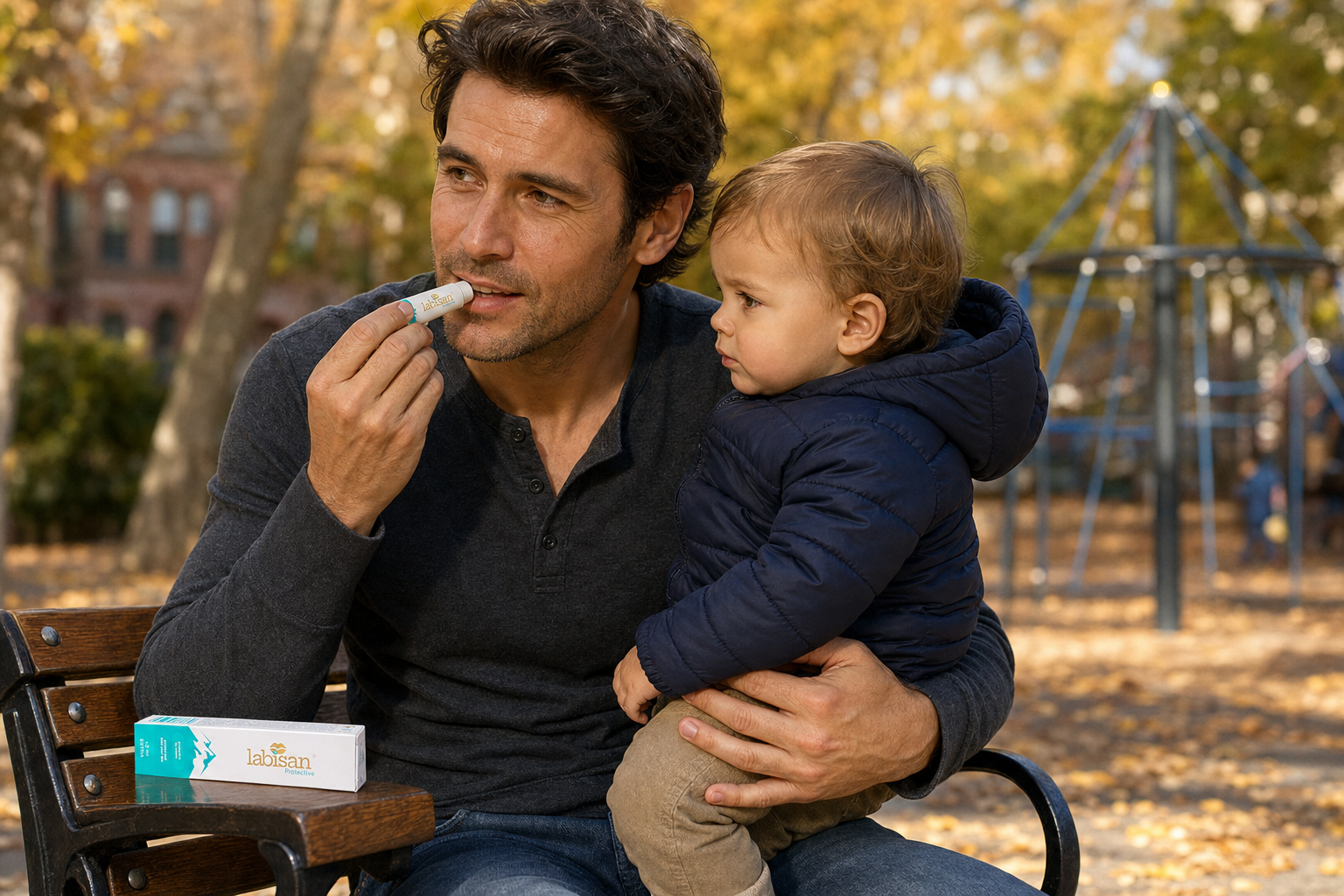
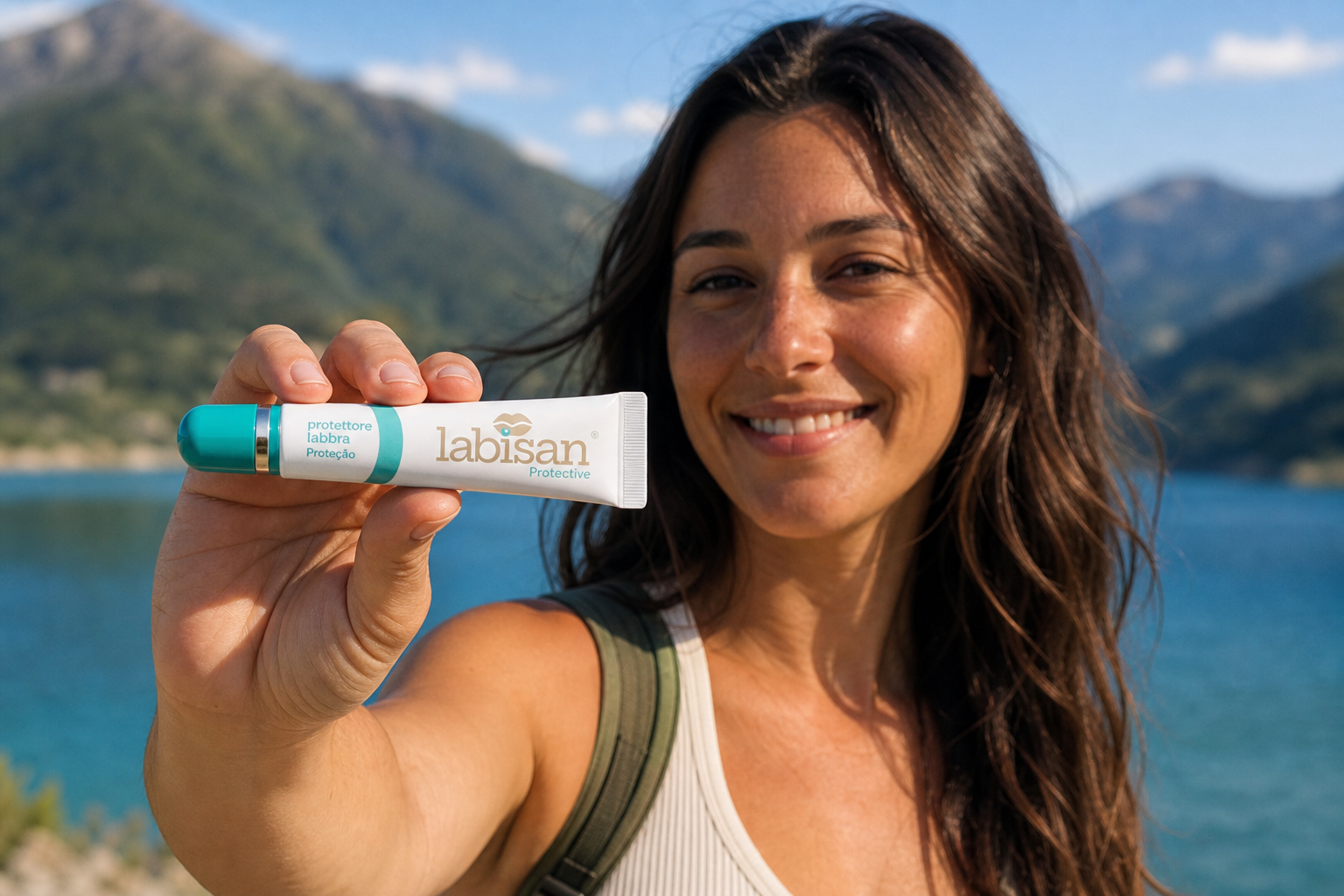
Block the UV at the lip. This is the highest-leverage single move because UV is the best-documented trigger and the easiest to physically intercept. A mineral lip balm with zinc oxide sits on the surface and reflects UV rather than absorbing it. The Labisan Protective Lip Balm SPF 20 combines zinc oxide with shea butter and manuka oil, so it shades the vermilion and rebuilds the barrier in the same pass. Reapply every two hours outdoors, after eating, drinking, or swimming, and deliberately coat the corners and the lower lip edge where reflected UV lands.
Stay ahead on fluids. Do not wait until you feel thirsty; thirst lags behind actual fluid loss. Steady water through the day keeps the lip barrier resilient and supports general recovery.
Protect sleep against the heat. Cool the bedroom before bed, use a fan to aid skin heat loss, take a lukewarm (not cold) shower to prompt the core-temperature drop, and keep a consistent sleep window even when nights are uncomfortable. Reducing the sleep-deprivation floor directly supports the immune tone that suppresses reactivation.
Support immune resilience over the season. For frequent recurrers, daily lip protection pairs with internal immune support. Graviola has a traditional and emerging-research profile around immune support, and many of our customers use it to help reduce outbreak frequency over a season; to be clear, it is not a cure for HSV-1 and nothing eradicates the virus. The combined approach is laid out in our overview of the Labisan lip balm and Graviola hybrid system.
Shade your lips before the heatwave does the damage
Labisan Protective Lip Balm SPF 20
Single: $24.99 | Adventure Pack (3x): $59.97 | Family Bundle (5x): $89.95
Free shipping over $49. 30 day satisfaction guarantee.
Shop NowFrequently Asked Questions
Does heat directly cause cold sores?
Not directly. Heat does not switch on the virus inside your nerves. Heatwaves trigger cold sores indirectly by stacking three known reactivation pressures at once: high UV exposure on the lips, dehydration that weakens the lip barrier, and poor sleep that lowers immune surveillance. The combination is what pushes latent HSV-1 past its reactivation threshold.
Why do I get cold sores in summer but not winter?
Summer concentrates UV exposure, the single best-documented cold sore trigger, along with more outdoor time and reflected sunlight off water and sand. Add dehydration and hot-night sleep loss and the seasonal pattern makes sense. Winter has its own triggers like cold wind and dry indoor air, but for many people the UV-driven summer pattern is stronger.
Can dehydration alone cause a cold sore?
Dehydration on its own rarely triggers an outbreak, but it dries and cracks the thin lip skin, weakening the barrier at the exact moment UV and sleep loss are applying pressure. It is a contributing floor in the stack rather than a standalone cause. Steady hydration during hot weather is a low-effort way to reduce the total trigger load.
How does poor sleep increase cold sore risk?
Sleep is when much of immune regulation occurs. Short or fragmented sleep is associated with reduced natural killer cell activity and altered inflammatory signaling, both of which help keep latent viruses suppressed. During heatwaves, hot bedrooms prevent the core-temperature drop needed for deep sleep, so heatwave nights act like mild, population-wide sleep deprivation that lowers your defense against reactivation.
What is the fastest way to prevent a heatwave cold sore?
Block the trigger you can control most directly: UV at the lip. Apply an SPF mineral lip balm with zinc oxide before going outdoors and reapply every two hours, covering the corners and lower lip edge. Pair that with steady hydration and protecting your sleep against the heat. For frequent recurrers, daily lip protection plus immune support can help reduce how often outbreaks occur over the season.