The vermilion of the lip is protected by a stratum corneum roughly three to five cell layers thick, against approximately ten to twenty layers on the adjacent cheek. It carries very little melanin, has no hair follicles, and essentially no sebaceous glands, which means it produces none of the hydrolipid film that gives the rest of your face a small amount of baseline photoprotection. The practical consequence is measurable: around 90 percent of lip squamous cell carcinomas occur on the lower lip, the surface that sits closest to horizontal and therefore takes the most direct midday sun plus reflected UV from snow, water and sand. On the SPF question specifically, the evidence base is narrower than most people assume. The most cited controlled experiment, Rooney and colleagues in The Lancet (1991), exposed people with UV-inducible herpes labialis to experimental ultraviolet light and found lesions in 27 of 38 subjects after placebo and 0 of 35 after an SPF 15 sunscreen. That is the number the science actually tested. Clinical dermatology guidance sits higher: the American Academy of Dermatology recommends a broad-spectrum lip product of SPF 30 or above for general sun exposure. Both figures matter, and the gap between them is where most of the confusion lives. If you want the short version before the detail, a broad-spectrum mineral lip balm with SPF 20 and 22 percent zinc oxide reapplied properly outperforms a higher-SPF product applied once and forgotten.
The Short Answer: The Minimum SPF for Lips
Here is the honest hierarchy, from evidence to practice:
SPF 15 is the experimentally validated floor. It is the level at which sunscreen was shown to block UV-induced cold sore reactivation under laboratory conditions. Below that, you are outside the tested range.
SPF 20 to 30 broad spectrum is the sensible working target for daily wear, commuting, dog walking, gardening and normal outdoor life.
SPF 30 or higher, reapplied aggressively, is the correct answer for high-UV environments: altitude, snow, open water, tropical latitudes, or any full day outdoors between 10am and 4pm.
What almost no lip sunscreen SPF level guide tells you is that the number is the least important variable in the equation. Film thickness, broad-spectrum coverage and reapplication frequency each swing your real-world protection further than the difference between 20 and 50 on the label. The rest of this article explains why.
Why Lips Burn Faster Than the Skin Around Them
The barrier is thinner and there is no pigment backup
Skin defends against UV in two ways: a physical barrier of dead keratinised cells that scatters and absorbs radiation, and melanin, which absorbs UV photons before they reach nuclear DNA in the basal layer. Lip vermilion is weak on both counts. The thin, translucent stratum corneum lets a higher proportion of incident UV reach the living basal keratinocytes, and the near absence of melanocytes in the vermilion means there is no tanning response to fall back on. This is also why lips do not "build a base tan"; they simply accumulate damage. The same structural thinness is what makes lips fail so quickly in dry cold, a mechanism covered in detail in our explainer on why cold weather causes chapped lips through barrier failure.
The geometry is against you
The lower lip projects forward and sits close to horizontal, which makes it a near-perfect collector for overhead sun. Then reflection adds a second dose from underneath. Fresh snow reflects up to about 80 percent of incident UV, dry sand roughly 15 to 25 percent, and open water around 10 to 30 percent depending on angle. Altitude compounds this: UV intensity rises by roughly 10 to 12 percent per 1,000 metres of elevation. A skier at 2,500 metres on a bright day is receiving direct UV, thin-atmosphere UV and snow-reflected UV on a tissue with almost no native defence. That combination is precisely why a plain wax stick fails at elevation, as we broke down in our piece on why beeswax-only lip balm fails at altitude.
The exposure is chronic and cumulative
Actinic cheilitis, the precancerous roughening and blurring of the lower lip border seen in outdoor workers, is a cumulative-dose condition. It does not come from one bad day; it comes from twenty years of unprotected lunch breaks. That is the strongest argument for a modest SPF worn constantly over a heroic SPF worn on holiday.
What the SPF Number Actually Buys You
SPF is not linear, and the arithmetic surprises people. Expressed as the percentage of UVB radiation filtered at the tested application thickness:
SPF 15 filters about 93.3 percent. SPF 20 filters about 95 percent. SPF 30 filters about 96.7 percent. SPF 50 filters about 98 percent.
The step from no protection to SPF 15 removes 93 percent of the UVB load. The step from SPF 20 all the way to SPF 50 removes a further 3 percentage points. Doubling the number does not double the protection; it shaves progressively thinner slices off an already small remainder. There is a second catch: SPF is a UVB measurement only. It says nothing about UVA, the longer wavelength that penetrates deeper, drives photoageing and causes local immunosuppression by depleting Langerhans cells in the epidermis. That immunosuppressive effect is directly relevant to anyone prone to cold sores. This is why "broad spectrum" on the label is a more meaningful signal than the SPF figure, and why the filter chemistry matters. Zinc oxide is the single broadest-spectrum filter available over the counter, covering UVB, UVA2 and into UVA1, and the FDA permits it up to 25 percent. Our own formulation reasoning, including why we hold zinc at 22 percent, is documented in the full breakdown of the Labisan 22 percent zinc oxide formula.
The Dose Problem: Why Your Lip Balm Underperforms Its Label
Every SPF figure on every product in the world is generated at a laboratory application density of 2 mg per square centimetre. Under-application does not reduce protection proportionally; it reduces it steeply. Apply half the tested dose and you land far below half the stated SPF.
Lips have a specific and underrated version of this problem. The vermilion surface is small, so the absolute amount of product needed is small, but the mechanical turnover is brutal. You eat, drink, talk, press your lips together, wipe your mouth and, if the balm is drying, lick. Each action strips film. A face that is coated at 9am may still be reasonably coated at 11am; a lip that is coated at 9am and has since had a coffee and a sandwich is effectively bare. This is the entire case for treating reapplication as the primary variable, which we quantify in our guide to the 90 minute rule for SPF lip balm reapplication.
The conclusion follows cleanly. A broad-spectrum SPF 20 mineral balm laid down in a visible film and refreshed every 90 minutes outdoors delivers more integrated daily protection than an SPF 50 applied thinly at breakfast and never touched again. The number on the tube is a ceiling, not a promise.
SPF and Cold Sores: The Connection Most Lip Balms Ignore
For roughly two thirds of the world carrying HSV-1, this stops being a cosmetic question. Ultraviolet exposure is one of the best-characterised triggers of herpes labialis reactivation: UV both damages local tissue and suppresses local cutaneous immune surveillance, and the latent virus in the trigeminal ganglion takes the opening. The Rooney trial cited above is the cleanest demonstration that blocking the UV blocks the reactivation, at least under controlled experimental exposure.
Honesty requires the counterweight. An earlier field study of skiers (Mills and colleagues, 1987) found sunscreen did not significantly reduce recurrences under real conditions. The most plausible explanation is not that UV protection fails biologically but that protection fails logistically: on a mountain, balm gets eaten, wiped, wind-stripped and forgotten. Which is exactly the reapplication problem, appearing again as the deciding factor. If an outbreak does start despite your best efforts, the timeline of what happens next is mapped in our 5 day cold sore lifecycle protocol.
Why the Labisan Dual Protocol Is the Smarter Long-Term Answer
Look at the cold sore aisle honestly and a pattern emerges. Abreva and other docosanol creams, acyclovir and valacyclovir, hydrocolloid patches, lysine tablets: these are all good at what they do, and what they do is act after the outbreak has already begun. You feel the tingle, you have already lost the round, and the product's job is to shorten the damage. That is a legitimate and useful category. It is also, structurally, a category that can only ever be reactive.
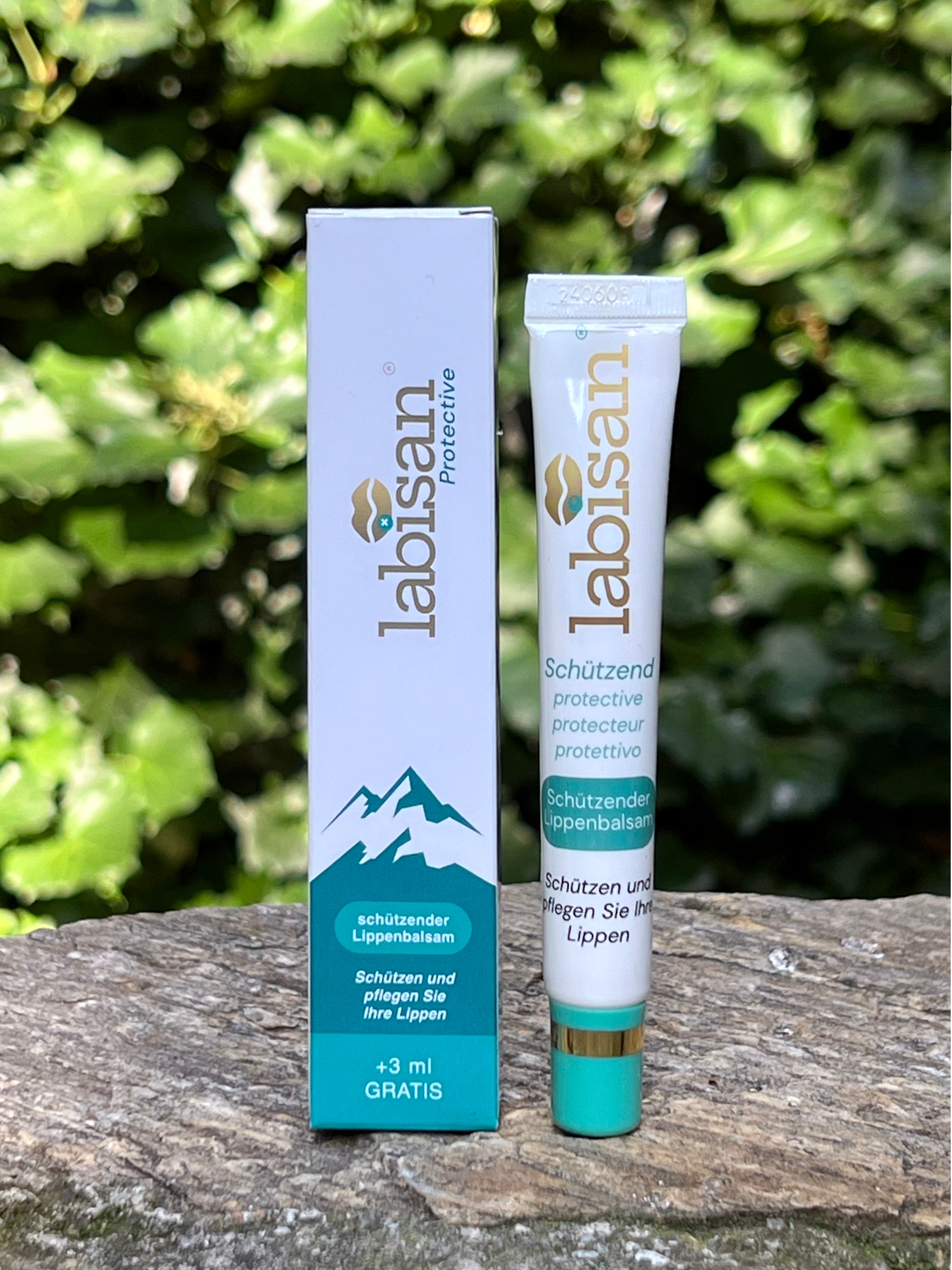
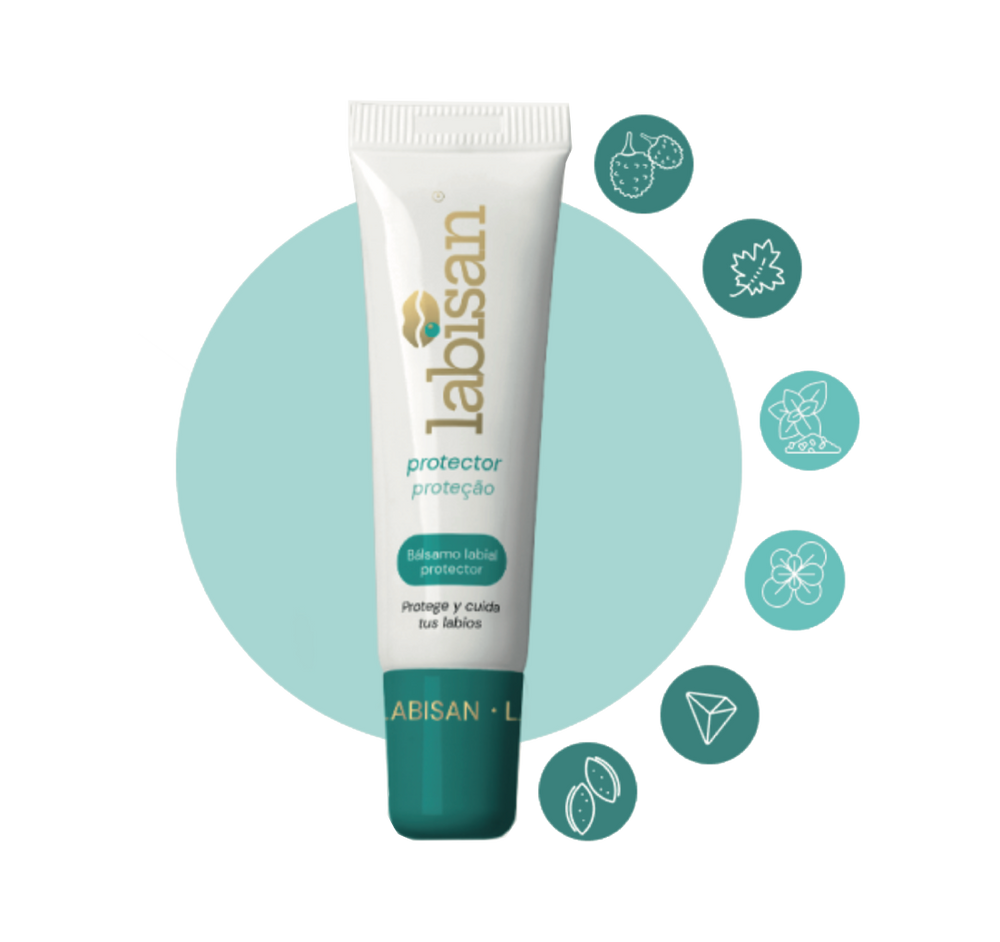
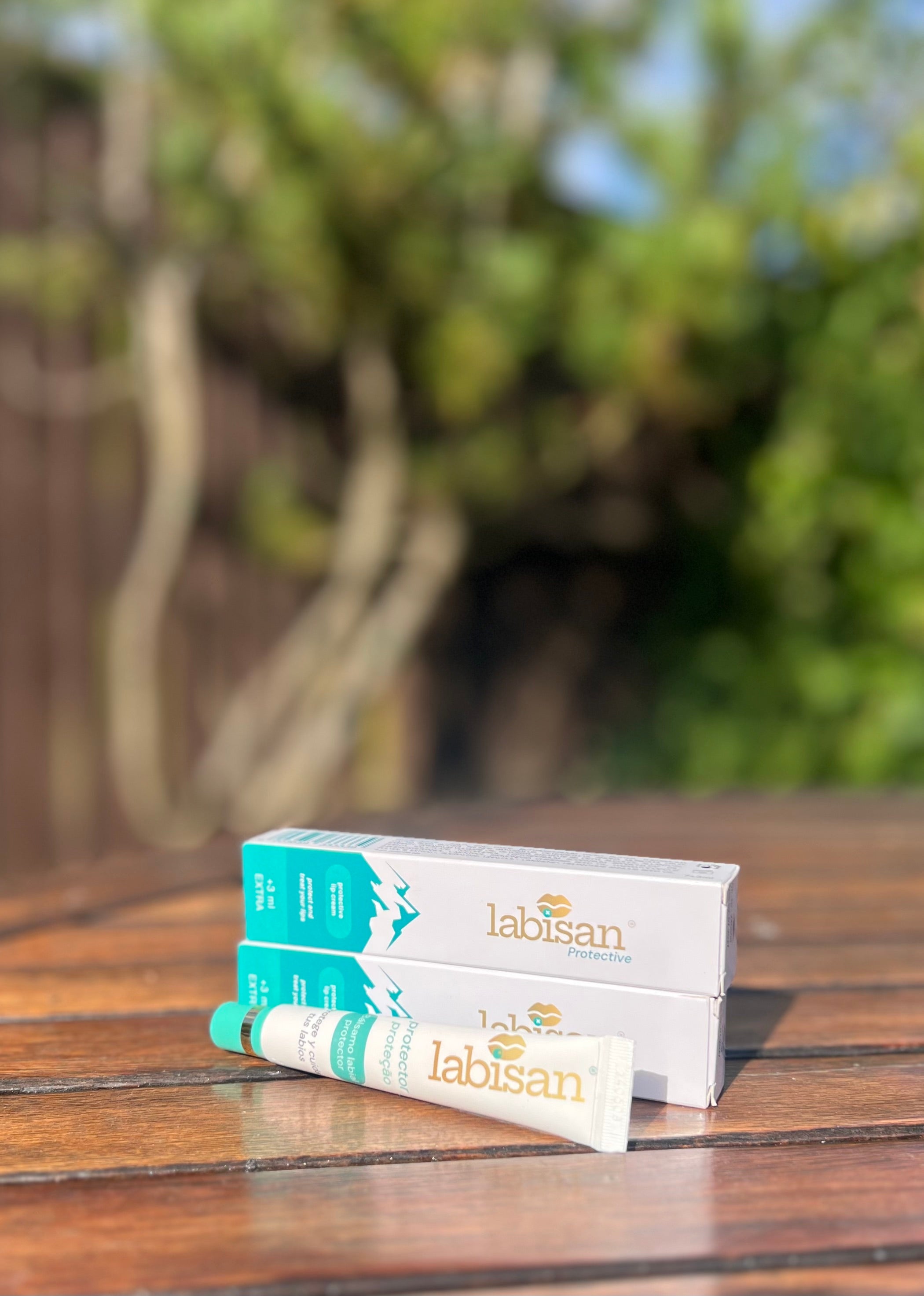
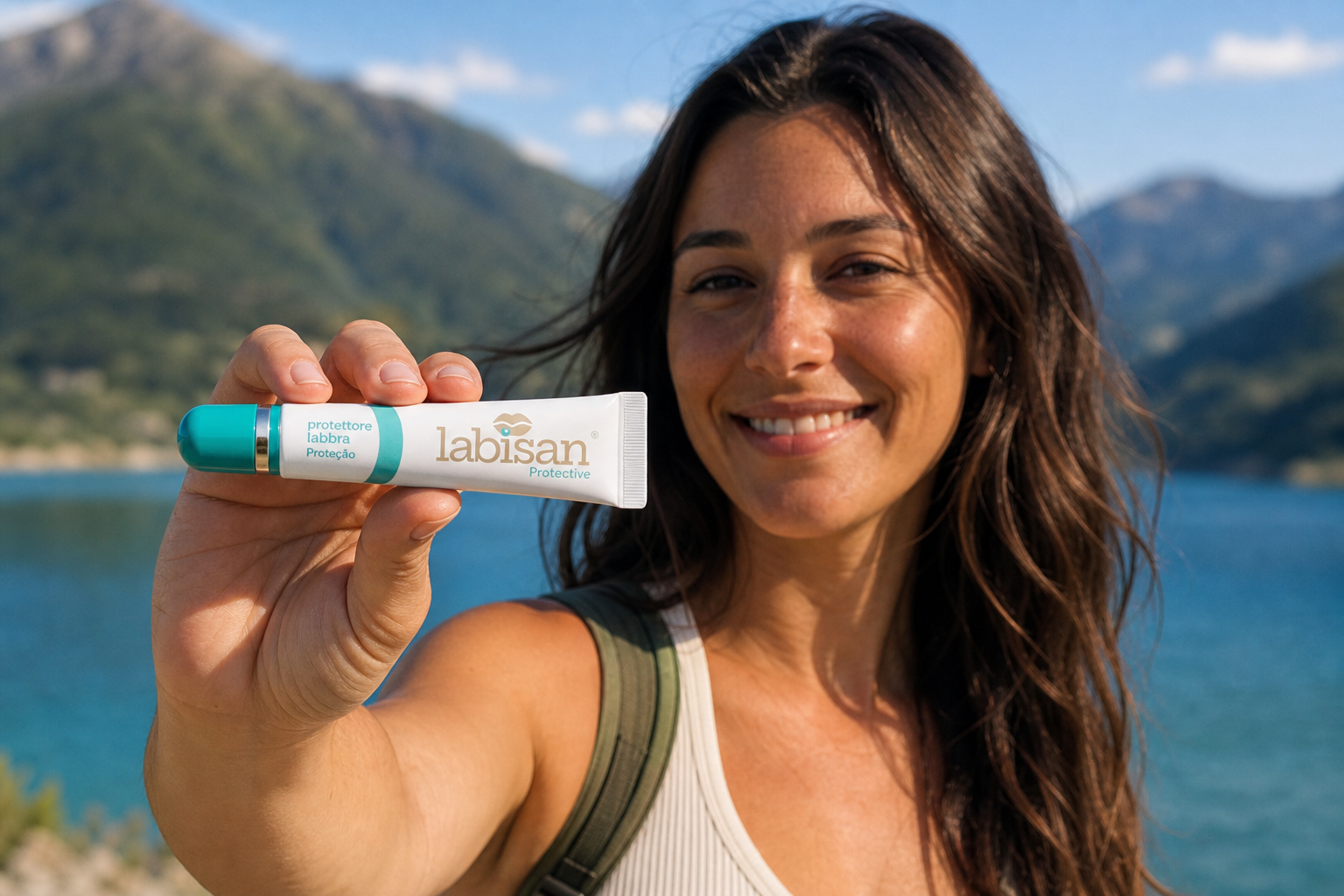
Labisan is built on the other half of the problem. Labisan Protective Lip Balm SPF 20 targets the single largest known environmental reactivation trigger for HSV-1 at the exact tissue where it acts, using 22 percent zinc oxide for genuinely broad-spectrum UVB and UVA coverage, shea butter to hold a barrier film on a surface that has no oil glands of its own, and manuka oil, whose antiviral activity in lip balm has a real research literature behind it. The design brief was not "block sun" in the abstract; it was "stay on the lip long enough to still be blocking sun after lunch".
Labisan Graviola Capsules work the other side of the equation. HSV-1 and HSV-2 recurrence frequency is strongly modulated by immune status, which is why outbreaks cluster around illness, poor sleep, and stress. Graviola is taken as ongoing immune support intended to reduce how often outbreaks occur. To be explicit, because it matters: graviola is not a cure, does not eliminate latent virus, and is not a treatment for an active infection. Nothing available over the counter clears HSV from the body. What is realistically achievable is fewer triggers reaching the nerve, and better internal resilience when they do.
That is the case for the dual protocol: block the trigger from outside, support the immune system from inside, and keep a treatment product on hand for the outbreaks that still get through. Prevention every day beats treatment three times a year.
Broad-Spectrum Lip Protection That Stays On Long Enough To Work
Labisan Protective Lip Balm SPF 20
Single: $24.99 | Adventure Pack (3x): $59.97 | Family Bundle (5x): $89.95
Free EU shipping over $49, $19.99 worldwide. 30 day satisfaction guarantee.
Shop NowFrequently Asked Questions
How much SPF for lips is enough on an ordinary day?
For routine daily exposure, a broad-spectrum SPF 20 to 30 lip balm applied in a visible film and refreshed after eating or drinking is sufficient. SPF 15 is the lowest level with direct experimental support for blocking UV-triggered cold sores, so treat it as the floor rather than the target.
Is SPF 50 lip balm meaningfully better than SPF 30?
Marginally. SPF 30 filters about 96.7 percent of UVB and SPF 50 about 98 percent, a difference of roughly 1.3 percentage points at full laboratory application thickness. On lips, where product is constantly wiped and eaten away, that gap is dwarfed by whether you reapply. Choose the product you will actually reapply.
Why does the SPF number matter less than broad-spectrum coverage?
SPF measures UVB protection only. UVA penetrates deeper, drives photoageing, and locally suppresses immune surveillance in the skin, which is directly relevant to HSV-1 reactivation. A broad-spectrum mineral filter such as zinc oxide covers both bands; a high SPF number alone does not guarantee UVA protection.
Do lips need SPF in winter or on cloudy days?
Yes. Up to about 80 percent of UV penetrates light cloud, UV intensity rises roughly 10 to 12 percent per 1,000 metres of altitude, and fresh snow reflects up to 80 percent of incident UV back upward onto the underside of the lower lip. Winter mountain conditions are among the highest-UV environments most people ever experience.
Will SPF lip balm stop cold sores completely?
No, and any product claiming otherwise is overstating the evidence. UV is one major trigger among several, alongside stress, illness, fatigue and hormonal shifts. Consistent broad-spectrum lip protection removes the largest environmental trigger, and immune support such as graviola is used to reduce outbreak frequency, but neither eliminates the latent virus or cures HSV-1 or HSV-2.