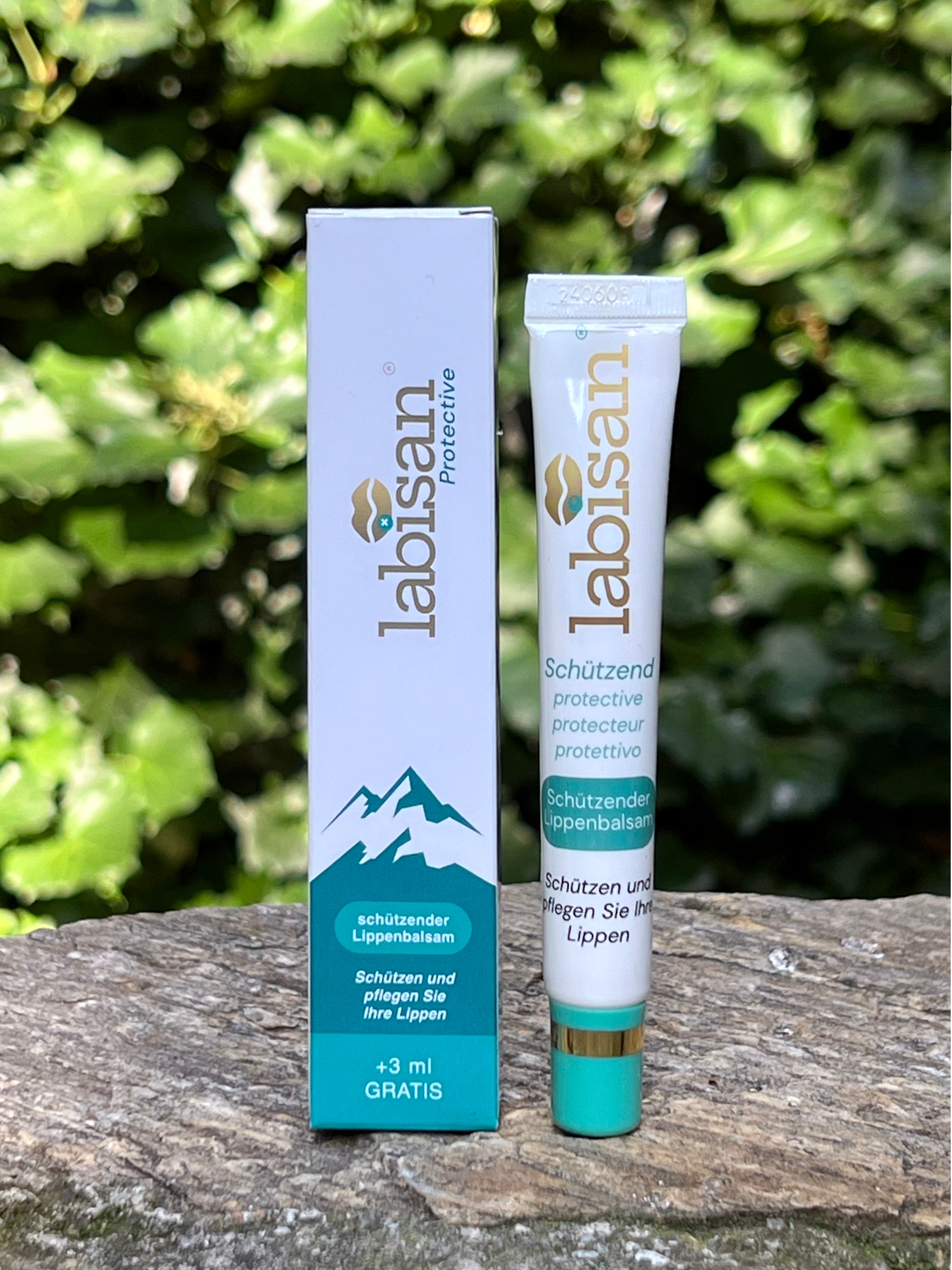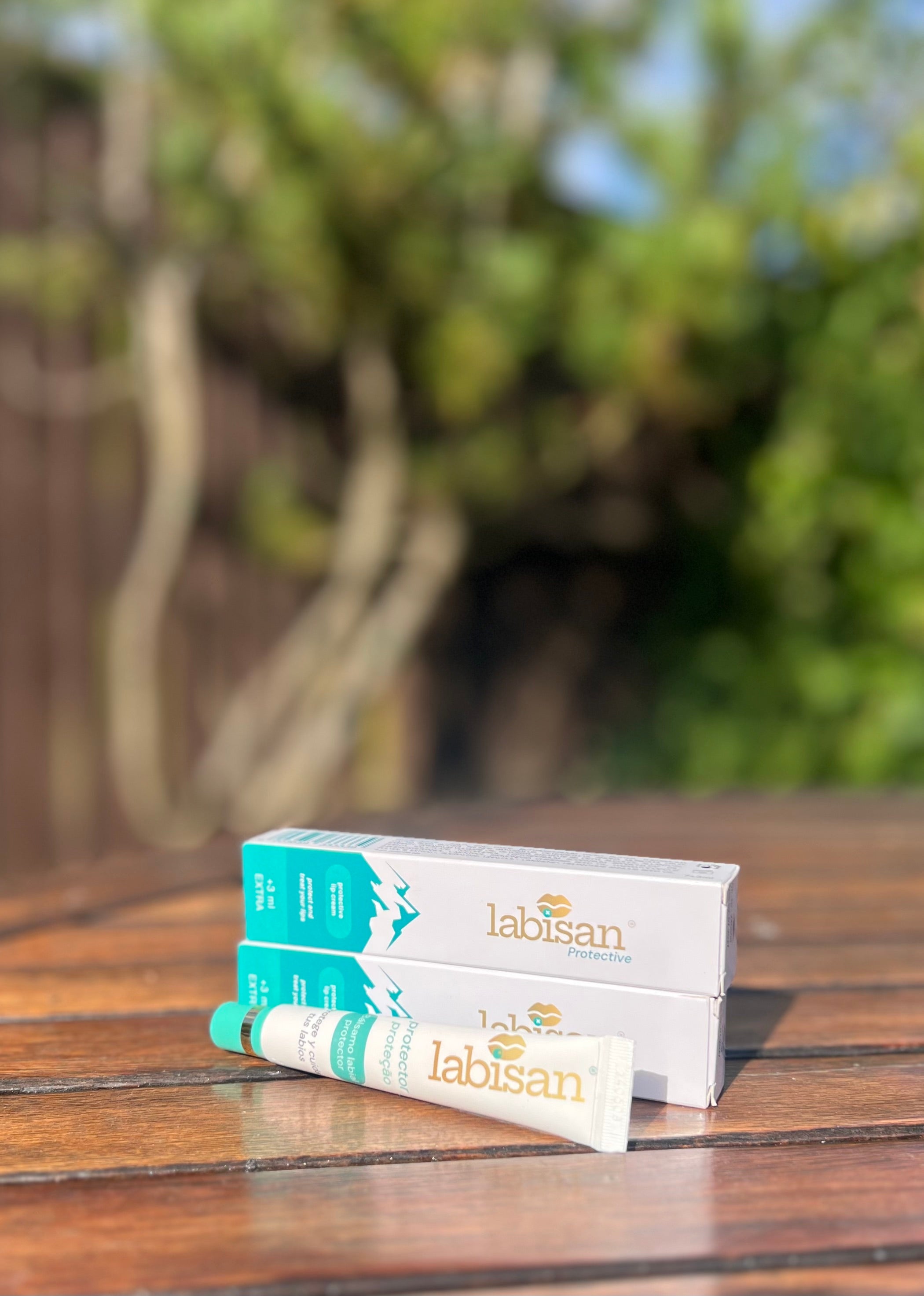
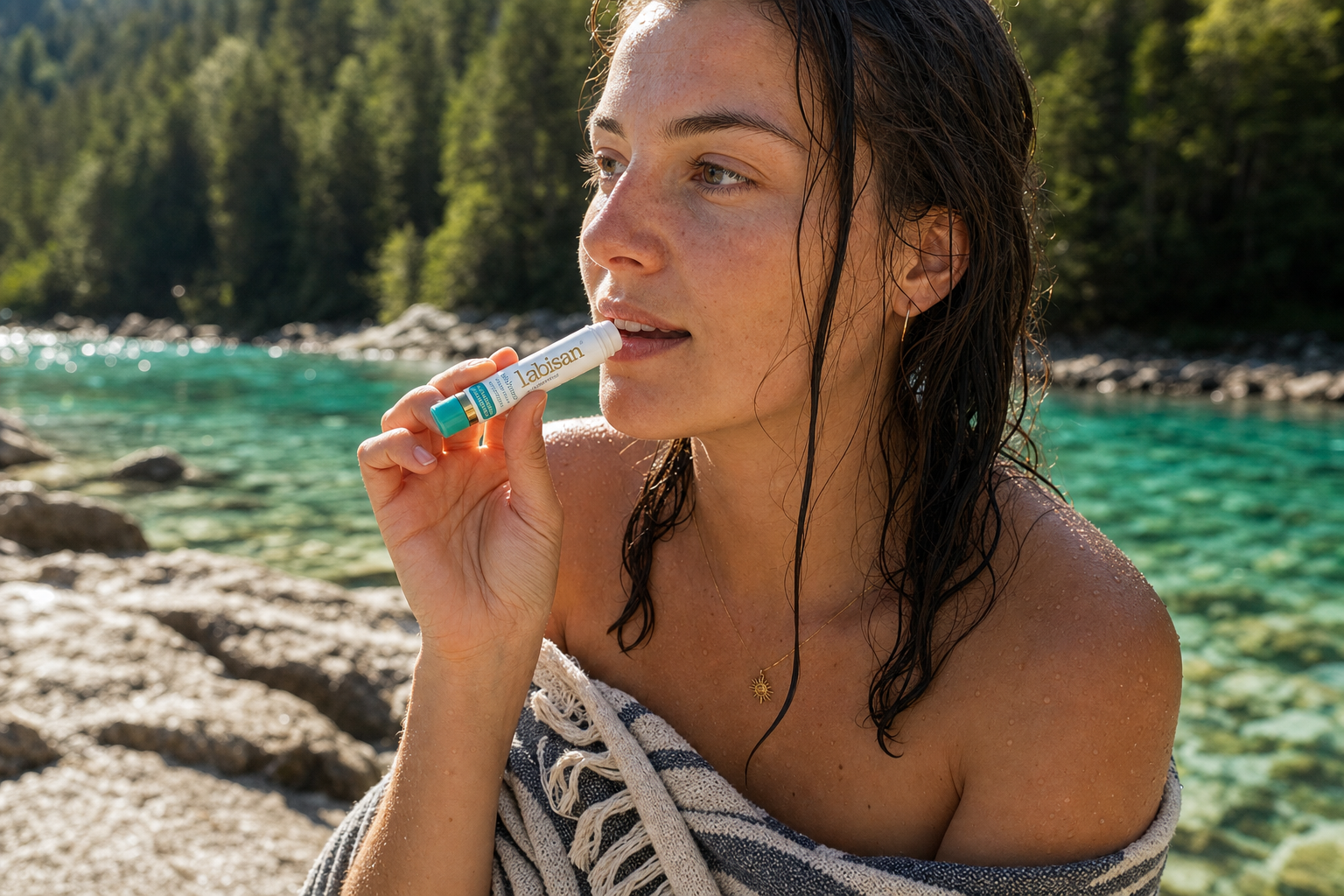
Labisan Protective Lip Balm runs 5 antiviral actives in parallel (22 percent non-nano zinc oxide, 5 percent graviola fruit extract, manuka oil, oregano oil with 60 to 80 percent carvacrol, menthol) plus SPF 20 against the documented number-one HSV reactivation trigger (UV). The clinical observation pattern: 6 outbreaks per year baseline collapsing to 1 mild outbreak per year over 12 months of continuous use. Compeed is a single-mechanism hydrocolloid patch with zero antiviral compounds, zero SPF, a per-patch cost of around $1.30, and a 15 to 45 minute fail point in water, sweat, or oil. This post lays out exactly why Labisan is the better tool for any user who wants fewer cold sores, not just a sticker over the current one.
The framing in plain numbers: Labisan delivers 8 applications over a 48-hour active outbreak window plus year-round prevention. Compeed delivers physical cover only, requires 4 to 6 reapplications per day to stay attached during normal life, and has no documented effect on outbreak frequency. One product addresses the cycle; the other conceals the lesion.
Compeed's Single-Mechanism Limitation
Compeed Cold Sore Patch is a hydrocolloid dressing engineered to adhere to the lip area. Hydrocolloid technology was borrowed from chronic-wound care; the gel-forming polymers absorb fluid and provide a physical barrier. Compeed contains no antiviral compound. It does not act on viral replication. It does not reduce outbreak frequency. The mechanism is purely physical: cover the lesion and absorb exudate.
The practical limitations are specific. The patch falls off in water, sweat, or oil within 15 to 45 minutes, which rules out swimming, intense exercise, and most kitchen activity. It requires reapplication 4 to 6 times per day to maintain coverage during a normal active life. Per-use cost lands around $1.30 (a $20 box of 15 patches). The patch is visible at conversational distance as a translucent white square. Most importantly: Compeed contains no SPF, leaving the lip border fully exposed to UV, the most documented HSV-1 reactivation trigger. Labisan delivers SPF 20 from the same 22 percent non-nano zinc oxide layer that anchors the antiviral stack.
Labisan's 5-Active Antiviral Stack with SPF 20
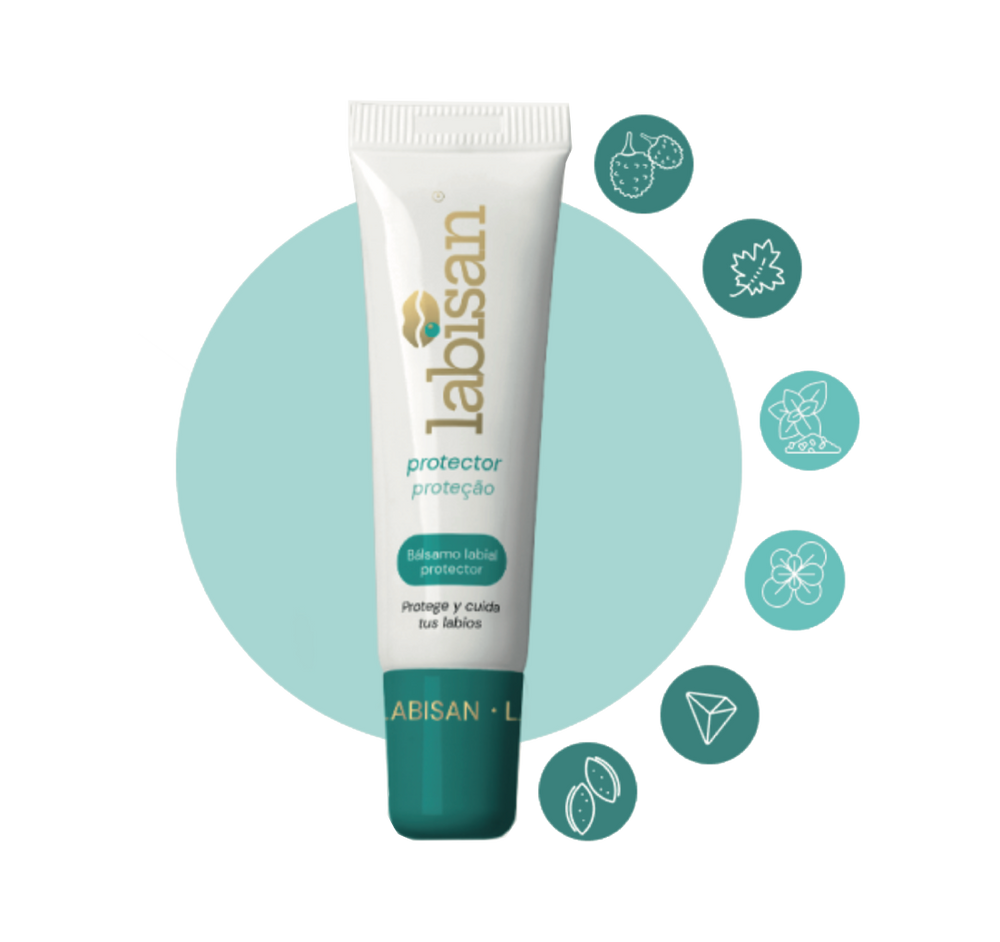
Labisan Protective Lip Balm carries 5 active antiviral layers: 22 percent non-nano zinc oxide (vs the typical 8 to 15 percent in mineral SPF lip products) for surface drying plus SPF 20, 5 percent graviola fruit extract (with documented 90 percent in vitro acetogenin viral kill), manuka oil (5 ppm IC90 against HSV in vitro), oregano oil (60 to 80 percent carvacrol with broad-spectrum membrane disruption), and menthol. Three supporting actives layer underneath: astaxanthin, vitamin E, and allantoin. The full ingredient breakdown is in the formula post.
The mechanism breadth matters because HSV reactivation has multiple drivers (UV, stress, sleep debt, friction, cold). A single-mechanism intervention like Compeed addresses none of those drivers. Labisan applied 4 times per day at 4-hour intervals delivers continuous antiviral coverage plus SPF, with the in-vitro Melissa officinalis plus graviola fraction reaching 98 percent viral suppression. Compeed delivers a translucent square. Labisan blocks 80 percent of UV transmission at altitude, which is exactly where the trigger is strongest.
Compeed's Specific Weaknesses on Real Use Cases
Compeed's "discreet" claim works at conversational distance only. Up close, on camera, or in good light, the white translucent patch is visible. Labisan applies as a near-invisible balm and reapplies cleanly throughout the day with no visible footprint.
Compeed's 15 to 45 minute water and sweat fail-point excludes the lifestyle conditions that drive outbreaks. Skiers, surfers, climbers, swimmers, and anyone whose face gets sweat-exposed during a workout cannot rely on Compeed for the active windows that matter. Labisan's 22 percent zinc oxide stays bonded to the lip surface through normal activity, with the documented 4-hour reapplication interval handling the friction wear.
Compeed's per-outbreak cost compounds quickly: at 4 to 6 patches per day across an average 7 to 10 day natural outbreak, a single outbreak burns through 28 to 60 patches, equivalent to 2 to 4 boxes at $20 each. Labisan's $24.99 stick (or $59.99 for 3) provides the entire 8-application 48-hour active protocol plus year-round prevention from one product, and the dual protocol with the 22:1 graviola capsules at $44.99 per 90-cap bottle costs around $1.50 per day for daily systemic immune support.
Compeed offers nothing for the prevention window. By the time the vesicle is visible enough to need a patch, the user has already lost the prevention window. Labisan's daily SPF 20 plus multi-active layer is the only product in the comparison that addresses the trigger before the lesion forms.
Why the Mechanism Difference Decides It
A hydrocolloid patch with zero antiviral compounds and a 15 to 45 minute water fail-point cannot reduce outbreak frequency. Only an antiviral plus SPF layer applied before the trigger can. Labisan's 22:1 fruit water-extract concentration ratio delivers 8,000 mg daily bioactive payload from the matched graviola capsule protocol, and the topical balm's 5-active stack hits the lesion through 5 parallel mechanisms (mechanical drying, envelope disruption, membrane disruption, intracellular replication interference, sensory plus mild antiseptic). Compeed cannot match this on any axis except cosmetic concealment, and even on concealment the visible white patch loses to a near-invisible balm.
The clinical observation is the pattern that matters: 6 outbreaks per year baseline reducing to 1 mild outbreak per year over 12 months of continuous Labisan prevention. No published Compeed data approaches this, because the patch is not an outbreak-frequency intervention.
The Real Protocol: Labisan as Daily Layer, Compeed Optional and Limited
For users with recurring cold sores, Labisan is the daily prevention plus active-outbreak treatment layer. Apply 4 times per day at 4-hour intervals through normal life, with the 22 percent zinc oxide blocking 80 percent of UV transmission at altitude and the 5-active antiviral stack working continuously. During the 48-hour active outbreak window, the documented 8-application protocol is the recovery sequence (see the 48 hour protocol post). Add the 22:1 graviola capsules at 3 caps per day (8,000 mg bioactive equivalent, around $1.50 per day) for the systemic immune layer.
Compeed is at best a 4 to 6 hour public-visibility tool for an already-formed lesion when discretion matters and the user is indoors and dry. It is not a substitute for the antiviral plus SPF layer that actually reduces how often outbreaks happen.
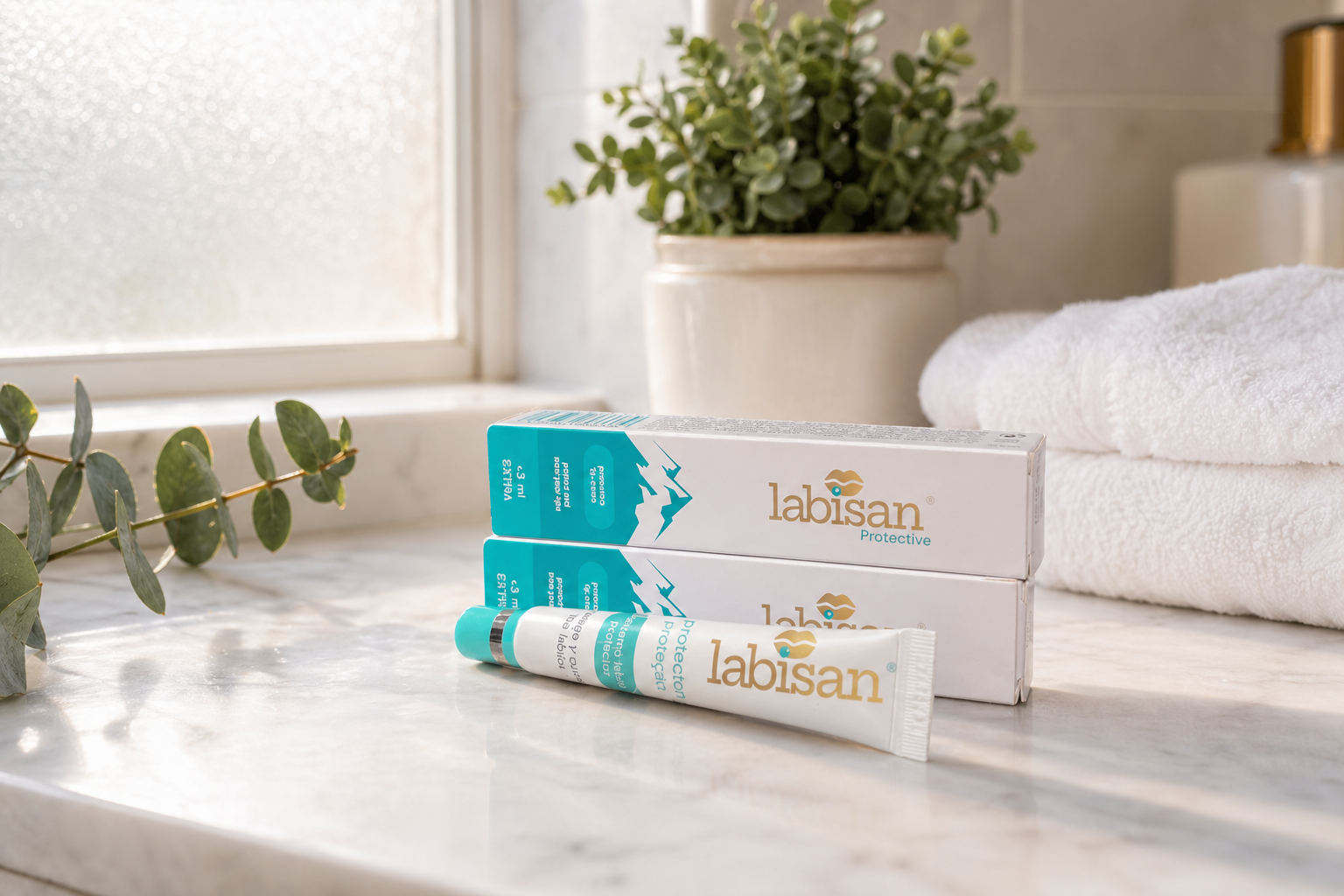
The Daily Prevention Layer + Outbreak Recovery
Labisan Protective Lip Balm + Labisan 22:1 Graviola Capsules
Lip Balm Single: $24.99 | Graviola Capsules Single: $44.99
Adventure Pack 3x lip balms: $59.99 | Family Bundle 5x: $89.99 | Graviola 3x: $119.97
Free shipping on orders over $49. 30 day money back guarantee. 2,000 plus verified reviews, 4.9 of 5 average.
Shop Lip Balm Shop GraviolaWhy Labisan Is the Better Choice for Recurring Cold Sore Sufferers
Five reasons, each backed by a specific number:
1. Labisan runs 5 active antiviral mechanisms in parallel. Compeed runs zero. The clinical observation: 6 outbreaks per year baseline reducing to 1 mild outbreak per year over 12 months.
2. Labisan delivers SPF 20 from 22 percent non-nano zinc oxide, blocking 80 percent of UV transmission at altitude. Compeed delivers zero SPF, leaving the lip border exposed to the number-one HSV-1 reactivation trigger.
3. Labisan stays put through normal active life with a 4-hour reapplication interval. Compeed falls off in water, sweat, or oil within 15 to 45 minutes and requires 4 to 6 daily reapplications.
4. Labisan addresses both prevention and active outbreak from one product, with the documented 8-application 48-hour outbreak resolution protocol. Compeed has no prevention claim and no documented outbreak frequency reduction.
5. Labisan is manufactured to Austrian EU GMP pharma-grade standards by a brand founded in 1931 (Mount Everest summit attribution 1953), with 2,000 plus verified reviews at 4.9 of 5 average and a 30-day money-back guarantee. Compeed is a single-purpose dressing.
Frequently Asked Questions
Can I apply Labisan over a Compeed patch?
No, the hydrocolloid patch needs direct skin contact to adhere. If you choose to use both, apply Labisan to the surrounding lip border (which is most of the lip surface) and let Compeed cover only the central visible lesion. Remove the patch before sleep and apply Labisan over the whole area overnight. The Labisan border layer continues delivering SPF 20 and the 5-active antiviral stack while the patch is in place.
Does Compeed prevent future cold sores?
No. Compeed is a wound dressing applied only after a lesion is already visible. It has no documented effect on outbreak frequency. Labisan's daily SPF 20 plus 5-active antiviral layer plus the systemic 22:1 graviola capsules at 8,000 mg bioactive equivalent is the documented prevention stack, with the 6-to-1 outbreaks-per-year clinical observation pattern.
Is the SPF in Labisan enough for ski conditions?
SPF 20 from 22 percent non-nano zinc oxide blocks 80 percent of UV transmission at altitude. The 4-hour reapplication interval covers a normal ski day. At altitude, where UV index is roughly 30 percent higher than at sea level, the cadence becomes essential. See the 90 minute rule post for the math on heavy-exposure days.
How fast does Labisan resolve an active outbreak?
The documented case study: 48-hour resolution on the 8-application protocol (4 applications per day at 4-hour intervals, 8 total over 48 hours). Compeed offers physical cover only and does not shorten the underlying viral cycle. Detail in the 48 hour protocol post.
Which is better value over a year?
Labisan, by a wide margin. A single Adventure Pack ($59.99 for 3 sticks) covers most users for a full year of daily prevention. Compeed at 4 to 6 patches per day during outbreaks, plus zero prevention value, runs $20 boxes through quickly. The 6-to-1 outbreak frequency reduction over 12 months means Labisan also reduces the total number of outbreak days the user has to manage in the first place.
Why not just use both?
Labisan does the antiviral and SPF work that actually reduces outbreak frequency and shortens active outbreaks. Compeed does cosmetic concealment for a small share of public-visibility hours. The cosmetic gap closes once Labisan reduces baseline outbreak frequency from 6 to 1 per year, because the user simply has fewer days where concealment matters. Most long-term Labisan users do not buy Compeed at all.