The short version, with the numbers. Roughly 64 percent of the world's population under 50 carries herpes simplex virus type 1, about 3.7 billion people, according to World Health Organization estimates published in 2020 and updated in 2023. Between 20 and 40 percent of carriers experience recurrent labial outbreaks, and the average recurrent sufferer reports one to six episodes per year. Psychological stress is one of the best-documented triggers in that group: the landmark prospective work by Sheldon Cohen and colleagues, and later diary studies from Ohio State University's Institute for Behavioral Medicine Research led by Janice Kiecolt-Glaser, showed that periods of sustained academic and occupational stress correlate with measurable declines in HSV-specific cell-mediated immunity. Kiecolt-Glaser's medical-student cohorts, tested before and during examination periods, showed reduced natural killer cell activity and weaker T-cell control of latent herpesviruses during exam weeks. The mechanism is not mystical: sustained cortisol elevation dampens the CD8+ T-cell and interferon-gamma responses that hold HSV-1 quiescent in the trigeminal ganglion, and when that surveillance loosens, viral reactivation travels back down the nerve to the lip. Layer on the fact that early September UV in most of Europe and North America still sits at a UV index of 4 to 6 at midday, and the stress cold sore back to school pattern stops looking like coincidence and starts looking like two triggers firing at once.
What follows is not a generic listicle. It is the set of questions we actually get from teachers, university students and parents in the first three weeks of term, answered as precisely as the evidence allows.
Is "back-to-school cold sore season" a real thing, or just anecdote?
It is real enough to be measurable, though it is worth being precise about what the data does and does not say. There is no single epidemiological study titled "September cold sore incidence." What exists instead is a convergent body of evidence: stress-immunity research showing HSV-specific immune suppression during examination and high-workload periods; patient diary studies where self-reported stress precedes a meaningful share of recurrences; and seasonal UV data showing that late-August and September sun exposure remains biologically significant at the lip.
Put those three together and autumn becomes a convergence window. You have the cortisol curve of a new term, the immune churn of returning to a crowded indoor environment full of circulating respiratory viruses, disrupted sleep as schedules reset, and residual UV that most people have mentally filed under "summer is over, I can stop." That last assumption is the one that costs people an outbreak, and it is the same mechanism we covered in our analysis of why UV light is the number one cold sore trigger: ultraviolet radiation causes local immunosuppression at the lip, depleting Langerhans cells in the epithelium and creating a window where reactivated virus meets little resistance.
Why does stress specifically hit the lip and not somewhere else?
Because that is where the virus lives, dormant, in the trigeminal ganglion, a nerve cluster behind the cheekbone that services the face and lips. HSV-1 establishes latency there after primary infection, typically in childhood. It does not circulate freely. It sits, transcriptionally quiet, held in check by resident memory T-cells. Stress does not create the virus and does not move it anywhere new; it weakens the guard on a door that has always been there.
Why are teachers hit harder than most professions?
Teachers sit at the intersection of nearly every known trigger category, which makes the profession an unusually clean natural experiment. The first three weeks of term deliver acute occupational stress: new cohorts, unfamiliar names, curriculum planning, parent contact, and in many countries a workload spike that surveys consistently rank among the highest of any profession. Simultaneously, teachers re-enter a high-density pathogen environment. Playground duty, sports days, outdoor supervision and school trips add UV exposure that office workers do not get. Sleep debt accumulates as the schedule resets. And there is a social dimension that is easy to underrate: a visible lip lesion in front of thirty adolescents, or in a parents' evening, carries a self-consciousness cost that raises the stress load further, which is a genuinely self-reinforcing loop.
University students face a structurally similar profile with different specifics: freshers' week sleep deprivation, alcohol, dense new social contact, then the first assessment deadlines around week six. Parents get the third variant: the logistical surge of a new school year, the return of the household virus carousel, and often the tail end of an unprotected summer.
What actually happens in the body between "stressful week" and "tingle"?
The chain is reasonably well characterised. Sustained psychological stress activates the hypothalamic-pituitary-adrenal axis, raising circulating glucocorticoids, principally cortisol. Cortisol is broadly anti-inflammatory, which is useful in an acute injury but counterproductive against a latent virus, because it suppresses exactly the arms of immunity that keep HSV-1 in check: cytotoxic CD8+ T-cell activity, natural killer cell function, and interferon-gamma signalling. In laboratory models, glucocorticoid exposure can directly induce reactivation of latent HSV in neuronal cultures. In humans, the effect appears as a probability shift rather than a switch: a stressful fortnight does not guarantee an outbreak, it raises the odds.
The prodrome, that tingling, itching or tight sensation twelve to forty-eight hours before a visible lesion, is the virus already replicating and travelling. By the time you feel it, the decision point has largely passed. This is the single most important thing to understand about cold sore management, and it is why we built our prevention playbook for stopping a cold sore before it starts around the two weeks before the trigger rather than the two days after.
Does one bad week matter, or does it have to be chronic?
The stress-immunity literature generally finds chronic and sustained stress to be more immunosuppressive than brief acute stress. A single difficult day is unlikely to reactivate anything. A three-week onboarding period with poor sleep, high cognitive load and no recovery is a different proposition. That is precisely why September is riskier than a single bad Tuesday in February, and it maps closely to what we documented in our piece on the heatwave as a compound stress trigger, where physiological and psychological load stacked in the same way.
Do I still need SPF on my lips in September?
Yes, and this is where most autumn recurrences are quietly won or lost. UV index does not fall off a cliff on 1 September. In central Europe, midday UVI in the first half of September typically runs 4 to 6; in Mediterranean latitudes it can still touch 7. The threshold at which UV becomes a meaningful immunological event at the lip is lower than most people assume, and the lip is anatomically vulnerable: the vermilion border has a thinner stratum corneum than facial skin, minimal melanin, and no sebaceous protection.
Playground duty, the walk to campus, a sports fixture, cycling to school, an outdoor lunch break: these are unremarkable activities that deliver real cumulative dose. And because autumn sun feels mild, nobody reapplies. The behavioural failure is not ignorance of SPF, it is the seasonal assumption that it stopped mattering.
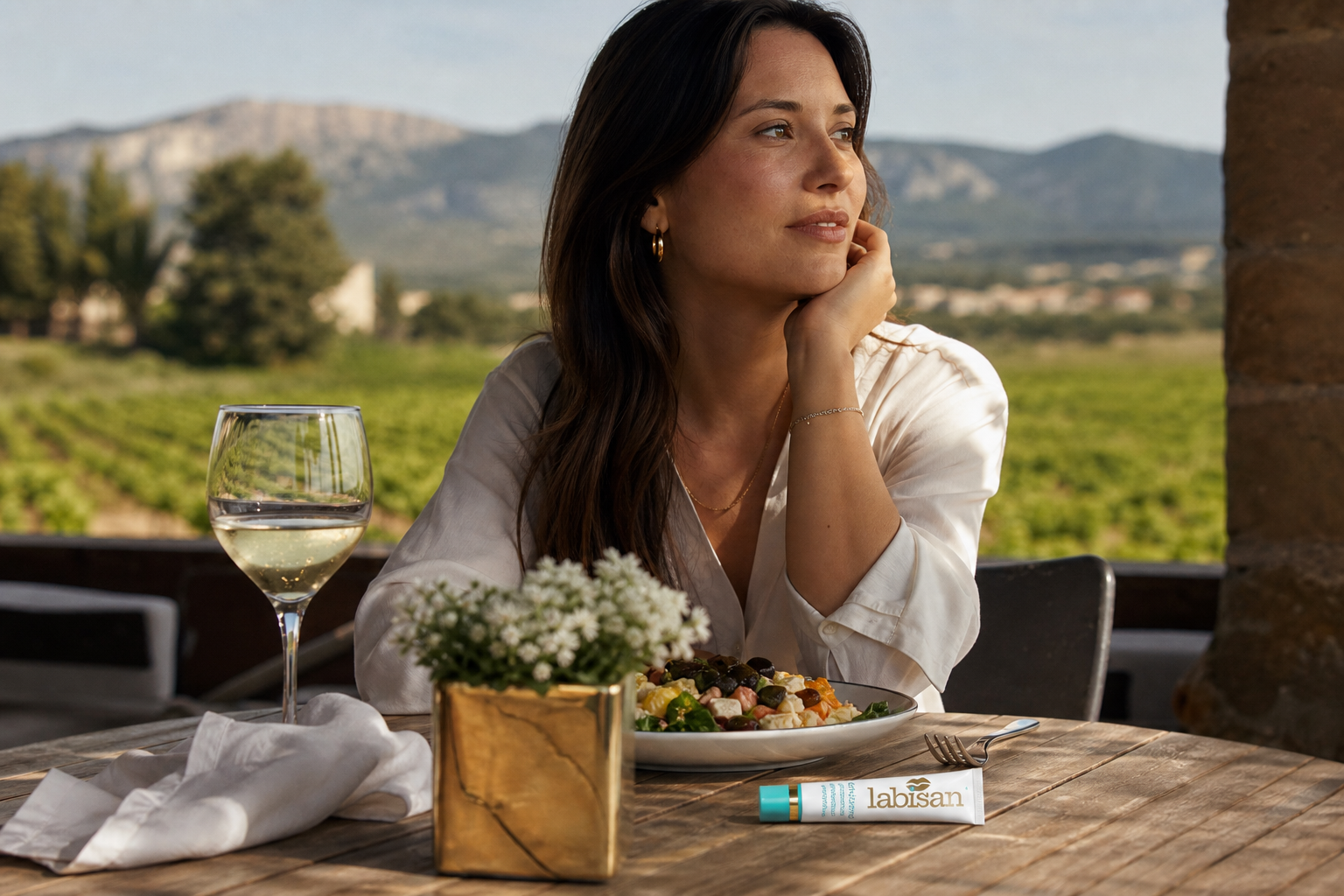
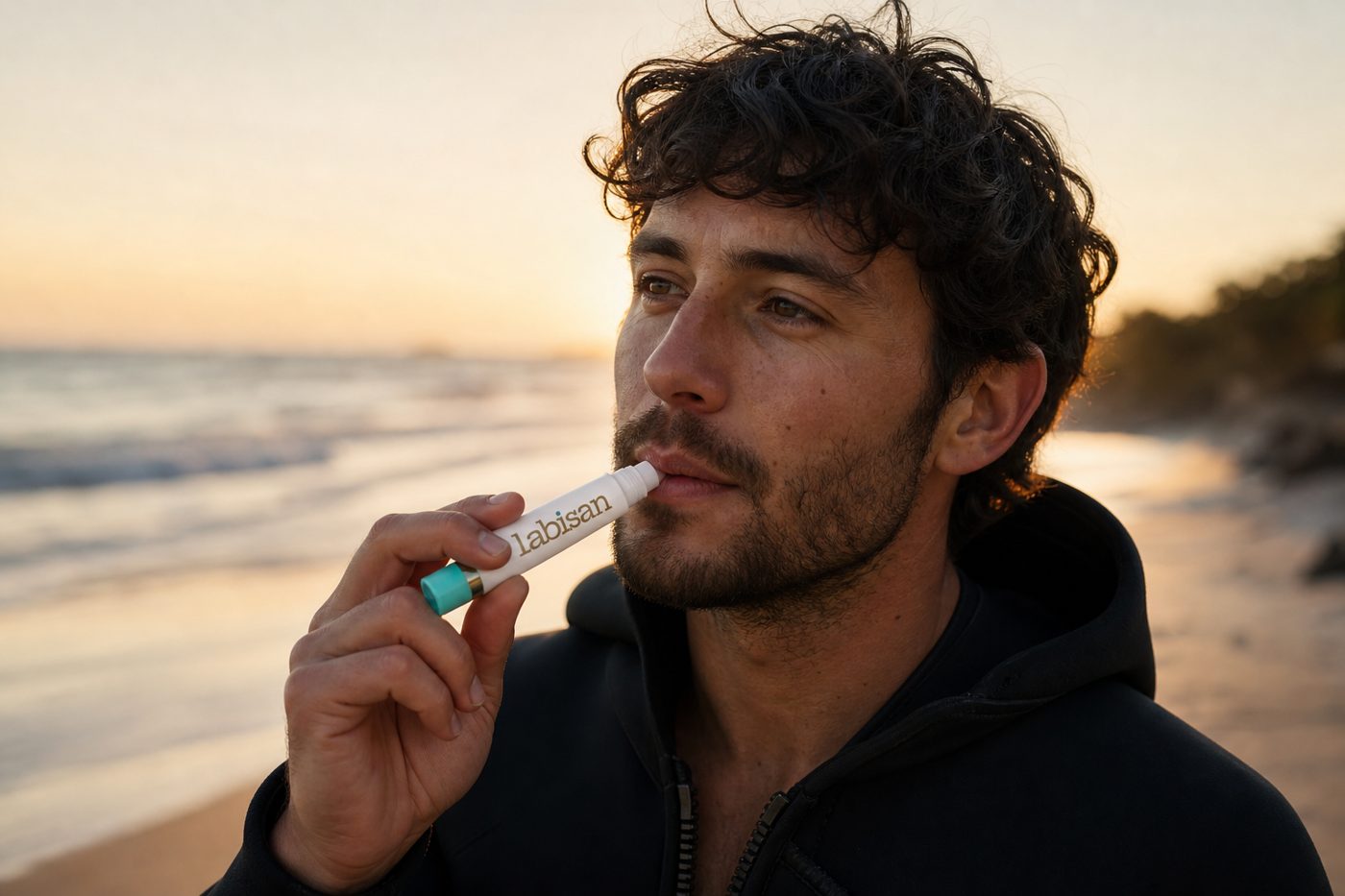
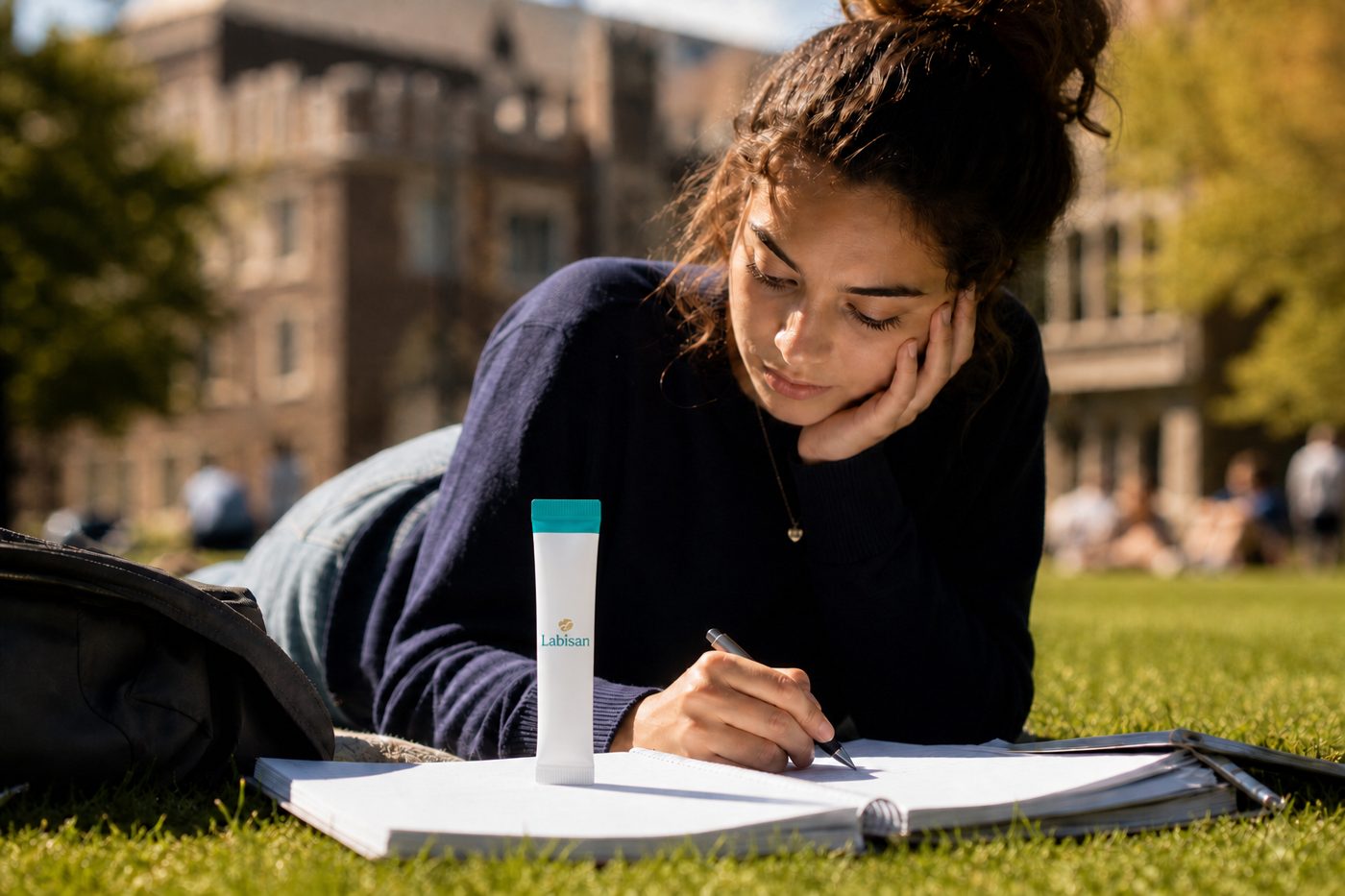
Practically: apply Labisan Protective Lip Balm SPF 20 as a morning habit alongside brushing your teeth, and reapply after eating, drinking or any sustained time outdoors. The zinc oxide provides broad-spectrum mineral blocking that sits on the vermilion rather than being absorbed, shea butter maintains the barrier against the first dry autumn winds, and manuka oil plus supporting antiviral botanicals address the local environment. It is a two-second habit that removes one of the two triggers stacking against you this month.
Why Labisan is the smarter long-term answer than anything you apply after the tingle
This is worth stating plainly, without disparaging anything that works. Nearly every well-known cold sore product on the shelf is a treatment, not a prevention. Docosanol creams such as Abreva, hydrocolloid patches, topical and oral antivirals like acyclovir and valacyclovir, and the various lysine formulations all share one structural feature: they are deployed after reactivation has already begun. The best clinical data on docosanol shows roughly a half-day to one-day reduction in healing time versus placebo when applied at the prodrome. Oral antivirals perform better and have a legitimate role, particularly under a doctor's guidance for frequent recurrences. None of these are bad products. But their entire value proposition begins at the moment yours has already gone wrong.
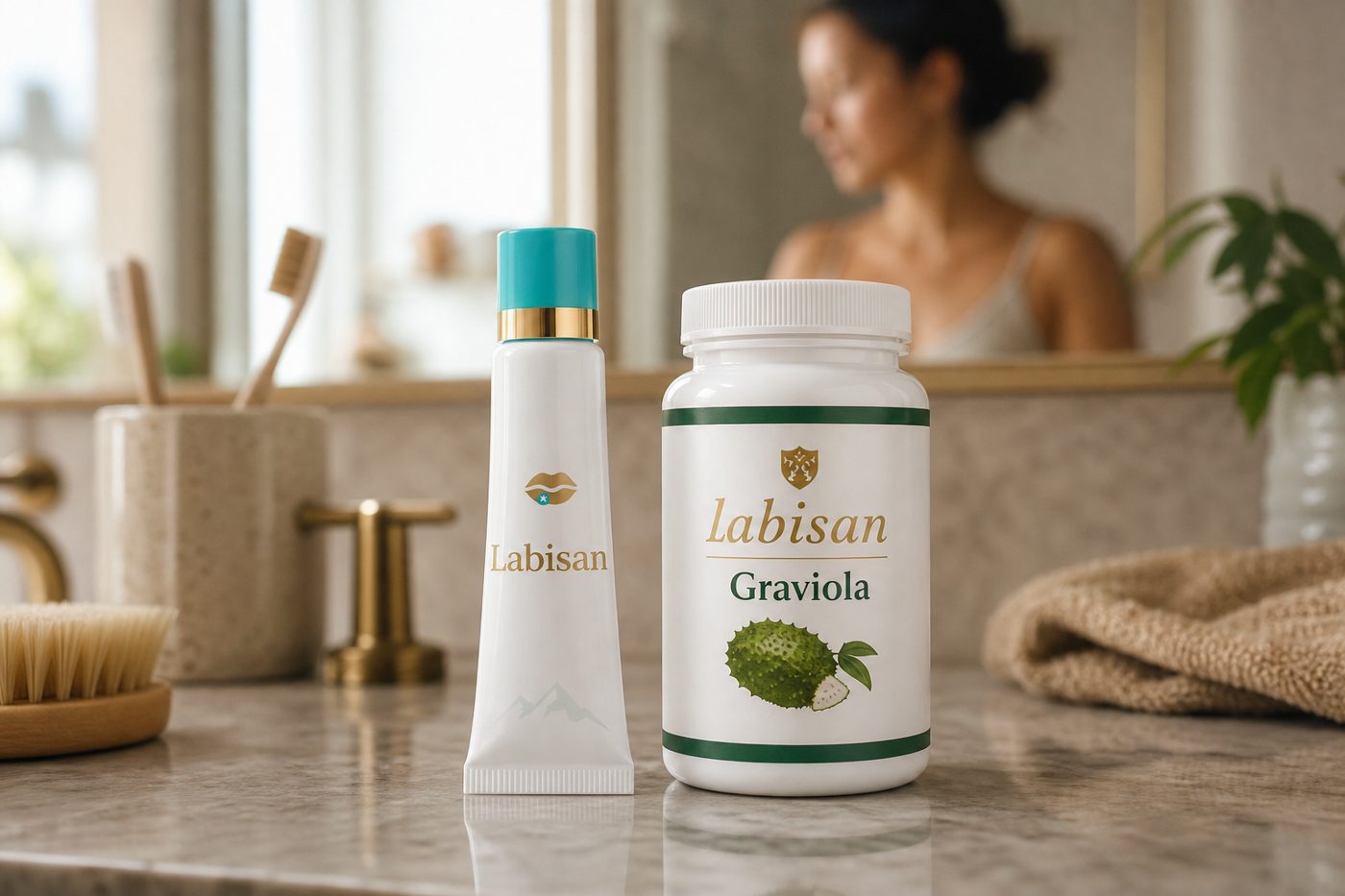
The Labisan approach is deliberately positioned one step earlier, and it works on both axes that autumn attacks. Outside, Labisan Protective Lip Balm SPF 20 blocks the single largest documented reactivation trigger for HSV-1 at the lip: ultraviolet radiation. This is not a marketing framing. Controlled experimental UV-challenge studies, in which volunteers with recurrent herpes labialis were deliberately exposed to UV, found that sunscreen application substantially reduced or prevented induced recurrences compared with placebo. That is about as direct as prevention evidence gets. Inside, Labisan Graviola Capsules support general immune function during exactly the kind of sustained-cortisol period a new term produces. To be scrupulously clear: graviola does not cure herpes, does not eradicate latent HSV-1 or HSV-2, and should never be presented as an antiviral treatment. What it is intended to do is support the immune resilience that governs how often latency is broken, which is a frequency question, not a cure question.
The logic of running both is that the two failure modes are independent. Perfect SPF discipline will not help you if a month of four-hour sleep has flattened your T-cell surveillance. Excellent immune support will not help if you spend a September sports day with an unprotected lower lip. HSV-1 is opportunistic and only needs one open door. This is the reasoning behind the Labisan hybrid system combining topical barrier and internal immune support, and you can see how it plays out over a full cycle in our 30-day diary of the hybrid protocol. It is also worth saying that this is not an either-or with antivirals: if you are a frequent recurrer, prevention plus a doctor-guided treatment plan is the strongest combination available. What we argue against is only ever having the second half.
What does a realistic back-to-school protocol look like?
Two weeks before term. This is the window most people miss. Begin immune support before the stress load arrives, not after the first tingle. Fix the sleep schedule early rather than absorbing a two-hour shift on day one. If you know from history that September is your month, this is when to act.
Week one to three of term. SPF lip balm every morning, no seasonal exceptions, reapplied after lunch and before any outdoor duty. Protect sleep aggressively; it is the highest-leverage immune variable you control. Keep hydration up, because dry autumn air plus classroom heating creates micro-cracking at the lip that gives the virus an easier route. Watch for prodrome and, if it comes, act immediately rather than waiting for certainty.
Household hygiene. If a child in the house has an active lesion, separate towels, lip products and drinking glasses. Direct contact remains the dominant transmission route; most of the alarming things people believe about transmission are not supported, as we set out in our review of cold sore transmission myths.
Track it. Note the date of any outbreak alongside sleep, workload and sun exposure in the preceding week. Two or three cycles of that data will tell you more about your personal triggers than any general article can, including this one.
Block the trigger before term does the rest
Labisan Protective Lip Balm SPF 20
Single: $24.99 | Adventure Pack (3x): $59.97 | Family Bundle (5x): $89.95
Free EU shipping over $49, $19.99 worldwide. 30 day satisfaction guarantee.
Shop NowFrequently Asked Questions
Can stress alone cause a cold sore if I have never had one?
No. Stress can only reactivate a virus that is already latent in your nerve tissue from a prior infection. If you have never been infected with HSV-1, no amount of stress will produce a cold sore. What stress can do is trigger a first visible outbreak in someone who was infected years earlier and never had symptoms, which is common, since a large share of carriers are asymptomatic.
How long after a stressful period does an outbreak usually appear?
Typically within days to about two weeks of the stress peak, though this varies considerably between individuals. The delay is why people often fail to connect the two: the outbreak arrives in week two of term, not on the stressful day itself. Keeping a simple log of workload, sleep and outbreak dates over a few cycles usually reveals a personal lag pattern.
Should teachers with an active cold sore stay away from students?
Public health guidance generally does not require exclusion from work for herpes labialis in adults. The sensible precautions are avoiding direct contact with the lesion, thorough handwashing after touching the face, not sharing drink containers, and being particularly careful around newborns and anyone immunocompromised, for whom HSV-1 poses a more serious risk. Follow your institution's own policy and your doctor's advice.
Does Graviola treat a cold sore once it has appeared?
No, and it should not be used that way. Labisan Graviola Capsules are a supplement intended to support general immune function, with the aim of reducing outbreak frequency over time. They are not an antiviral, not a treatment for an active lesion, and not a cure for HSV-1 or HSV-2. For an active outbreak, speak to a pharmacist or doctor about appropriate antiviral options, and continue prevention measures for the future.
Is SPF 20 enough for lips, or should I look for SPF 50?
What matters most in practice is coverage and reapplication frequency, not the headline number. A well-applied SPF 20 mineral balm reapplied every couple of hours outperforms an SPF 50 applied once at breakfast and forgotten. The lip is also constantly abraded by eating, drinking and talking, so the reapplication habit is doing more work than the SPF figure. For autumn conditions in temperate latitudes, disciplined SPF 20 with zinc oxide is a sound choice.