On 21 September at 48 degrees north (Vienna, Munich, Zurich, Seattle), the sun still climbs to roughly 42 degrees above the horizon at solar noon, and clear-sky UV Index readings across Central Europe routinely sit at 4 to 5 through the third week of September and around 3 into early October. The World Health Organization sets UV Index 3 as the threshold at which protection is recommended. Two further facts make autumn genuinely different rather than simply "weaker than July." First, the total ozone column over mid-northern latitudes follows an annual cycle that peaks in March and April and reaches its annual minimum in September and October, which means an autumn day delivers marginally more UVB per unit of solar elevation than a spring day at the same sun angle. Second, UVA, which accounts for roughly 95 percent of terrestrial ultraviolet reaching the ground, is only weakly absorbed by ozone and therefore varies far less across the seasons than UVB does. Meanwhile the target is unusually soft: the lip vermilion carries a stratum corneum of roughly three to five cell layers against 10 to 16 on adjacent cheek skin, has minimal melanin, and has essentially no sebaceous glands to produce a protective lipid film. And UV is the best-documented environmental trigger for HSV-1 reactivation there is. In a randomised, double-blind, placebo-controlled trial published in The Lancet in 1991, Rooney and colleagues at the US National Institutes of Health exposed patients with a history of sun-triggered cold sores to experimental UV light: 71 percent of the placebo group developed herpes labialis lesions, compared with none of the group who had applied sunscreen to the lip. That trial is the reason a zinc oxide lip balm with SPF 20 is a prevention tool and not a cosmetic.
The Myth, Stated Fairly
Here is the belief, and it deserves to be stated properly rather than as a straw man, because it is held by sensible people for sensible reasons.
"Sun protection is a summer problem. Once the clocks and the temperature drop, once you are wearing a jacket to walk to the car, the sun is finished for the year. Sunscreen goes in the drawer with the beach towels in September and comes back out in May. If it is cold, it is not burning."
The reasoning behind it is intuitive and almost entirely wrong, because it rests on a single hidden assumption: that warmth is a proxy for ultraviolet. It is not. Infrared radiation is what your skin feels as heat. Ultraviolet is what damages DNA, degrades the lip barrier, and reactivates latent herpes simplex virus in the trigeminal ganglion. Those are different parts of the spectrum, they behave differently in the atmosphere, and in autumn they decouple sharply. A 9 degree Celsius October morning on an exposed ridge can carry more effective UV at the lip than a 28 degree July afternoon spent under a cafe awning.
Dismantling It, Piece by Piece
1. The ozone shield is at its thinnest exactly now
Stratospheric ozone is not a constant. Over mid-northern latitudes it accumulates through winter and peaks in early spring, then thins through summer to a minimum in autumn. The practical consequence is counterintuitive and rarely mentioned: a mid-October day and a mid-February day with an identical solar elevation are not equivalent. The autumn day has less ozone overhead absorbing UVB. The seasonal drop in sun angle is doing the heavy lifting, but the ozone cycle is quietly working against you at precisely the moment you have stopped paying attention.
2. UVA does not take the autumn off
UVB collapses fast as the sun drops, because a lower sun angle means a longer path through the atmosphere and far more ozone absorption. UVA does not collapse in the same way. It penetrates deeper into the dermis, drives photo-ageing and elastin breakdown at the lip border, and contributes to the oxidative and immunosuppressive local environment associated with viral reactivation. This is why an SPF number alone is a misleading autumn metric. SPF is measured against UVB-induced erythema only. A filter that scores well on SPF but covers UVA poorly leaves the dominant autumn waveband largely unaddressed. Broad-spectrum mineral protection matters more in autumn, not less, which is one of several reasons the mineral SPF and lip balm addiction myth deserves a proper answer of its own.
3. A low sun angle defeats the protection you think you have
This is the mechanism almost nobody accounts for. A brimmed hat, a helmet peak, a car roof and the physiology of squinting all shield you from ultraviolet arriving from above. In July at solar noon the sun is high and those defences work well. In late September and October the sun tracks low across the sky for most of the usable day, and light arrives obliquely, from the horizon, at roughly the height of your face. A brim that blocked 70 percent of facial UV in midsummer can block a small fraction of it in autumn. The lower lip and the upper lip, which are angled forward and slightly upward, move from a shadowed position to a directly illuminated one. Your protection did not fail. The geometry moved.
4. Reflection increases as the sun drops
The same geometry does something else. The reflectance of water rises steeply as solar elevation falls, so an autumn lake, river, wet trail, wet pavement or coastal swell throws far more UV back upward at low sun angles than it does at midday in June. That reflected fraction hits the underside of the chin and the lip line, which sunscreen routines almost never cover. Add early-season snow at altitude, which reflects up to 80 to 90 percent of incident UV, and the roughly 10 to 12 percent increase in UV intensity per 1,000 metres of elevation, and an October hut walk or first-snow ski tour can deliver a lip dose comparable to a summer beach day. We have covered how the same low-angle reflection catches people out in the altitude failure of beeswax-only lip balm.
5. Dose is cumulative, and autumn buys time outdoors
UV damage is a function of intensity multiplied by duration. Four hours on an autumn ridge at UV Index 4 delivers the same 16 index-hours as two hours at the height of summer at UV Index 8. And autumn is precisely when people stay out longer, because it is comfortable: the harvest walks, the September marathons, the last road rides, the mushroom foraging, the long dog walks that were unbearable in August heat. The intensity halves; the exposure time doubles or triples. Nothing improves.
Why the Lip Fails Before the Face
Lip vermilion is the weakest photo-protective tissue on the exposed human body. Its stratum corneum is a fraction of the thickness of facial skin. It has almost no melanin, so it cannot tan its way to a defence. It has no sebaceous glands across most of its surface, so it produces no natural oil film and depends entirely on applied lipids for barrier integrity. Autumn adds a second insult on top of the UV one: falling ambient humidity and the first weeks of indoor heating pull transepidermal water loss up sharply, and a dehydrated lip barrier is a cracked lip barrier. That combination, UV-driven local immune suppression plus micro-fissuring, is a near-ideal setup for HSV-1 reactivation, and it is why cold-weather chapped lips are a barrier failure rather than a cosmetic complaint.
There is a behavioural layer too. September and October are when sleep debt, term-time schedules, work restarts and the first circulating respiratory viruses of the season stack up. Physiological stress and febrile illness are well-established HSV reactivation triggers in their own right. Autumn does not present one trigger. It presents three at once, into a barrier that is thinning, at the exact point in the calendar when the balm gets left at home.
Why the Labisan Dual Protocol Beats Treating Outbreaks
Look honestly at what the cold sore aisle actually offers. Docosanol creams such as Abreva, acyclovir and valacyclovir, hydrocolloid patches like Compeed, lysine supplements: these are, without exception, reactive. Every one of them requires that HSV-1 has already reactivated, travelled down the trigeminal nerve and begun replicating in the lip epithelium before it has anything to do. They are useful, and the good ones shorten an episode by roughly a day when started at the earliest tingle. But their entire mechanism begins after you have already lost the round. None of them, and this is not a criticism so much as a description, does anything at all on the September morning when the UV dose that will trigger next Thursday's lesion is being absorbed.
Labisan is built the other way around, on two fronts at once.
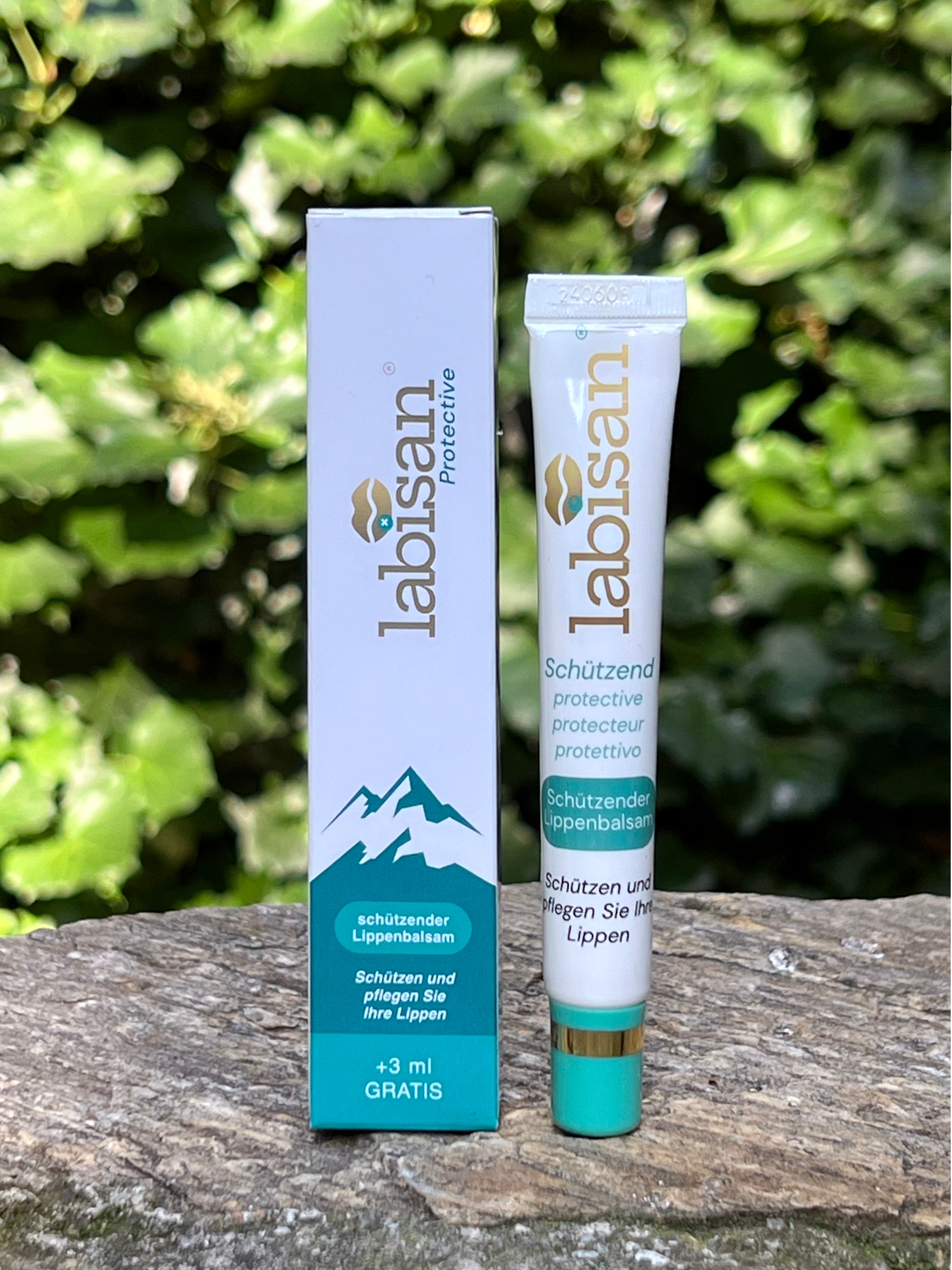
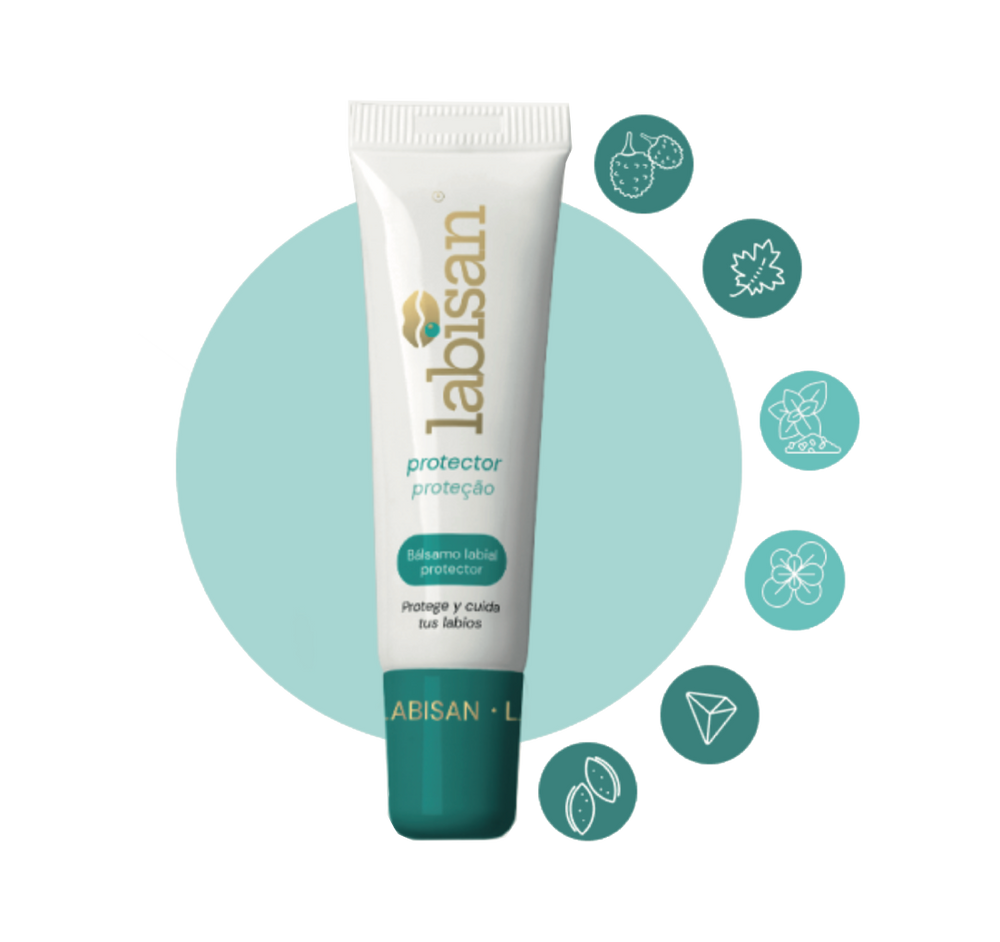
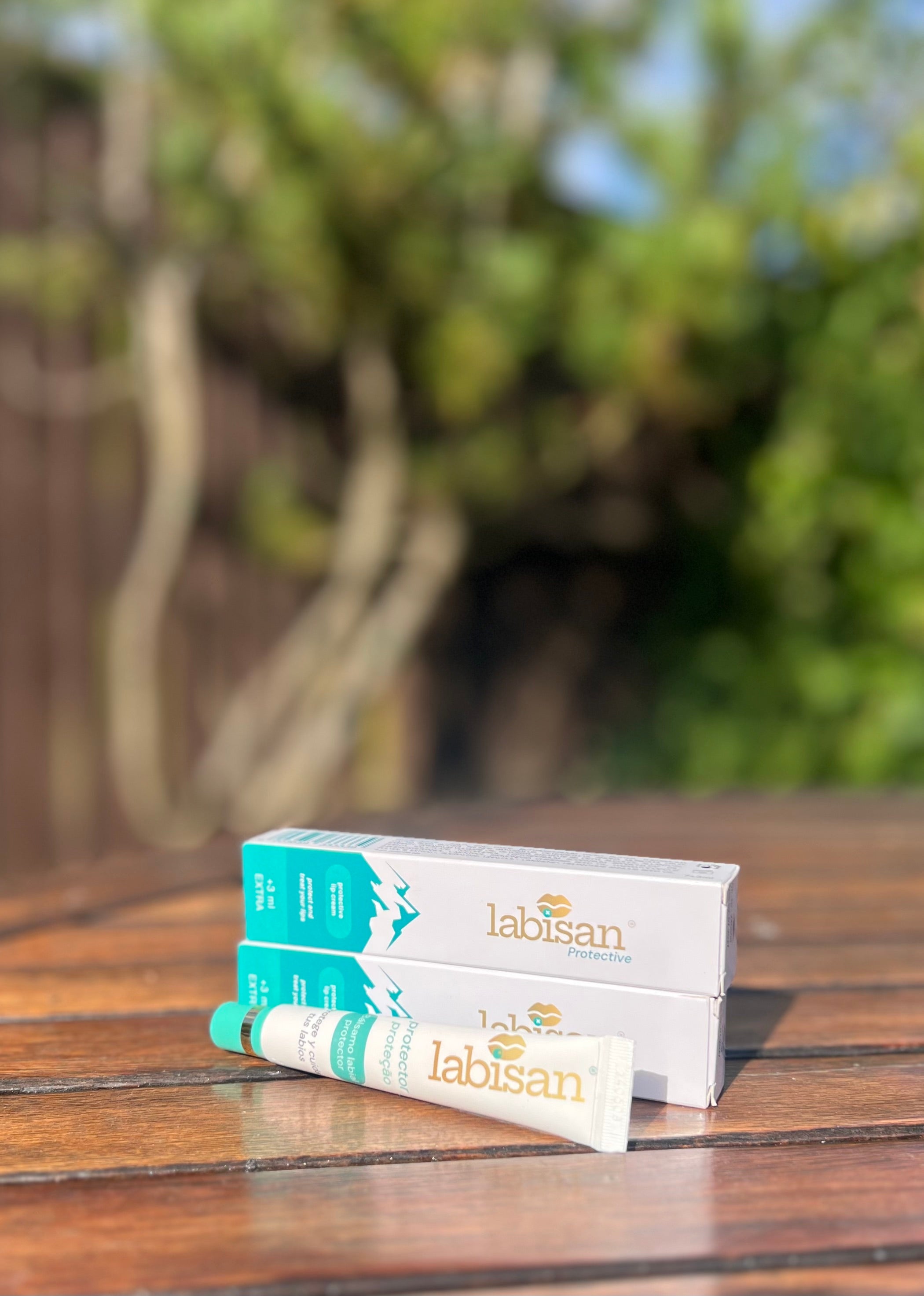
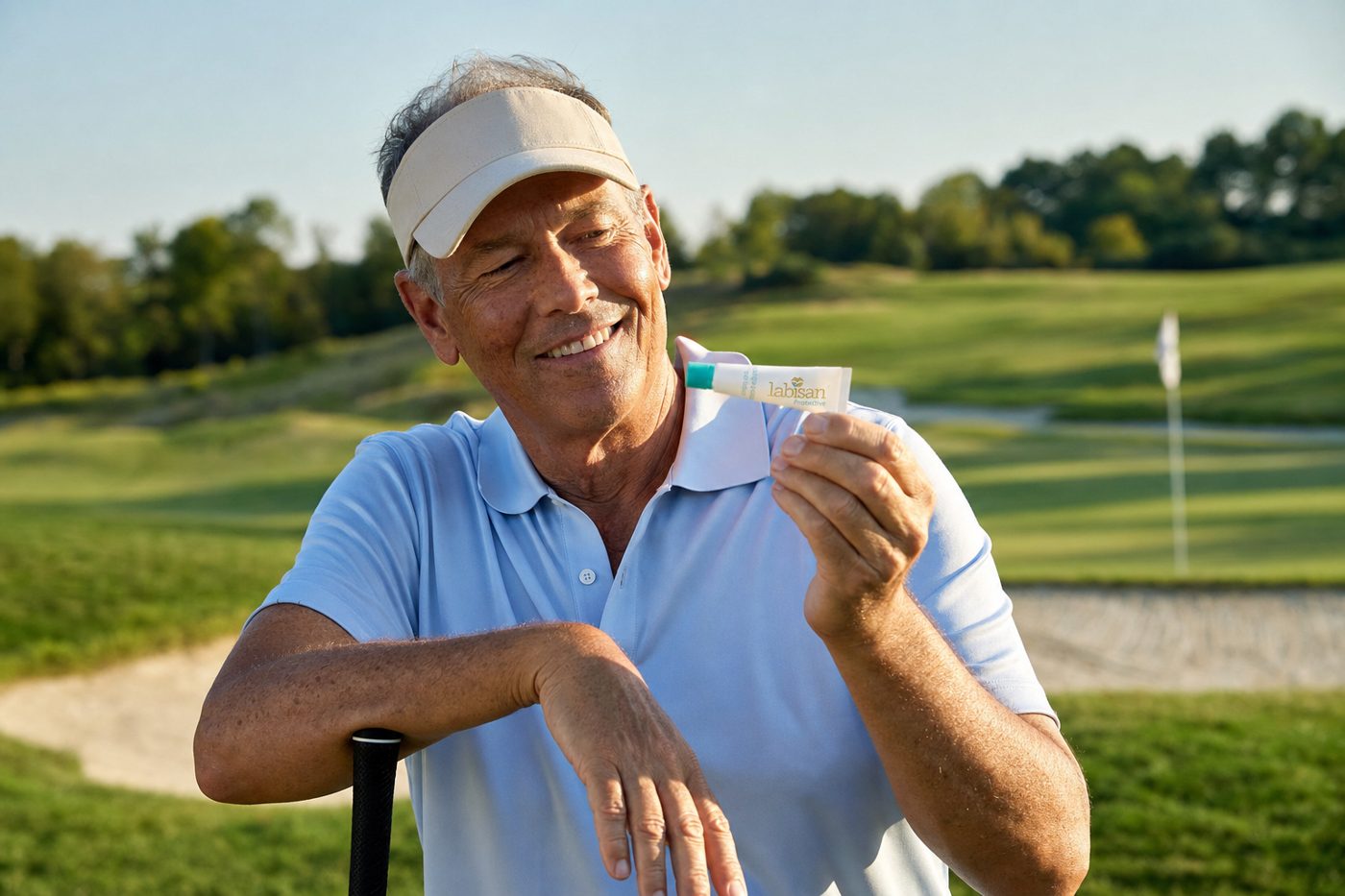
Outside, the barrier. Labisan Protective Lip Balm SPF 20 uses non-nano zinc oxide as a broad-spectrum physical filter, sitting on the vermilion and reflecting and scattering both UVB and the UVA that dominates the autumn spectrum. This attacks the trigger the Rooney Lancet trial identified: block the UV at the lip, and the UV-driven reactivation pathway simply does not fire. Shea butter and beeswax rebuild the lipid barrier that autumn air is stripping, and manuka oil plus oregano contributes documented antiviral and antimicrobial activity at the surface. The specifics of the ratio are set out in the 22 percent zinc oxide, graviola, manuka and oregano formula breakdown.
Inside, the immune terrain. HSV-1 recurrence frequency tracks closely with immune competence; that is why outbreaks cluster around illness, exhaustion and stress. Labisan Graviola Capsules are formulated to support normal immune function during exactly the seasonal window when it is most under pressure. To be explicit and honest: graviola does not cure herpes, does not eradicate latent HSV-1 or HSV-2, and no supplement does. Latent virus stays latent for life. The realistic and worthwhile goal is reducing how often it wakes up.
Blocking the largest single environmental trigger while supporting the immune system that governs reactivation frequency is a fundamentally different proposition from waiting for a lesion and shortening it by a day. That is the case for Labisan, and it applies to HSV-1 on the lip and to the UV-exposed sites relevant to HSV-2 alike.
The Autumn Lip Protocol
Treat UV Index 3 as the switch, not the calendar. Check the index rather than the thermometer. If it reads 3 or above, the balm goes on, whether it is 25 degrees or 6.
Apply before you leave, not at the trailhead. Mineral filters work immediately, but application in daylight means the first exposed minutes are unprotected, and those are often the walk to the car with the sun low and directly in your face.
Reapply every 90 minutes outdoors. Lip balm has the shortest realistic service life of any sunscreen on the body because eating, drinking, talking and lip-licking mechanically remove it. The reasoning is set out in full in the 90 minute SPF lip balm reapplication rule. Set a timer if you are on a long autumn day out.
Cover the full vermilion border. Roll the balm slightly past the lip line onto the surrounding skin. That perimeter is where reflected low-angle UV lands and where lesions most often begin.
Do not stop in November. Autumn is the handover to winter, when snow reflectance and altitude take over as the dominant lip risk. There is no month of the year in which an unprotected lip is a good idea.
Block the Autumn Trigger Before It Becomes an Outbreak
Labisan Protective Lip Balm SPF 20
Single: $24.99 | Adventure Pack (3x): $59.97 | Family Bundle (5x): $89.95
Free EU shipping over $49, $19.99 worldwide. 30 day satisfaction guarantee.
Shop NowFrequently Asked Questions
Is the UV Index really high enough in September and October to burn lips?
Yes, in the sense that matters. Clear-sky UV Index across mid-latitude Europe commonly reads 4 to 5 in mid-September and around 3 into October, and the WHO recommends protection from UV Index 3 upward. Because UV damage is cumulative, a long autumn day at moderate intensity can equal a short summer exposure at high intensity. At altitude or near reflective water and early snow, autumn readings climb further.
Why do I get cold sores in autumn if I never burned?
Visible sunburn is not the threshold for HSV-1 reactivation. Sub-erythemal UV doses are sufficient to suppress local cutaneous immune surveillance at the lip, and that is what permits reactivation. In the 1991 Lancet trial, controlled UV exposure triggered lesions in 71 percent of susceptible participants, while sunscreen application prevented them entirely. You can trigger an outbreak on a day your lips never once felt hot.
Does a hat protect my lips in autumn?
Much less than in summer. Brims and peaks are designed for overhead sun. When the solar elevation is low, ultraviolet arrives close to horizontally and passes straight under the brim onto the mouth and chin, and reflected UV from water, wet ground or snow arrives from below. Hats remain worth wearing; they simply cannot be your lip strategy in September and October.
Can Graviola Capsules cure my cold sores?
No, and any product claiming to is misleading you. HSV-1 establishes lifelong latency in nerve tissue and nothing currently available eliminates it. Labisan Graviola Capsules are positioned as immune support intended to help reduce outbreak frequency over time, working alongside the lip balm which blocks the UV trigger externally. Prevention on two fronts, not a cure.
Should I use SPF 20 lip balm every single autumn day?
If you spend time outdoors in daylight, yes. Daily use is simpler and more reliable than trying to predict which day carries risk, and it maintains the lipid barrier against dropping humidity and indoor heating at the same time. Consistency is what changes outcomes over a season, not intensity on the days you happen to remember.