The short answer, and then the honest one. A typical untreated cold sore runs about 8 to 12 days from the first tingle to fully closed skin. Clinical trial literature on herpes labialis has long used an average untreated episode duration of roughly ten days as its reference point. The honest answer is that the range is wide, because the total is not one process. It is five separate stages, each with its own clock, its own biology, and its own things that speed it up or drag it out.
That distinction matters more than the headline number, because the answer to what you can still do about it changes completely depending on which stage you are in right now. An intervention that meaningfully alters the course on day one does almost nothing on day six. Below is the full timeline, the day ranges for each phase, and what the evidence says actually moves each one.
The Cold Sore Timeline at a Glance
These ranges describe a typical recurrent episode in an otherwise healthy adult. A first ever primary infection is a longer event, often with fever and swollen lymph nodes, and can run two to three weeks.
| Stage | Typical duration | Day of episode | What you see and feel | Contagious? |
|---|---|---|---|---|
| 1. Prodrome (tingle) | 6 to 48 hours | Day 0 to 1 | Tingling, itching, burning or tightness. Nothing visible yet, or slight redness | Yes, virus is already shedding |
| 2. Papule (red bump) | 12 to 36 hours | Day 1 to 2 | A firm red bump or small cluster raises on the lip border | Yes |
| 3. Vesicle (blister) | 1 to 3 days | Day 2 to 4 | Grouped fluid filled blisters on a red base, tense and tender | Yes, blister fluid is dense with virus |
| 4. Ulcer (weeping) | 1 to 2 days | Day 4 to 5 | Blisters rupture into a shallow open sore that weeps clear fluid. Peak pain | Yes, this is the most contagious point |
| 5. Crust and heal | 4 to 7 days | Day 5 to 12 | Yellow brown scab forms, cracks, sheds. Pink skin underneath fades | Declining, but assume yes until the scab is gone |
Add those together and you get a floor around eight days and a ceiling around twelve, which is where the population average sits. For the day by day action plan version, see the cold sore 5 day lifecycle protocol, and for the symptom walkthrough, cold sore stages from tingle to healed.
Stage 1: The Tingle, 6 to 48 Hours
The prodrome is the reactivation signal. Herpes simplex virus type 1 has been sitting latent in the trigeminal ganglion, and something has restarted replication: ultraviolet exposure, a fever, poor sleep, physical stress, hormonal shift, or trauma to the lip. Virus travels back down the sensory nerve to the skin, and the nerve irritation is what you feel. Most people describe tingling, itching, a hot pinpoint, or a strange tightness. Some get nothing and simply wake up with a bump.
This stage is short and disproportionately important. Viral replication in the skin is climbing fast during these hours, and every intervention with genuine evidence behind it works by suppressing that replication before it peaks. Once the blister is fully formed, most of the damage that determines the rest of the episode has been done, and what remains is largely a healing problem rather than a viral one.
What shortens this stage: starting treatment inside it. Topical docosanol 10 percent is indicated for exactly this window. Prescription oral antivirals are the most potent episodic option and are worth discussing with a doctor in advance if your outbreaks are frequent or severe, so you have a plan ready rather than losing the window to a booking queue.
What lengthens it: waiting to see if it develops. That is the single most common and most costly mistake in this whole timeline.
Stage 2: The Papule, 12 to 36 Hours
A firm red bump raises at the vermilion border, usually in the same spot as last time, because the same nerve branch supplies it. It can be a single papule or a small cluster. Pain is mild and the main sensation is pressure. This stage is brief and often blends into the blister stage within a day.
What shortens this stage: continuing whatever you started at the tingle. Stopping because the bump appeared anyway wastes the remaining benefit. Keep the lip protected from sun and wind, because ultraviolet exposure on an actively replicating lesion is not neutral.
What lengthens it: squeezing or picking at the bump. Rupturing it early does not shortcut anything. It enlarges the eventual open area, raises the odds of secondary bacterial infection, and spreads virus onto your fingers.
Stage 3: The Blister, 1 to 3 Days
Fluid filled vesicles form on a red base, typically in a tight group rather than one large blister. They are tense, tender and full of infectious virus. Lesion size and pain generally peak within about 24 hours of this point, which is why day three is usually described as the worst.
What shortens this stage: honestly, not much. The window where antivirals meaningfully change the course is largely behind you, so keeping the blister intact for as long as possible becomes the useful goal. An occlusive barrier, a hydrocolloid patch, or a protective balm applied with a clean applicator rather than a finger all help keep the surface from drying out and splitting.
What lengthens it: deliberately popping the blisters. Every guide says not to do it and it is worth restating, because it converts a contained lesion into an open wound one to two days early, which adds directly to the crust stage at the far end.
Stage 4: The Weeping Ulcer, 1 to 2 Days
The vesicles rupture and leave a shallow, painful erosion that weeps clear or straw coloured fluid. This is the most contagious moment of the episode and the point at which transmission to other people, or to your own eyes and fingers, is most likely. It is also the shortest stage.
What shortens this stage: keeping the area clean and covered rather than letting it dry into a thick hard crust. Wash your hands after touching your face, do not share towels, cups, razors or lip products, and never handle contact lenses without washing first, because herpetic eye infection is one of the genuinely serious complications.
What lengthens it: secondary bacterial infection. If the fluid turns cloudy yellow, the surrounding skin becomes hot and swollen, or you develop increasing pain after day five, that is not a normal cold sore trajectory.
Stage 5: Crust and Healing, 4 to 7 Days
This is the longest phase and the one people underestimate. A yellow brown scab forms over the ulcer, then goes through a cycle of drying, cracking and reforming until the epidermis underneath has closed. Pink or slightly discoloured skin can persist for another week or two after the scab is gone, which is normal and almost always resolves without scarring.
The reason it stretches is mechanical. Lip skin moves constantly, and talking, eating and drinking all flex a rigid scab over a mobile surface. A dry scab cracks, the crack reopens the wound underneath, a new scab forms, and the clock effectively restarts. People who report fourteen day cold sores are very often in a crack and reform loop rather than a viral one.
What shortens this stage: keeping the scab pliable. A soft occlusive layer over the crust reduces cracking and keeps the wound bed moist, the standard principle of moist wound healing. Apply it with a clean cotton bud rather than a fingertip. Sun protection matters here too, because healing skin pigments more readily.
What lengthens it: picking off the scab, alcohol based drying agents, aggressive exfoliation, and repeated unprotected sun on the healing lip.
How Much Does Treatment Actually Shorten a Cold Sore?
This is where expectations need calibrating, because the honest numbers are more modest than the marketing. Every effective treatment shifts the timeline by hours to about a day. None makes a cold sore vanish overnight.
For over the counter topical docosanol 10 percent, the pivotal multicentre randomised placebo controlled trial published by Sacks and colleagues in the Journal of the American Academy of Dermatology in 2001 found a median time to healing of 4.1 days in 370 docosanol treated patients, approximately 18 hours shorter than the 367 patients on placebo, a statistically significant difference. Adverse events were mild and comparable to placebo.
For prescription oral antivirals, which are a matter for your doctor rather than a self treatment decision, published trials of high dose short duration early valaciclovir reported a reduction in median episode duration of roughly half a day to one day compared with placebo, along with a modest increase of about 6 to 7 percent in the proportion of episodes that aborted before a blister formed. That aborted lesion effect is the most interesting endpoint in the whole field, and it only occurs when treatment starts in the prodrome.
For hydrocolloid patches, the Karlsmark trial published in the Journal of the European Academy of Dermatology and Venereology in 2008 randomised 351 people with an active outbreak to a cold sore patch or aciclovir cream 5 percent. Median healing time was 7.57 days with the patch and 7.03 days with the cream, not a statistically significant difference, and both were well tolerated. The patch matched the cream on healing while adding protection and discretion.
The pattern across all three is consistent. Treatment moves the needle by hours, and the size of the effect depends almost entirely on how early you start. We compare the tolerability profiles of these options in detail in cold sore treatment side effects compared, and the head to head evidence on the two most common shelf options in lysine versus docosanol.
What Makes a Cold Sore Last Longer Than It Should
If your episodes routinely run past twelve days, work through this list before assuming your body is simply slow.
- Late start. Treatment begun on day three is a different intervention from treatment begun in hour six. Keep your chosen product on you, not in a bathroom cabinet at home
- Scab cracking. Covered above, and by far the most common avoidable cause of a long tail
- Continued ultraviolet exposure. Sun does not only trigger outbreaks, it stresses skin that is trying to close. A particular issue at altitude or on water, where reflected ultraviolet hits the lower lip from below
- Secondary infection. Bacterial impetiginisation of a lip lesion is not rare, especially when the lesion has been picked
- Immune status. Episodes are longer and more likely to complicate in people who are immunosuppressed. This group should be under medical management rather than self treating
- Cold, wind and dry indoor air. Barrier disruption slows re epithelialisation, which is why winter cold sores tend to drag
When to Stop Self Treating and See a Doctor
Most cold sores need no medical attention. These situations do:
- A sore that has not healed after two weeks, or that keeps enlarging
- Any eye involvement: pain, redness, light sensitivity, blurred vision, or lesions near the eye. Same day assessment
- Fever, malaise, or spreading lesions beyond the lip area
- Signs of bacterial infection: hot spreading redness, thick yellow pus, or worsening pain after day five
- Eczema alongside a spreading blistering rash, because eczema herpeticum is a medical emergency
- Any degree of immunosuppression, whether from medication, chemotherapy, transplant or illness
- Very frequent recurrence, commonly cited as six or more episodes a year, where suppressive therapy is worth discussing
- An infant or newborn with any suspected herpes lesion
The Better Question: How Do You Have Fewer of These at All?
Every number above describes an episode that has already started. The larger opportunity sits earlier, because for a substantial share of people the dominant external trigger is ultraviolet light and it is the one trigger you can physically block.
The controlled evidence here is unusually clean for this field. In a trial published in The Lancet in 1991, experimentally applied ultraviolet light produced cold sores in 71 percent of susceptible subjects when a placebo was used on the lip, and in none of the same subjects when a sunscreen was applied first. That is a preventable trigger sitting on the outside of your body, and it is not addressed by anything you take after the tingle has already arrived.
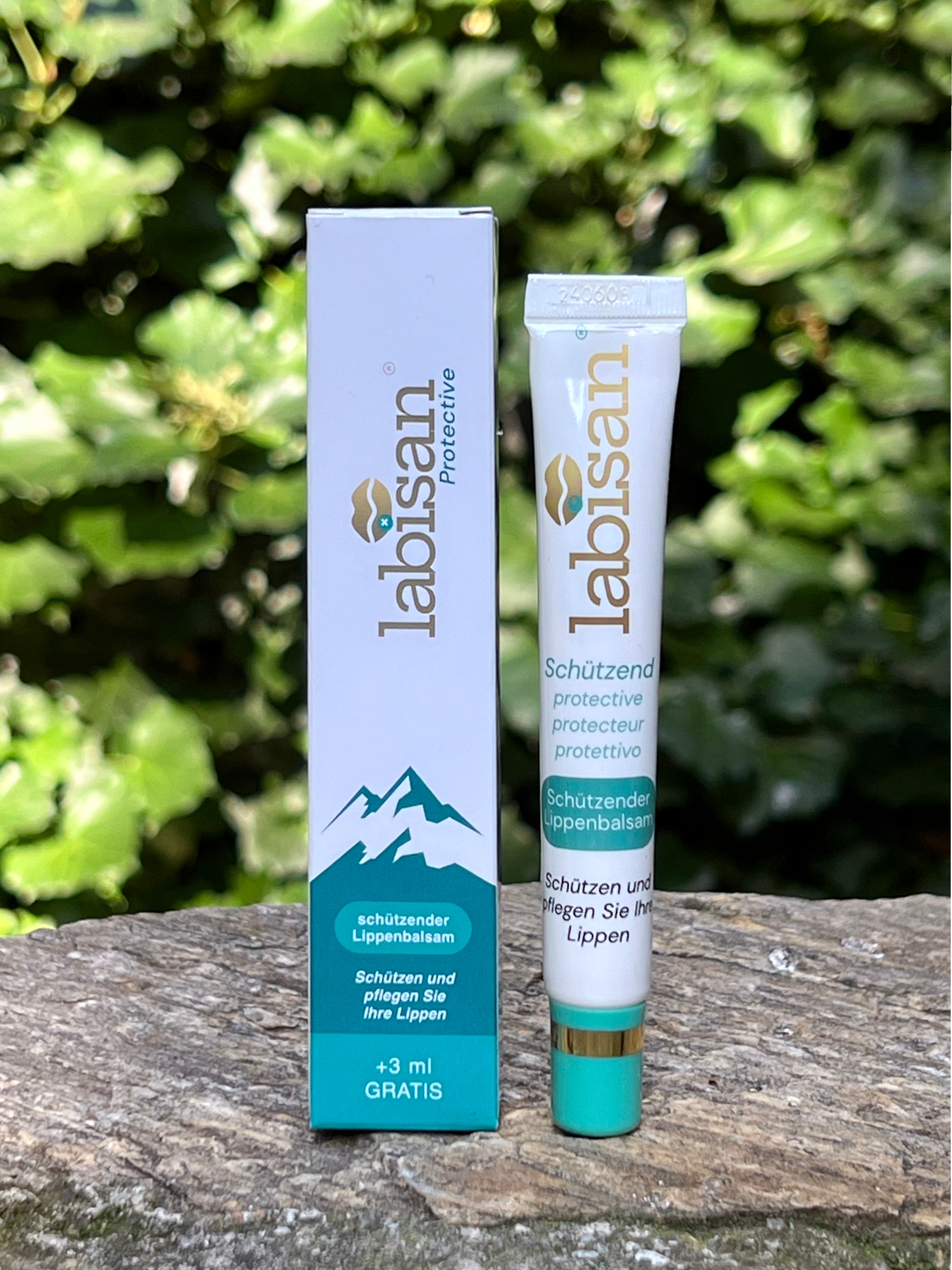
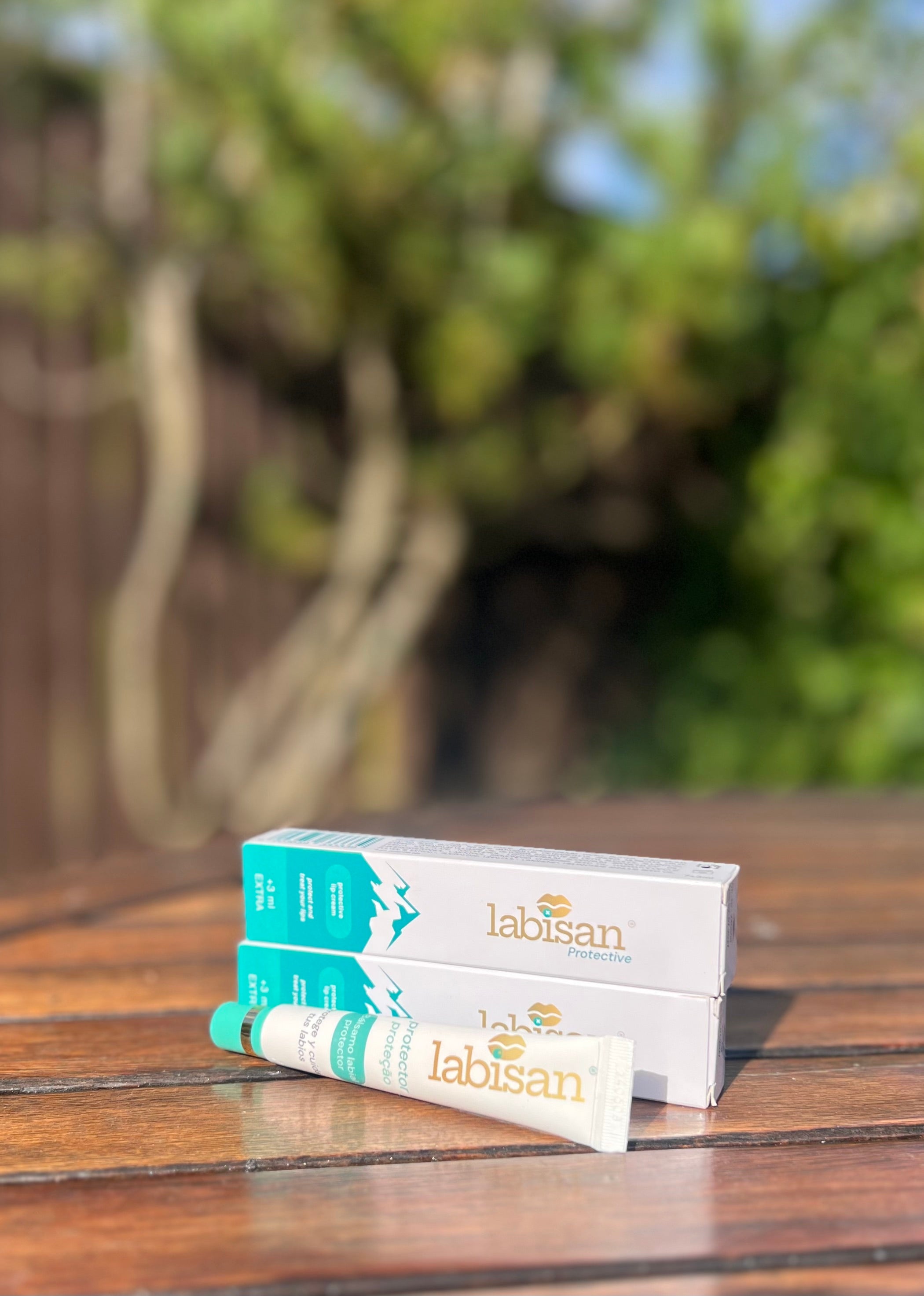
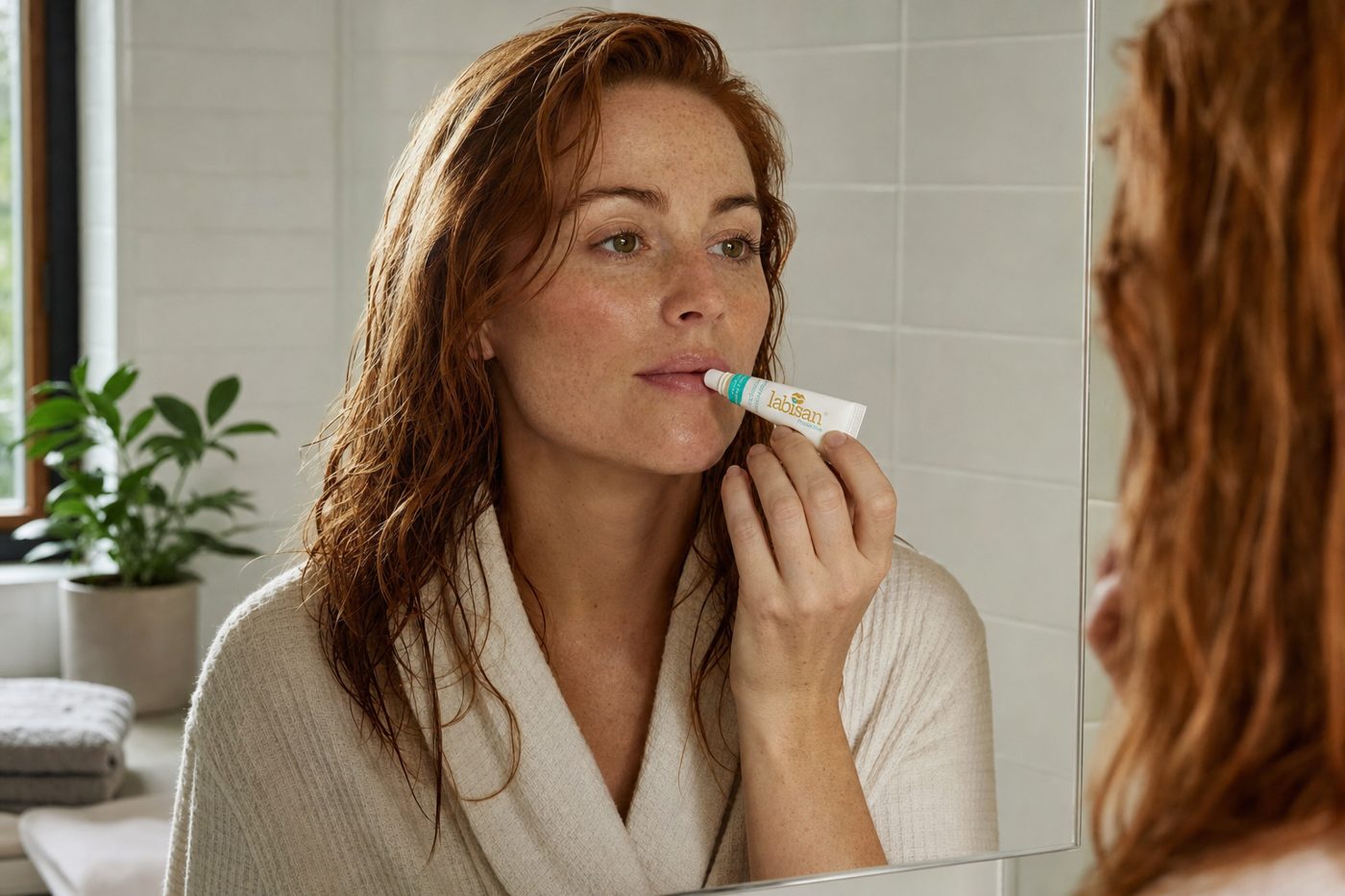
This is the reasoning behind building daily barrier protection into the routine rather than reaching for treatment reactively. Labisan Protective Lip Balm SPF 20 uses zinc oxide as a physical ultraviolet filter alongside shea butter and manuka oil to hold the barrier through cold, wind and altitude. It is a prevention tool, not a cure, and we will not describe it as one. For the full routine, follow the Labisan cold sore protocol, and our best lip balm for cold sores top 5 compares how the leading products differ on filters and tolerability.
Block the Trigger Before the Timeline Even Starts
Labisan Protective Lip Balm SPF 20
Single: $24.99 | Adventure Pack 3x: $59.99 | Family Bundle 5x: $89.99
Free EU shipping over $49, $19.99 worldwide. 30 day satisfaction guarantee.
Shop NowFrequently Asked Questions
How long does a cold sore last without any treatment at all?
Usually 8 to 12 days from the first tingle to fully closed skin, with clinical literature on herpes labialis citing an average untreated episode duration of about ten days. A first ever primary infection is different and can run two to three weeks, often with fever and swollen lymph nodes. If a recurrent sore has not healed after fourteen days, that is worth a medical opinion.
Can you make a cold sore go away in 24 hours?
No. Nothing available makes an established cold sore disappear in a day. The closest thing is an aborted episode, where treatment started during the tingle stops a blister forming at all, and published valaciclovir trial data put that outcome at roughly 6 to 7 percent above placebo. A real effect, but an uncommon one that depends entirely on starting within hours rather than days.
Which stage of a cold sore lasts the longest?
The crust and healing stage, typically 4 to 7 days and sometimes longer. It stretches because lip skin is constantly moving, so a dry scab cracks, reopens the wound underneath, and reforms. Keeping the crust soft with an occlusive layer applied using a clean cotton bud, rather than letting it dry out and split, is the most practical way to keep this phase from running long.
Why does my cold sore last two weeks when other people say theirs last five days?
Usually one of four things: treatment started late rather than during the tingle, the blister or scab was picked, the lesion picked up a secondary bacterial infection, or the lip kept getting sun, wind and cold while it was trying to close. Immune status and medications also matter. If long episodes are your normal pattern despite all that, ask a doctor about suppressive options.
Is a cold sore still contagious once it has scabbed over?
Treat it as contagious until the scab has gone completely and the skin has closed. Viral shedding declines through the crust stage but does not stop neatly at the moment a scab appears, and a cracked scab exposes fresh lesion fluid. The peak of contagiousness is the weeping ulcer stage around day four to five, covered in full in how long are cold sores contagious.
This article is educational and is not medical advice. It does not diagnose or treat any condition. Speak to a doctor or pharmacist about your own situation, especially if you are pregnant, immunosuppressed, taking prescription medication, or dealing with a lesion that is not healing normally.