The numbers up front. In 1999 the neurologist Dominique Caparros-Lefebvre and colleagues published a cluster study from the French Caribbean island of Guadeloupe describing eighty-seven patients with atypical Parkinsonism. Thirty-six percent of the cluster reported chronic, daily consumption of soursop, the local name for Annona muricata, primarily as fresh fruit juice, infused leaf tea, and bark decoctions. Annonacin, the most abundant acetogenin in Annona muricata, is present at roughly fifteen micrograms per gram of fresh fruit pulp and at substantially higher concentrations, often above two hundred micrograms per gram of dried weight, in the leaves. Chronic daily exposure at gram-per-day levels for years, almost exclusively from leaf preparations, is the dose context the Caribbean signal sits in. Labisan's daily cap, fruit-pulp extract choice, and one-year-on, one-year-off cycling protocol are engineered to sit two orders of magnitude below the chronic-exposure zone. This post walks through the signal, the dose math, and the three engineering choices.
If you came to this post worried about the safety of Labisan Graviola Capsules, the short answer is that the product was built around exactly this safety signal. The longer answer is below.
What the Caribbean Signal Actually Said
Caparros-Lefebvre's 1999 paper, published in The Lancet, documented an unusual cluster on Guadeloupe. The patients presented with parkinsonism that did not respond to levodopa, that had additional features overlapping with progressive supranuclear palsy, and that did not match either classical Parkinson's disease or the local incidence of other movement disorders. Epidemiological work-up identified chronic, lifelong consumption of soursop products as the most strongly associated dietary factor. Subsequent in-vitro and animal work, much of it from the same group, established annonacin as a potent mitochondrial complex I inhibitor, identified neuronal cell loss patterns consistent with annonacin exposure, and built a mechanistic case that chronic acetogenin neurotoxicity could plausibly produce the atypical-Parkinson phenotype the Guadeloupe cluster showed.
The follow-up literature over the next two decades narrowed the picture. The neurotoxicity is dose-dependent and exposure-time-dependent. Acute moderate consumption produces no measurable neuronal injury. The risk profile is built by daily, often multi-source, often gram-per-day-acetogenin exposure sustained over years. The Caribbean pattern of fresh juice every morning plus leaf tea every afternoon plus bark or seed preparations occasionally hits that exposure level. A clinically dosed capsule supplement does not, unless the formulator picks the leaf, runs a high extract ratio, and recommends daily use without cycling.
The Dose Context That Almost Nobody Quotes
The numerical comparison is the part of the literature that consumer-facing graviola coverage almost never includes. Fresh fruit pulp delivers roughly fifteen micrograms of annonacin per gram of pulp. A glass of fresh juice prepared from 200 grams of pulp delivers around three milligrams of annonacin per glass. The Caribbean exposure pattern, two to three glasses per day plus daily leaf tea, produces a sustained annonacin intake on the order of twenty to fifty milligrams per day, almost all of which comes from the leaf component because dried leaf can carry an order of magnitude more annonacin per gram than fresh fruit. Sustain that for years and the cumulative neuronal exposure becomes meaningful.
The Labisan daily dose is engineered an order of magnitude below this. Three capsules per day of a 22:1 fruit water extract, with each capsule carrying roughly 500mg of finished extract, deliver a concentrated bioactive payload that maps to approximately 33 grams of raw fruit pulp equivalent. The annonacin contribution from the fruit pulp at that concentration is in the low single-digit milligram range per day, well below the chronic-exposure zone associated with the Caribbean signal. Cap that intake at one year on, then one year off, and the cumulative exposure stays comfortably outside the risk window.
Engineering Choice One: Fruit Pulp, Not Leaf
The first and most important safety choice Labisan made when designing the capsule was to use a fruit pulp extract rather than a leaf extract. The decision is unfashionable in the broader graviola supplement market, where leaf extracts dominate because they concentrate acetogenins more aggressively and produce a more potent acetogenin-per-gram extract. The aggressive concentration is precisely the safety problem. Leaf extracts at high ratios deliver five to twenty times the annonacin density per dose and land users much closer to the Caparros-Lefebvre chronic-exposure zone if taken daily. The fruit vs leaf safety post walks through the engineering case in full.
Fruit pulp delivers a more balanced compound profile. The acetogenin layer is present but at lower density. The polyphenol and flavonoid co-fraction is much richer than the leaf, contributing the antioxidant and immune-supportive properties that are the actual reason most users supplement. The flavonoid profile post covers that side of the chemistry. Taken together, the fruit pulp extract is the source tissue that maximises the desirable bioactive payload while minimising the chronic-acetogenin-exposure risk that the Caribbean signal warned about.
Engineering Choice Two: A Fixed Daily Cap
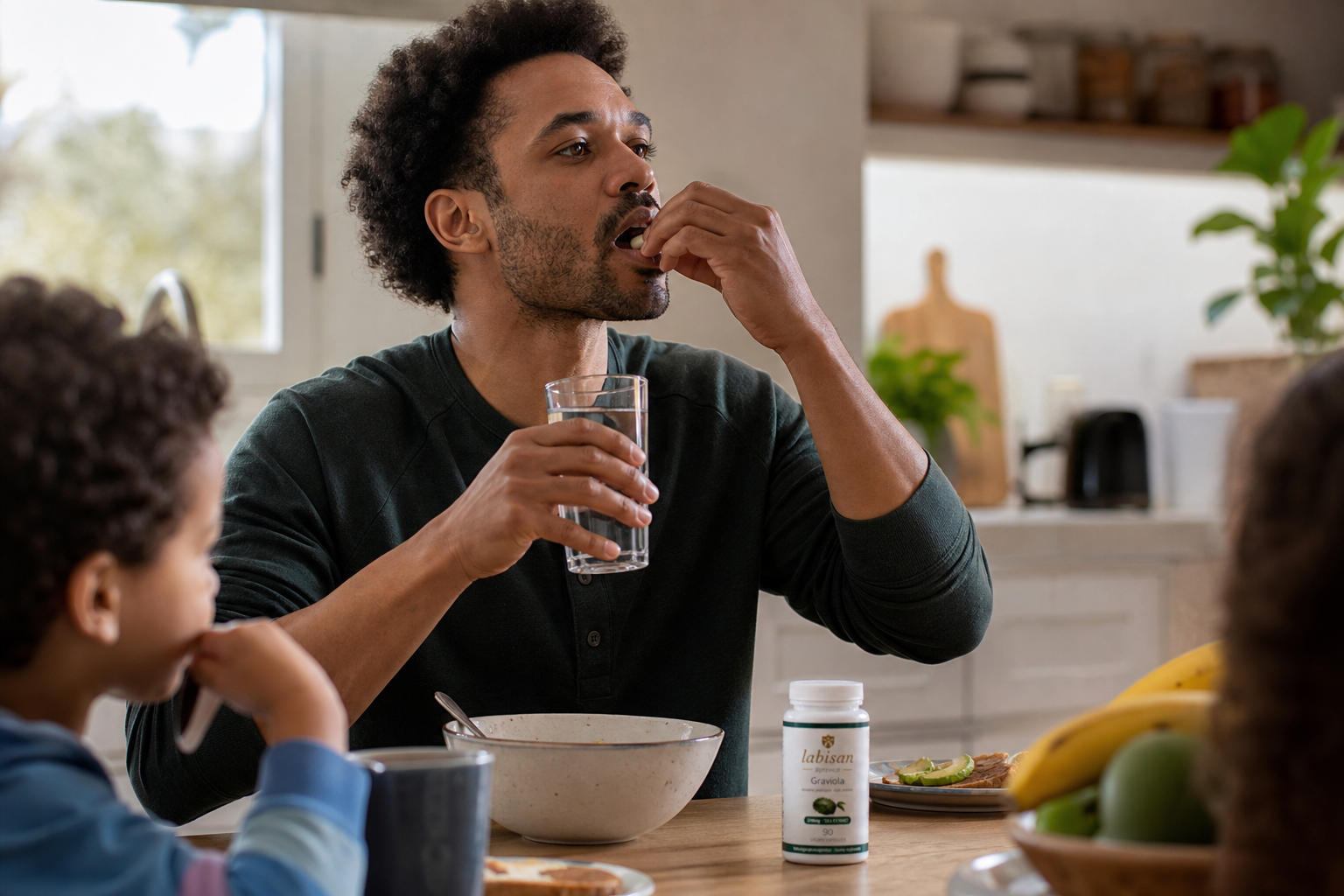
The second engineering choice is the explicit dosing cap. Three capsules per day, one with each main meal, sustained as a daily protocol. Not four, not five, not double-dose on outbreak days. The dose was set by calculating backward from the bioactive payload required to map to the in-vitro pharmacology range, then capping at the level that keeps the annonacin contribution comfortably below the chronic-exposure zone. The three-capsule dose protocol post walks through the math.
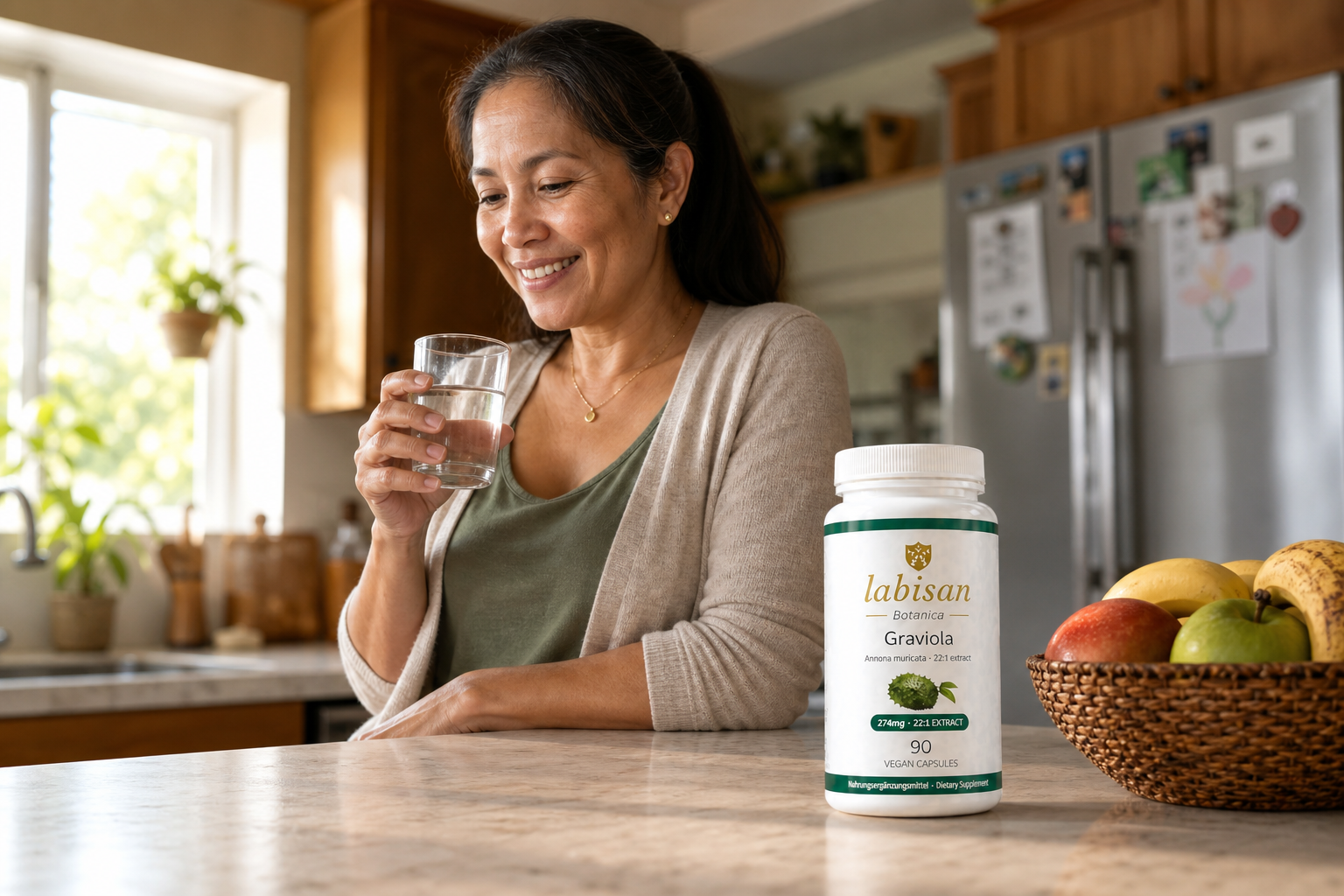
The cap is enforced by the bottle size. Each bottle contains 90 capsules and is sold as a one-month supply. There is no marketing pressure to bump the dose because there is no marketing pressure to deplete the bottle faster than its monthly cadence. The economics of the product are aligned with the safety architecture.
Engineering Choice Three: One Year On, One Year Off
The third engineering choice is the cycling protocol. Labisan recommends a one-year-on, one-year-off pattern for users who want to take graviola as a chronic daily supplement. The off-year resets the cumulative exposure clock. It also gives the user a real-world signal about whether the supplement is delivering the benefit they came for, by removing it and noticing what changes. The cycling protocol post covers the reasoning and the practical implementation.
Cycling sounds counterintuitive in a supplement market that prefers continuous-consumption customers. The decision was made on safety grounds, not on commercial grounds, and we make it visible to the customer in the protocol guidance rather than hiding it.
The safety-engineered graviola
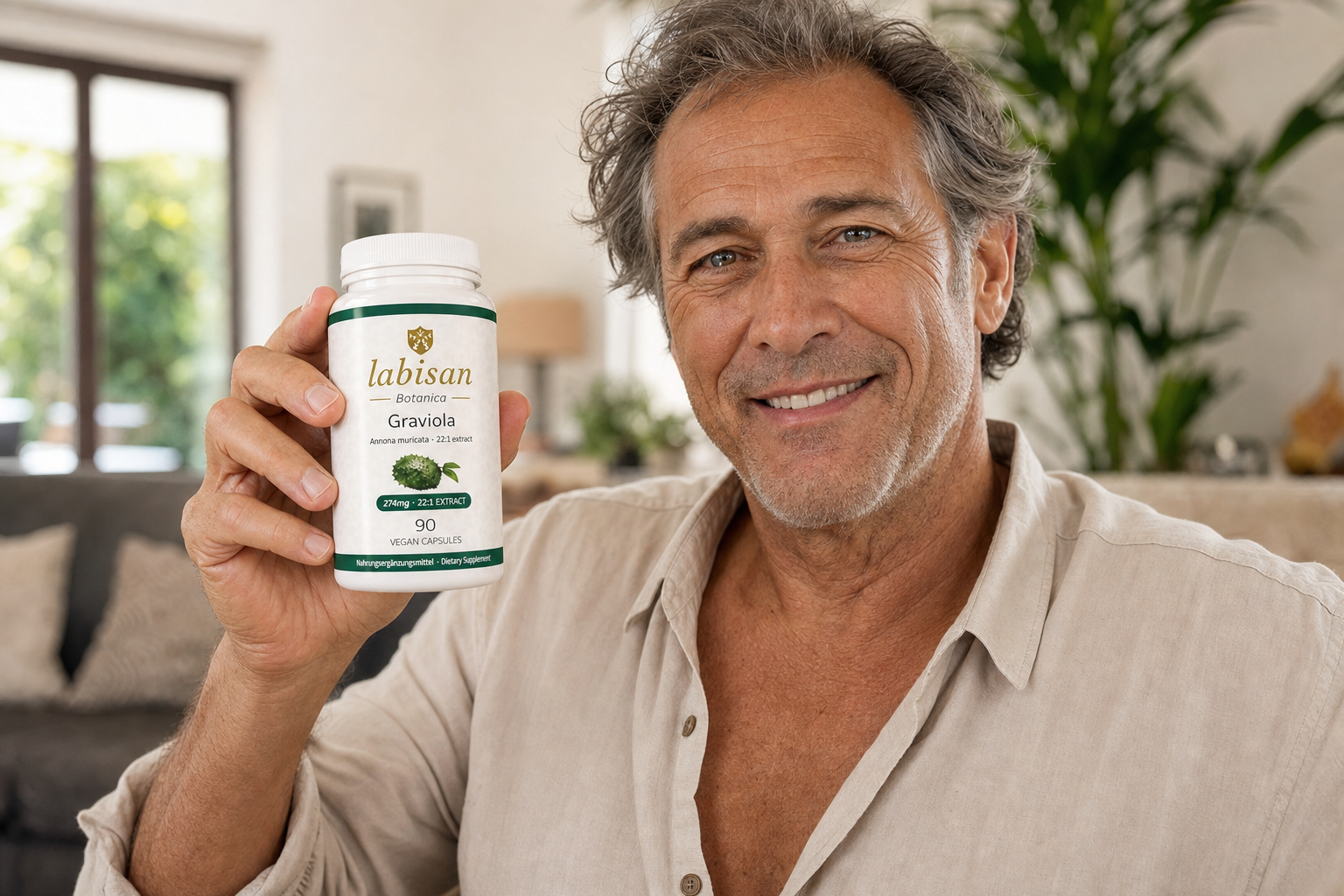
Labisan Graviola Capsules: Fruit Pulp 22:1, Three a Day, One Year On One Year Off
Single bottle (90 capsules, one month): $44.99 | 3x Bundle: $119.97 | 5x Bundle: $179.95
Free shipping on orders over $49. 30 day money back guarantee.
Shop Graviola CapsulesWho Should Not Take Graviola
Some additional safety lines that belong on a post about a real neurotoxicity signal. Pregnant and breastfeeding women should not take graviola supplements; the chronic-exposure data are too thin to set a safe perinatal window. People with diagnosed Parkinson's disease or any atypical parkinsonian syndrome should not take graviola. People on prescription antiparkinsonian medication should consult their neurologist before adding any acetogenin-bearing supplement. People with diagnosed mitochondrial disorders should avoid complex-I-inhibitor supplements as a class. People undergoing chemotherapy that itself targets mitochondrial function should not stack a mitochondrial inhibitor on top without oncologist supervision.
These are the exclusion criteria we put on the product page in plain language. The transparency is intentional. A supplement that takes safety seriously names the populations that should not use it instead of hiding behind marketing copy.
How This Compares to Other Common Cold-Sore Supplements
Lysine has a much better-characterised long-term safety profile and is the right choice for users who want a low-friction daily oral supplement for cold sore prevention with minimal exclusion criteria. The tradeoff is potency; the effect size in the lysine literature is modest. The graviola vs lysine post compares the two protocols head to head. Acyclovir prophylaxis is the prescription option for users with frequent severe outbreaks and carries its own side-effect file documented in the graviola vs acyclovir post. Melissa officinalis is an additive layer with an independent antiviral file. Labisan Graviola Capsules sit in the middle of this spectrum: more potent than lysine, lower side-effect profile than acyclovir, engineered safety architecture for chronic daily use within the cycling protocol.
The Lip Surface Vector Is Separate
Everything in this post is about the systemic, immune-supportive, internal-vector half of cold sore prevention. The external vector, the lip surface itself, is what Labisan Protective Lip Balm is for. A 22 percent zinc oxide film blocks the UV trigger that drives reactivation. A multi-active antiviral layer including manuka oil, melissa officinalis, oregano oil, and a graviola fruit extract addresses the surface viral load. The two products are designed to be used together. The hybrid system post walks through the combined daily protocol.
Bottom Line
The Caribbean atypical Parkinson signal is real, the molecule is annonacin, the exposure pattern was chronic high-dose leaf consumption over years, and the consumer-facing safety question is whether a specific graviola supplement sits inside or outside the chronic-exposure zone. Labisan Graviola Capsules are engineered to sit outside it. Fruit pulp extract, not leaf. A fixed three-capsule daily cap, not a freely escalating dose. One year on, one year off cycling, not perpetual continuous consumption. Manufactured in Austria under EU GMP standards, in pharmaceutical-grade HPMC capsules, with batch-level certificates of analysis available on request. Three capsules per day, one with each main meal. Free shipping on orders over $49, 30 day money back guarantee.
The companion external layer is Labisan Protective Lip Balm, which addresses the UV-trigger half of HSV-1 reactivation at the vermilion border with a 22 percent zinc oxide mineral SPF film. Most carriers running the dual system see a steeper outbreak-frequency drop than either layer alone. The 12-month outbreak reduction post covers the combined-system mechanism.