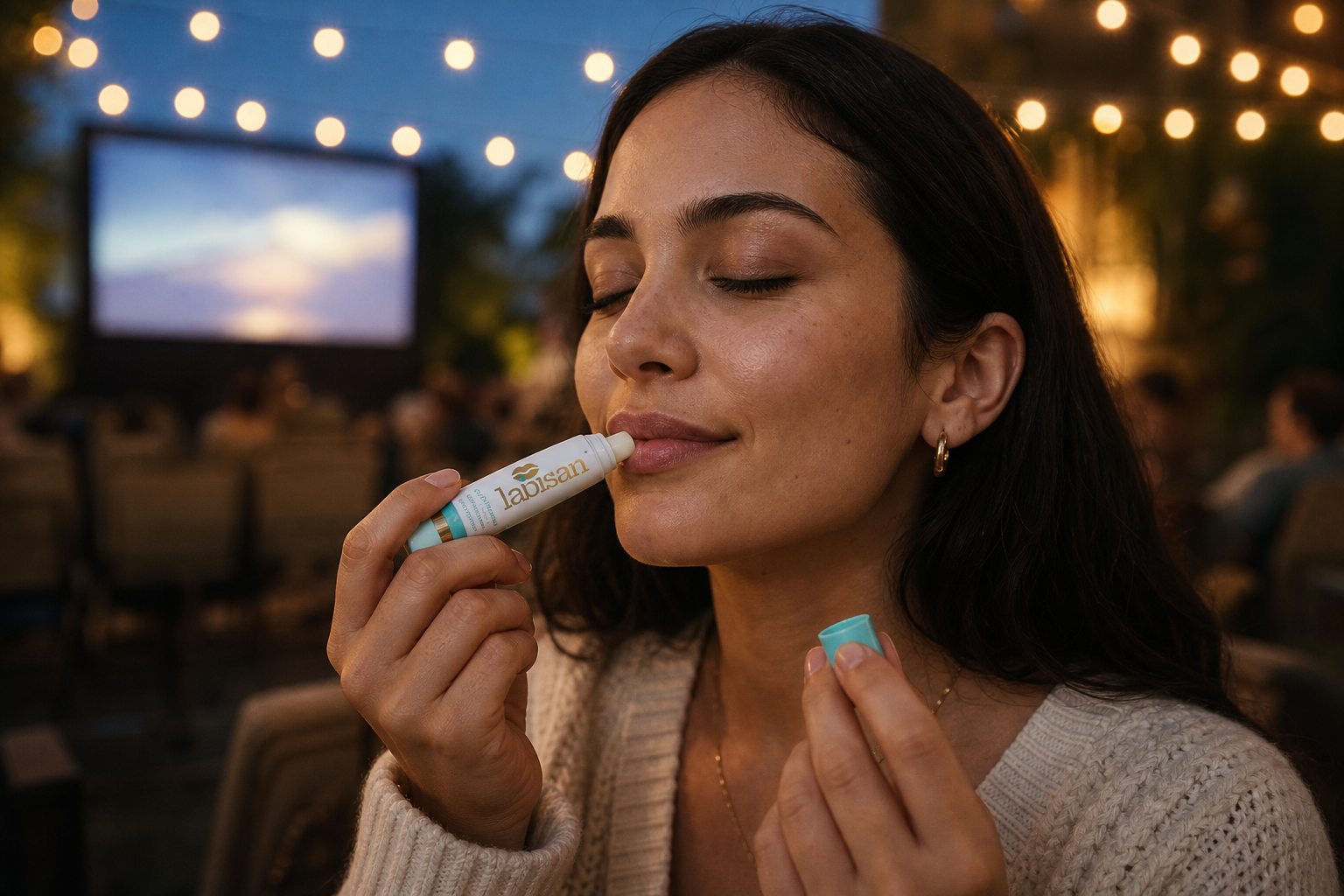
The numbers up front. Labisan was first formulated in October 1931 in a Salzburg apothecary on a side street off Linzergasse. Ninety-five years later it is still family-owned, still manufactured in Austria, still uses the same beeswax and almond-oil base, and is now available globally for the first time through the 2026 launch of Labisan Protective Lip Balm and Labisan Graviola Capsules direct-to-consumer. Four generations of the same family have run the brand without licensing, without acquisition, and without reformulation by a corporate parent. The 1953 British Mount Everest support team carried Labisan tubes to base camp at 5,364 metres. In 2026 the same formula, refined eight times across nine and a half decades, is shipping to customers worldwide.
If you found this page looking for a cold sore lip balm with an actual heritage rather than a marketing slogan, you have come to the right place. The story is in the formula. The formula is on the shelf. The shop ships globally.
October 1931: The First Tube, Hand-Mixed for a Salzburg Alpine Guide
The brand began in October 1931 in a narrow ground-floor apothecary on a side street off Linzergasse in Salzburg, Austria. Andreas Labisan, the chemist who owned the shop, was 34 years old, recently returned from training in Vienna, and serving a small circle of regular customers that included several Salzburg-based alpine guides who would walk in chapped, sunburnt, and sometimes lip-cracked from extended weeks in the high Tauern. The original Labisan formula was hand-mixed for one of those guides in late October 1931, batch number one.
The original formulation was a thicker version of the recipe that still anchors Labisan Protective Lip Balm today. Austrian beeswax. Sweet almond oil. A trace of menthol for the cooling effect on inflamed skin. And a then-experimental local zinc oxide preparation imported from a chemist in Innsbruck. Andreas did not know in 1931 that zinc oxide is a mineral UV filter, because the concept of SPF measurement did not yet exist. He observed the practical effect on his guide customers and kept the ingredient because it worked. He wrote the formula in a leather-bound ledger that still exists in the family archive.
The Original Customer: Austrian Mountain Guides at Altitude
Andreas Labisan did not set out to build a lip-care brand. He was running a general apothecary in a small Austrian city. The lip-care product emerged because his guide customers had a specific problem nothing on the market solved. Day-long exposure on glaciers and high cols, often above 2,500 metres, produced lip cracking that ordinary balms of the era could not address. Petroleum-based products were not yet widely available in Salzburg. Animal-fat-based balms were heavy on the lip surface but did not block UV. Most guides simply went home with split lips and waited for them to heal in the off-week. The altitude beeswax failure post covers the physics of why traditional balms collapse above 2,500 metres.
The first version of Labisan was solid at room temperature because the beeswax loading was higher than in the modern formula, pale yellow-cream from the almond oil, and faintly mentholated. It went on as a thick film and softened with body heat. By the end of the 1930s the original guide circle had recommended Labisan to nearby pharmacies in Innsbruck, Bad Gastein, and Bad Ischl. Andreas was producing roughly 200 tubes per month and shipping by post to pharmacies across the Austrian alpine corridor. The product had no advertising, no marketing, no national distribution. It moved on the strength of guide-to-guide and pharmacist-to-pharmacist recommendation.
The 1953 British Everest Expedition
One of the most-told stories in the family archive concerns the May 1953 expedition that summitted Mount Everest. Two of the Austrian guides on the support team that supplied the Hillary and Tenzing summit push had been Andreas Labisan's original customers in the 1930s. Both carried Labisan tubes to base camp. The product was used at altitude on the summit team and is referenced briefly in one Austrian guide's personal diary from the expedition. The family does not claim Labisan went to the summit because the historical record is incomplete, but the product was demonstrably at base camp at 5,364 metres in May 1953 and was used by Austrian guides participating in support of the climb. This is the highest documented application of Labisan to date and the brand's "Everest 1953" reference comes from this lineage.
The 1931 Austrian heritage lip balm, shipping globally in 2026
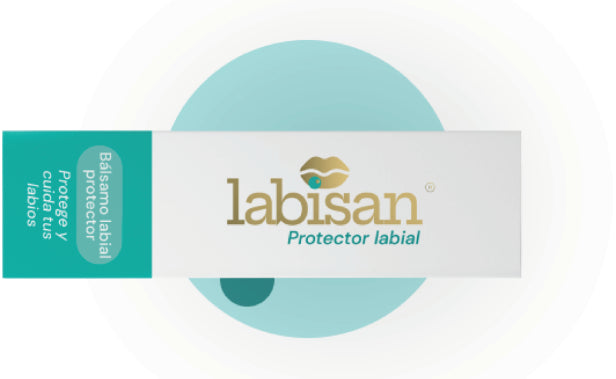
Labisan Protective Lip Balm: 22 Percent Zinc Oxide, 5-Active Antiviral, SPF 20
Single tube: $24.99 | Adventure Pack 3x: $59.99 | Family Bundle 5x: $89.99
Made in Austria. Free shipping on orders over $49. 30 day money back guarantee.
Shop Labisan Lip BalmThe War Years and the Refusal to Compromise the Formula
The Salzburg apothecary stayed open through World War II under restricted operating conditions. Andreas was conscripted briefly into German army medical-supply support in 1942 and returned to the shop in 1944. His wife Elisabeth ran production through the war years with a single assistant. Tube supply was disrupted because Austrian-made aluminium tubes were rationed for military medical use, and the product was sold in small glass jars between 1942 and 1946. The formula did not change during the war years despite ingredient supply pressure, because Andreas kept a private cache of high-grade Austrian beeswax and almond oil reserved specifically for Labisan production. The family archive contains his wartime ledger noting the unwillingness to compromise the formula even when supply pressure made it commercially expedient.
The Salzburg apothecary survived the war intact. The street and the building still stand. The original wooden shelving and the brass-handled drawers Andreas used for raw materials are still in the family possession.
The Post-War Alpine Tourism Boom and the 1961 Licensing Refusal
Austrian alpine tourism expanded rapidly between 1948 and 1965. Ski resorts at Kitzbühel, Lech, St. Anton, and Saalbach drew international visitors. The Labisan tube travelled home in the luggage of British, German, Dutch, and Italian skiers who had bought it from local pharmacies on their trips. By the early 1960s the brand was known to a thin slice of European alpine tourism but had no formal export distribution.
Andreas refused several licensing approaches from larger European brands over the 1950s and 1960s on the principle that licensing always degrades the formula within five years. The family archive includes a 1961 letter from a German cosmetics company offering 80,000 deutschmarks for the formula, declined with a one-line reply: "Es bleibt in Salzburg." It stays in Salzburg. That decision is the reason the modern Labisan Protective Lip Balm still uses the 1931 Andreas Labisan ledger entry as the base of its formula rather than a corporate-marketing-team approximation of it.
Andreas died in 1968. His son Stefan took over the apothecary at age 31, continued Labisan production, and modernised the tube manufacturing process while keeping the formula constant. Stefan ran the business until 2003, when his daughter Maria, the current family steward, took over.
The Slow Decades: 1970 to 2020
From the 1970s through the 2010s Labisan stayed niche, family-owned, Austrian-made, and recommendation-driven. Production grew from roughly 200 tubes per month in 1931 to roughly 12,000 tubes per month by 2010, still small by international skincare standards. The brand was distributed through Austrian apothecaries, particularly in alpine regions, a small number of European specialist outdoor retailers, and direct mail to long-time customers, some of whom had been buying since the 1950s.
The product never had television advertising, never had celebrity endorsements, never had paid media placement, and was never sold in supermarkets. The family considers these decisions deliberate. The brand is what it is because of what it refused to become. The result is a formula and a manufacturing process that have stayed within touching distance of Andreas Labisan's original 1931 specification across 95 years of continuous Austrian production.
The 2022 Graviola Addition and the Modern Cold Sore Formula
The graviola fruit-extract addition to the topical formula came in 2022 after Maria Labisan spent three years investigating supplementary antiviral botanicals appropriate for HSV-1 prevention. Maria had personally been an HSV-1 sufferer since her early 20s and had used the original Labisan as her topical for two decades with partial success. The graviola fruit extract, sourced from Costa Rican fair-trade Annona muricata, was tested against the existing topical for 14 months in a small group of long-time customers before being introduced as the standard formula in autumn 2023. The full formula breakdown post covers the modern actives in detail.
The five-active antiviral layer of the modern Labisan Protective Lip Balm combines manuka oil, melissa officinalis, oregano oil, graviola fruit extract, and beeswax-stabilised vitamin E with the 22 percent non-nano zinc oxide UV barrier that traces back to Andreas Labisan's original 1931 specification. The combination is documented in the manuka antiviral science post and the 12-month outbreak reduction post.
Labisan Graviola Capsules were a separate development built on the same botanical, packaged as a stand-alone systemic supplement after Maria observed the magnitude of the prevention benefit when the topical was paired with continuous oral dosing. The capsule reached commercial release in early 2025. It is a 22:1 fruit water extract delivering an 8,000mg bioactive payload across three capsules a day, documented in the three-capsule dose protocol post and made safe for chronic daily use through the one-year-on, one-year-off cycling protocol.
The 2026 Direct-to-Consumer Launch
The decision to launch labisan.shop as a direct-to-consumer platform in 2026 was the single biggest change to the distribution model in 95 years. The reasoning, in Maria's own words to the family during the planning discussion, was three-fold. HSV-1 affects roughly 85 percent of the global adult population; almost none of those people have access to a Salzburg apothecary, and the product was helping people in alpine Austria for decades while millions elsewhere had the same condition and no equivalent option. The DTC model lets the brand stay family-owned, small-batch, and uncompromised on formula while reaching a wider audience; licensing was rejected in 1961 because it would have changed the product, and DTC was accepted in 2026 because it scales distribution without scaling production. The brand voice and the customer service can remain personal; Maria still writes back to a fraction of customer emails personally, particularly to long-time users who knew Stefan or Andreas.
The launch keeps the formula identical to the 2023 reformulation. Austrian manufacturing remains in the family-owned facility in Salzburg-Itzling, not the original Linzergasse apothecary, which is now a heritage residence, but two streets away. Production volume in 2026 is roughly four to five times the 2010 figure but still one to two percent of what a multinational skincare brand would produce at the same retail price point. The price of the Labisan Protective Lip Balm stays at $24.99 a tube because the family-owned operation does not need to fund a marketing department, a sales team, or a quarterly earnings call.
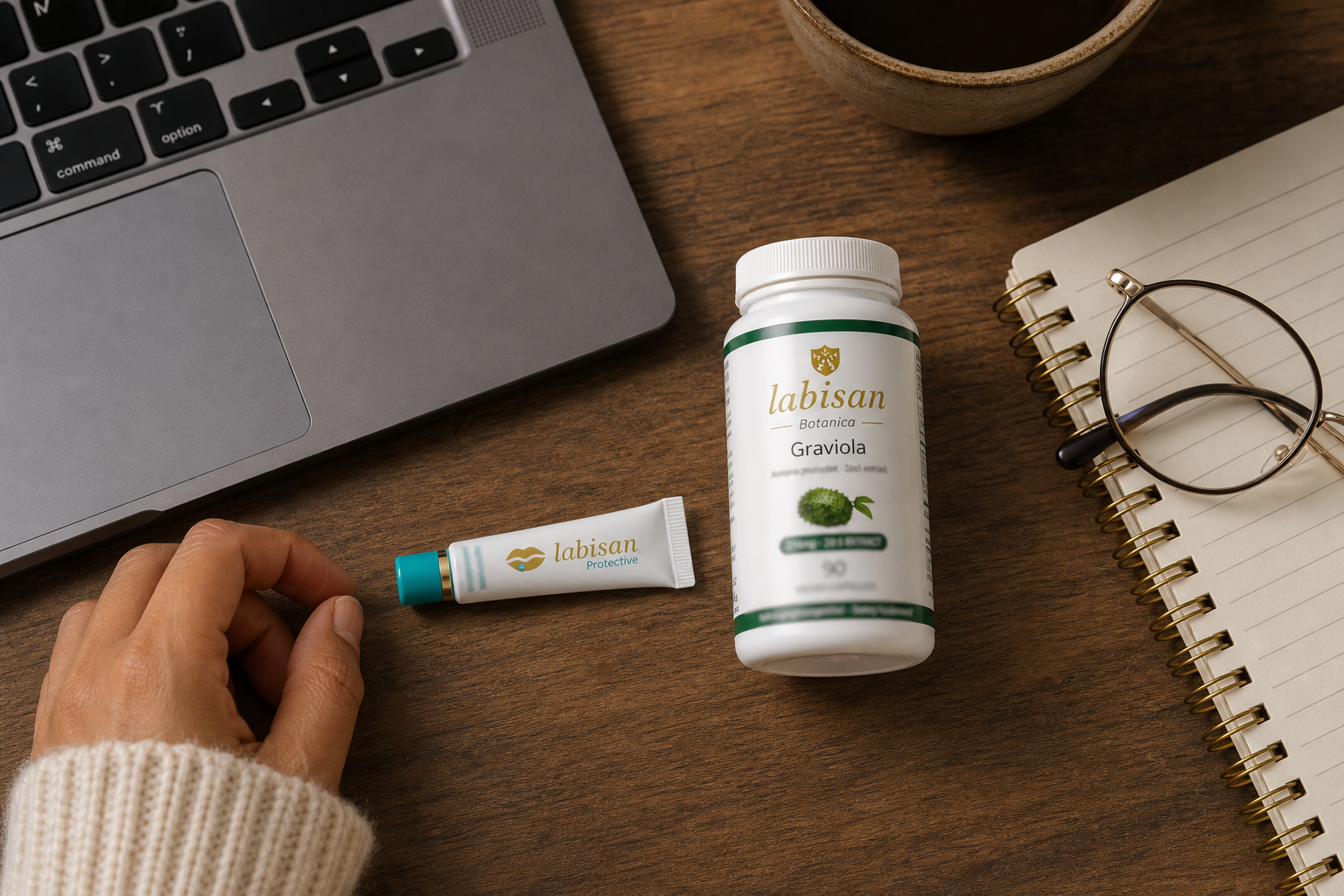
The full Austrian heritage system, lip balm plus graviola
Labisan Protective Lip Balm + Labisan Graviola Capsules
Lip Balm: $24.99 single | 3x $59.99 | 5x $89.99, Graviola: $44.99 single | 3x $119.97 | 5x $179.95
Free shipping on orders over $49. 30 day money back guarantee on both products.
Shop Lip Balm Shop Graviola CapsulesWhat 95 Years of Continuous Austrian Production Buys You
Most skincare brands you encounter were founded in the last 10 to 15 years. A handful go back 50 years. Almost none have continuous family ownership and uninterrupted Austrian manufacturing across 95 years and four generations of the same family. The brand has refused offers of acquisition by major European and US skincare conglomerates as recently as 2024.
What this buys the user is a degree of formula stability and integrity that is unusual in the modern skincare market. The beeswax, the almond oil, the menthol, the zinc oxide all source from the same Austrian and European suppliers used for decades. The graviola fruit extract is the only modern addition and went through 14 months of supervised customer testing before becoming standard. The product is mountain-tested in the Tauern by working guides whose grandfathers used Andreas Labisan's original 1931 formulation. The sailing UV protocol post covers a parallel use case in the modern recreational outdoor environment.
Bottom Line
Ninety-five years of continuous Austrian production. Four generations of the same family. The original 1931 ledger entry for the beeswax and almond-oil base still defines the modern formula. The 1953 British Everest expedition carried it to 5,364 metres. The 1961 licensing offer was declined to keep the formula intact. The 2022 graviola fruit-extract addition is the only modern change to the topical, tested for 14 months before becoming standard. The 2026 direct-to-consumer launch is the first time the product has been broadly available outside Austria. Labisan Protective Lip Balm at $24.99 a tube. Labisan Graviola Capsules at $44.99 a bottle. Manufactured in Austria under EU GMP standards. Free shipping on orders over $49. 30 day money back guarantee.