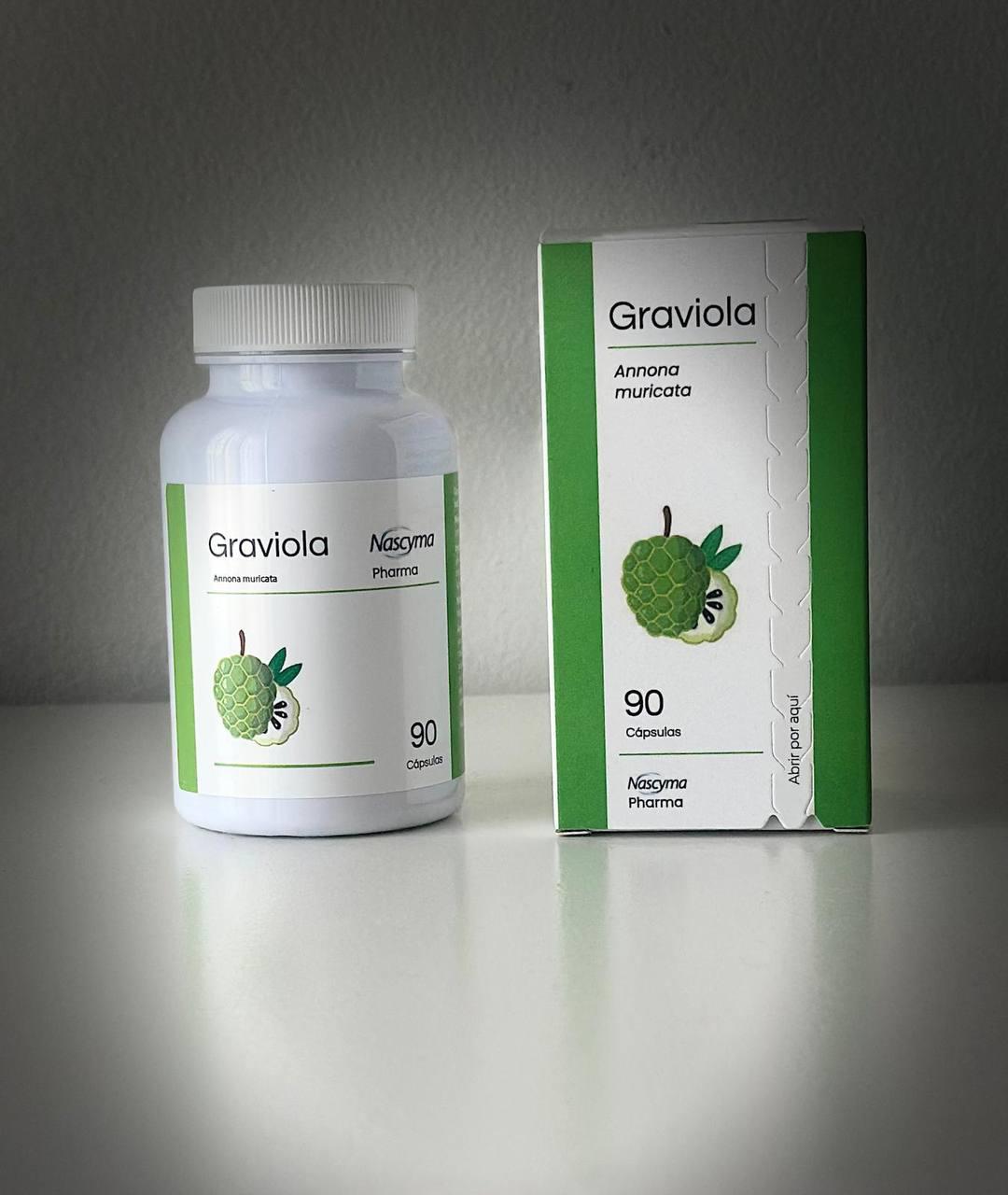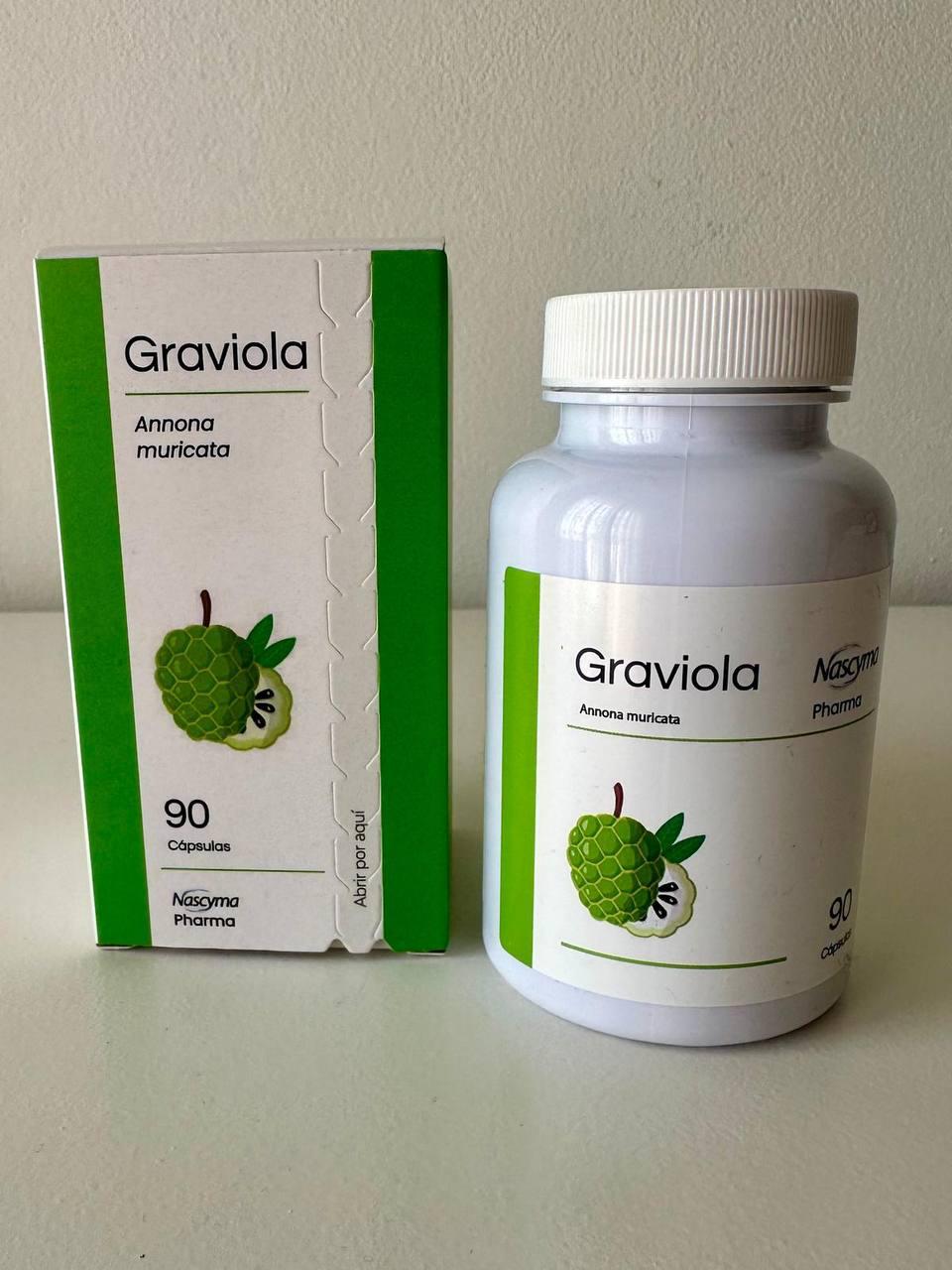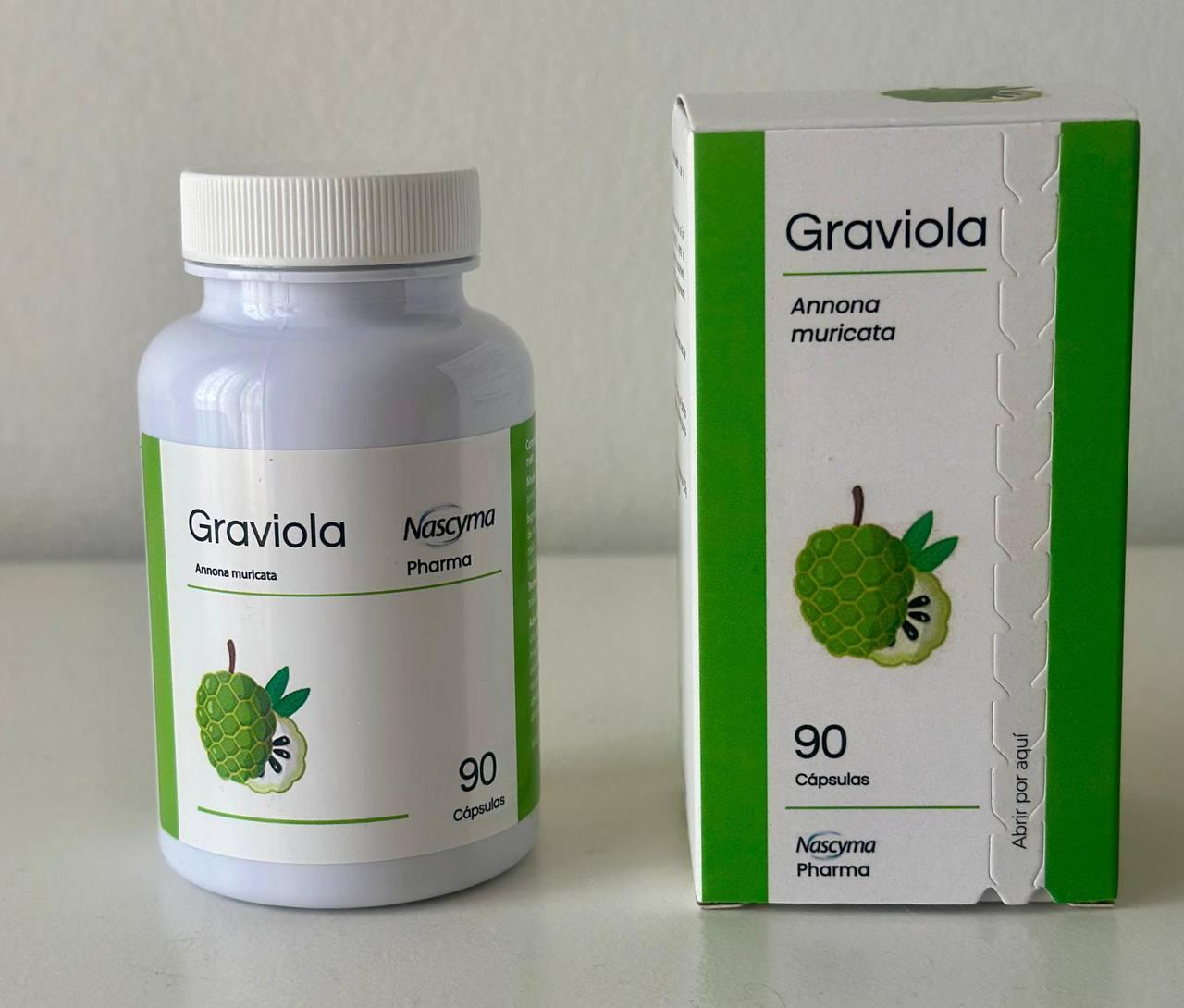
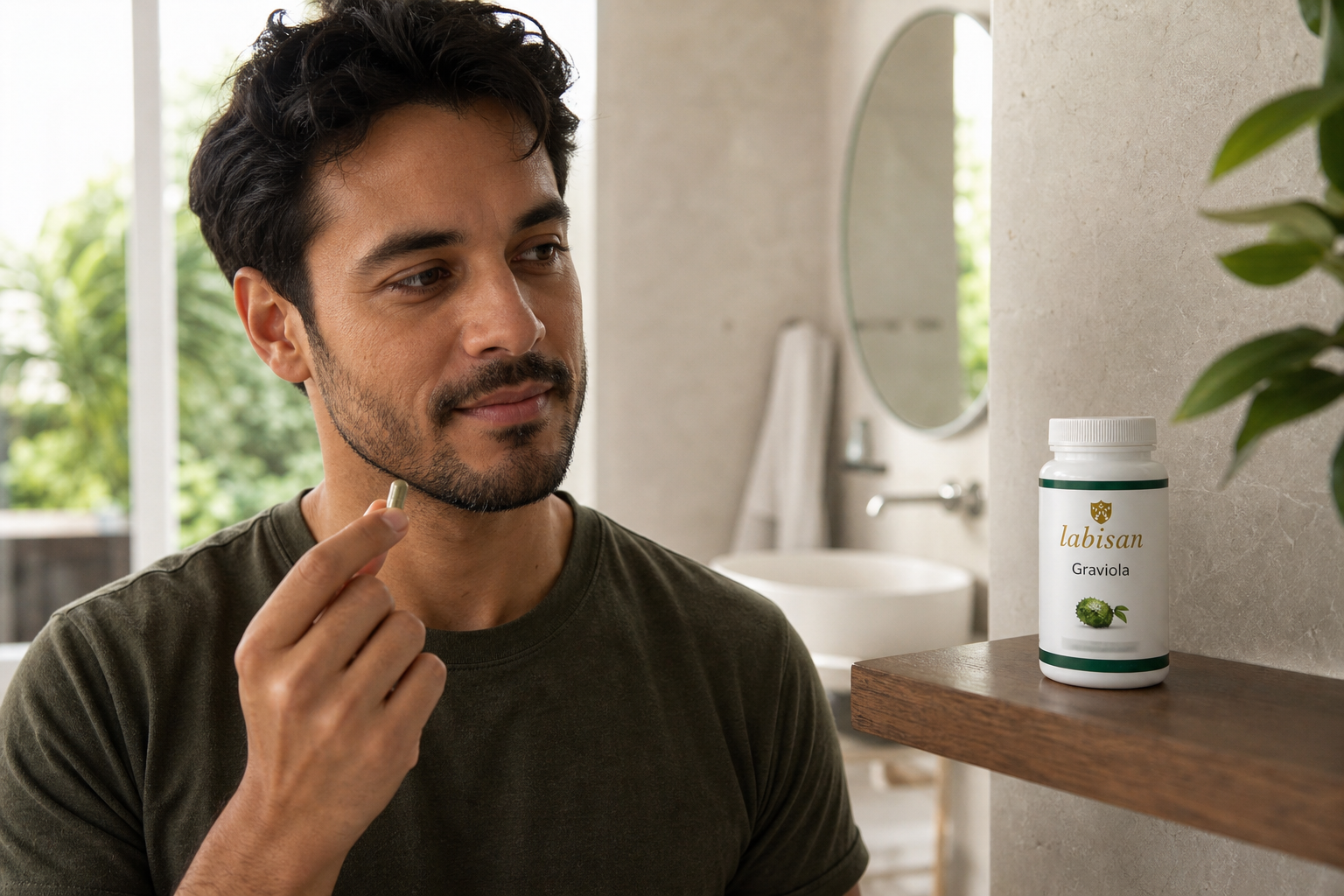
Graviola (Annona muricata, also sold as soursop or guanabana) has one of the widest quality spreads of any botanical on the supplement shelf, and three numbers decide whether a given bottle is worth your money. The first is the extract ratio: a 4:1 leaf extract means four kilograms of dried leaf were concentrated into one kilogram of powder, so a 667 mg capsule delivers roughly 2,667 mg of leaf equivalent. The second is the contaminant panel: USP General Chapter <232> sets oral permitted daily exposures of 5 mcg for lead, 5 mcg for cadmium, 15 mcg for inorganic arsenic and 30 mcg for mercury, and California Proposition 65 uses a far stricter 0.5 mcg per day reproductive-harm level for lead. The third is the plant part, because the acetogenin annonacin is neurotoxic in animal models and is concentrated most heavily in the seeds and root bark. Champy and colleagues (2005) measured roughly 15 mg of annonacin in an average soursop fruit and about 36 mg in a cup of traditional leaf infusion, and estimated that daily consumption approaches 1 mg/kg/day, a range comparable to doses that produced brainstem lesions in rats. The epidemiological signal behind that concern, the atypical parkinsonism cluster reported by Caparros-Lefebvre and Elbaz in The Lancet (1999) in Guadeloupe, came from lifelong daily consumption of fruit, teas and decoctions, not from time-limited, dose-defined supplement use. No regulator has published an official safe daily intake for annonacin, and France's food safety agency ANSES has flagged annonaceous acetogenins as an open concern. That is exactly why a buying protocol matters more here than with, say, vitamin D.
What follows is a protocol, not a listicle. It takes about fifteen minutes, it runs entirely from your phone before you click checkout, and each step has a pass or fail answer. Run it in order, because Step 1 disqualifies more products than every later step combined. If you want the background on why plant part is the first gate, our breakdown of graviola fruit extract versus leaf extract safety covers the phytochemistry in more depth than we will repeat here.
Step 1: Verify the Species and the Plant Part Before You Look at Price
Open the product page and find the supplement facts panel, not the marketing copy. You are looking for two specific strings: the Latin binomial Annona muricata, and the named plant part. A compliant label reads something like "Annona muricata (graviola) leaf extract 4:1, 667 mg." An unacceptable label reads "Graviola Complex 1000 mg" with no species and no plant part.
Why this is the hardest gate: the genus Annona contains well over a hundred species, several of which are sold interchangeably in source markets, and DNA-barcoding surveys of the herbal supplement trade (Newmaster et al., BMC Medicine, 2013) found substantial rates of species substitution and undeclared filler across the category. If a seller will not name the species and the part, you are not buying graviola. You are buying green powder with a graviola picture on it.
Reject these outright
Any product containing seed or root bark, since these carry the densest acetogenin load and have no place in a daily supplement. Any "whole plant" or "aerial parts plus root" blend, because that phrasing exists to hide the ratio. Any proprietary blend that buries graviola inside a 1,200 mg mixed total, since you cannot compute your actual intake and therefore cannot apply Step 4.
Step 2: Convert the Extract Ratio Into Milligrams of Actual Leaf
This is where most price comparisons go wrong. A bottle advertising "1,000 mg graviola" for $14 usually contains 1,000 mg of raw milled leaf powder, which is roughly one quarter the botanical mass of 1,000 mg of a 4:1 concentrated extract. The arithmetic is simple: extract milligrams multiplied by the first number of the ratio equals leaf equivalent. So 667 mg of 4:1 equals 2,668 mg leaf equivalent, and three of those capsules per day equals roughly 8,000 mg. That is the reasoning behind the 8,000 mg daily graviola dose split across three capsules, and it is the number you should be comparing across brands rather than the headline milligrams on the front label.
Do the same calculation on every product in your cart, then divide by price. Cheap raw powder is frequently more expensive per milligram of leaf equivalent than a standardized extract once you normalize. If the seller does not state a ratio at all, assume 1:1 raw powder and price it accordingly.
Step 3: Ask for the Batch Certificate of Analysis, Then Actually Read It
Email the seller and ask for the certificate of analysis (COA) matching the lot number you will receive. A brand that cannot produce one within a business day has told you something important. When it arrives, check four panels.
Heavy metals. Leafy botanicals accumulate cadmium and lead from soil, so this is not theoretical. Compare the reported mcg per daily serving against the USP <232> oral limits above, and confirm the testing lab is ISO/IEC 17025 accredited rather than in-house. Microbiology. Look for total aerobic count, yeast and mould, and explicit absence of Salmonella and E. coli per USP <2021> and <2022>. Pesticides. EU Regulation (EC) 396/2005 applies a default maximum residue limit of 0.01 mg/kg to substances without a specific listing, which is a useful benchmark even outside Europe. Sterilisation method. Ethylene oxide is prohibited on foods in the EU and triggered a wave of RASFF supplement recalls between 2020 and 2021; confirm the material was steam treated instead.
While you have the COA open, check what the capsule itself is made of. Titanium dioxide (E171) has been banned as a food additive in the EU since August 2022 under Regulation 2022/63, and it still appears in older shell stock. We make the full argument in our piece on why the HPMC capsule shell matters more than the active ingredient, and Labisan uses plant-derived HPMC with no titanium dioxide for exactly that reason.
Step 4: Run the Annonacin Safety Check on Yourself
This step takes two minutes and is non-negotiable. Graviola is not appropriate for everyone, and an honest seller will say so on the label.
Do not take graviola if you are pregnant or breastfeeding, if you have Parkinson's disease or another movement disorder, or if you have a first-degree family history of atypical parkinsonism. Speak to your doctor first if you take antihypertensives or antidiabetic medication, since Annona muricata extracts have shown blood-pressure-lowering and glucose-lowering effects in animal studies and the additive effect is plausible. Do not take it continuously for years. The Guadeloupe data concerns cumulative lifetime exposure, which is why we publish and follow a one year on, one year off graviola cycling protocol rather than pretending open-ended daily use has been studied. It has not.
Set a calendar reminder for your stop date on the day your first bottle arrives. This is the single most commonly skipped step in the entire protocol.
Step 5: Choose the Channel, Because Where You Buy Changes What Arrives
Once a product passes Steps 1 through 4, the remaining question of where can you buy graviola comes down to chain of custody. Buy direct from the brand. On large marketplaces, stickerless commingled inventory can pool identical listings from multiple sellers into one bin, which means the bottle shipped to you may not be the one the brand tested, and counterfeit units enter the same pool. Direct purchase gives you a traceable lot number, a real returns policy, and a person to email for the COA.
Health food shops and pharmacies sit in the middle: better provenance than a marketplace, but stock frequently sits past its potency window and staff rarely have batch documentation. Ordering Labisan Graviola Capsules direct keeps the lot traceable end to end, and we ship free within the EU on orders over $49 with a 30 day satisfaction guarantee.
Step 6: Pair It Correctly, Because Graviola Alone Solves Only Half the Problem
Most people searching for graviola sourcing are not buying it as a general tonic. They are buying it because they get recurrent cold sores and want fewer of them. If that is you, the buying protocol above is necessary but incomplete, and here is the honest reason why.
Almost every product marketed for HSV-1 and HSV-2 acts after reactivation has already begun. Docosanol creams, hydrocolloid patches, acyclovir and valacyclovir all enter the picture once the virus has left the trigeminal ganglion and replication is underway; they can shorten an episode, but by definition they are downstream. Lysine sits in the same reactive category with thinner evidence, as we set out in our graviola versus lysine comparison for cold sores. Nothing in that list touches the trigger.
Ultraviolet exposure is the best documented environmental trigger for recurrent herpes labialis, and it is the one you can physically block. Labisan Protective Lip Balm SPF 20 uses zinc oxide as a broad-spectrum mineral filter, with shea butter to hold the barrier through cold and wind and manuka oil among its botanical actives. That is the outside half: stop the UV hit before it becomes an outbreak. Graviola is the inside half, supporting immune function with a flavonoid profile including quercetin, kaempferol and rutin, aimed at reducing outbreak frequency over months rather than treating a lesion in progress. In vitro work on Annona muricata extract against herpes simplex type 1 (Padma et al., Journal of Ethnopharmacology, 1998) is genuinely interesting but remains laboratory-stage evidence, and we will not represent it as more. To be explicit: graviola is not a cure for herpes, it does not clear latent virus, and no supplement does.
Run both halves together and the logic is straightforward. Barrier on the outside removes the largest reactivation trigger; immune support on the inside works on how often reactivation gets a foothold. Buying graviola on its own leaves your lips unprotected on exactly the high-UV days that matter most, which is why our summer peak-season cold sore prevention protocol runs the two products in parallel rather than in sequence.
Verified Sourcing, Documented Batches, Fewer Outbreaks to Manage
Labisan Graviola Capsules
Single: $44.99 | 3-Pack: $119.97 | 5-Pack: $179.95
Free EU shipping over $49, $19.99 worldwide. 30 day satisfaction guarantee.
Shop NowFrequently Asked Questions
Where can I buy graviola that has actually been tested?
Buy direct from a brand that will send you a batch-specific certificate of analysis from an ISO/IEC 17025 accredited laboratory covering heavy metals, microbiology and pesticide residues. Marketplace listings are the weakest option because commingled inventory breaks the link between the tested lot and the bottle you receive. If a seller cannot produce a COA for your lot number, treat that as a failed product regardless of price or review count.
Is graviola safe to take every day?
At a defined dose, from leaf material only, for a bounded period, most healthy adults tolerate it well. The unresolved question is cumulative annonacin exposure over years, which is why we recommend a fixed cycle of one year on followed by one year off, and why seeds and root bark should never appear in a daily product. Avoid it entirely during pregnancy or breastfeeding, and if you have Parkinson's disease or a family history of a movement disorder. Speak to your doctor before starting if you take blood pressure or diabetes medication.
What extract ratio should I look for when I buy graviola capsules?
A stated ratio of 4:1 from leaf is a reasonable standard, because it lets you calculate leaf equivalent exactly: multiply the milligrams of extract by four. Compare products on leaf equivalent per day and per dollar rather than on the headline number on the front of the bottle. A missing ratio should be read as unconcentrated raw powder.
Can graviola cure cold sores or herpes?
No. HSV-1 and HSV-2 remain latent in nerve tissue for life, and nothing available, prescription or botanical, eliminates them. Graviola is used for immune support with the goal of reducing how often outbreaks occur. For the trigger itself, blocking UV at the lip with a mineral SPF is the measure with the most direct mechanism behind it.
Should I take graviola and use the lip balm at the same time?
Yes, that is the intended design. They address different points in the same problem: the balm reduces the ultraviolet exposure that provokes reactivation, and the capsules support immune resilience that influences frequency. Neither replaces antiviral medication prescribed by your doctor, and you should keep taking anything you have been prescribed.